

The board is on the lawn, the wax is still sticky, and a bag of fins is sitting next to the tail with no label that says which set belongs on it. That is the usual starting point. A thruster set, a spare pair, maybe a single from an old longboard, and no clear sense of which one will hold a line on tomorrow's beach break.
This surfboard fins guide treats the fin as a system, not a sticker on the deck. Template, flex, size, box and salt exposure all change the feel. The fastest fin is not always the right one for New Zealand conditions. A setup that spins freely in soft, fat sections can let go when the face stands up or the bottom gets uneven.
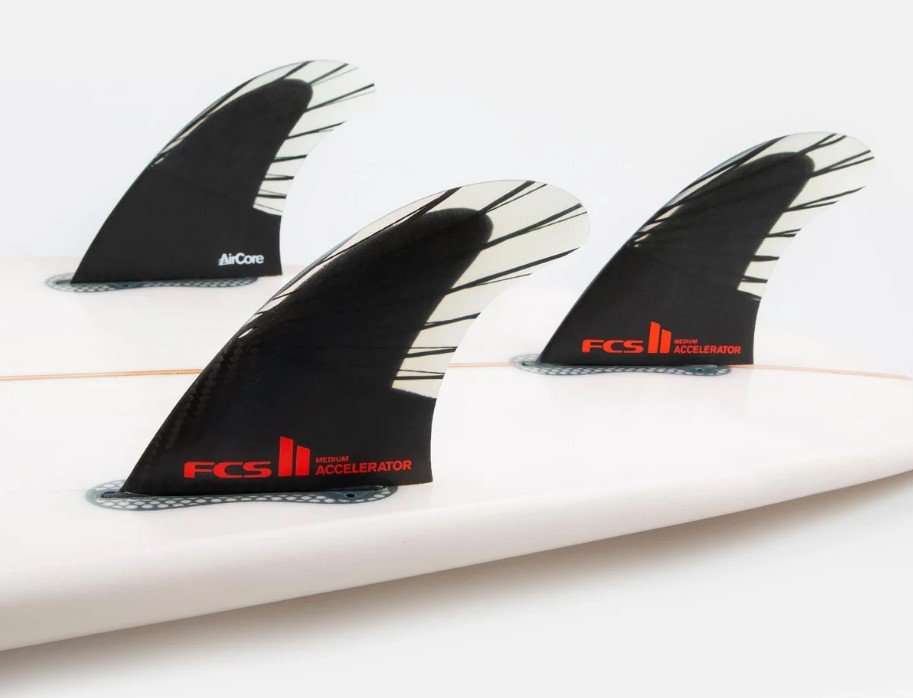
Fin Setups at a Glance and Where Each One Fits
Start with a thruster on most shortboards and mid-lengths. Three fins, one centre and two side bites, give balanced hold and drive for everyday beach breaks. The board's boxes decide what else is possible. You can't add a box to a board that doesn't have one, so count the plugs before you buy a second set.
A setup is the number and placement of fins. The table below is the lookup. Read it against your box count and the size of wave you ride in practice, not the size you hope for on a good weekend.
| Setup | Fin count and layout | How it feels | Best for |
|---|---|---|---|
| Thruster | 3 fins: one centre, two side | Balanced hold and drive, predictable release | Everyday beach breaks, shortboards and mid-length boards |
| Quad | 4 fins: two front, two rear | Fast down the line speed | Good for fast, hollow waves |
| Twin | 2 fins set wide | Very loose and quick, less hold on steep faces | Fish and retro boards in small surf |
| Single | 1 centre fin | Stable, smooth and traditional | Longboards, noseriding and mellow waves |
How to use the table
Thruster: Leave this on if the board has three boxes and you surf mixed beach breaks. It is the default because the centre fin stops the tail from sliding every time you lean.
Quad: Use four fins when you want more down the line speed. Drive comes from the rear pair.
Twin and single: A twin belongs on a fish or retro outline in small surf. A single belongs on a longboard when you want a drawn-out line and a chance to nose-ride. If your board only has one box, those other rows are not options.
The feel words in each row, hold, drive, release and looseness, are what the next part unpacks. Matching the board itself to local waves is covered in our guide to surfboards in New Zealand.
How Fins Create Drive, Hold and Release
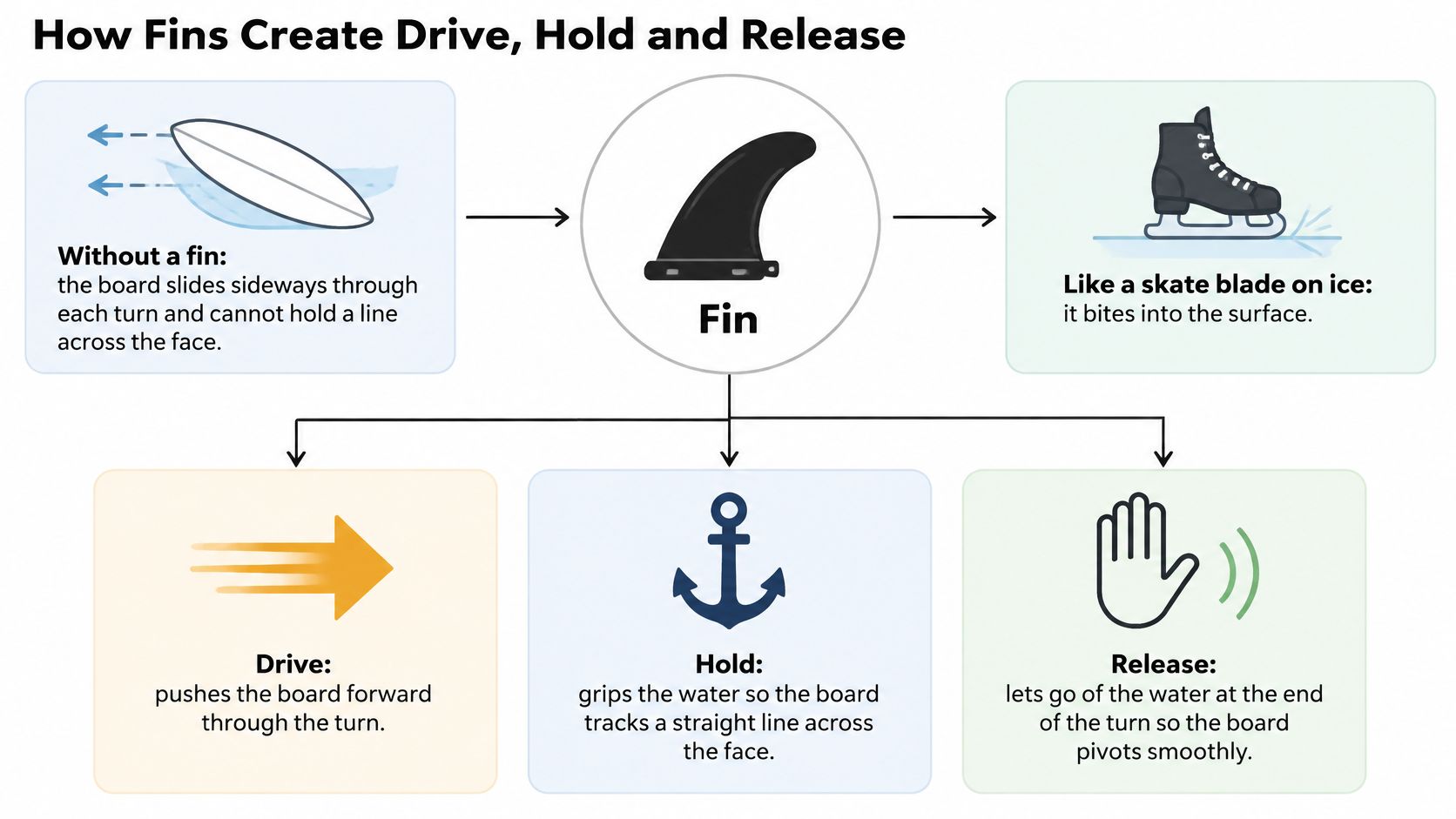
Without a fin, the board slides sideways through each turn and can't hold a line across the face. A fin works like a skate blade on ice. It bites into the wave face, and the edge you set decides how the board pushes off the turn.
Four words for what you feel
Drive is the forward push out of a turn, mostly from the rear fins in a thruster or quad.
Hold is grip through the turn. It comes from total fin area and from the side fins biting when you load the rail.
Release is how easily the fin lets go so the tail can slide. That matters for control when the wave gets heavy, not only for looking loose.
Pivot is how quickly the tail swings. It helps when you want rapid direction change but you gain pivot at the expense of drive.
Each of those four has a physical cause. Depth controls hold: a deeper fin has more blade in the water, so it resists sideways slip harder through a bottom turn. Base length controls drive: a longer base gives the water more surface to push against as you come out of the turn. Rake, the amount the tip sweeps back, controls pivot. More sweep draws the turn out into a longer arc. Less sweep lets the tail snap around in a tight pocket.
The trade-off in one turn
A fin with more area holds better through a bottom turn. It also feels stiffer and releases less when the surf is small. A smaller fin spins the board quickly and can wash out on a steep face. Put any fin on that map. More drive and hold sit on one side. More release and pivot sit on the other. You don't get all four at once.
Practical rule: If the tail slides before you finish the turn, you need more hold. If the board won't come around in weak surf, you need more release or pivot, not a stiffer fin.
The side fins in a thruster also sit at a slight angle to the stringer, which is called toe-in. Toe-in helps the board turn in toward the pocket more willingly, at the cost of a small amount of straight-line speed. Cant, the outward tilt of the side fins, loosens the tail. More cant frees the board up, less cant keeps it planted. These angles are fixed in the boxes when the board is glassed, so you tune behaviour with the fins you plug in, not the plugs themselves.
Where you stand on the tail changes how much of that fin you load. A surfboard tail pad gives you feeedback to get your back foot in the same place so the fin's drive and release stay consistent from wave to wave.
Fin Templates and Which Ones Drive Hardest
A template is the fin model. Outline, rake, sweep and foil together decide how it behaves in a turn, and two measurements do most of the work: rake and base length. More rake with a longer base pulls the board through long arcs and holds under load. Less rake and an upright profile let the tail pivot and release sooner.
Raked templates versus upright templates
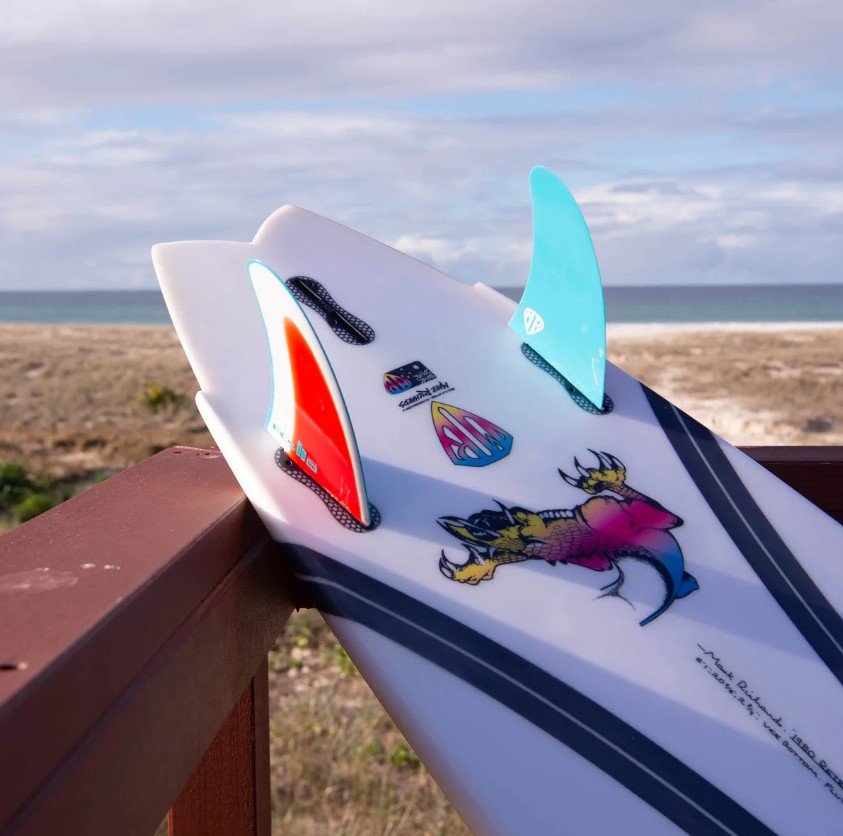
MF and AM sit at the raked end of the FCS range. They are built for drawn-out turns on waves with push behind them, and they reward a surfer who drives off the tail through a longer arc. Choose that family when the wave has enough face to let the arc run. On a weak beach break the same outline can feel like the board is stuck on a rail, because the wave never supplies the load the template was designed for.
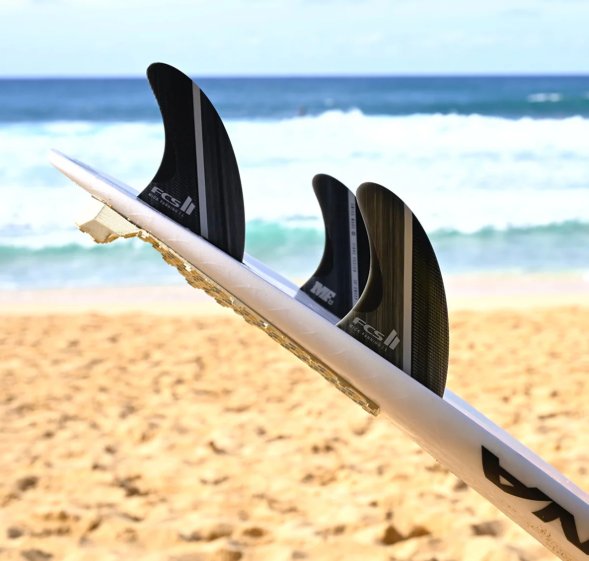
An upright template such as Reactor pivots quickly and lets go early, which helps a board come around in soft surf. Performer splits the difference and is a sensible starting point for one set that covers most conditions. Within any of these outlines, performance glass construction gives the most direct response, with Performance Core a step below it.
Why the fastest fin can be the wrong fin
Most fin charts stop at board type, rider weight and wave height. A Kiwi week doesn't. You can move from a weak beach break to a wind-affected East Coast peak, then a reef or point, inside a few days. Generic rules such as "twins or quads for small waves" and "thrusters for average beach breaks", the kind listed in guides to choosing a surfboard fin setup, don't answer that.
Extra release feels fast until the section stands up. Then it reduces confidence, because the tail lets go before you have finished the turn.
The box already glassed into the board narrows the field before template choice even starts. An FCS II plug takes FCS fins and a Futures box takes Futures fins, and Blitz Surf Shop carries both systems plus Firewire's Endorfins, so the practical question is which template inside your system matches the board and the waves in front of you.
Choose the template that matches the board style first, then the rider. Treat extra drive as a bonus only where the wave can supply it. A raked template in performance glass suits fun, glassy surf and a performance outline. On a steep, hollow reef, favour the same family with more hold and less emphasis on pure release.
Fin Materials and How Flex Changes the Feel
A surfer over 90 kg had been riding medium fins in glassflex on his usual shortboard. He changed to large fins in Performance Core on that same board. Response improved straight away, and so did his surfing. The catch is that size and material changed together, so neither change can take all the credit. Change one variable at a time if you want to know which one did the work.
Softest to stiffest
Plastic flexes and forgives. It responds slowly and gives the least drive, which suits entry boards and budget setups where a wipeout shouldn't snap a fin.
Glassflex sits in the middle. The feel is predictable for mid-weight riders on everyday beach breaks.
Neoglass has a higher fibreglass content than Glassflex and the fin is a bit stiffer. Getting more performance for only a slightly higher price point
Performance Core responds more quickly and adds noticeable drive. It is the sensible step when the outline already fits and you want more life from the same board.
Performance glass is the stiffest and most direct. It gives the most drive for powerful waves and high-performance boards, and it punishes a mismatched template because there is nowhere for error to hide.
Why stiffness changes the turn
A stiffer foil responds more directly and resists deformation under high load. A softer fin can store and release energy, then feel vague once the board is moving. On the same template, swapping plastic for a glass construction typically feels like a different board: the response arrives sooner and the drive is more obvious under load. The bigger and more powerful the surf, the wider that gap feels.
West Coast loading makes it obvious. Taranaki's wave climate is dominated by long-period southwest conditions of roughly 10–14 seconds, from a 36-year hindcast at six offshore locations, according to the Taranaki surf breaks assessment. Long-period swell carries more energy than short-period wind swell of similar height, so the fin loads harder in the bottom turn. A small, pivot-heavy set can feel fun in weak surf and lose hold at speed. Adequate base area, torsional stability and predictable flex matter more. The same board that feels fine on a sheltered East Coast beach break can need more area or a stiffer foil once that swell period rises.
Board flex feeds into that picture. A blank that stores energy through a turn and releases it on the exit amplifies whatever the fin is doing, so a lively board will exaggerate a fin swap that a heavy, damp board would muffle. That is worth keeping in mind when matching fins to different constructions, such as those covered in our guide to Firewire surfboard constructions and models.
Fin Boxes and How to Fit Fins Safely
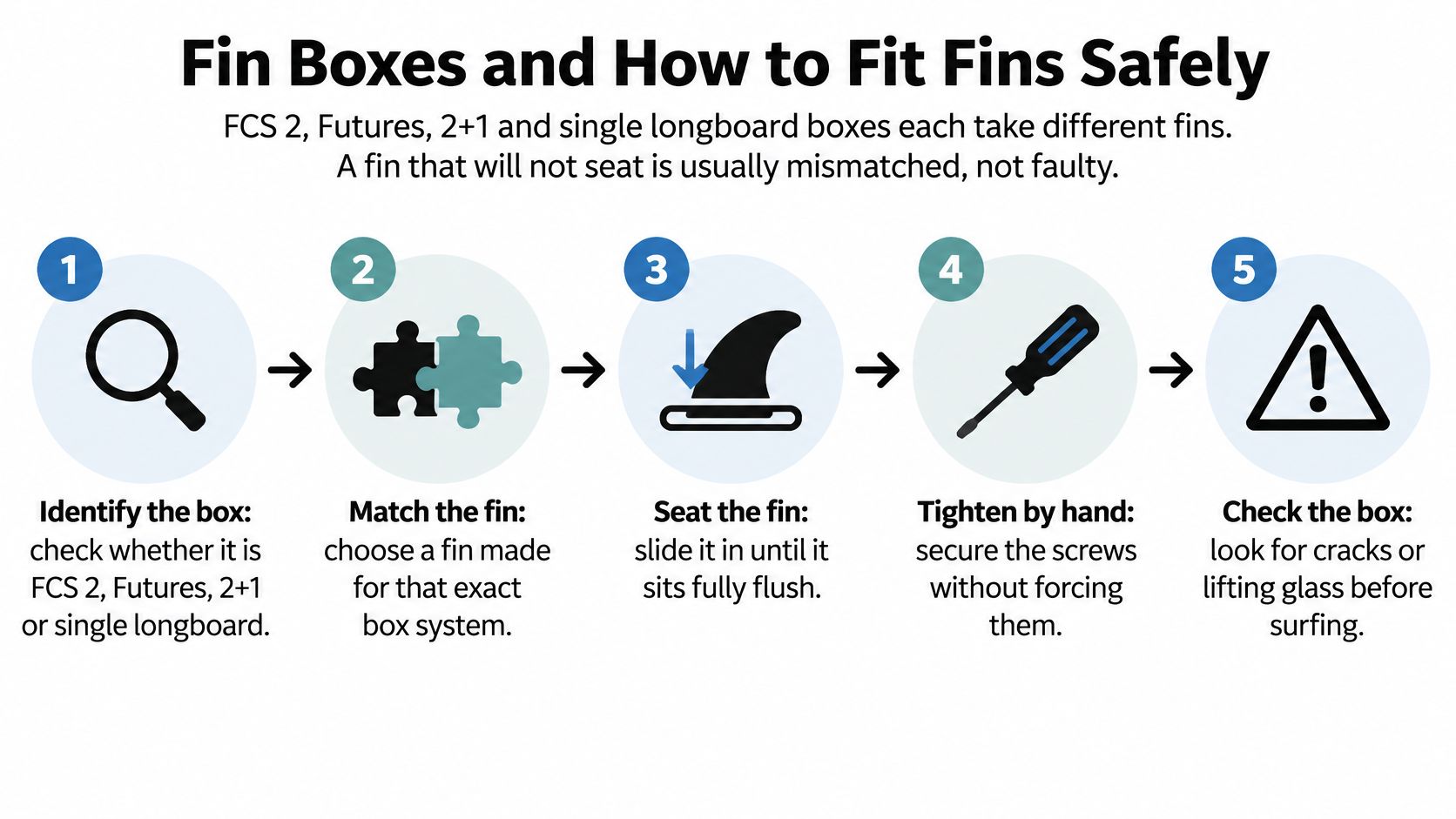
Fin systems are not interchangeable. FCS 2 plugs, Futures boxes, 2+1 boxes and single longboard boxes each take different fins. A fin that will not seat is usually mismatched, not defective.
| Box system | Fin fitment | First check |
|---|---|---|
| FCS 2 plugs | FCS fins only, in matching plug pattern | Plug pattern matches the fin before any force is applied |
| Futures box | Futures fins only, different base plug | Confirm the Futures base before buying fins |
| 2+1 box | Side and centre fins in one system | Check all three positions line up before tightening |
| Single longboard box | Single centre fin, screw-in or lock-in type | Check the box is clean, straight and not cracked |
Fit them in this order
- Confirm the box by looking at the plug or tab pattern before you buy or fit. FCS 2 uses a twin-tab pattern. Futures uses one longer base. Forcing the wrong base into either will chew the box.
- Rinse the box with fresh water to clear sand and salt, then dry it fully. Grit under a tab is the usual reason a fin rocks.
- Inspect the box and the glass around it for cracks, lifting glass and stress marks. A loose feel often starts in the box, not the fin.
- Line the tabs or plugs up with the box, and only use a fin made for that system.
- Seat the fin with gentle pressure. Tighten the screws by hand until snug. A driver makes it easy to crush the plug.
- Check the fin sits straight and level with the tail before you paddle out. A cocked side fin makes the board pull.
- After salt water, remove the fins, rinse them, dry them and store them somewhere dry. Damp coastal storage speeds corrosion on screws and tabs.
If a fin rocks, tighten the screws by hand and recheck the box before you do anything else. Never sand a fin base to force a fit, and never sand the box. Keep any sanding to light removal of rough spots on the fin itself. Retire a fin that is chipped through or stress-marked rather than reshaping it.
Choosing Fin Size by Rider Weight and Board
Manufacturer weight ranges are starting points, not guarantees. Board volume, tail shape, technique and the wave you intend to ride can all justify moving a size up or down. A fin that feels wrong may be mismatched to the box, or just the wrong area, rather than defective. Check the system before you blame the size, which is the gap most charts leave for people buying second-hand gear, as our fins guide notes when it treats fit, box condition and salt exposure as part of performance.
| Rider weight | Board type | Starting fin size | Adjust when |
|---|---|---|---|
| Under 60 kg | Shortboards and fish | Small | The material is flexible enough for a light rider to load the fin |
| 60 to 75 kg | Shortboards | Medium | The board is very thin or the surf is steep and you want more hold |
| 75 to 90 kg | Shortboards or mid-lengths | Medium to large | You want more hold, so fit bigger side fins first |
| Over 90 kg | Mid-lengths and longboards | Large | Board volume is high and the rider wants more response |
What moves you off the starting size
Under 60 kg: Small fins suit light riders, especially in a flexible material they can bend. A large glass fin under a light rider often feels dead because it never loads.
60 to 75 kg: Medium is the usual shortboard start. Stay there until the tail is either washing out or refusing to pivot.
75 to 90 kg: Medium to large covers most shortboards and mid-lengths. If hold is the complaint, increase the side fins before you jump the whole set.
Over 90 kg: Large is the start on shortboards and midlenths. The earlier glassflex-to-Performance Core change sat in this band, and size was half of that result. On a high-volume board, large can feel too locked. Drop area only if you want more response and the tail is already tracking.
Board volume pulls the other way
A bigger, fuller board can often take a smaller fin because the outline and thickness already supply stability. A thin performance shortboard may need more area so the tail doesn't skip. Tail shape matters too. A wide squash carries area. A narrow pin does not. If you are still unsure which board volume you are on, sort that with a what size surfboard do I need check before you buy a third fin set.
Matching Fins to NZ Breaks and Swell
Most East Coast sessions are moderate, not huge. For Gisborne's Midway and Waikanae beaches, offshore modelling found the most favourable swell direction is south to southeast (140–180°), about 70% of the time. A 10-year hindcast put mean offshore wave height near 1.0 m, with common periods of 6–16 seconds, and waves above 2 m showing up only about 5–10% of the time, in the Gisborne surf break assessment.
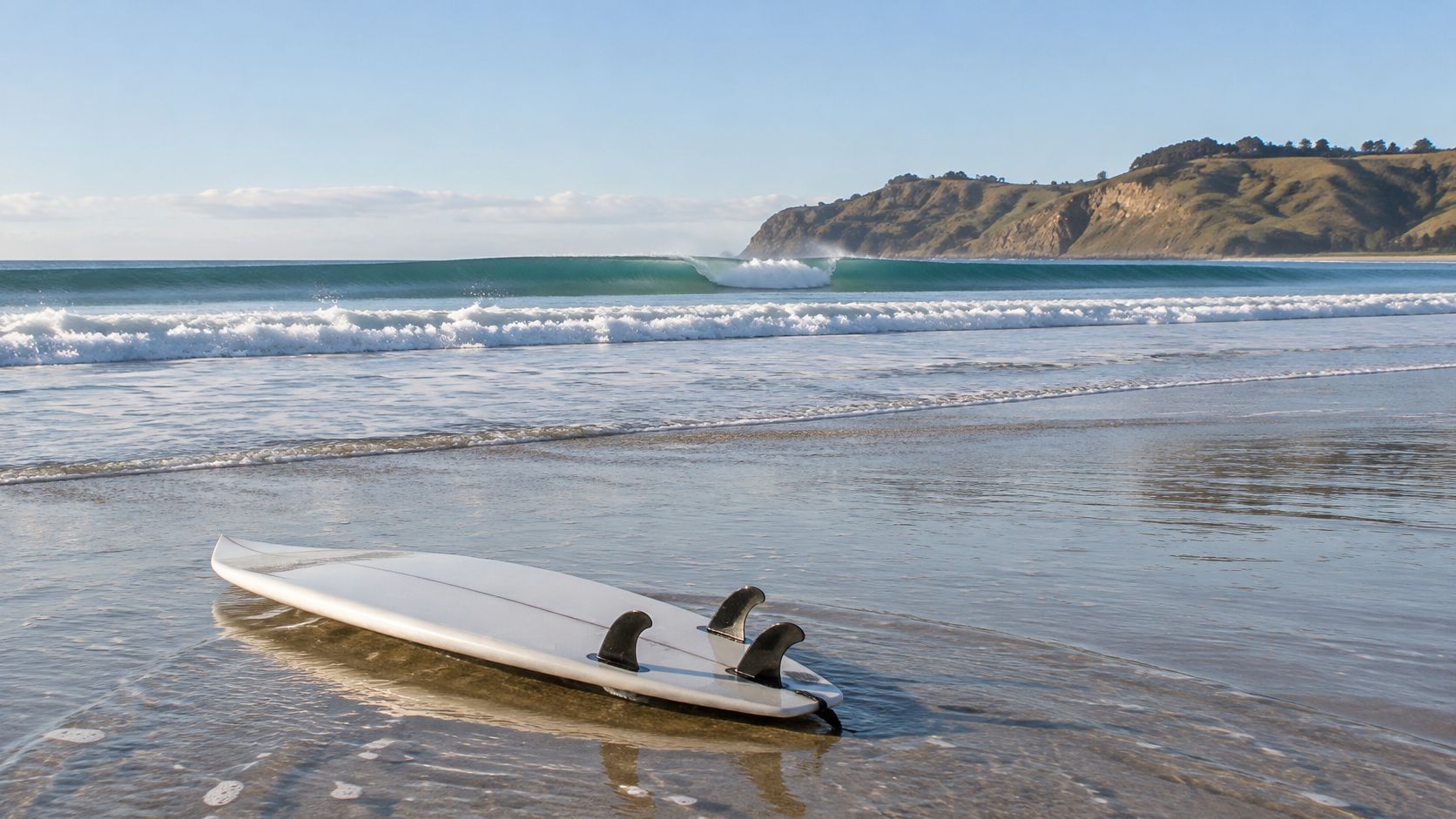
That spread rewards a balanced primary set. A thruster with medium-area fins holds a line through a fast section and still releases when the wave goes soft. The quickest fin is often the wrong fin here. A stiff, heavily raked set that flies down the line will lock the tail on a small day, and an extreme small-area pivot set gives up too much hold on the rare bigger swell.
When the wave changes
Set fin area and flex for your weight and board first, then tune the template to the wave. Soft, weak surf wants the tail to move, so a smaller fin, a more upright template, or a softer layup adds pivot and release where push is scarce. Faster, steeper waves want the opposite: more rake and a stiffer material so the board holds through turns. Check what your boxes will take before sizing up or down, since the system in the board sets the limits.
On long-period west-coast swell, the sort that loads up the Taranaki coast, a larger-area thruster or a well-supported quad tracks better than a loose, small set once the face has real energy. Check the conditions on the Gisborne surf report before you commit to a swap, so the fins match the morning you get rather than the swell you hoped for.
| Condition | What it looks like | Setup change |
|---|---|---|
| Weak, soft beach break | Slow, mushy sections with limited push | Smaller fins or a more upright template, softer flex for pivot and release |
| Everyday East Coast beach break | Moderate waves with frequent ridable sets | Balanced thruster with medium-area fins |
| Steep reef or point wave | Hollow, fast sections over an uneven bottom | Stiffer, more swept fins for hold |
| Long-period west-coast swell | Long-interval sets carrying heavy energy | Larger-area thruster or well-supported quad |
A versatile primary set covers most New Zealand sessions. Run one thruster you trust, then carry one step smaller or softer for mushy days and one step stiffer for reefs. Fins improve handling. They do not make a closeout surfable, and they do not replace ability.
Diagnose, Retire and Choose Your Next Step
A loose fin usually points to the box or its screws before the fin itself. Tighten by hand, look for cracks or lifting glass, and only then suspect the fin. I have seen plenty of "dead" fins come back to life once the box was cleaned out and the screws seated properly.
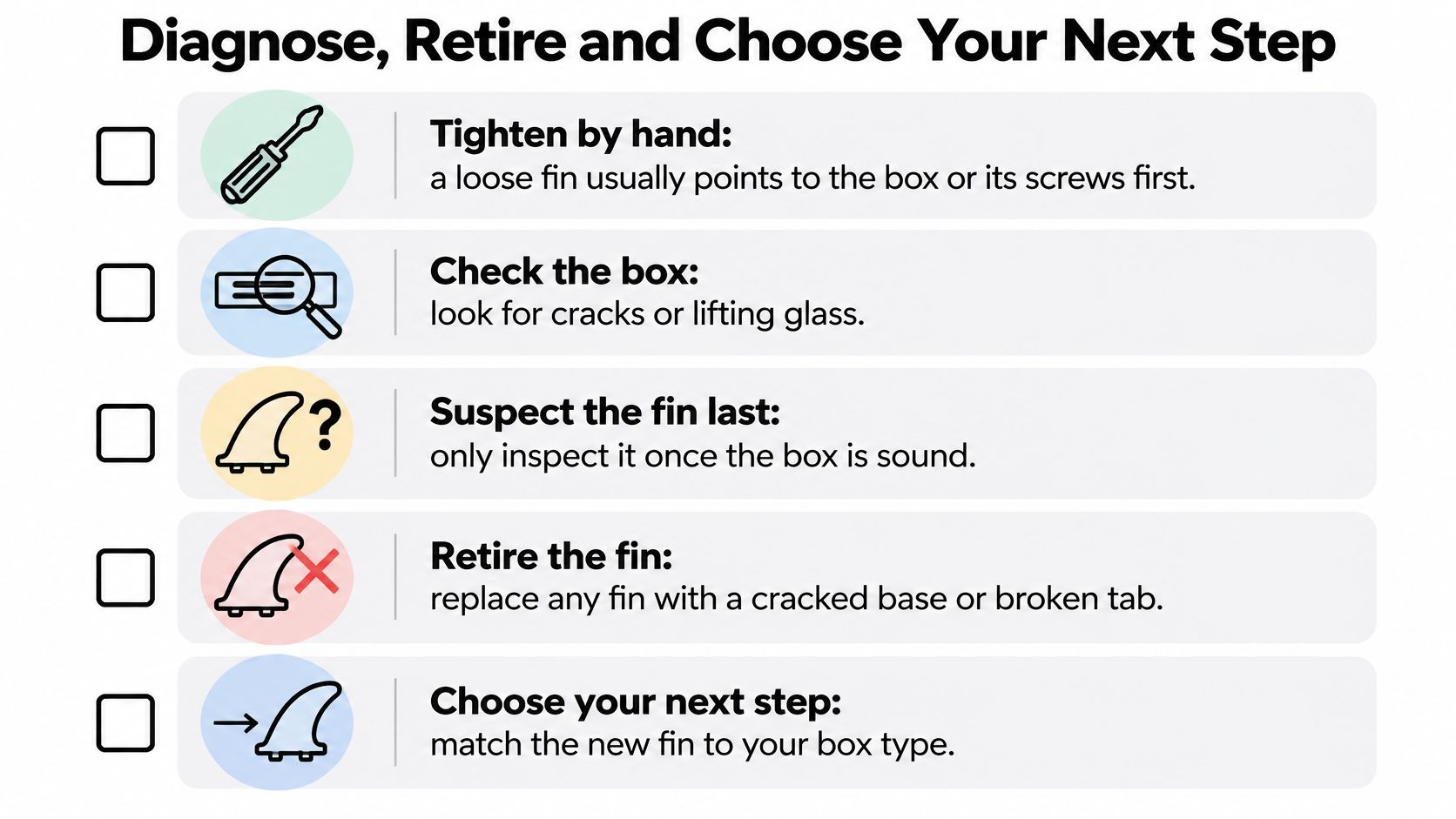
Watch a solid chip. A chipped edge that stays solid can stay in the quiver. Rinse it after each salt session and watch the chip for growth.
Retire a cracked base. A crack through the fin, or stress marks around the base, means retirement. A failing base can let go in a wave.
Repair the box, not the fin. A damaged box is a board repair, not a fin problem. Blitz Surf Shop offers surfboard repair, so have the box fixed before any new set goes in.
Second-hand gear: Check the box system first, then the fin. Treat unknown history as suspect until you have inspected tabs, screws and the base.
Work through this checklist before you spend anything. Most fin problems are cheaper to fix than the fin itself.
Blitz Surf Shop stocks fins from Endorfins, FCS and Futures Fins, and the team will match template, size and flex to your board and the breaks you ride most. The fastest set on the shelf is not always the right one for the waves you surf, so let your local conditions decide before the price tag does. If a box is cracked or a fin is chewing the plugs, our repair bench can sort the hardware before you buy another set. Head to Blitz Surf Shop with your board's box type written down.


