

Firewire surfboards aren't just another board on the rack; they represent a fundamental shift in how surfboards are designed and built. They’re known for being incredibly lightweight, surprisingly tough, and having a lively, responsive flex that feels totally different under your feet compared to a traditional PU board.
Shop Our Current Range Of Firewire Surfboards
Shop Our Current Range Of Slater Designs Surfboards
What Sets Firewire Surfboards Apart?
Ever wondered why you see so many Firewire boards in the lineup these days? It really comes down to their core philosophy, perfectly summed up by their mantra: "The Future Under Your Feet." Firewire didn't just slide into the surfboard industry quietly; they made waves by proving that you don't have to choose between a high-performance board and one that's better for the planet.
They stepped away from the old-school foam and resin combo, diving headfirst into new materials and construction methods. This forward-thinking approach has given us boards that are not only lighter and stronger but also reduce the environmental toll of building a new quiver.
Innovation Meets Proven Design
But Firewire’s magic isn't just about fancy new tech; it's about smart collaboration. They team up with legendary shapers like Rob Machado and Dan Mann, blending their decades of design wisdom with these advanced materials.
This fusion means that every board, whether it's a zippy shortboard or a cruisy mid-length, is built on a solid foundation of proven surfboard design principles. The end result is a board that feels instantly familiar in the way it performs, yet excitingly different in its potential.
Firewire's goal is simple: create the best possible surfing experience with the smallest environmental footprint. This drives them to constantly refine their materials and processes, ensuring every board pushes the limits of both performance and sustainability.
A Commitment to Sustainability
This commitment to the planet is more than just talk. Firewire has led the charge in adopting more sustainable practices, using things like paulownia wood deck skins, lightweight EPS foam cores, and bio-resins made from plants. This focus has really struck a chord with surfers, driving not just their own growth but a much-needed shift across the entire industry.
Their partnership with Slater Designs is set to expand the use of recycled materials across their whole range. It’s a clear sign of a wider market shift toward greener innovation, something you can read more about in analyses of the global surfing equipment market and Firewire's role in it.
Ultimately, choosing a Firewire is an investment in a board that will not only level up your surfing but also align with a more conscious way of enjoying the sport we all love.
Understanding Firewire Technology
So, what's really going on under your feet when you ride a Firewire? It's way more than just foam and fibreglass; it’s a finely tuned system engineered to feel alive in the water. To really get a handle on it, let's break down the thinking behind their famous constructions.
First, forget the traditional, heavier feel of polyurethane (PU) boards. Firewire kicks things off with an extremely light EPS (Expanded Polystyrene) foam core. Think of this as the board's skeleton. Because it's so light, it gives the board natural buoyancy and a quick, floaty feel—a massive plus in the often less-powerful waves we get around New Zealand.
But a light core is only half the story. The real magic is in how Firewire wraps and reinforces this core to control its flex and create a unique on-wave personality. This is where their different technologies come into play, each offering a distinct ride.
This graphic really nails the core concepts driving Firewire's whole approach.
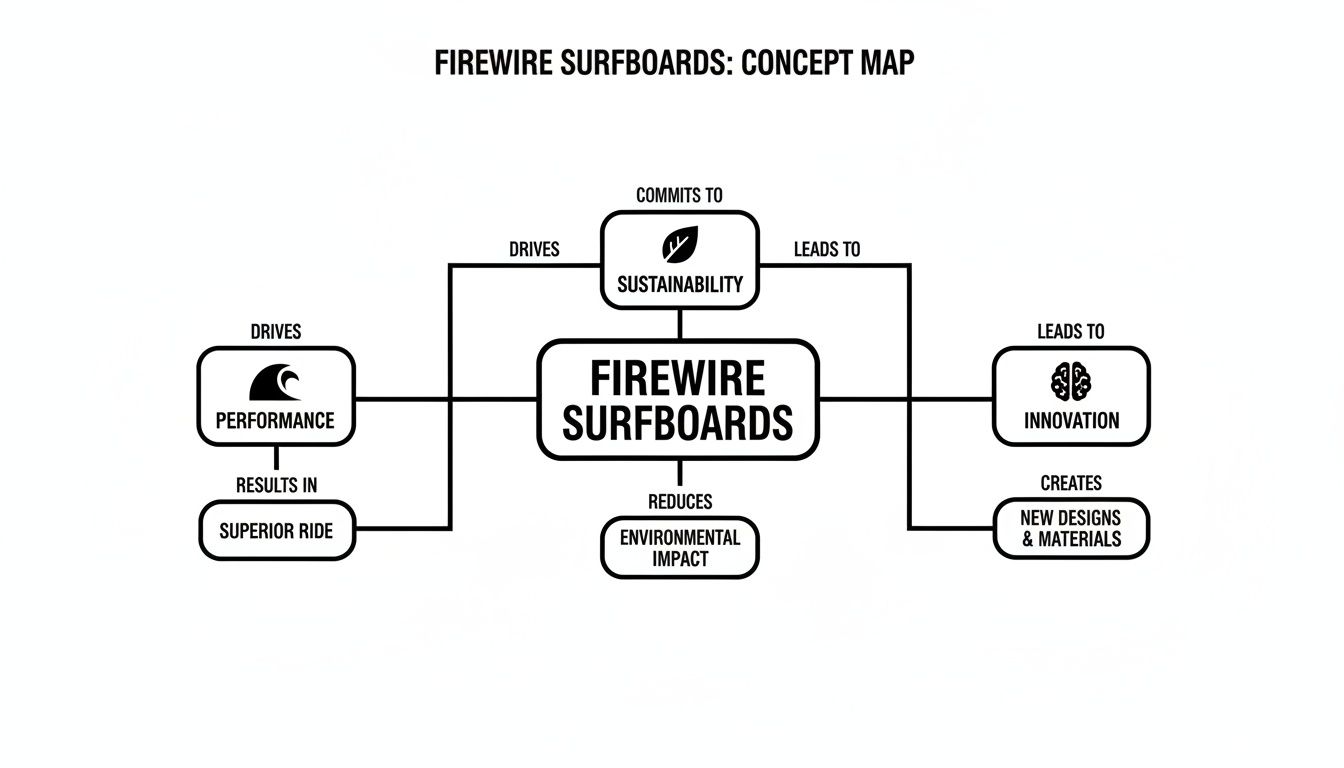
It shows how Firewire is constantly balancing high-performance design, genuine eco-consciousness, and forward-thinking innovation.
The Core Firewire Constructions
Firewire offers several distinct technologies, and each one uses a unique recipe of materials to produce a different feel underfoot. Getting your head around these is the key to picking the right board for your style.
-
Helium (HEL): This is their lightest and most advanced tech. It pairs that feather-light EPS foam core with a durable aerospace composite deck skin. The real kicker is the parabolic rails, made from a blend of balsa and paulownia wood. The end result is a board that feels incredibly lively, responsive, and quick off the mark—perfect for generating your own speed in smaller, weaker waves.
-
Ibolic Technology (IBT): Ibolic tech serves as the board’s advanced flex management system. It employs a central composite structure extending along the board's length, from nose to tail, to regulate its flexibility. This design delivers quick responsiveness during turns, providing a strong acceleration and a cohesive, engaging sensation through the water.
-
Volcanic Tech (VT): This construction method is employed by Firewire for a variety of their boards. Volcanic Tech integrates basalt fibers, known for their durability and strength, into the board's design. These fibers provide enhanced resilience and a responsive ride, effectively absorbing vibrations and offering a consistent feel across different wave conditions. This makes it a versatile option for surfers seeking reliability and performance on diverse surf breaks.
At its heart, every Firewire technology is about optimising the relationship between flex and response. By using different combinations of materials, they can fine-tune how a board stores and releases energy through a turn, giving the surfer more speed and control.
Introducing Volcanic Technology
The latest weapon in their arsenal is Volcanic Tech, which pushes their sustainability mission even further. This construction swaps out traditional fibreglass for woven basalt fibres, which are literally derived from volcanic rock. Basalt is not only extremely durable and strong but also much less toxic to produce than standard fibreglass.
This gives the board a robust build with a responsive flex pattern that sits somewhere between the classic feel of TimberTek and the high-energy spring of LFT.
If you're keen to learn more about this game-changing construction, you can dive deeper into Firewire's Volcanic Technology in our detailed guide.
Firewire Surfboard Technology At a Glance
Feeling a bit overwhelmed by the options? No worries. This table breaks down the key differences to help you match a construction to your surfing and the waves you ride most often.
| Technology | Key Materials | Performance Feel | Best For |
|---|---|---|---|
| Helium (HEL) | Ultra-light EPS core, aerospace composite deck, parabolic balsa/paulownia wood rails. | Incredibly light, lively, and responsive. Exceptionally fast acceleration. | Generating speed in small to medium waves; progressive surfing. |
| Ibolic tech | EPS core with a central composite I-Beam"springer" for controlled flex. | Drivey and powerful. Provides a rapid rebound and burst of speed out of turns. | High-performance surfing in good waves; surfers who like a connected feel. |
| TimberTek (TT) | EPS core with a sustainably sourced paulownia wood deck skin. | Smooth, classic, and predictable flex. A slightly dampened, all-round feel. | A versatile option for a wide range of conditions, from clean points to choppy beach breaks. |
| Volcanic (VOLC) | EPS core laminated with basalt fibres from volcanic rock instead of fibreglass. | Robust and responsive. Flex sits between the classic feel of TT and the high-energy pop of LFT. | Eco-conscious surfers wanting a durable, all-round performance board. |
Ultimately, choosing the right tech comes down to a simple question: what do you want to feel when you're on a wave? Each of these constructions offers a unique answer.
Finding Your Perfect Firewire Model
With so many innovative shapes and technologies in their lineup, picking the right Firewire surfboard can feel like a tough choice. The key is to match the board's design to your surfing style and the waves you ride most often. This guide breaks down some standout models from our Firewire collection here at Blitz Surf Shop, helping you connect the dots between a board's features and your next epic session on the New Zealand coast.
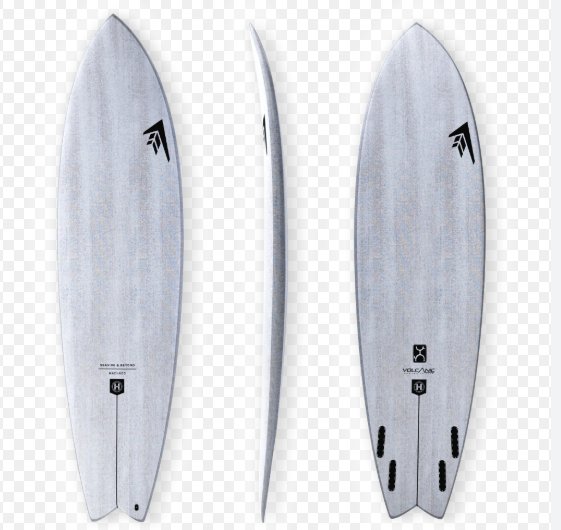
Think of this as your personal model guide. We'll look at who each board is really for, the conditions it loves, and what makes it feel special under your feet.
The Seaside for Everyday Fun
If you need one board that can handle almost anything from knee-high peelers to head-high runners, the Rob Machado Seaside is an absolute must-see. This model has quickly become a modern classic for a reason: its incredible versatility.
The Seaside blends a fish-inspired outline with modern performance tweaks. Its low entry rocker helps it paddle into waves with ease and generate speed effortlessly, even across the flattest sections. A subtle single-to-double concave and quad fin setup give it a surprising amount of hold and drive, allowing for fast, fluid turns.
-
Ideal Waves: Perfect for punchy beach breaks and long, peeling point breaks. It excels in waves from 1-4 feet but can handle more.
-
Skill Level: Intermediate to advanced surfers will unlock its full potential, but its stability also makes it a forgiving choice for progressing beginners.
-
Defining Feature: Its Helium construction makes it incredibly light and lively. This gives it a skatey, responsive feel that turns weak, mushy waves into a proper fun-filled playground.
The Dominator Pro for High Performance
When the waves become inviting and you're ready to elevate your surfing, the Dominator Pro is the board to consider. This high-performance model is crafted for energetic surfing in quality conditions.
Featuring a unique squash tail design, the Dominator Pro is engineered to enhance maneuverability and control. Its bottom concave design consists of a combination of single to double concaves, allowing for impressive speed and smooth transitions between turns. The board offers a responsive feel, instantly reacting to the slightest rider inputs, making it ideal for executing powerful carves and aerial maneuvers.
The Dominator Pro excels in converting speed into precision. It encourages a fast, fluid surfing style, rewarding those who prefer an aggressive approach and dynamic performance on the waves.
This board is not meant for leisurely rides; it’s designed for surfers aiming to tackle challenging sections and execute sharp, precise lines. For those interested in exploring the latest advancements in surfboard design, the Dominator Pro represents a significant step forward in performance surfing.
The Firewire Machado Groove
Introducing the Firewire Machado Groove, a perfect blend of style and functionality for surfers seeking versatility and performance. This model is crafted for those who appreciate a balanced design that caters to a variety of wave conditions.
The Groove boasts a refined outline with a moderate volume distribution, ensuring effortless paddling and early wave entry. Its design encourages smooth transitions and fluid movements, making it ideal for carving graceful turns on the face of the wave. The board's shape allows for exceptional maneuverability, providing an engaging ride in diverse surf environments.
-
Ideal Waves: Suited for a range of conditions, from mellow beach breaks to more challenging point breaks. The Groove excels in small to medium-sized waves, offering endless fun and adaptability.
-
Skill Level: Suitable for all levels of surfers. Beginners will appreciate its stability and ease of use, while advanced surfers will enjoy its dynamic performance and responsive nature on smaller days.
-
Key Features: The Groove's standout feature is its ability to offer a seamless blend of glide and agility. Its design ensures both stability and liveliness, making it a versatile choice in the Firewire lineup.
The Firewire Machado Groove is a testament to thoughtful design, providing an engaging experience for surfers of all skill levels.
How to Choose the Right Size Firewire Board
Figuring out the right size for a Firewire surfboard needs a bit of a mental shift compared to traditional boards. Your height and weight are still part of the equation, of course, but the number you really need to zone in on is volume, measured in litres. This is your best guide to how a board will float and paddle.
Firewire's unique construction methods and forward-thinking shapes mean they pack volume in different ways. You could have two boards with the exact same length, but they might have wildly different volumes and feel like chalk and cheese in the water. Focusing on litres cuts through the confusion and makes sure you get the float and performance you're after, no matter the dimensions.
Why Volume is Your Best Friend
Think of a board's volume as its engine. More volume gives you more float, which means you'll paddle easier, get into waves earlier, and keep your speed up through the mushy sections. On the flip side, less volume lets the board sit deeper in the water, making it more sensitive and responsive for high-performance turns, but it'll make you work harder for it.
Your perfect volume isn't one-size-fits-all; it changes based on a few key things:
-
Skill Level: If you're just starting out, more volume is your friend – it provides the stability you need. More experienced surfers can drop the volume for better manoeuvrability.
-
Fitness: Be honest with yourself here. If your paddle fitness isn't at its peak, a bit of extra volume will mean more waves and longer surfs. Simple as that.
-
Wave Type: For the kind of waves we often get around New Zealand, which can be a bit gutless, more volume is great for generating your own speed. But if you're surfing powerful, hollow waves, less volume gives you the control you need to handle that speed.
The goal is to land on your personal volume "sweet spot." You want enough float to make surfing fun and catching waves easy, but not so much that you can't turn the thing. Nailing that balance is the secret to getting better.
The Firewire Technology Factor
Now, this is where it gets really interesting. Firewire's lighter technologies, especially the incredibly light Helium construction, completely change the sizing game. These boards are so light for their given volume that you can often ride a board with a few more litres than your standard PU board, and it won't feel chunky or slow at all.
This extra bit of float makes paddling an absolute breeze and gets you into waves way earlier, but here's the kicker: it does it without killing the board's ability to rip a quick, lively turn. This is a massive advantage you'll find in many Firewire surfboards.
For a deeper dive into matching your weight and ability to the perfect board volume, our detailed guide on what size surfboard you need is a fantastic place to start. Once you get your head around how your surfing, our local waves, and Firewire's tech all work together, you'll be able to pick a board that feels like it was made just for you.
Maintaining Your High-Performance Surfboard
Owning a Firewire surfboard is a real investment in your surfing, and looking after it properly means that investment will pay you back for years. These high-performance epoxy boards are built tough, no doubt, but like any quality bit of kit, they still need a little TLC to keep them feeling lively and responsive under your feet.
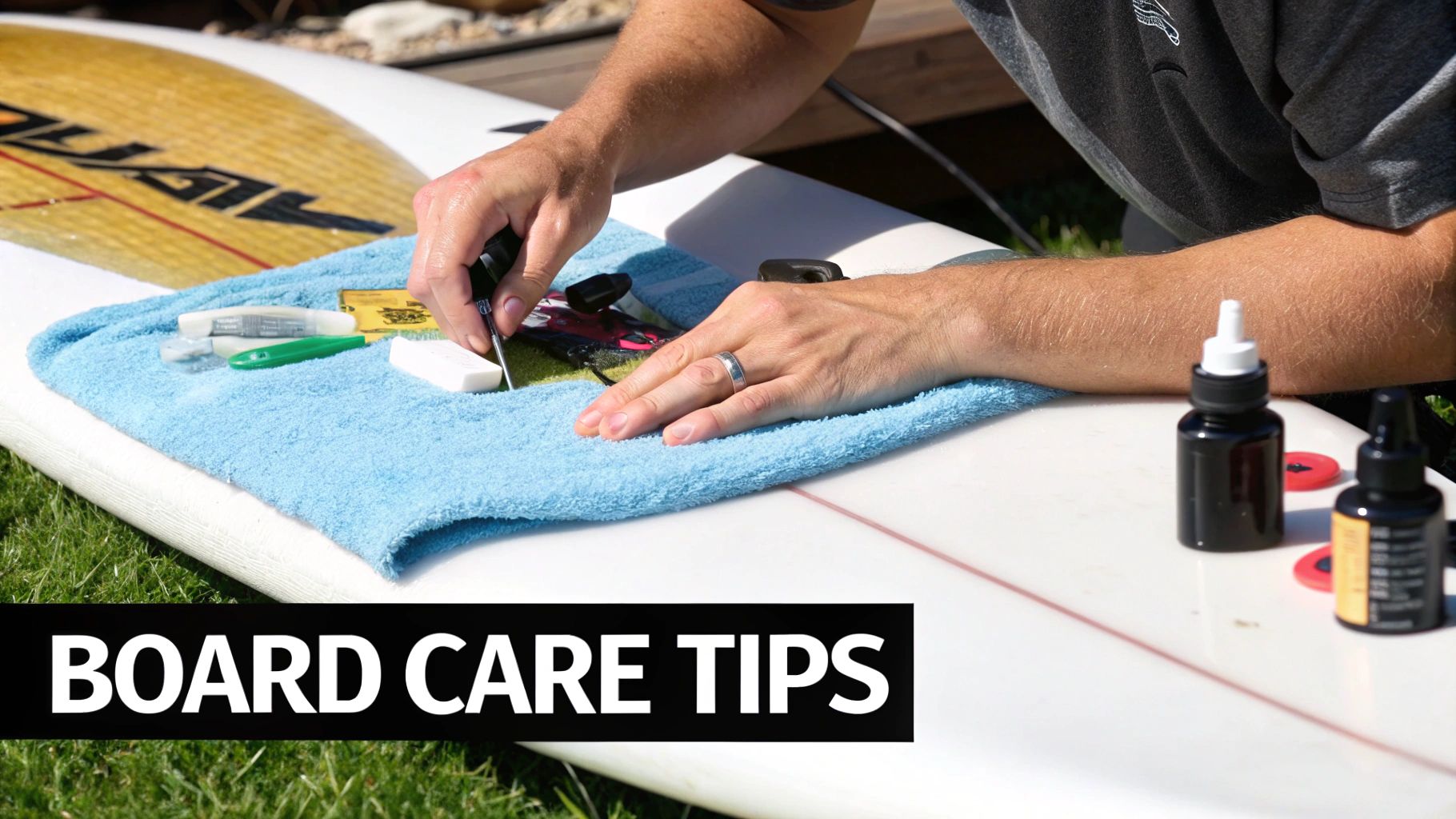
The biggest enemy of any epoxy board is intense heat and direct sun. It’s no joke. The EPS foam core can actually expand if it gets too hot, which can lead to delamination—that’s when the outer skin starts to peel away from the foam. This is the number one thing you want to avoid.
Simple habits can make a massive difference here. Always stash your board somewhere cool and shady. A decent board bag is your best friend; it reflects the sun and adds a bit of padding for when you’re chucking it in the car. And whatever you do, never leave it cooking in a hot car for hours on end.
Handling Dings And Repairs Correctly
Look, even the toughest boards get dinged eventually. It’s just part of surfing. The golden rule with Firewire boards is this: only use epoxy resin for repairs. Traditional polyester resin, the stuff used on old-school PU boards, will literally melt the EPS foam core and cause damage you just can't fix.
A tiny, forgotten ding can turn into a huge headache. Waterlogging doesn’t just add weight and kill that magic, responsive feel; it can rot the core structure from the inside out. Get onto dings quickly and do it right to keep your board in fighting shape.
For those minor cracks and scrapes, a sun-cure epoxy repair kit is a brilliant, easy fix. We keep a good range of simple-to-use epoxy repair essentials in stock at Blitz to get you back in the water with minimal fuss.
Stick to these simple practices to keep your Firewire feeling fresh session after session:
-
Rinse After Every Surf: Give your board a quick hose down with fresh water. It gets the corrosive salt off and keeps everything in good nick.
-
Store It Smart: Don’t just lean it against a wall where it can fall over. Pop it on a surfboard rack, either horizontally or vertically, to stop it from warping or getting bashed.
-
Fresh Wax, Better Grip: Stripping and re-waxing your board regularly not only keeps it looking clean but ensures you’ve got the best possible grip when you need it. Our guide on how to wax your surfboard for peak performance breaks it all down.
Follow these simple tips, and your Firewire will keep delivering that high-performance feel you bought it for, surf after surf.
Why Choose Blitz Surf Shop for Your Firewire?
You can get a Firewire from plenty of places, but buying one from Blitz Surf Shop plugs you right into the heart of New Zealand's surf scene. We're not just another online store; we're a local, family-owned shop run by passionate surfers who are out there riding these boards on the same waves you are.
We've been a cornerstone of NZ surfing since 1983, and all that time on the water means we give genuine advice that comes from real-world experience. If you can make it to our Gisborne store, you can see and feel the different Firewire technologies for yourself—something a photo on a screen just can't do justice. Our crew can chat you through the subtle differences between each model, making sure you walk out with the perfect board for your skill level and your local break.
Expert Advice and NZ-Wide Shipping
When you shop with us, you're backing a local business that lives and breathes surfing. That support allows us to stock a proper range of boards for our ever-growing surf community. And it is growing—the NZ market is projected to hit USD 262.7 million by 2028, fuelled by our incredible 15,000 kilometres of coastline. We're here to get every surfer kitted out for it. You can read more about the expanding NZ surf market here.
Don't worry if you're not in Gisborne, you can still tap into our knowledge and stock.
We offer reliable, NZ-wide shipping, carefully packing up your new Firewire and sending it straight to your door, whether you're in the Far North or the Deep South. It’s the local shop experience, delivered.
To get the full story on who we are and what makes us tick, have a read of our guide on why Blitz Surf Shop is New Zealand’s go-to online surf store.
Got a Few Questions About Firewire?
You're not alone. Picking out a new board is a big deal, and it's smart to do your homework. We get a lot of questions from Kiwi surfers about Firewire, so we've put together answers to the most common ones we hear in the shop.
Are Firewire Boards Actually More Durable Than My Old PU Board?
Yeah, in most situations, they really are. Firewire's tech, like Helium and Ibolic, uses advanced epoxy composites that are way tougher against the usual dings and pressure dents that plague a standard polyester (PU) board. They have a bit more give and flex, which also helps them resist snapping when you’re in the thick of it.
But they do have one kryptonite: crazy heat. If you leave your board baking in a hot car or in direct sun for ages, the internal EPS foam core can expand and potentially cause the layers to separate (delamination). Just be smart about where you store it, and you'll be sweet.
Can I Use My Normal Fins in a Firewire?
Absolutely. Firewire keeps things simple by using Futures Fins boxes. This means any fins you’ve already got for either of those systems will slot in perfectly. Firewire make a range of fins themselves to suit each model of their boards.
It makes it super easy to swap your favourite thruster fin set from your old board or to experiment with the massive range of performance fin options out there to really dial in your ride. We always list which fin system a board has on its product page, so you'll know exactly what you're getting.
The real value in a Firewire often reveals itself over the life of the board. The combination of enhanced durability, superior performance feel, and a more sustainable construction process creates a long-term investment in your surfing progression and enjoyment.
Is a Firewire Surfboard Worth the Higher Price?
It’s true, a Firewire often has a bigger price tag upfront, but a lot of surfers find it pays for itself in the long run. Because they're so much tougher, you'll spend less time and money on ding repairs, and the board will simply last longer.
But it’s not just about longevity. The high-tech materials give the boards a super lively, responsive feel under your feet that can help you squeeze more performance out of every wave. When you add up the extended lifespan, the incredible on-wave feel, and Firewire's effort to build boards more sustainably, that initial spend starts to look like a pretty solid investment.
Ready to feel the future under your feet? The team at Blitz Surf Shop is here to help you find the perfect Firewire surfboard for your style and your local break. Check out our full collection online and get expert advice from guys who actually ride what they sell.
Shop the Firewire Surfboards Collection Now at Blitz Surf Shop


