

Your skateboard deck is the wooden platform you stand on. It's the absolute foundation of your entire setup. Think of it like the chassis of a car or the frame of a bike; everything else—the trucks, wheels, and bearings—bolts onto this one crucial piece.
The Foundation of Your Ride
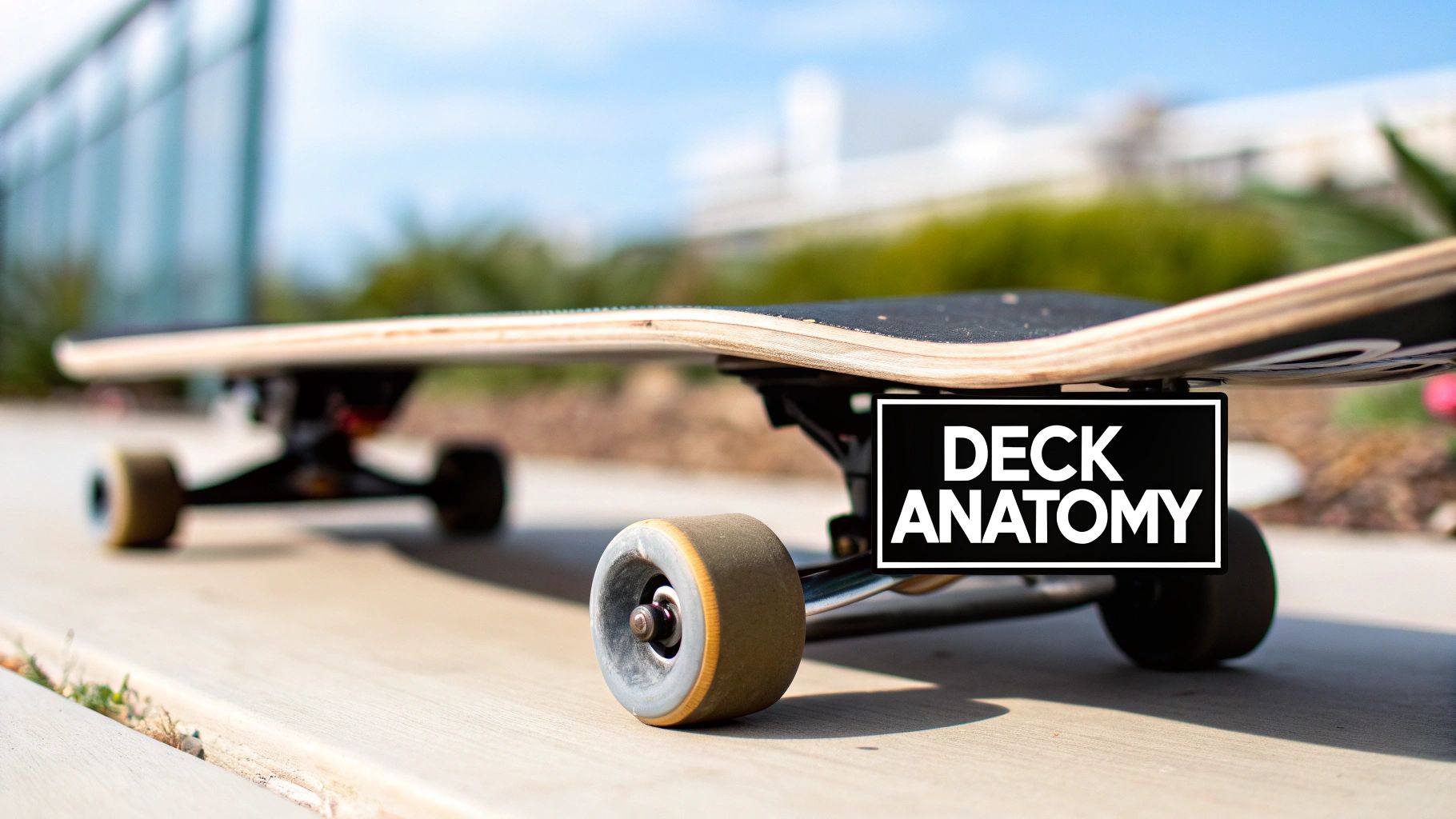
A deck is way more than just a plank of wood. It's an engineered tool, precisely shaped to perform. It’s where your connection to the board begins, turning your body's movements into the ollies, carves, and grinds that make skating so good.
When you find the right deck, it feels like a natural extension of your feet. That feeling gives you the control and confidence to really push your skating.
Most modern decks you'll see are made from 7-ply North American maple. This wood is the gold standard for a reason—it's got the perfect mix of strength, flex, and durability. These thin layers of wood, or veneers, are glued together and pressed in a mould, which is what gives a deck its iconic curves and that all-important pop.
Key Parts of a Skateboard Deck
Every deck has a few core features that work together to give you a responsive ride. Getting your head around these parts is the first step to figuring out which board is right for you.
-
Nose and Tail: The nose is the front of the board, and the tail is the back. The tail is usually a little shorter and steeper, giving you the leverage you need to pop the board off the ground for tricks. The nose is often a bit longer and mellower, which helps with catching the board during flip tricks.
-
Concave: This is the subtle side-to-side curve you feel under your feet. Concave is like arch support, locking your feet in for way better grip, stability, and board control when you're turning or flipping your board.
-
Mounting Holes: Simple but essential. These are the eight holes drilled into the centre of the deck where your trucks get bolted on.
A well-chosen deck is the single most important part of your setup. It defines how the board flips, how it feels under your feet, and ultimately, how you progress as a skater.
Beyond performance, the deck is also a massive part of self-expression in skate culture. It’s a blank canvas for insane graphics and art. You can check out our collection of blank and graphic decks to get an idea of the huge variety out there.
How Skateboard Decks Are Made
Ever wondered what gives a skateboard deck its signature strength and that satisfying pop? It's not just a plank of wood; it's a carefully engineered piece of equipment, born from a process of lamination and serious pressure. The journey from a maple log to the board under your feet is a real blend of craftsmanship and precision.
It all kicks off with high-quality North American Maple, which is the gold standard in the industry for its incredible durability and resilience. This wood is peeled into super-thin sheets, or veneers, which become the building blocks of every great deck.
The 7-Ply Standard
Most modern skateboard decks are constructed using a 7-ply method. Picture it like assembling a layered cake, where each layer contributes to the final product's strength and characteristics. Seven maple veneers are coated in a specific adhesive and stacked on top of one another.
A key aspect of this method is the alternating grain direction of each ply. This cross-graining technique endows the deck with significant strength, preventing it from easily breaking along the grain. Without this vital step, the decks would be more brittle and lack the responsive flex necessary for performing tricks.
Once assembled, the stack is placed into a hydraulic press. This machine applies substantial force to bond the veneers and shape them into the familiar form, creating the nose, tail, and concave that determine the board's feel and performance.
The secret to a deck's pop lies in the combination of cross-grained maple veneers and high-pressure moulding. This construction allows the deck to store and release energy, effectively turning it into a spring that propels you into the air for ollies and flip tricks.
In terms of bonding, manufacturers use different adhesives to suit various preferences and environmental considerations. Some decks are bonded with water-based glue, which is more environmentally friendly and reduces harmful emissions. Others might use resin-based adhesives, which can provide a stronger bond and enhance durability. The choice of adhesive can impact the performance and sustainability of the skateboard deck.
Beyond Traditional Maple
While 7-ply maple remains predominant, advancements in technology and rider preferences have introduced additional materials, each catering to specific riding styles or performance requirements.
-
Bamboo: Commonly found in longboards and cruisers, bamboo provides a more flexible and springy experience. Its distinctive flex pattern is ideal for deep carving and ensuring a smooth ride.
-
Carbon Fibre: Used at the high-performance end, carbon fibre layers are sometimes integrated with maple decks. This results in a lighter and stiffer board, offering quicker response and enhanced pop, albeit at a higher cost.
Additionally, Powell Peralta's Flight Deck Technology incorporates advanced materials and construction techniques to produce decks that are remarkably thin, light, and durable. This technology enhances the board's performance, making it suitable for riders seeking strength and longevity in their decks.
Understanding these materials and deck construction methods helps explain the variations in feel, performance, and pricing among the boards available. The quality of the wood, type of glue, and precision of the press are crucial factors in the final product. For a more in-depth look at the manufacturing process, explore our comprehensive guide on skateboard construction.
Understanding Skateboard Deck Sizes and Shapes
Picking the right size and shape for your skateboard deck can feel like a massive decision, but it’s a lot simpler than it looks. It really just boils down to four key measurements: width, length, wheelbase, and concave. Each one plays a huge part in how the board feels under your feet and responds to your movements.
Think of these elements as the DNA of your deck. A tiny tweak in one can completely change the personality of your ride, turning it from a stable park-cruiser into a nimble street-flipper. Getting this part right is your first step to building confidence and nailing new tricks.
Breaking Down the Core Dimensions
The first and most critical measurement to get your head around is the width. Measured in inches, deck widths usually run from 7.5" up to 9.0" and beyond. A wider deck gives you more surface area, which means more stability for your feet when you’re landing tricks or carving through transitions in a skate park. For instance, a skater who loves riding bowls might go for a wider 8.5" deck for that extra platform.
On the flip side, a narrower deck is lighter and much easier to flip. That’s why you’ll often see street skaters doing technical flip tricks on a deck around 8.0"—it rotates faster and takes less effort to pop. Your shoe size is a big factor here, too; someone with size 11 shoes is going to feel pretty cramped on a 7.75" deck.
This infographic breaks down the common materials that give a deck its unique characteristics.
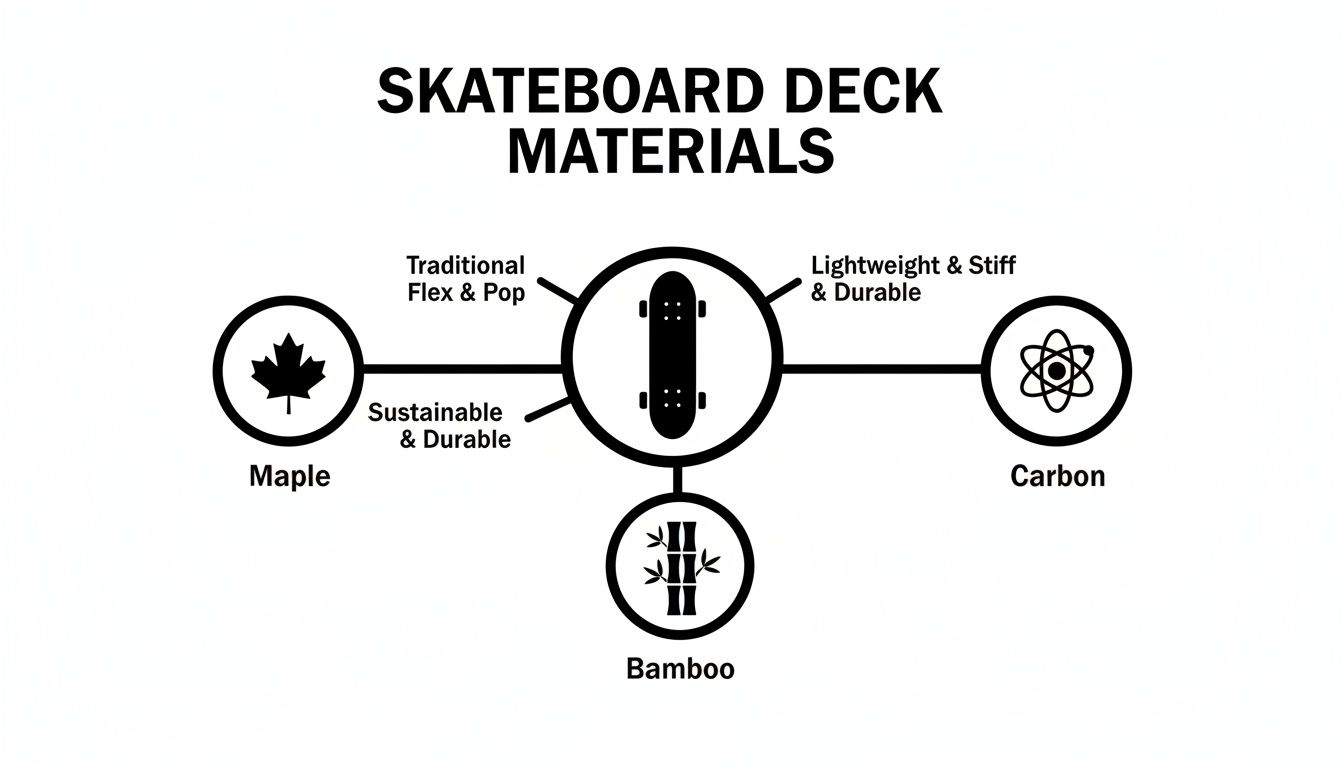
As you can see, traditional maple is all about strength and pop, while alternatives like bamboo and carbon fibre offer different flex and weight for more specialised riding styles.
The Role of Concave and Wheelbase
Next up is concave, which is the subtle side-to-side curve of the deck. Think of it like the arch support in a good pair of shoes—it’s designed to hug your feet, giving you better leverage and control for steering and tricks. A deeper concave locks your feet in more securely, which is awesome for flip tricks and slides. A mellower, flatter concave provides a more stable, chilled-out feel that some skaters prefer for cruising or riding ramps.
Concave isn't just about comfort; it's a performance feature. The right curve gives you the feedback and grip you need to feel connected to your board, translating tiny foot movements into precise actions.
Finally, we have the wheelbase. This is simply the distance between the two sets of inner mounting holes where your trucks attach. A shorter wheelbase gives you a tighter turning circle, making the board feel quicker and more responsive. A longer wheelbase boosts stability, especially at high speeds, which is why you’ll find it on decks built for big vert ramps or bombing hills.
To give you a solid starting point, here’s a quick guide to help you choose the right deck width based on your shoe size and primary skating style.
Skateboard Deck Width Guide
This table is a great reference, but remember it's all about what feels right for you. Use it to narrow down your options.
| Deck Width (Inches) | NZ Shoe Size (Men's) | Primary Riding Style |
|---|---|---|
| 7.5" – 8.0" | 6 – 9 | Street, Technical Tricks |
| 8.0" – 8.25" | 9 – 11 | All-Around (Street & Park) |
| 8.25" – 8.5" | 11+ | Park, Bowls, Vert |
| 8.5"+ | 11+ | Vert, Cruising, Old-School Shapes |
At the end of the day, these are just guidelines. The perfect deck is a personal choice, and it all comes down to what feels best under your feet. Don't be afraid to experiment as you progress!
For younger riders just getting started, you can find more specific advice in our guide to choosing a skateboard for kids.
How to Match a Deck to Your Riding Style
Picking the right skateboard deck isn't about finding some single "best" board on the market—it’s about finding the one that lines up with what you want to do. All those technical details like width and concave start to make real sense when you connect them to how you actually want to skate. This is where you find a deck that feels less like a piece of gear and more like an extension of your own two feet.
The shape you'll see everywhere is the popsicle deck. It’s symmetrical, versatile, and the go-to for pretty much any street or park skater. That balanced design is perfect for flip tricks and riding switch (using your non-dominant stance), giving you a predictable feel no matter which way you’re facing.
Street and Park Decks: The All-Rounders
For skaters who want to do a bit of everything, a standard popsicle deck is the ultimate tool. Whether you're grinding ledges downtown or flowing through a concrete skatepark, this shape delivers the goods. And here in New Zealand, street-style skating is absolutely massive.
Globally, street decks made up about 46% of the skateboard market in 2023. That trend is even stronger here in NZ, thanks to the buzzing urban skate scenes in cities like Wellington and Dunedin, which have over 50 recognised spots between them. For us at Blitz, this means keeping a solid stock of durable 7-ply maple decks from brands like Powell Peralta and Globe is a must. They’re reliable options for beginners and young skaters (groms), while more experienced riders can dial in their setup with specific widths from 8.0 to 8.5 inches.
Cruisers and Surfskates: For Carving and Commuting
If nailing technical tricks isn't your main goal, then a cruiser or a surfskate might be just your speed. These decks are built for a totally different feel—one that’s all about flow, carving, and just enjoying the ride.
-
Cruiser Decks: These are usually a bit wider and often have a directional shape, with a clear nose and tail. They’re built for comfort and stability, making them awesome for the daily commute or just rolling around town with mates. They offer a mellow, chilled-out ride.
-
Surfskates: This is a more specialised setup, engineered to mimic the feeling of surfing, but on concrete. They use a unique front truck system that allows for incredibly tight, fluid carves. Our Carver surfskates are super popular with surfers looking to cross-train on land, helping them perfect their turns when the waves are flat.
Finding the right deck style is about matching the board’s personality to your own. A street skater needs a responsive, symmetrical deck for technical precision, while a surfer will feel right at home on a deck designed for deep, flowing carves.
Decks for Beginners and Groms
For anyone just starting out, especially younger riders or 'groms', the main thing is to build confidence. A slightly wider, more stable deck is usually the best way to go. It gives you a more forgiving platform for learning the basics like balancing, pushing, and turning, without feeling too twitchy under your feet.
A deck between 8.0" and 8.25" is a fantastic starting point for most adult beginners. It’s stable enough to feel secure, but still nimble enough to learn ollies and basic tricks. Durability is also a big one, so a solid 7-ply maple construction will hold up against the inevitable bumps and scrapes that come with learning.
If you want to dive deeper, check out our comprehensive guide to learn more about freeride surf and skate styles and see which path gets you amped.
Essential Deck Care and Assembly Tips
There's nothing quite like the feeling of a fresh skateboard deck, but making that crisp, responsive feel last is all about how you treat it. A bit of proper care goes a long way in extending the life of your board, ensuring you get the most pop and performance out of every single session. It’s not rocket science, but a few simple habits can make a massive difference.
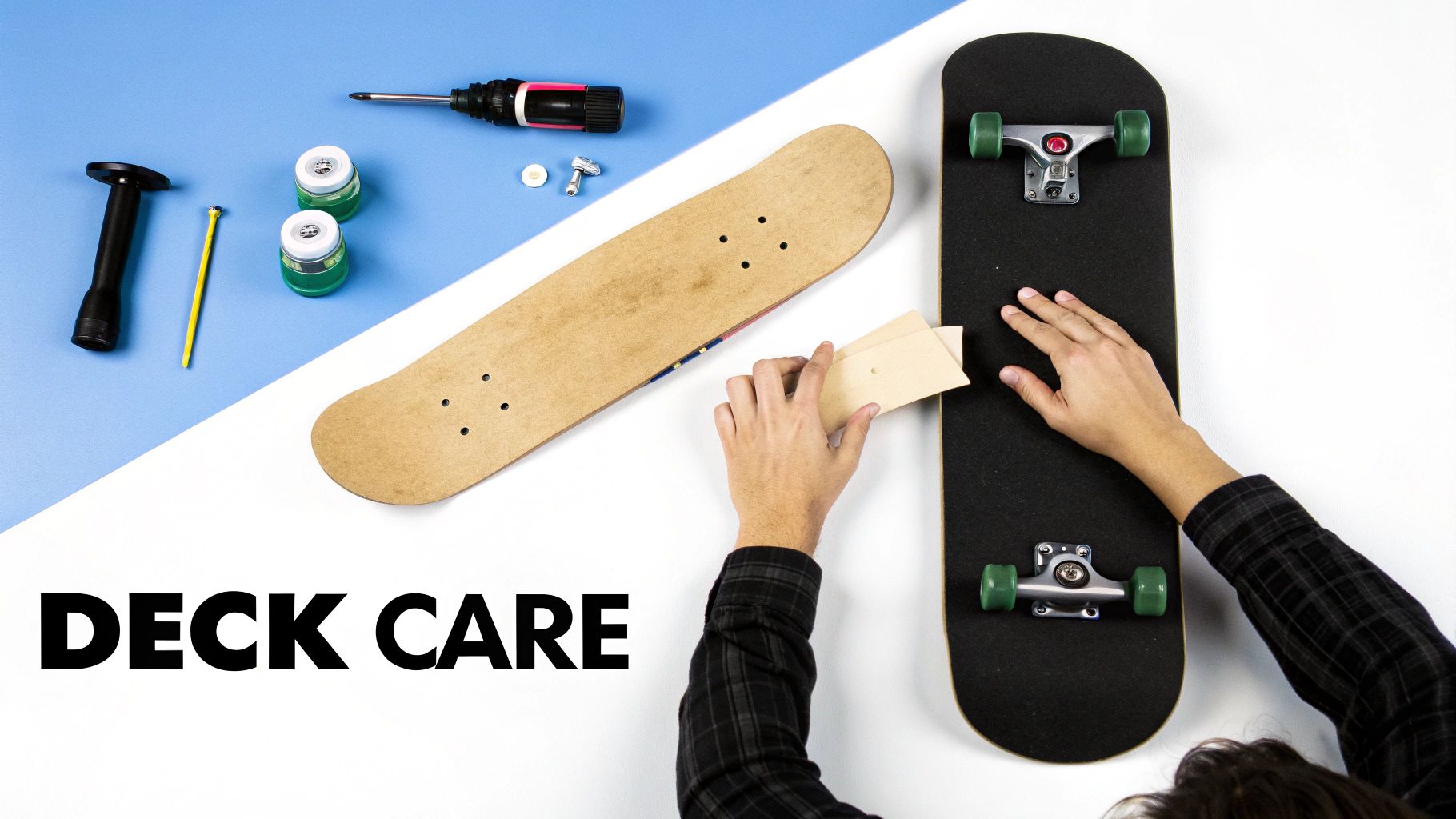
Water is the number one enemy of any maple deck. If your board gets soaked, moisture creeps in between the wood plies, breaking down the glue and causing it to delaminate. The result? A soggy, dead-feeling board with zero pop. Always store your board indoors in a dry spot—never leave it out in the rain or sitting on damp grass.
Preventing Common Deck Damage
Even with the best care, skating is tough on a deck. Knowing what to look for can help you spot problems early and hopefully avoid that sudden, heartbreaking snap.
-
Razor Tail: This is what happens when you drag the tail on the ground, wearing it down to a sharp, thin edge. It absolutely murders your pop and, true to its name, can get pretty sharp. Some wear is inevitable, but try to avoid dragging it too much.
-
Pressure Cracks: You'll see these small cracks appear around your truck bolts. Don't panic. They're usually just in the top layer of wood and are a normal sign of a well-used board. Just keep an eye on them to make sure they don't get too deep.
-
Waterlogging: If your board feels heavy, sounds dull when you tap it, and has lost all its pop, it’s probably waterlogged. Unfortunately, there’s no real fix for this, which is exactly why keeping it dry is so critical.
Your deck’s lifespan is directly tied to how you treat it. For a skater hitting the park a few times a week, a deck typically lasts 6-12 months before it loses its pop and needs replacing.
This regular need for fresh wood is a big part of what drives the skate industry. The APAC skateboard market, which includes New Zealand's thriving scene, is set to grow steadily, thanks to urban youth culture and great facilities like NZ's 60+ skateparks. This growth highlights how important local shops are for getting hands-on advice and finding the right fit, a trend seen worldwide. You can read more about skateboard market trends on marketresearchfuture.com.
Basic Assembly Confidence
Putting a board together for the first time can look a bit intimidating, but it's actually a pretty straightforward job.
Applying grip tape is the first step. Lay it down starting from the centre and smooth it outwards to push out any air bubbles. Then, use a file or even the side of a screwdriver to score the edge all the way around before trimming the excess with a sharp blade for a clean, pro finish.
Next, grab a skate tool and poke the bolt holes through the new grip tape. Push your bolts through from the top, pop your trucks on, and tighten the nuts until they're snug. You want them tight enough that the trucks don't wobble, but not so tight that you risk creating pressure cracks.
Knowing how your setup works gives you the confidence to look after it. It’s not just about nuts and bolts; it’s about understanding how each part works together to give you the ride you want. To get a better handle on another crucial component, you can learn more about Bones Bearings in our performance guide.
Finding Your Next Skateboard Deck in NZ
Trying to figure out the world of skateboard decks can feel like a massive mission, but nailing that choice is the secret to unlocking your potential on four wheels. Here in New Zealand, you've got some incredible options, whether you're the type who likes the hands-on feel of a local shop or the ease of buying online. The best way forward is whichever one lands you on a board that feels like it was made for you.
Nothing beats getting your hands on a deck before you commit. Popping into our Gisborne store lets you actually stand on different boards, feel the curve of the concave, and get a proper sense of the width. Our crew can give you one-on-one advice, helping you match a deck to your size, your style, and the local spots you're keen to hit up.
Your Local Connection to Skateboarding
As a family-owned shop, we’ve been part of the New Zealand skate scene since 1983. We've seen trends come and go, but one thing never changes: the importance of a solid, local skate shop. We're not just here to sell gear; we're here to back skaters, from the first-time grom finding their balance to the seasoned veteran dialling in a new setup.
Being based on the East Coast also has a huge influence on what we stock. With deep roots in surf culture, we carry an awesome range of surfskates that are perfect for carving up concrete when the waves are flat. They’re the ultimate cross-training tool for surfers and just an incredibly fun ride for anyone chasing that smooth, flowing feel.
Choosing a local shop means you're investing in more than just a piece of wood. You're supporting a community hub where knowledge gets shared, and the local scene is kept alive and kicking.
Getting the Right Deck Delivered NZ-Wide
Even if you can't make it to Gisborne, we've got you sorted. We know skaters are spread all across Aotearoa, from the city streets of Auckland to the bowls down in Queenstown. That’s why we offer NZ-wide delivery, making it easy to get the perfect deck of a skateboard sent right to your door. Plus, we offer free shipping on all eligible orders over $150.
The growth of skateboarding in NZ is impossible to ignore. Skateboarding New Zealand's strategic plan is aiming to boost participation to 25,000 skaters by 2030, a huge jump that relies on everyone having access to quality, affordable gear. While local shops are as important as ever, around 30% of decks in NZ are now bought online, a shift we've embraced to serve skaters everywhere. To learn more about this initiative, you can explore Skateboarding New Zealand's 2024-2034 Strategic Plan.
No matter where you are or what your style is, finding the right deck is your first step to getting better. It’s the foundation of your entire setup and the most personal piece of your gear. Once you find a board you love, you can take it anywhere. Check out our guide on the top skate parks in NZ and get hyped for your next session.
Ready to find the perfect deck for your ride? At Blitz Surf Shop, we've got the expertise and the range to get you rolling. Explore our collection of decks, completes, and hardware online or visit us in-store. https://blitzsurf.co.nz


