

Getting your child their first skateboard for kids is a huge moment, but it's important to know the difference between a proper board and something that's really just a toy. A genuine skateboard from a dedicated place like Blitz Surf Shop is built for safety and performance. On the other hand, a cheap board from a big-box store can be unsafe, frustrating, and might just snuff out that new spark of interest before it even gets going.
This guide is here to help you choose with confidence.
Your First Skateboard: A Guide for Kiwi Parents
Watching your kid step onto a skateboard for the first time is pretty special. It’s the start of a new adventure, one packed with building new skills, gaining confidence, and spending countless hours just having fun. But for parents, figuring out which board to buy from the sea of options can feel a bit overwhelming.
We've put this guide together to clear things up for Kiwi parents. We'll cut through the jargon and show you exactly what to look for, making sure your child's first time on a board is a good one. Our goal is simple: to give you the knowledge to pick a board that's safe, tough, and just right for a young rider.
Why the Right Board Matters
It's a common mistake to just grab a cheap skateboard from a department store. The problem is, they're often made with flimsy plastic parts that don't roll or turn properly. They’re more toy than actual sporting equipment. A proper skateboard from a real skate shop, however, is built with quality components designed to work together for a smooth, safe ride.
A well-chosen skateboard does more than just roll; it becomes a tool for building balance, resilience, and creativity. It gives them a stable platform that responds predictably, which is exactly what they need to learn and progress safely.
As you get ready to introduce your child to skating, it's worth remembering what an amazing form of experiential learning it is. They're building skills through doing, which is a powerful way to develop physical coordination and even problem-solving skills. If you're interested in the culture behind it all, you can dive into the rich history of skateboarding by checking out the evolution and influence of Santa Cruz Skateboards in our other guides.
Here’s what we’ll walk you through in this guide:
-
Sizing: Why getting a board that fits your child's height and shoe size is non-negotiable.
-
Complete Skateboards: The absolute best starting point for any new skater.
-
Essential Components: A quick rundown of what makes a board ride smoothly and safely.
-
Safety Gear: The must-have equipment for every single skate session.
Shop complete skateboards here
How to Choose the Right Skateboard Size for Your Child
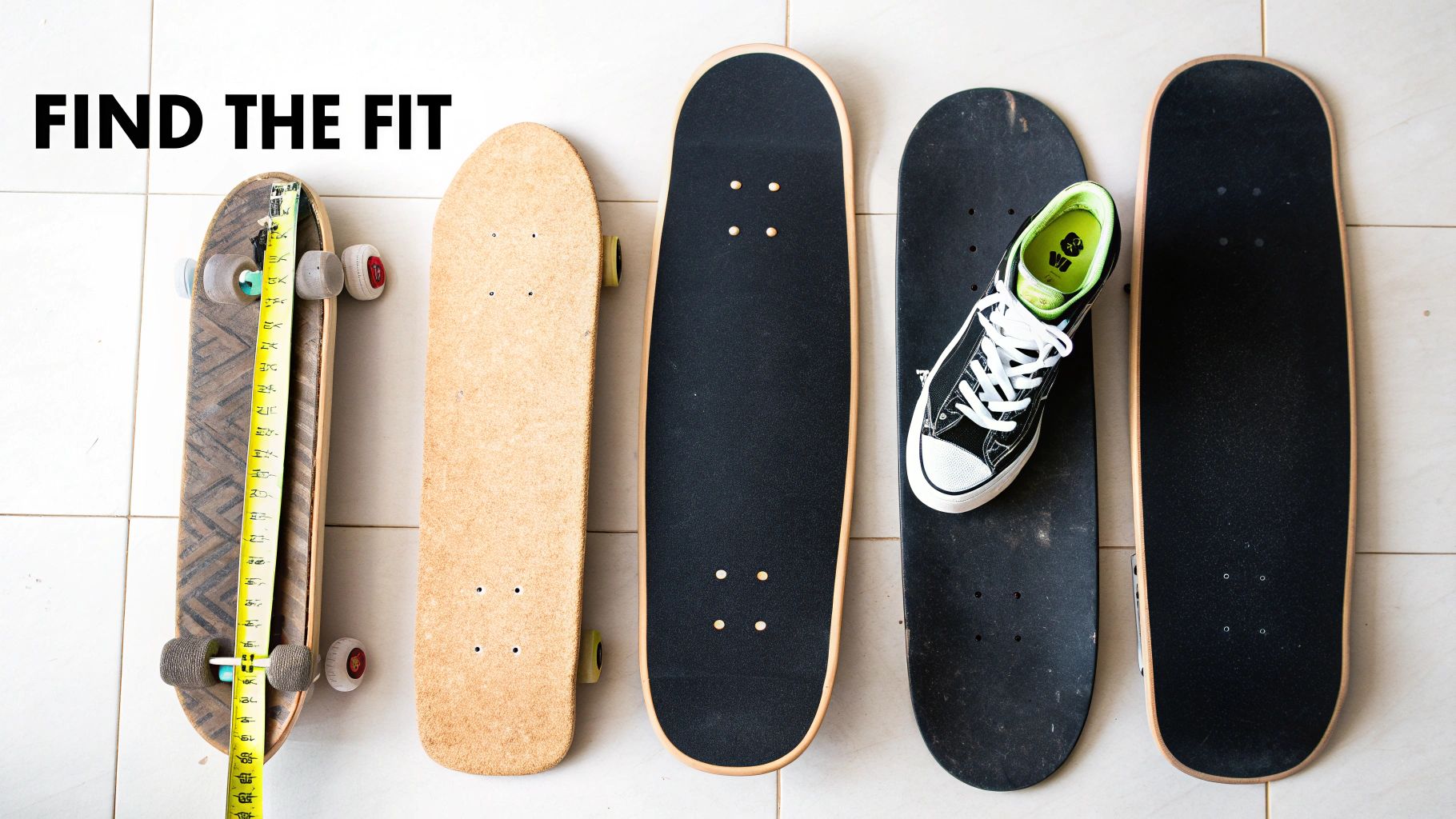
Picking the right size skateboard for a kid isn't just about what looks cool—it's the most important first step for keeping them safe and building their confidence. A board that’s too big is like asking them to ride an adult's bike; it’s clunky, hard to control, and a quick recipe for frustration.
On the flip side, a board that’s too small will feel wobbly and unstable, making it tough for them to find their balance. You want it to feel just right.
The secret is matching the deck width to your child's size. Think of the deck as the foundation for their stance. A wider board gives them a bigger, more stable platform to stand on, while a narrower one is lighter and easier for a smaller rider to turn and handle.
We measure skateboard decks in inches, and for kids, these sizes are specifically designed for smaller bodies. Getting this right from the start means the board will feel like a natural extension of their feet, not something they have to wrestle with.
Matching Deck Width to Your Child
The main things to look at are your child's age, height, and shoe size. While age is a good starting point, we've found that shoe size is often the best clue for how much stability they'll need. A kid with bigger feet is naturally going to feel more secure and balanced on a slightly wider board. Bear in mind if you just want it to be stable and easy to go straight then go wider than the guide.
Here's a breakdown of the common sizes for a kid's skateboard:
-
Micro Decks (6.5" - 6.75"): These are the smallest boards out there, built for the absolute youngest riders, usually under 5 years old. They're super lightweight and short, which makes them incredibly easy for tiny skaters to carry around and control.
-
Mini Decks (7.0" - 7.5"): Perfect for kids aged 6 to 8 years old. This size strikes a great balance between stability and being easy to manoeuvre, making it ideal for when they're learning the basics of pushing and turning.
-
Mid-Size Decks (7.5" - 8.0"): This size is spot-on for older kids, typically 9 to 12 years old. It's also a great fit for younger kids who happen to be a bit taller or have larger feet for their age. It provides a solid platform that will see them through their first few years of progression.
Quick tip: The goal isn't to buy something they can "grow into." It's about giving them the best possible tool for learning right now. A board that fits properly gives them the stability they need to master balance and control from their very first push.
Quick Sizing Reference Chart
To make it even easier, here's a simple chart to use as your go-to guide. Just match up your child’s details to find the perfect deck width for their first skateboard for kids.
| Skateboard Size | Deck Width (Inches) | Best for Age | NZ/AU Shoe Size |
|---|---|---|---|
| Micro | 6.5" – 6.75" | 5 & Under | Kids 9 & Under |
| Mini | 7.0" – 7.5" | 6 – 8 Years | Kids 10 – Adults 3 |
| Mid-Size | 7.5" – 8.0" | 9 – 12 Years | Adults 4 – 8 |
| Full-Size | 8.0" + | 13+ Years | Adults 9+ |
Once you've nailed down the right size, you can get to the fun part: picking out awesome graphics and designs. We have a fantastic range of complete skateboards for kids that are perfectly sized and ready to roll straight out of the box.
And if you're curious about how all the different parts come together to affect the ride, you can learn more about skateboard wheels in our guide.
Understanding the Anatomy of a Kids Skateboard
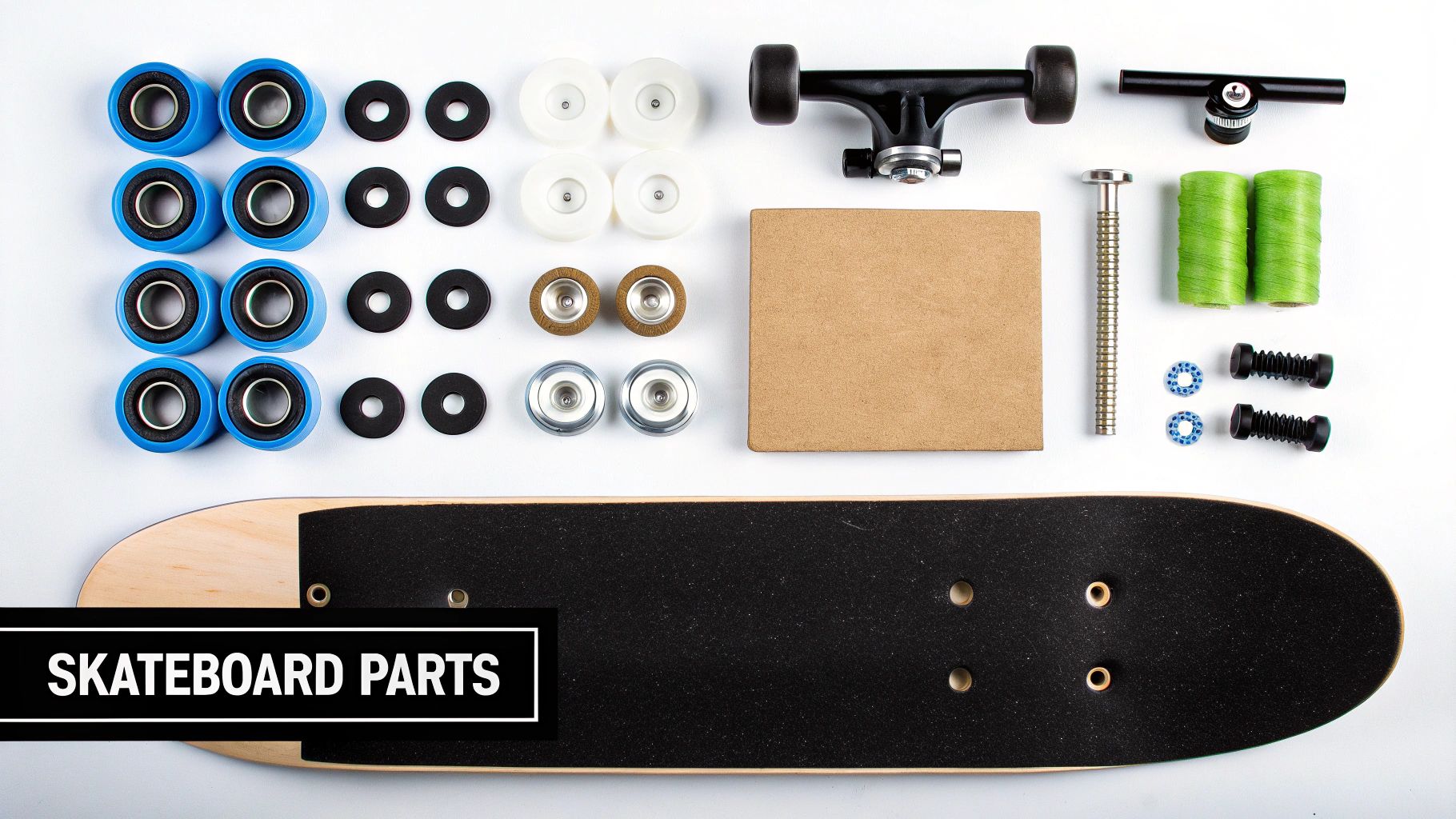
At first glance, a skateboard might just look like a plank of wood with wheels. But a proper skateboard for kids is actually a finely tuned machine, with each part playing a crucial role. Getting your head around these components is the key to seeing why a real skateboard is worlds apart from a cheap toy in terms of safety and fun.
A good way to think about it is like a car. You’ve got the body, the steering, the tyres, and the engine—only in this case, the engine is your kid’s endless supply of energy and excitement. Let's break down the main parts without getting bogged down in confusing jargon.
The Deck: The Foundation
The deck is the board itself—the platform your child stands on. Quality decks are built from multiple layers of pressed maple wood, which gives them the perfect blend of strength and flex needed to absorb the shock of landing small jumps or riding over bumpy ground. Cheaper boards often use shoddy plywood or even plastic that can snap without warning.
On top, you'll find the grip tape, which feels like a big sheet of sandpaper. This gritty surface is a non-negotiable safety feature; it literally locks your kid’s shoes to the board, giving them the traction they need to stay balanced and in control.
Trucks: The Steering System
If the deck is the body of the car, then the trucks are its steering and suspension. These are the T-shaped metal axles bolted underneath the deck, and they’re what hold the wheels on. A good set of trucks lets a rider turn smoothly just by leaning from side to side.
The trucks on a proper kids skateboard are made from tough metal alloys. More importantly, they have soft rubber bushings that make turning a breeze for a lighter rider. Toy boards, on the other hand, usually have stiff plastic trucks that make steering next to impossible, which is a recipe for frustration.
Wheels and Bearings: The Ride Quality
The wheels are the tyres of our car analogy, and their material and hardness have a huge impact on the ride. A real skateboard uses wheels made from a durable material called urethane. For beginners, softer wheels are ideal because they provide more grip and a smoother roll over slightly rough surfaces, like your average Kiwi footpath.
Tucked inside each wheel are two bearings. These are the small, ring-like devices that let the wheels spin freely with minimal effort. A board with decent bearings will glide for ages after a single push, making the whole experience feel smooth and fun. Poor quality bearings, like those in toy boards, create a ton of friction and force a kid to constantly push just to keep moving. It's exhausting!
A well-built skateboard is more than just a collection of parts; it’s a complete system designed for performance and safety. Every single component, from the maple in the deck to the bearings in the wheels, works together to give your child a stable, predictable, and seriously fun ride.
Once you understand how these bits and pieces work together, you can really see the value in getting a proper setup from the get-go. For a more detailed look into how these parts are chosen and put together, check out our guide on skateboard construction.
Essential Safety Gear for Young Skaters
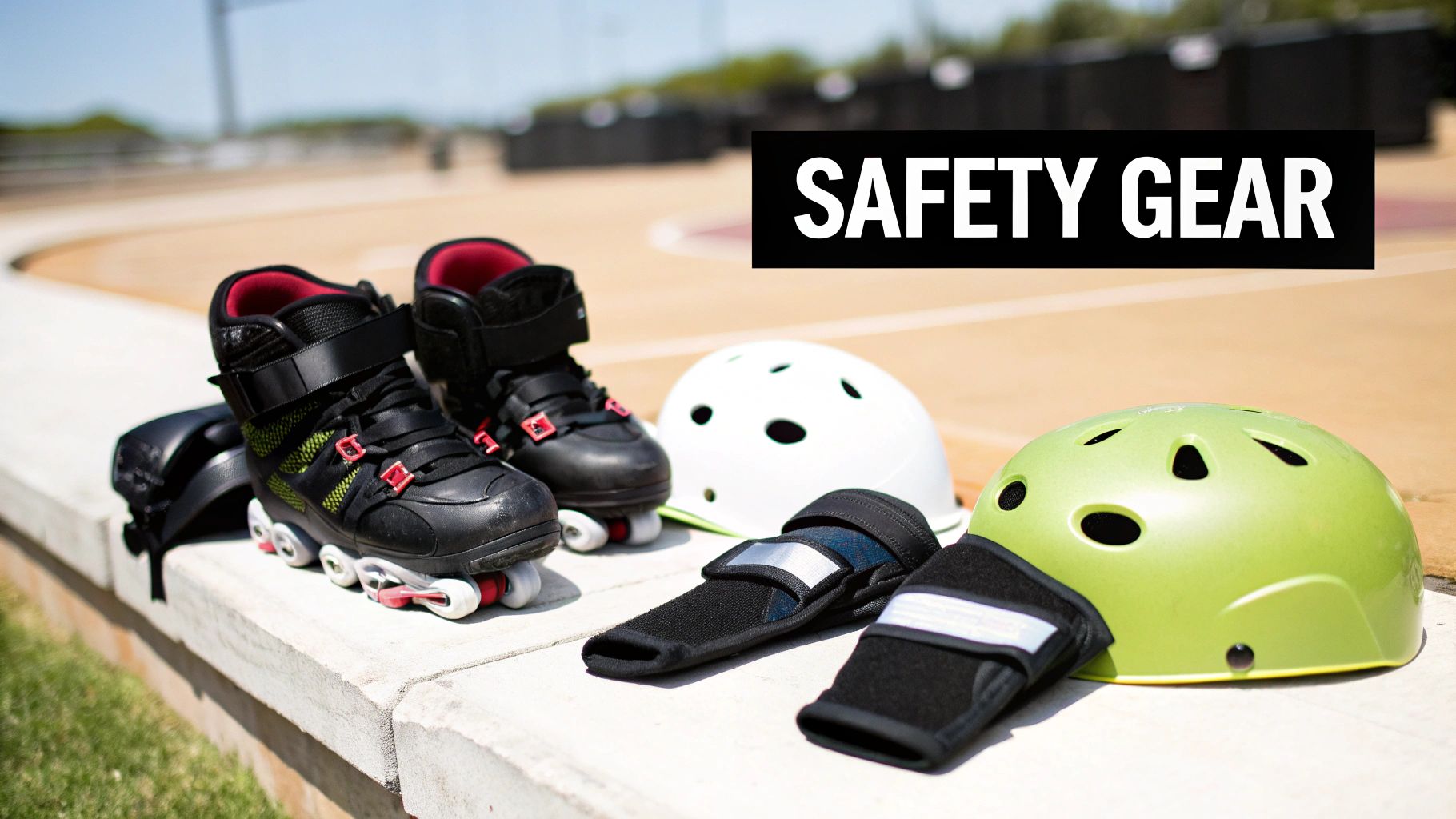
Let's be real about one thing: learning to skateboard means falling. It’s not an if, it’s a when. It's just a guaranteed part of the journey. The right safety gear is what turns a scary fall into just another lesson—a minor bump on the road to building up their confidence.
Think of safety gear as a skater's uniform. It’s not optional; it’s the essential kit that allows kids to push their boundaries a bit, get back up after a tumble, and keep rolling with a smile. Without it, a simple slip can easily lead to an injury that might put them off skating for good.
The Non-Negotiables For Every Session
The most critical piece of equipment is a properly fitted helmet. No arguments. It’s the number one defence against head injuries.
When picking one out, make sure it sits level on your kid's head and comes down low on the forehead, about one to two finger-widths above their eyebrows. The side straps need to form a 'Y' shape just below the earlobes, and the chin strap should be snug enough that only one finger can fit between the strap and their chin.
Beyond the helmet, a full set of pads is needed to protect the body's most common impact zones. This stuff is specifically designed to absorb the shock of hitting hard concrete so your child can learn without being scared to fall.
-
Wrist Guards: These are absolutely vital. A kid's first instinct when they fall is to put their hands out. Wrist guards have a hard plastic or metal splint that stops the wrist from bending back too far, preventing sprains and fractures.
-
Knee Pads & Elbow Pads: Knees and elbows almost always take a beating during a spill. Good quality pads will have a tough outer shell and comfy inner padding to cushion the blow.
You can find a great selection of reliable helmets and protective pads right here in our shop, all designed to offer excellent protection.
Shoes Make a Surprising Difference
You might not immediately think of shoes as safety gear, but they play a massive role in keeping your kid stable and in control.
Proper skate shoes have flat, grippy rubber soles that give them maximum contact with the board's grip tape, which stops their feet from slipping off unexpectedly. They're also built tough, with durable materials and reinforced stitching to handle all the wear and tear that comes with skating.
Equipping your child with the right gear is the most important step you can take to build their resilience. It teaches them that preparation is key and gives them the physical and mental confidence to try new things.
Beyond just the physical gear, a big part of their well-being is understanding how we keep kids safe while they are out there building independence. For more practical advice on building safe skating habits, make sure you read our guide on skateboarding safety and injury prevention tips.
Your Child's First Day on the Skateboard
Alright, you’ve got the right board and all the safety gear sorted. Now for the exciting part. That first day on a skateboard for kids is a massive milestone, and with a bit of planning, you can make sure it’s a positive memory instead of an intimidating one. The main thing is to create a safe, supportive space for them to find their feet.
Location is absolutely everything for that first session. You’re looking for a spot that’s smooth, flat, and completely free of traffic. Think of an empty tennis or netball court, a quiet cul-de-sac, or even just a smooth concrete driveway. Steer clear of uneven footpaths or any areas with cracks that can easily trip up a beginner.
Finding Their Stance and Balance
The very first step isn't actually rolling at all; it's simply getting comfortable standing on the board. A great way to do this is to pop the skateboard on a patch of grass or a rug. This stops it from moving, letting your child focus purely on getting their balance without the fear of the board shooting out from under them.
Next up is figuring out their natural stance, which will either be regular (left foot forward) or goofy (right foot forward). A simple trick for this is to give them a gentle, unexpected nudge from behind. The foot they instinctively step forward with to catch themselves is usually the one that will feel most natural at the front of the board.
The goal of the first day isn't to master tricks or even roll very far. It’s simply about building a positive association with the skateboard, making it feel like a fun toy rather than a scary challenge.
Once they feel steady on the stationary board, you can move over to your flat, smooth surface. Start by holding their hands and just letting them practise getting on and off the board. From there, you can progress to a gentle push, taking just one tiny step at a time. Make sure you celebrate every little success to keep their spirits high!
Structured Learning and Skate Programs
While mucking around at home is fantastic, lots of kids really thrive in a more structured environment. It's been great to see a rise in local learn-to-skate programs popping up all over New Zealand. These sessions offer a super supportive setting where kids can learn fundamental skills from experienced instructors and hang out with other young skaters.
The growth of these programs is making skating more accessible than it's ever been. The 2023 Skateboard Participation Survey found that 39% of respondents reported that learn-to-skate programs were available in their local areas. That’s fantastic news for parents looking for a safe entry point into the sport for their kids. You can read more about the findings from the latest survey to see how communities are getting behind new skaters.
These programs often run at local skateparks, which are becoming more common and better maintained across the country. As your child's confidence grows, you can start exploring these awesome community spaces together. Check out our guide on the best skate parks in NZ to find a great spot near you.
Why a Real Skate Shop Is Your Best Choice
When you’re looking for a skateboard for kids, where you buy it from is just as important as the board itself. A big box store might seem easy, but honestly, you can’t beat the know-how and passion of a dedicated, family-owned skate shop like ours. We aren't just here to move boxes; we're part of the local scene.
We’ve been helping Kiwi families get rolling on the right gear here in Gisborne since 1983. Our team is made up of actual skaters, so the advice we give comes from years of experience. We make sure your kid gets a board that’s not only safe and built to last but is a perfect fit for them. We hand-pick all our complete skateboards from trusted brands known for quality parts, so you can have total peace of mind.
More Than Just a Sale
When you buy from us, you're doing more than just getting a great skateboard. You’re backing a local business that puts its heart right back into the skate community. We’re here for the long haul, ready with advice on keeping the board maintained or helping you upgrade parts as your young skater gets more confident and starts progressing. That's how we help nurture the next generation of riders.
The skate scene in New Zealand is buzzing with young talent, making quality gear and proper support more crucial than ever. The 2023 Skateboard Participation Survey showed that teenagers now make up a massive 40.5% of the global market. Closer to home, 33% of female skaters surveyed in NZ were under 18. You can dive into the full story on the official Skateboarding New Zealand report.
From our shop here in Gisborne to our NZ-wide delivery, we’re stoked to welcome your grom into the world of skateboarding.
Got Questions? We've Got Answers
We hear a lot of the same questions from parents just starting their skateboard journey, so we've put together some quick, clear answers for you. The goal here is to iron out any last wrinkles of doubt so you can feel 100% confident picking out the perfect board for your kid.
What's the Best Age for a Kid to Start Skateboarding?
Most kids start getting the hang of the balance and coordination they need for skateboarding right around 5 years old. But honestly, the most important things are that they are keen to try it and are willing to chuck on the safety gear every single time.
For the little ones aged 5-7, we always point parents towards a 'Micro' or 'Mini' sized board from our range of complete skateboards for kids. They're way lighter and smaller, which makes them much easier for little legs to handle, control, and carry around.
Should I Just Grab a Cheap Skateboard from a Toy Store?
Look, we strongly, strongly advise against buying skateboards from big box toy or department stores. It's almost a guarantee they'll be built with flimsy plastic parts and bearings that barely spin. This makes them not only unsafe but incredibly frustrating and difficult to actually ride properly.
A quality board from a proper skate shop gives your kid a much safer, more enjoyable experience—one that actually helps them learn and get better. Think of it as an investment in their safety and their long-term love for the sport.
What’s the Difference Between a Skateboard and a Cruiser?
It's a great question. A standard 'popsicle' skateboard—the kind you see at the skatepark—has a curved nose and tail. That shape is specifically designed for doing tricks. A cruiser board, on the other hand, often has a different shape and comes with softer wheels, making it better for just smoothly rolling around on footpaths.
If your child is dreaming of learning tricks and spending time at the skatepark, a standard complete skateboards is definitely the best place to start.
How Long Will a Kids Skateboard Actually Last?
A quality complete skateboard from a proper brand is built to take a beating while your kid is learning. While parts like the deck or wheels might eventually need to be swapped out as their skills get better, a good starter board should easily last for several years of regular use. It offers fantastic value and a solid, reliable platform for them to progress on.
Ready to find the perfect board and get your young rider rolling? The team here at Blitz Surf Shop is always ready to help with expert advice and a hand-picked selection of quality gear. Check out our range of complete skateboards online or pop into the shop.


