

A board has been sitting in the car, and the wax is now thick, patchy and awkwardly firm. You want it off without gouging the deck or scattering flakes across the driveway. The fix isn't a sharper blade or more force: use a plastic surfboard wax scraper, soften the wax carefully, and collect what comes away.
The right approach changes with the water, too. Wax that's easy to lift in summer can turn stubborn in a cooler session, while soft wax can smear as the board warms. Get the tool, temperature and cleanup right, and stripping a board becomes a controlled maintenance job rather than a wrestle.
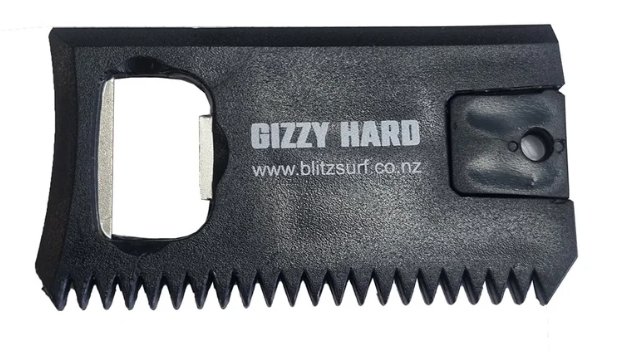
Scraper Types and What They Cost in NZ
A thick, sun-baked layer calls for a scraper that lifts wax without digging into the laminate. A circular plastic tool such as the Waxfresh moves in any direction, so you can work across the stance area, tail and rails without repeatedly catching an edge. For the heavy buildup that comes off a board at New Zealand's winter-to-summer wax changeover, the circular shape is the most efficient option.
| Scraper type | Edge and direction | Best for | 2026 NZ price |
|---|---|---|---|
| Circular plastic scraper (Waxfresh) | Round plastic edge, works at any angle | Thick or uneven wax across the whole deck | $18 |
| Flat-edged plastic wax tool (Far King) | Plastic blade, fixed straight edge | Light touch-ups and budget kits | $6 |
| Toothed comb scraper | Teeth on one edge, pulls in one direction | Restoring grip on flattened wax after bulk removal | $6 available at Blitz with bottle opener and fin key |
| Metal blade | Rigid steel edge | Not recommended for any deck | - |
The flat edge and toothed edge do different jobs. A flat plastic edge lifts bulk wax; the teeth are for roughing up wax that's flattened but still on the board, restoring grip between full strips. Drag teeth through a dirty, built-up layer and you just carve grooves into the mess while leaving most of it behind.
On price, the Far King plastic tool was listed at NZ$5.99 by City Beach in 2026, which suits a budget kit or minor touch-ups. The Wax Fresh scraper at NZ$17.95 in 2026, with other NZ surf retailers listing the same tool a few dollars higher.
Leave metal out of the kit. A rigid steel edge can strip the board's top layer along with the wax, and it gives you almost no room for error if the board shifts or you lean too hard. Plastic flexes against the deck; steel bites.
For most riders, one circular plastic scraper covers the job. Add a comb edge only if you regularly revive flattened wax, and keep two habits with it: scrape over a towel or bag so the flakes go in the bin rather than onto the driveway, and let a cold board warm up before you put pressure on any edge, because firm winter wax rewards patience over force.
Matching Wax Hardness to Water Temperature
Wainui's seasonal water-temperature swing affects both the wax you choose and how it comes off the deck. Reported water temperatures range from 13–15°C in winter to 18–21°C in summer, and the best-performing wax changes with the water, according to the Wainui Beach conditions guide. For Gisborne and the East Coast, the guide classifies winter as a cool- or cold-water wax setting and summer as a warm-water setting.
| Water temperature and season | Wax type to choose | Scraping effect to expect |
|---|---|---|
| 13–15°C, winter | Cool or cold-water topcoat over a harder basecoat | Soft wax can smear as the deck warms, so scrape early in the session |
| 18–21°C, summer | Warm-water wax | Wax can turn firm in cooler spells, so warm the board before scraping |
The mismatch is easy to recognise. Wax formulated for warmer water can feel relatively firm during a cold session, making it tempting to lean harder on the scraper. That extra pressure is the wrong response: soften the wax instead. Cold-water wax can go the other way, smearing as the deck warms, so work while it's still manageable rather than waiting until it's tacky and soft.
A harder basecoat gives the topcoat a foundation; the topcoat is selected for the water temperature. Choose for the coldest water expected during the session, not just the seasonal average, and check conditions before you decide what to apply. If you're refreshing your setup as well as choosing a scraper, this guide to what surf wax does helps clarify the role of the wax layers.
Shoulder-season conditions sit between the table's ranges, so let the wax guide your pace. Scrape in smaller sections and check the deck every few passes. If the wax resists and chips, soften it before continuing; if it smears, stop and let the surface cool a little.
How to Remove Old Wax Step by Step
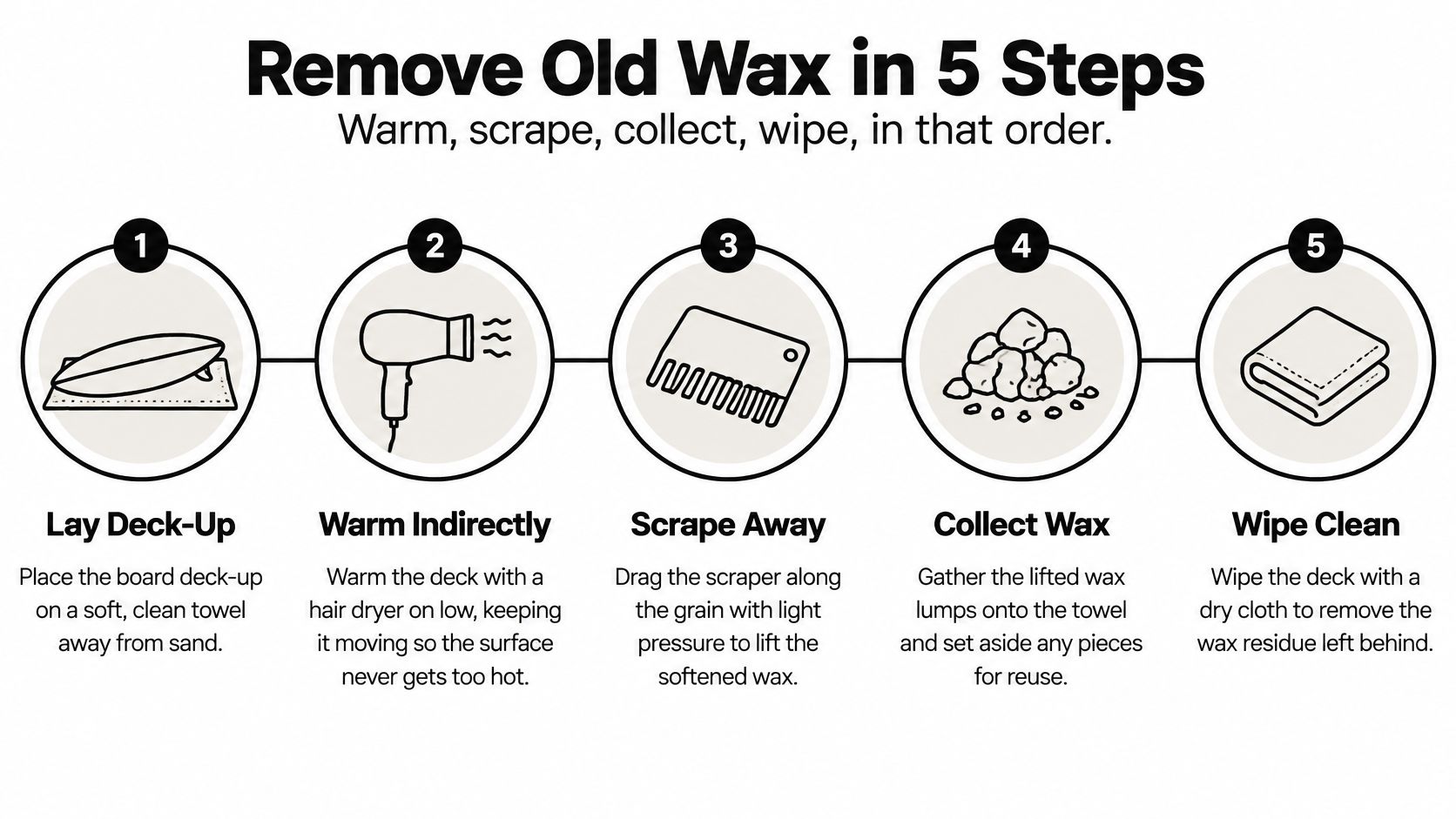
A board coming out of a cold New Zealand winter morning holds firmer wax than the same deck after a warm afternoon, so let the wax set your pace rather than forcing the scraper through. The routine stays the same: warm, scrape, collect, wipe. Keep the board stable, use moderate pressure and stop if the edge starts catching on the surface.
- Lay the board deck-up. Set it on a soft, clean towel, away from sand. A gritty or hard support can mark the board, and sand caught under the deck can get dragged across the surface.
- Warm the wax indirectly if using a comb, don't warm it if using Waxfresh. Warm the wax gently using indirect warmth, out of direct sun and away from any heat source, and check the board regularly so the wax softens without the deck overheating. Slightly softened wax lifts in strips; overheated wax smears and a hot deck can be damaged.
- Start with the flat edge. Hold the scraper at a shallow angle and push in short, overlapping passes to remove bulk wax. Don't gouge downward. If firm wax resists, soften it a little more or adjust the angle rather than leaning harder on the edge.
- Change direction as you work. A circular Wax Fresh scraper can move at any angle, which helps you keep contact as the board curves around the rails, tail and stance areas. Changing stroke direction also lifts wax without repeatedly catching the same edge line.
- Catch the shavings. Scrape onto newspaper or into a bag rather than letting flakes fall on the sand, the ground or into a drain. The surf wax removal guide also recommends collecting residue, and contained shavings are far easier to bin than flakes scattered across a car park or beach.
- Use teeth only for flattened wax. The toothed edge can rough up wax that is staying on the board to restore texture, but it is the wrong tool for stripping a heavy or gritty layer. Using the teeth for bulk removal takes more effort and can press sand into what remains.
- Wipe the deck clean. Use a clean cloth to remove the remaining film before applying fresh wax. A stripped deck should feel even under your hand, with no ridges, no tacky patches and no grit.
The method rewards controlled contact rather than speed. If checking the angle helps before you start, this wax-removal video shows the shallow edge position and overlapping passes.
If a greasy film remains after wiping, a dedicated option such as the Sticky Johnson wax remover can finish the job before the new basecoat goes on.
Mistakes That Damage Boards or Hurt You
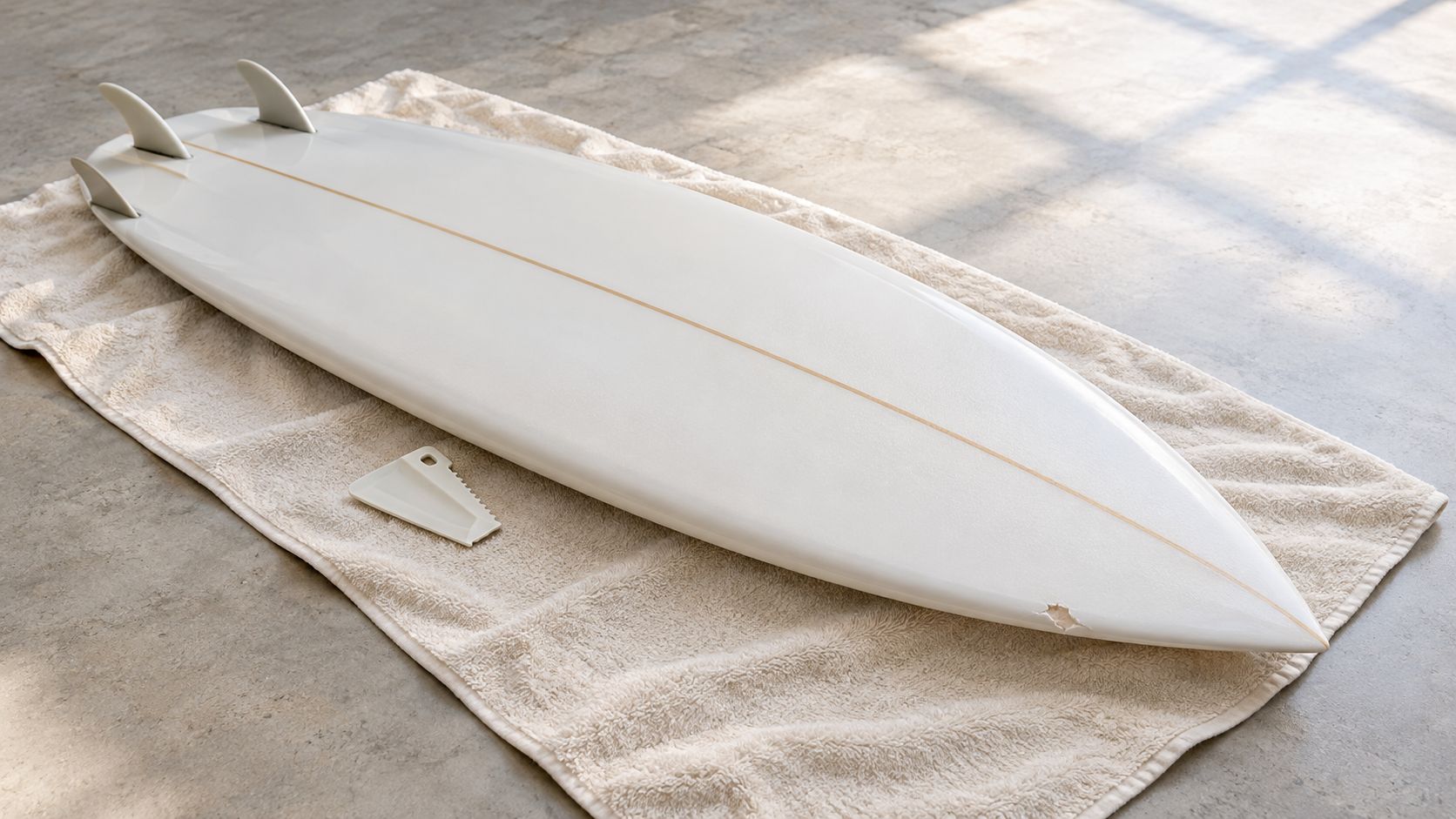
A wax scraper is a small tool, but the board under it is not. A surfer's own board is one of the most common sources of injury in the sport, and it can hurt you just as easily on the driveway if it shifts mid-stroke or a fin catches your hand. Secure it flat before you start, and treat a slipping scraper with the same respect you'd give a fin edge.
- Using a metal scraper: It can strip the board's top layer along with the wax. Use a plastic edge and controlled pressure.
- Pressing hard on stubborn wax: Force can mark the deck, especially when wax is uneven or softened. Cold wax is the main trap here. A board scraped after a chilly NZ winter session holds wax that resists the edge, and leaning harder is how decks get gouged. Warm it gently or change the scraper angle instead.
- Applying hot water or direct heat: Excessive heat can contribute to delamination. Keep the board shaded and cool, and monitor it while warming. A car interior on a hot day softens wax quickly, but it puts the laminate at risk too.
- Scraping across fittings or damage: Fin boxes, leash plugs, pressure dents and exposed repairs need care. Work around these spots rather than levering against them. An edge that drops into a hairline crack can widen it.
- Letting children use sharp-edged tools unsupervised: A slip can cause a cut. Keep the scraper in an adult's hand or supervise closely.
- Skipping the final inspection: Wax can hide cracks or lifting laminate. Check the rails and fin area before the next session, and use a surfboard repair guide if you need help identifying damage.
Steady pressure on a secured board beats speed every time. Force feels productive; it is also how decks get marked.
Disposing of Scraped Wax Without Harming the Coast
New Zealand's water temperature swings mean most surfers change wax at least twice a year, and every change leaves a pile of shavings. Where those shavings end up matters. Plastic makes up 78% of debris recorded across 41 New Zealand beaches, and 72% of that debris arrived through the water, according to research documented by the University of Waikato. That finding doesn't establish surf wax as a source of coastal plastic. It does support a simple precaution: contain residue rather than leaving it where wind or water can carry it away.
Keep this cleanup routine practical:
- Collect as you scrape. Catch shavings on paper or in a sealable bag before the wind takes them.
- Choose a clean work spot. Use a towel or a shaded hard surface, not sand or a wet lawn.
- Keep flakes out of drains. Stormwater drains carry whatever enters them straight to the coast, so never tip shavings into a drain or a stormwater grate.
- Dispose of the collected wax thoughtfully. Put it in household rubbish unless your local council gives different guidance.
- Clean the tool away from stormwater. Wipe it down, or rinse it over a lawn or a sink that doesn't feed a stormwater drain.
Waste rules differ between councils, so check your own council's guidance if you're unsure what belongs in household rubbish. The plastic scraper is a separate item from wax residue; don't assume the tool follows the same disposal route as the shavings.
Eco-labelled wax doesn't change the routine. Whatever you ride, catching residue, binning the packaging and keeping a worn scraper out of the environment still applies, and it's worth weighing that alongside the surf wax you choose. A lower-waste routine starts before the first scrape: set out paper or a container, then clean up the work area when you're done.
Build a Scraping Kit Before Your Next Session
The routine matters more than the number of tools in your kit. A clean scraper and a checked deck make the next wax change quicker, while a nicked edge or hidden damage can turn a simple cleanup into a repair.
| Frequency | Task | Why it matters |
|---|---|---|
| After every session | Rinse the scraper, dry it and wipe the deck film | Stops grit transferring onto the deck next time |
| Weekly | Check the scraper edge for nicks and the deck for dents or cracks | A damaged edge can gouge laminate under pressure |
| After each wax change | Clear old wax from the comb teeth | Keeps the toothed edge gripping rather than smearing |
| Monthly or after a hard knock | Inspect rails, fin boxes and leash plugs for lifting or delamination | Catches small cracks before they spread |
For a typical New Zealand surf kit, start with one circular plastic scraper, a clean towel, a cloth for the final wipe and a bag for shavings. Add a comb edge if you regularly revive flattened wax. You can find more practical advice in this guide to building a wax kit in New Zealand.
Keep the steps simple: check the scraper edge before you use it, secure the board on a clean support, and look over the deck once the old wax is off. If you find lifting or cracks, don't cover them with fresh wax and hope for the best. Blitz Surf Shop sells surf wax from Sex Wax and Wax Fresh, along with hardware including grips and boardbags, and offers surfboard repair services if an inspection reveals damage.
Buy one circular plastic scraper, follow the seven-step removal routine, and book a repair check if you find lifting laminate or cracks.
Blitz Surf Shop stocks surf wax, scrapers and other board-care hardware, and offers surfboard repair services when maintenance reveals damage. Visit us online or in store for the gear to keep your board ready for its next session.


