

You step onto your board at Wainui, paddle into a clean set, and feel your front foot slide sideways during the pop-up. The board isn't broken, and your balance hasn't suddenly disappeared. The deck is too smooth, too wet, or covered with the wrong wax for the water.
So, what does surf wax do? It creates a textured, tacky surface that helps your hands, chest, knees, and feet stay connected to the board. On a hard PU or epoxy deck, that extra friction supports paddling, standing, turning, and shifting your weight without sliding away from the spot you need.
For New Zealand surfers, wax choice also depends on the temperature of the sea, not the temperature on the beach. A bar that feels perfect in a cooler South Island session can become soft and messy in warmer northern water. This guide works through the grip mechanics first, then covers temperature bands, application, maintenance, removal, and the trade-off between conventional petroleum-based wax and eco alternatives. If you're starting from scratch, this guide to surfing wax gives you another useful reference before you pick up a bar.
Introduction to What Surf Wax Does for Every Surfer
Wax is easy to underestimate because the job looks so simple. You rub a bar over the deck, see a few bumps appear, and head down to the water. The important part is what those bumps do once the board is wet and your weight moves quickly across the surface.
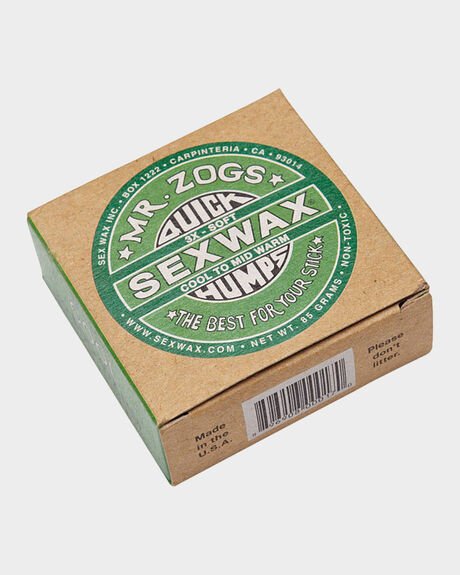
A smooth surfboard deck behaves a bit like glass under water. During the paddle, your chest and hands need contact with the board. During the pop-up, both feet need to land and stay planted. Once you're standing, the board needs to respond as you move pressure from rail to rail. Without enough grip, every one of those movements becomes less certain.
Surf wax isn't decoration. It's the replaceable friction layer between you and a slippery board.
New surfers often assume more wax automatically means more grip. It doesn't. The result depends on three things working together: the correct hardness for the water, a clean deck, and a raised texture rather than a flat smear. Too little texture leaves you sliding, while a dirty or overworked surface can feel soft, unstable, and unpleasant under a wetsuit.
New Zealand conditions make the choice more practical than it may first appear. Water temperatures change between regions and seasons, and a surfer moving from a winter Dunedin bank to a warmer East Coast session may need a different topcoat. Once you understand the reason behind the temperature labels, choosing and applying wax becomes a quick piece of board care rather than guesswork.
How Surf Wax Creates Grip and Traction on Your Board
A hard surfboard deck is smooth by design. Water sits between that smooth surface and your skin or wetsuit, reducing the friction available when you push, pull, or shift your weight. Wax changes the surface by adding a soft, tacky layer with small raised bumps.
Think of the difference between a sheet of glass and fine sandpaper. Glass lets contact slide easily. Sandpaper has texture that catches against another surface. Surf wax doesn't turn the deck into sandpaper, but its micro-texture creates a similar principle. The bumps increase the opportunities for your foot, hand, chest, or wetsuit to resist movement.
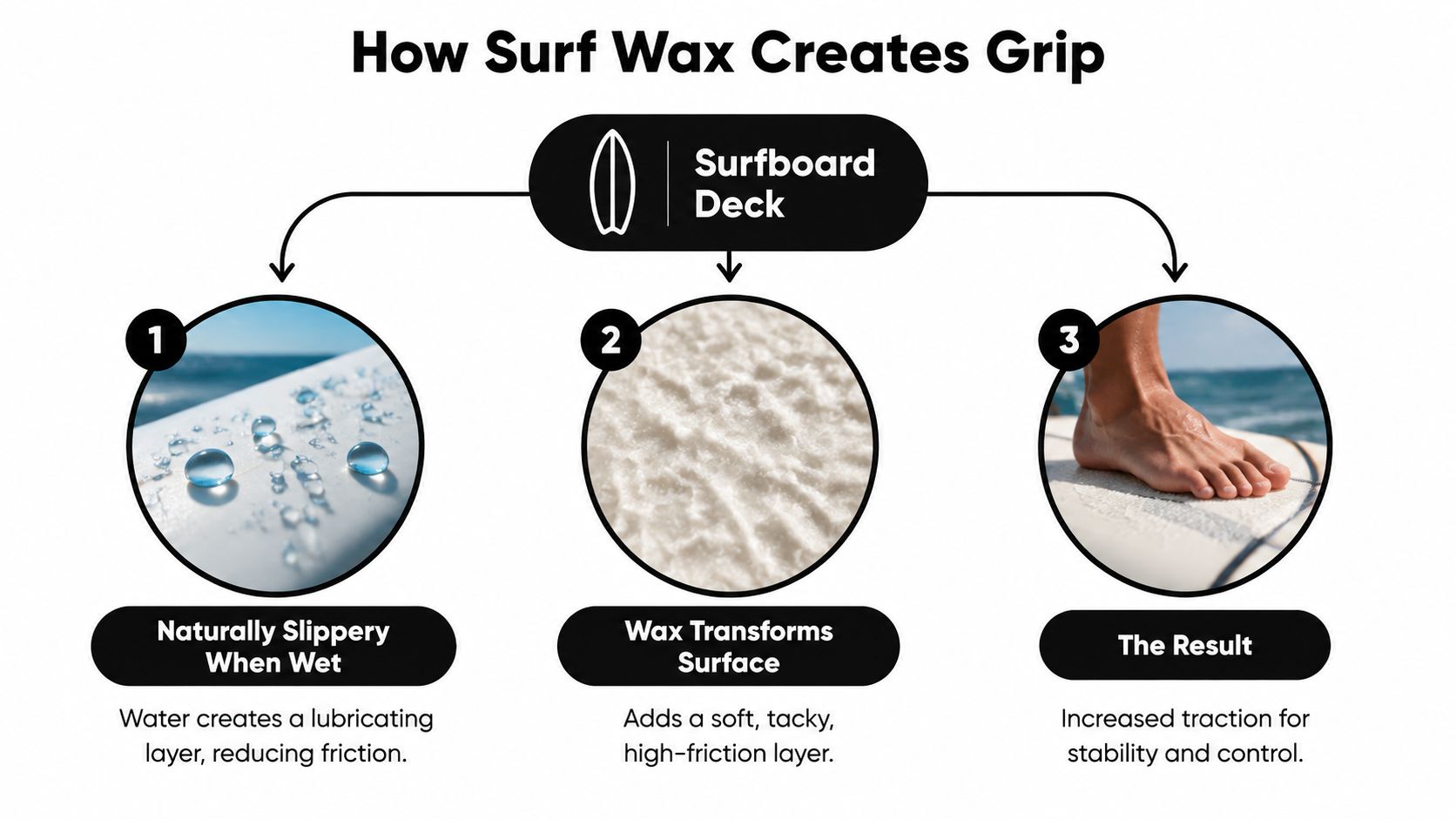
Why the texture matters
Pressure is what makes the wax useful. As you paddle, your chest presses down on the board. As you pop up, your hands and feet load the deck for a short, forceful movement. In a turn, your feet press into different parts of the board while the board accelerates beneath you. The tacky bumps help those contact points resist unwanted sliding.
That doesn't mean you need a thick coating over every centimetre. You need consistent texture through the places your body uses. A shortboard usually needs reliable coverage under the chest, hands, front foot, and back foot. A longboard rider may want usable grip farther towards the nose if they move around the deck.
NZ surf guidance recommends a criss-cross basecoat followed by circular topcoat strokes until the bumps reach at least 1 mm high. The raised surface is the working part of the wax, not the colour or the visible pattern. Pressing too hard flattens and smears the wax, while excessive build-up can add drag and leave your feet sitting on a mushy layer. Surf Industries explains the texture and application balance.
The core job of surf wax is friction management. It gives you enough texture to stay connected without covering the board in unnecessary bulk.
If you already have plenty of wax on your board but need texture then use a wax comb to create tight ridges in the surface for extra grip.
Understanding Surf Wax Types and Temperature Ratings for NZ Water
Wax hardness is matched to water temperature, not air temperature. The sea can stay cool on a warm day, and a cold wind can make the beach feel wintry while the water remains comparatively mild. The topcoat needs to stay tacky in the water, so choosing by the forecast alone can send you to the wrong bar.
The basic rule is straightforward. Softer wax works in colder water because it needs to remain grippy. Harder wax suits warmer water because soft wax can lose its shape, smear, or melt. New Zealand retailers commonly group wax into cold, cool, warm, and tropical ratings, although the exact boundaries can vary between brands.
NZ Surf Wax Temperature Guide
| Wax Type | Water Temperature | Feel and Best Use in NZ |
|---|---|---|
| Cold | Below 15°C | The softest and stickiest option, suited to winter water in colder areas such as Dunedin and the West Coast. |
| Cool | About 14°C to 19°C | Semi-soft and tacky, useful for cool New Zealand conditions and shoulder seasons. |
| Warm | About 18°C to 24°C | Firmer and still sticky, suited to warmer water and summer sessions in milder coastal areas. |
| Tropical | Above 24°C | Harder wax for hot water, where a softer formula could lose its texture and grip. |
These ranges overlap because brands use slightly different formulas and labels. A New Zealand retailer lists cool wax around 16°C to 20°C, warm wax around 21°C to 23°C, and tropical wax above 24°C, while an extra-hard formula is intended for water temperatures of 23°C and above. Check the temperature guidance printed on the bar rather than assuming every brand uses identical limits.
A simple choice at the counter
If you're surfing colder winter water, start with cold or cool depending on the actual sea temperature. For warmer northern or summer conditions, move towards warm or tropical. This Sticky Johnson guide can help you compare the brand's approach before choosing a temperature-specific bar.
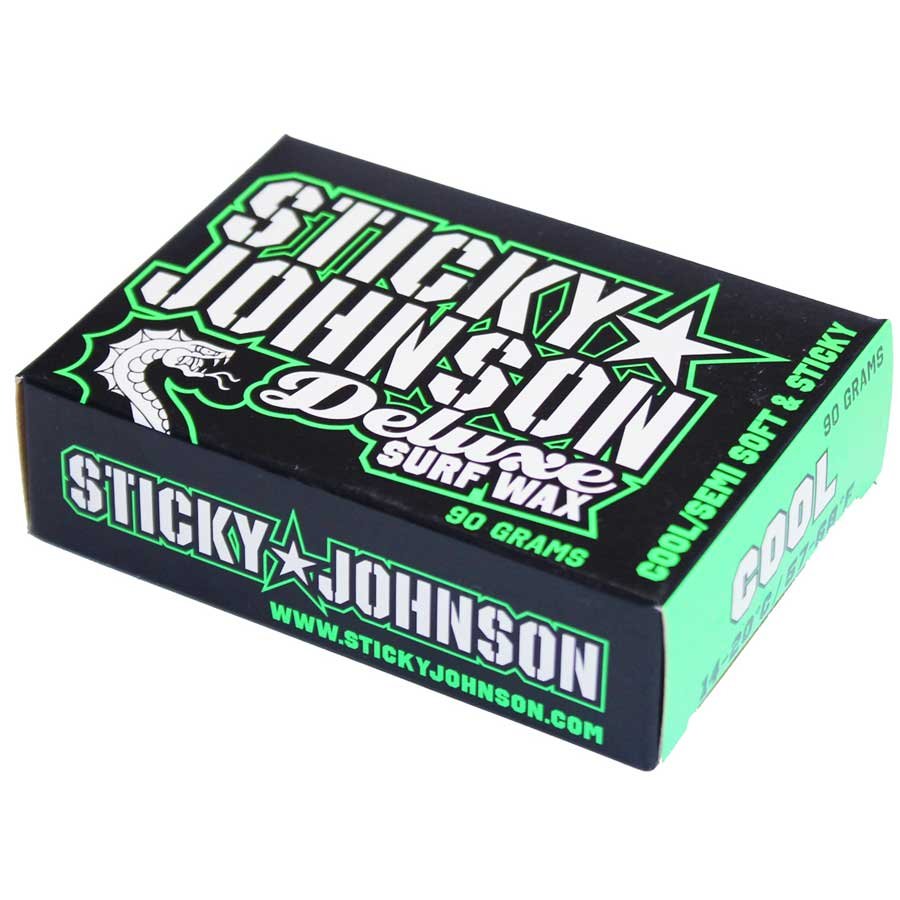
The wrong rating can defeat a well-applied wax job. Tropical wax may stay too hard to form useful bumps in cold water, while cold wax can become a sticky smear when the water warms. Temperature matching comes before adding more wax.
How to Apply Surf Wax for Maximum Grip
Start with a clean, dry deck. Sand, dust, and old residue interfere with adhesion, so wipe the board before you begin. If the existing wax is dirty, heavily flattened, or from a very different temperature, remove it rather than trying to bury the problem under a fresh layer.
Build the foundation
Hold the bar so its edge makes contact with the deck. Lay down firm diagonal lines in one direction, then cross them from the opposite angle. The resulting grid gives the softer topcoat something to hold onto and helps you cover the riding area evenly.
Use the basecoat through the places where your body and feet need support. Include the front and back foot zones, the chest area used during paddling, and the hand positions involved in your pop-up. Don't leave a narrow strip through the centre and assume your feet will stay there.
Add the raised texture
Switch to your temperature-appropriate topcoat. Use light circular strokes over the crossed lines, allowing the wax to build small bumps rather than flattening into a shiny film. NZ application guidance recommends building bumps to at least 1 mm, which gives you a useful tactile target when you're unsure whether the surface is ready.
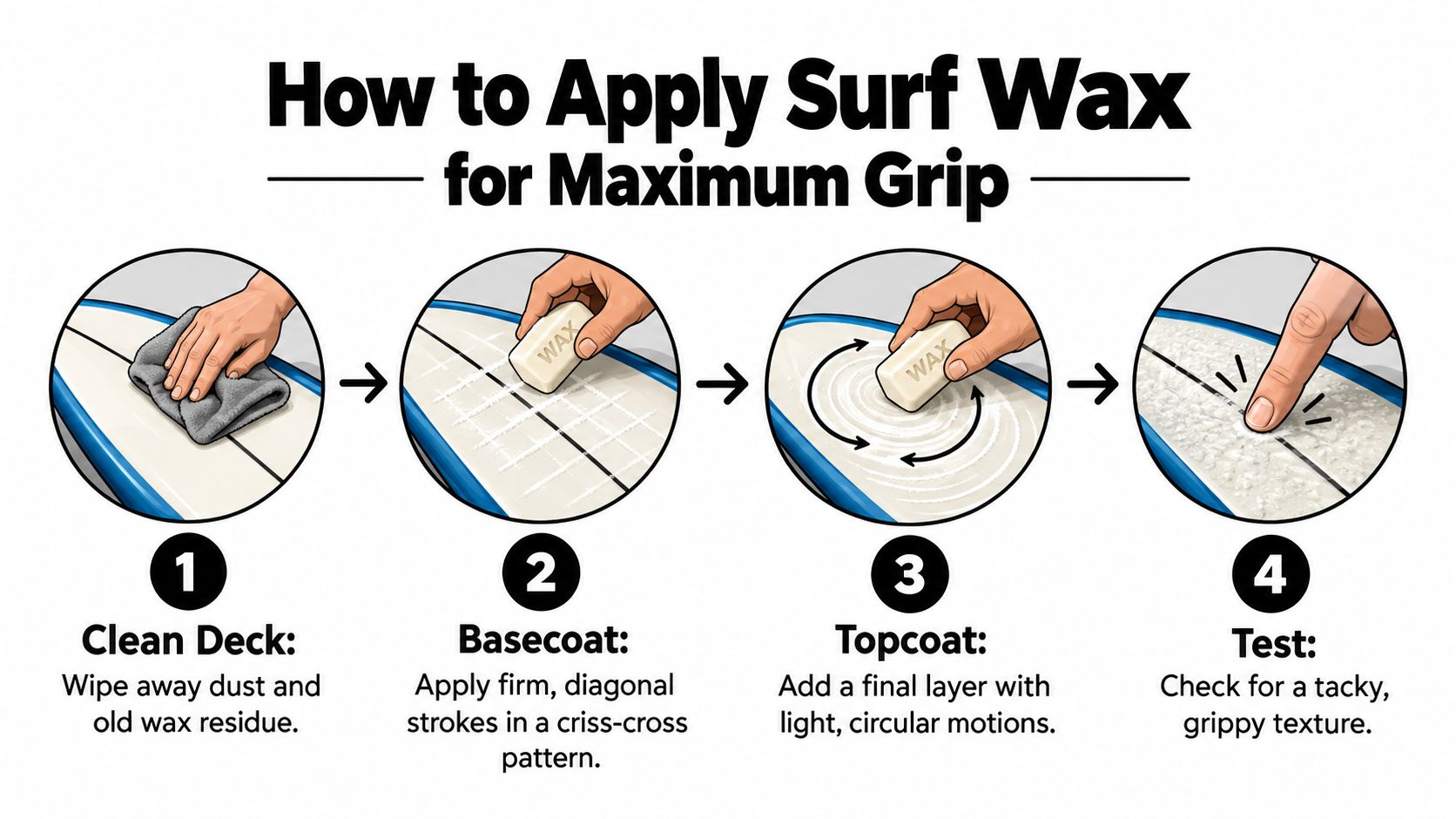
Your hand should feel a consistent, slightly rough tack across the covered area. If the bar drags heavily and leaves a flat shiny streak, ease off the pressure. If parts of the deck still feel smooth, work those sections with gentle circles instead of adding a thick layer everywhere.
Tactile check: If your palm glides smoothly, you need more texture. If the wax feels soft and squashed, you've probably used too much pressure or the wrong temperature.
Topcoat can be refreshed before a session, especially after the board has been rinsed or carried through sand. For products and tools, you can use the surfboard waxing guide alongside a suitable bar and wax comb.
Keeping Your Wax Fresh With Maintenance and Removal
A good wax job doesn't need to be stripped after every surf. Most sessions only call for a light refresh, particularly if the surface still has clean bumps and feels tacky beneath your hand. Add a few gentle strokes over worn areas rather than covering the whole deck with another heavy layer.
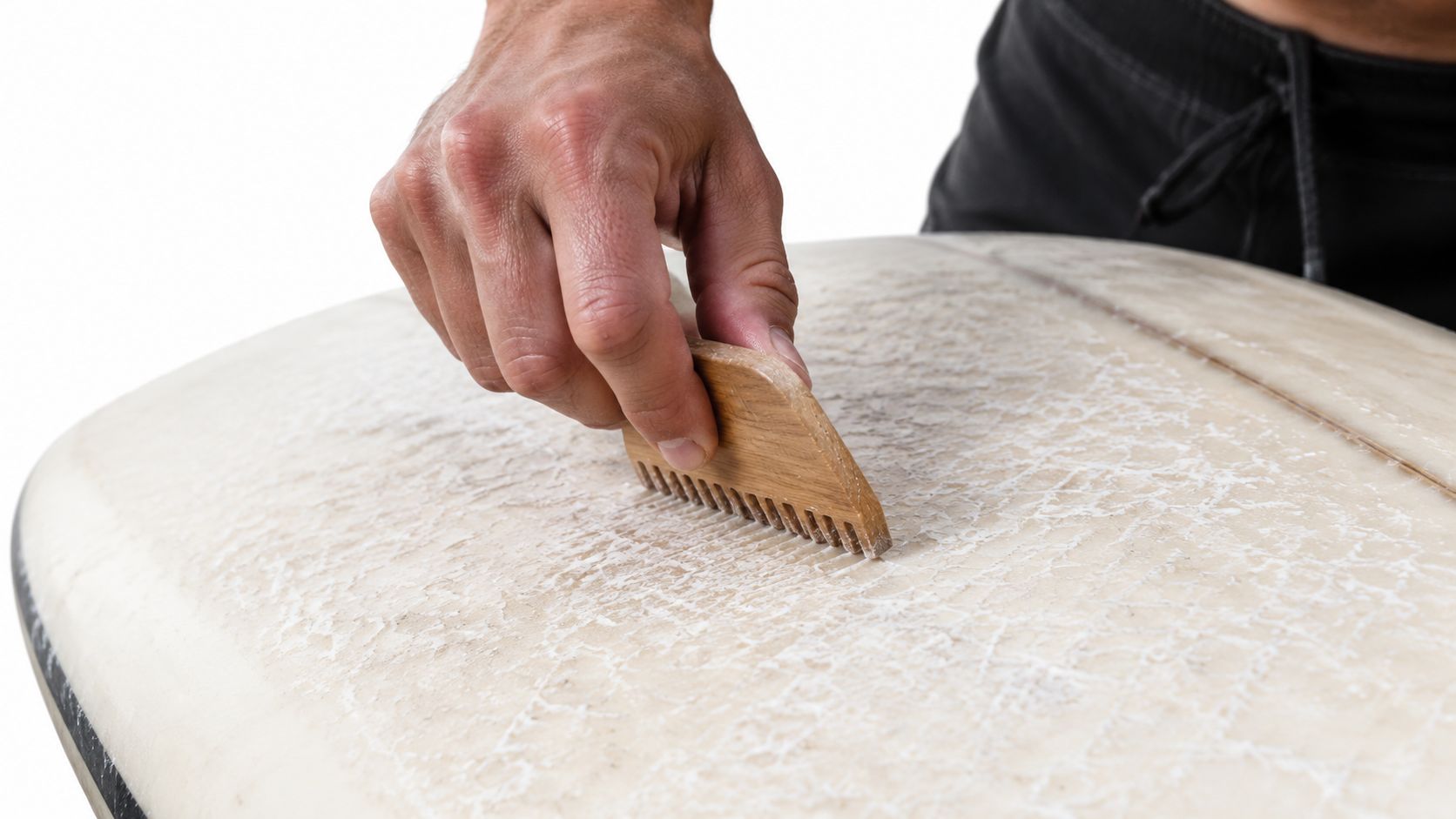
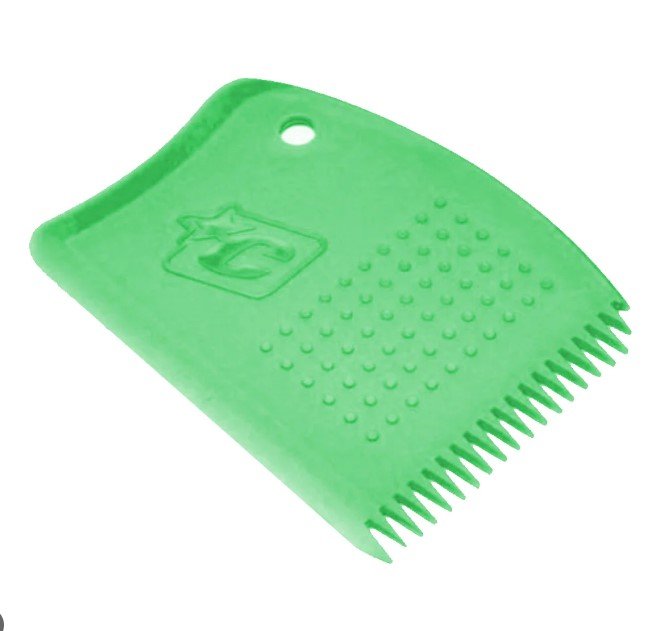
A wax comb helps revive texture when the surface has been flattened. Run the toothed edge lightly across the wax in a cross-hatched direction. The aim is to reopen the bumps, not scrape the deck or carve deep channels through the coating.
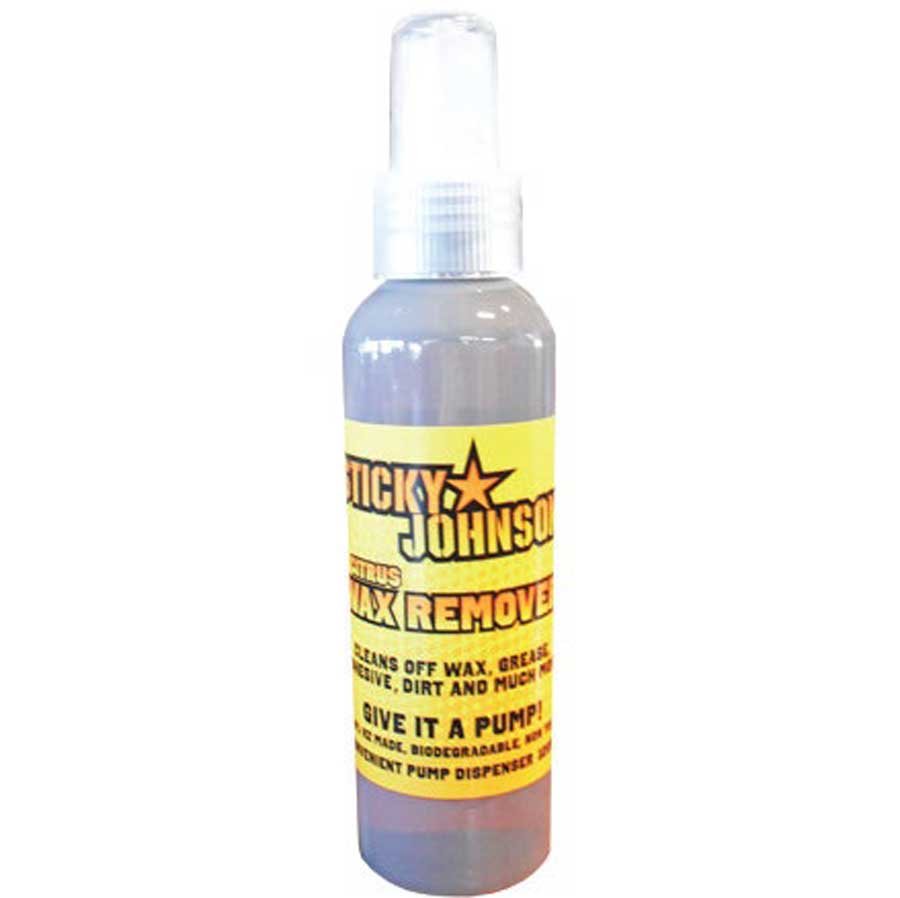
YOu can use products like Sticky Johnson wax remover to get a completely clean deck.
When a full removal makes sense
Strip the deck when sand and grime have become embedded, when the wax has discoloured, or when you're moving between seasons with a substantially different water-temperature rating. A clean surface also makes it easier to see the condition of the deck and notice residue that fresh wax would hide.
Use sunlight to soften the old wax, but don't leave the board heating until the wax runs. Once pliable, push the flat edge of a wax comb across the deck and gather the shavings as you work. Follow with a gentle residue cleaner and a cloth, taking care not to gouge the surface with a sharp or improvised tool.
Heat is a common maintenance problem in New Zealand summer. A board left wax-side up in direct sun or inside a hot vehicle can soften the wax and spread it over the rails. Store the board in shade, and keep the wax bar out of the heat as well. For a convenient removal option, Sticky Johnson Wax Remover is designed for clearing old surf wax from the board.
Common Surf Wax Mistakes and How to Avoid Them
Most poor grip comes from a small number of avoidable errors. The board may look waxed, but appearance isn't the test. Your hand should feel a consistent, raised texture, and the product should suit the water underneath you.
The mistakes that cause sliding
- Waxing a dirty deck: Sand and grime sit between the wax and the board, reducing adhesion. Wipe the deck first and remove contaminated wax when the surface has become gritty.
- Using tropical wax in cold water: A hard bar may not create a useful tacky texture in cooler New Zealand conditions. Choose cold or cool wax according to the actual sea temperature.
- Applying only down the centre: Your feet, chest, and hands don't always land on a narrow line. Cover the active contact zones across the deck, including the areas used during paddling and popping up.
- Pressing too hard: Heavy pressure smears the wax and flattens the bumps. Use lighter circular strokes for the topcoat.
- Building a huge layer: More wax can create a soft, unstable surface and unnecessary drag. Maintain the texture instead of endlessly adding volume.
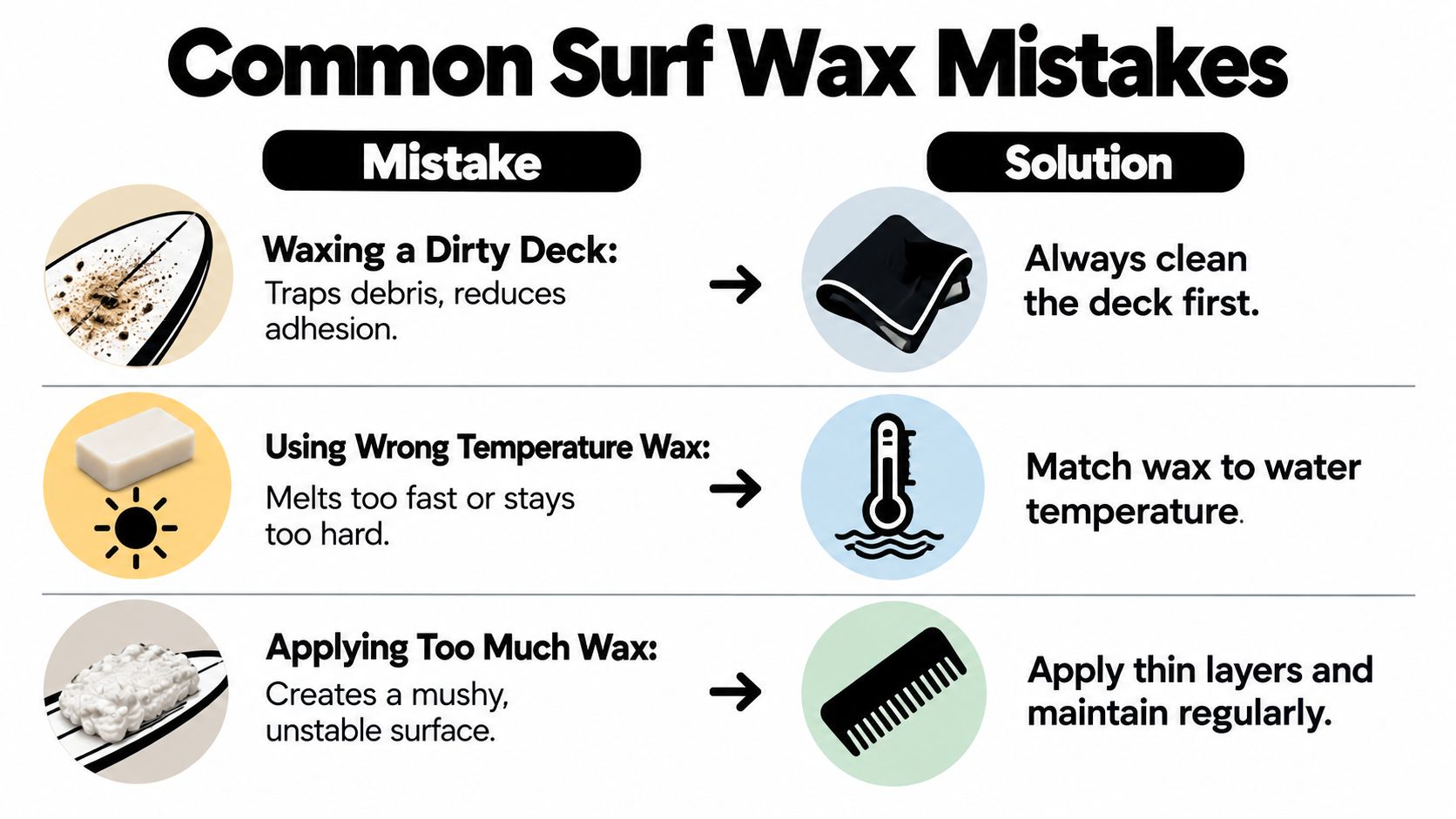
A comb can rescue a flattened surface for a session, but it can't fix the wrong temperature rating or a deck packed with sand. If your wax job feels slippery, inspect the surface before reaching for another bar. Cleaning and choosing the correct hardness usually solve more than extra application does.
Choosing Between Surf Wax Traction Pads and Eco Alternatives
Wax gives you customisable grip across the deck. You can place it where your hands, chest, knees, and feet contact the board, which suits longboards, midlengths, fishes, and boards where you move around. A tail pad offers a more fixed reference under the back foot, which can help riders who want a defined tail position, particularly on performance shortboards.
Many surfers use both. The pad locks in the tail area while wax covers the rest of the standing and paddling surface. This guide to surfboard tail pads covers the fixed-grip option without removing the need to think about forefoot traction.
The environmental question is harder to ignore. A 2025 NZ sustainability guide says about 95% of surf wax on the market is made from petroleum-based paraffin, petroleum jelly, tackifiers, fragrances, and colours, and describes those materials as harmful to marine life and humans. Read that as a product-composition and disposal concern, not as proof that every conventional bar has the same formula or creates the same impact. Sustainable Taranaki outlines the petroleum and eco-wax issue.
Eco wax can reduce reliance on petroleum-derived ingredients, but you still need to check its temperature rating, texture, durability, and compatibility with your board. A lower-impact choice that goes soft in the wrong water won't give you reliable control, so performance and environmental considerations belong in the same decision.
For most NZ surfers, a sensible setup is a clean basecoat, temperature-specific topcoat, and a comb ready for maintenance. Keep the bars matched to the places and seasons you surf, then choose an eco alternative when its ingredients and performance fit your conditions.
Blitz Surf Shop stocks surf wax, temperature-rated options, traction products, and board-care essentials for surfers across New Zealand. Visit Blitz Surf Shop to find the right grip setup for your board and local water, or ask the team for practical advice before your next session.


