

Finding the right pair of skate shoes in NZ is about way more than just how they look; it's about performance, safety, and making every single session count. The easiest way to think about it is like this: your shoes are the suspension and tyres for your skateboard. They're the one thing connecting you to your board, and they define your control, your confidence, and ultimately, how much fun you have.
Why Your Skate Shoes Are Your Most Important Gear
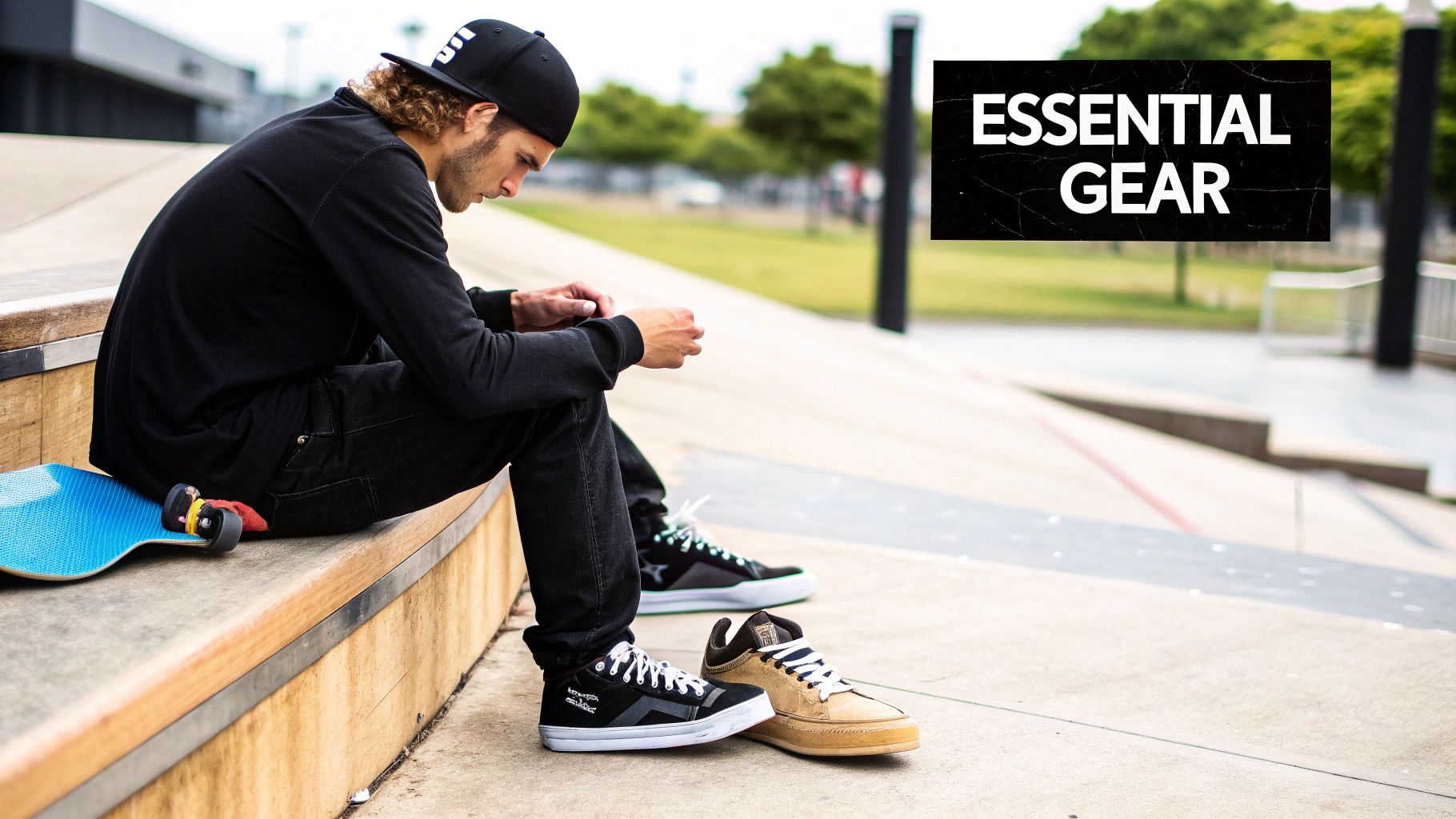
We've all been there. A session cut short by bruised heels, zero board feel, and feet that are just screaming at you. More often than not, the culprit is a pair of shoes never designed for the unique abuse of skateboarding. The wrong footwear can turn a great day at the park into a frustrating battle against your own gear.
Now, picture dropping in with a pair of purpose-built skate shoes. Suddenly, you've got the precise board feel you need for flip tricks, but also the impact protection to handle a few sketchy landings. From the smooth concrete of Auckland's Aotea Square to the rugged bowls down in Christchurch, the right shoes give you the confidence to actually push your limits.
Built For Kiwi Skaters
Here in New Zealand, the skate scene is absolutely buzzing and growing fast. The skateboard footwear and apparel market across Australasia is projected to expand at a compound annual growth rate of 5%. This isn't just a random number; it shows a community that's serious about quality gear that's built to last.
At Blitz Surf Shop, we’ve been part of Aotearoa’s skate culture since way back in 1983. We know that choosing the right shoe can feel a bit overwhelming, with all the chat about vulcanised soles, cupsole construction, suede vs. canvas, and everything in between.
That’s exactly why we put this guide together. Our goal is to cut through the jargon and help you find the perfect pair that fits both your style and, most importantly, your feet.
Investing in proper skate shoes is one of the smartest things you can do to avoid injury. It's not just about comfort; it's about protecting your ankles and feet from the repetitive, high-impact reality of skateboarding.
This guide will walk you through everything you need to know, from understanding what makes a real skate shoe different, to finding the best brands available right here in NZ. We also cover other crucial topics like skateboarding safety and injury prevention tips in our other guides.
Right then, let's find the pair that will change your skating.
The Anatomy of a True Skate Shoe
At a quick glance, a pair of skate shoes might look a lot like your average sneakers, but it’s what’s hiding beneath the surface that makes all the difference. What truly separates them is pure, purpose-built engineering.
Think of a skate shoe’s flat, grippy sole as the high-performance tyre on a race car—it’s designed for one thing: maximum contact and unwavering control. Unlike running shoes with their curved soles and lightweight mesh, every part of a skate shoe is chosen to withstand the unique abuse of skateboarding. From the constant friction of grip tape to the heavy impact of landing tricks, these shoes are your first line of defence. This isn't just about style; it's about specific features that help you skate better and safer.
Built To Take a Beating
The first thing grip tape attacks is the upper part of your shoe, especially around your toe and ollie area. Your standard canvas or synthetic trainers can get shredded in a single session. That's why most quality skate shoes are built from far tougher materials.
-
Suede Uppers: This is the gold standard for durability. Suede's tough, fibrous nature offers incredible resistance to the sandpaper-like grit of your board, lasting way longer than other materials.
-
Reinforced Canvas: While not as bombproof as suede, many skate-specific canvas shoes feature reinforced layers or special treatments. This beefs up their lifespan for skaters who prefer a lighter, more broken-in feel straight away.
-
Triple-Stitching: Look closely at the high-wear zones, like the toe cap and ollie patch. You’ll often find double or even triple-stitched seams. It's a small detail, but it’s critical for stopping your shoe from blowing out when you’re just getting warmed up.
It’s this dedication to durability that has cemented the skate shoe's place not just in skateparks, but in everyday fashion too. The global skateboard footwear market is blowing up, projected to grow from US$3,095.5 million in 2023 to US$4,546.8 million by 2033. Skate shoes are a huge part of this, valued for their lasting construction and timeless style.
Engineered For Protection and Control
Beyond just being tough, a skate shoe needs to protect your feet and connect you to your board. A stray board smacking your ankle or a hard landing can end a session pretty quick, which is why designers focus so heavily on protective elements.
A padded tongue and collar are essential. The tongue acts as a shield, protecting the top of your foot from the board flipping up and whacking you. A padded collar does a similar job, helping to lock in your ankle, prevent rubbing, and offer a bit of crucial support. This padding isn’t just for comfort; it’s functional armour.
The sole of a skate shoe is where the real magic happens. It’s the critical link between you and your board, dictating everything from how you feel its concave to how well you absorb a big impact.
This brings us to the two main types of sole construction, each offering a completely different feel and performance. Getting your head around these is key to finding the perfect skate shoes NZ skaters need for our varied spots.
-
Vulcanised Soles: Often called 'Vulc' soles, these are cooked at high temperature to bond the rubber sole to the upper. The result is a thin, flexible, and super grippy sole that gives you maximum boardfeel right out of the box. No break-in time needed.
-
Cupsole Soles: These are built differently. The upper part of the shoe sits inside a durable, pre-moulded rubber "cup." This method allows for way more cushioning and support, making them the go-to for skaters hitting bigger gaps and stairs.
Each sole type has its pros and cons, directly influencing how you skate. We'll dive deeper into this crucial choice, but understanding these core components helps you appreciate the thought that goes into every pair. To better understand how your board works with your shoes, you might also be keen on our guide on the fundamentals of skateboard construction.
Choosing Your Sole: Vulcanised Versus Cupsole
The choice between a vulcanised sole and a cupsole is probably the single biggest decision you'll make when grabbing a new pair of skate shoes. This isn't just a tiny detail; it completely changes how you feel your board, how you control it, and how you connect with your skating.
One gives you surgical precision for technical tricks, while the other offers bombproof protection for big drops.
Think of it like tyres on a car. A race car needs thin, super-grippy tyres for maximum road feel and tight cornering. On the other hand, a rally car needs thick, chunky tyres with deep suspension to soak up massive impacts. Your shoe's sole is your tyre, and the right choice really comes down to how and where you skate.
The Vulcanised Sole Experience
A vulcanised sole (or just 'vulc' for short) is all about one thing: boardfeel. The whole process involves baking the shoe at high heat, which melts a soft rubber outsole onto the upper with a simple strip of rubber foxing tape. The result is a super flexible, lightweight, and almost totally flat sole.
Because it's so thin, there’s very little getting in the way between your foot and the board. You can feel every little curve of the concave, making those tiny adjustments for flip tricks feel way more intuitive and direct. Best of all, they're pretty much ready to skate straight out of the box with zero break-in time.
If you're a street skater who loves ledge combos, flatground tricks, or anything that needs pinpoint precision, a vulcanised shoe is your best mate. The grip and flexibility are unreal, giving you the control to flick your board just right. Have a look at classic vulcanised models from Vans to see this iconic construction in action.
But, all that amazing boardfeel comes with a trade-off. The minimal cushioning means less impact protection. If you’re jumping down stairs or big gaps all day, your heels and joints are going to feel it.
The Cupsole Advantage
On the other side of things, we have the cupsole. As the name suggests, the rubber outsole is moulded into a solid 'cup' shape that the rest of the shoe sits inside. This design lets shoe companies pack in way more cushioning and protective tech.
Cupsoles are built for durability and taking a beating. They often have complex midsoles with foam or gel inserts, all designed to soften heavy landings and save your feet from heel bruises. This beefy construction makes them stiffer and generally helps them last a lot longer than their vulc cousins.
These are the go-to for skaters tackling big stair sets, gaps, or spending their time in concrete bowls and on vert ramps. While you do lose some of that instant boardfeel you get from a vulc shoe, you gain the support and confidence to really commit to high-impact tricks. They usually need a few sessions to break in and soften up. Brands like DC Shoes are famous for their protective and long-lasting cupsole designs.
This flowchart can help simplify the decision based on what you skate most.
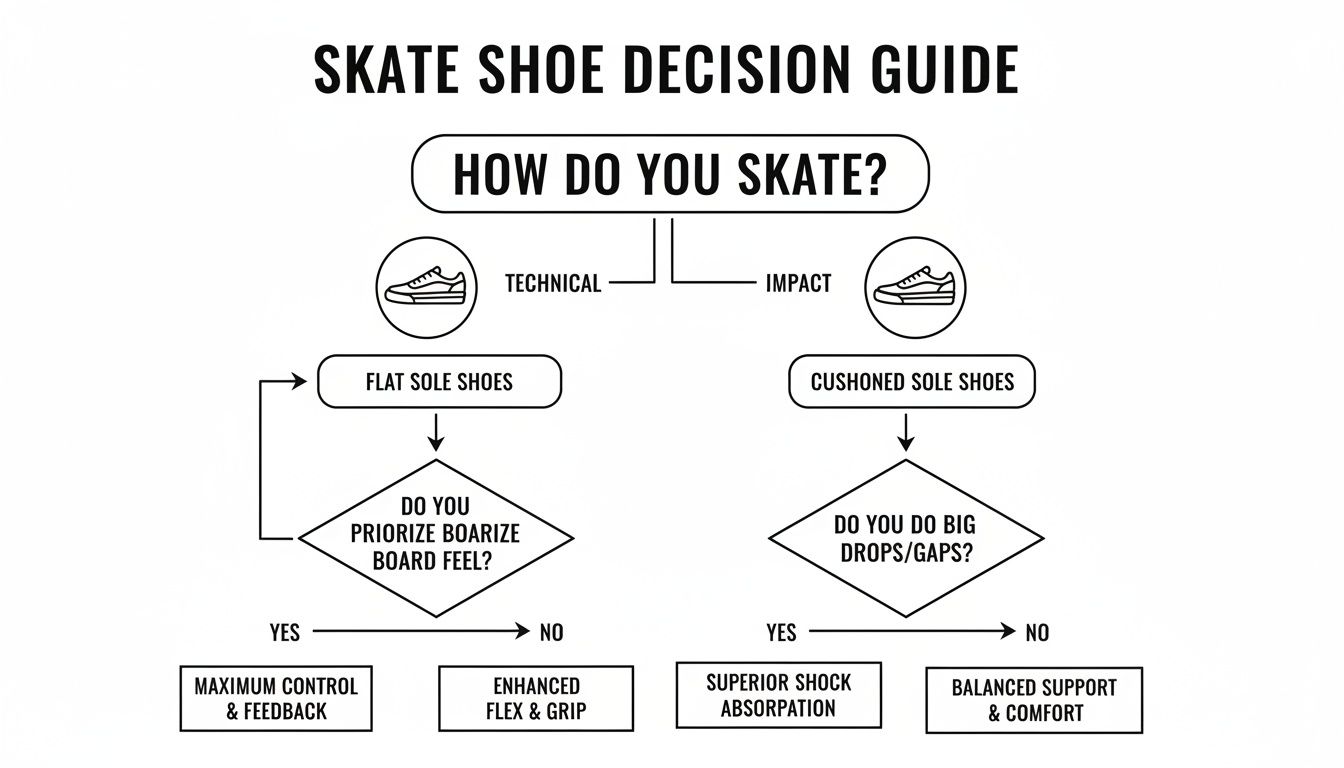
The main thing to take away from this is that your choice should match the kind of skating you're actually doing day-to-day.
Head-to-Head Comparison
To make the decision even clearer, let's break down the key differences. Getting your head around these trade-offs will help you find the perfect balance for your needs, whether you're skating the streets of Auckland or the parks in Gisborne. Choosing the right sole can be just as important as picking the right skateboard wheel durometer for different terrains.
Vulcanised Sole vs Cupsole: A Head-to-Head Comparison
This table lays it all out, helping you see at a glance which sole construction lines up with your skating style.
| Feature | Vulcanised Sole | Cupsole | Best For |
|---|---|---|---|
| Boardfeel | Excellent. Thin and flexible for maximum control. | Good. Stiffer and thicker, sacrificing some feel. | Technical street skating, ledges, flatground, and manual pads. |
| Impact Protection | Low. Minimal cushioning for heavy landings. | Excellent. Designed with advanced cushioning. | Gaps, stair sets, vert ramps, concrete bowls, and high-impact skating. |
| Durability | Good. Can wear out faster due to softer rubber. | Excellent. Built to last through heavy abuse. | Skaters who go through shoes quickly and need maximum lifespan. |
| Flexibility | High. Flexible right out of the box. | Low to Medium. Requires a break-in period. | Skaters who want an instantly comfortable, ready-to-skate shoe. |
| Break-in Time | Minimal. Ready to skate almost immediately. | Required. Can feel stiff for the first few sessions. | Skaters who don't mind a short break-in period for more support. |
At the end of the day, there’s no single "best" sole—only the best sole for you. Plenty of skaters actually own both types, switching between them depending on what spot they’re hitting that day.
Choosing the right skate shoes in NZ means matching your gear to our diverse spots. A techy street session in town might be perfect for a vulc, while a day at the local concrete park could be way better with a solid cupsole. Don't be afraid to experiment and find what gives you the most confidence on your board.
How to Find Your Perfect Fit Online
Buying skate shoes online can feel like a bit of a gamble, especially for us Kiwi skaters. We’ve all been there—a shoe that’s too loose means sloppy control and zero precision. Even worse, one that’s too tight will kill a session with pain before it even gets going.
You're aiming for that sweet spot: a perfectly snug fit that feels like an extension of your foot, giving you the confidence to really trust your board.
This is where it gets a little tricky. Sizing isn't a universal language between brands. A US 10 in a classic Vans shoe might feel completely different from the same size in a pair of DC or Etnies. Each brand uses its own last—the mould the shoe is built around—which is why the fits can be so unique.
When you're buying online, you've got to be extra sure about the fit. For a deeper dive into understanding what 'true to size' means and how it all works, that guide is a good resource. It helps make sense of the jargon and gives you a better shot at getting it right the first time.
Practical Tips for Measuring at Home
Before you even glance at a size chart, a few simple steps at home can make all the difference. These will give you the most accurate measurement to work with.
-
Measure in the Afternoon: Your feet naturally swell a bit throughout the day. Measuring later on ensures you’re getting them at their largest, so you don't end up with shoes that feel fine in the morning but pinch by the arvo.
-
Wear Your Skate Socks: Don't measure barefoot. Always pop on the same type of socks you’d wear for a skate session to get a true-to-life fit.
-
Trace Your Foot: Stand on a piece of paper and trace the outline. Then, just measure the distance from your heel to the tip of your longest toe to get your length in centimetres.
Getting the fit right is about more than just comfort; it's about performance. A snug heel and secure midfoot prevent your foot from sliding around, which is absolutely essential for board control during technical tricks.
Navigating the Sizing Chart
Once you've got your measurement, a sizing chart is your best friend for converting it. Just remember that US, UK, and EU sizes are all different, so a reliable chart is key.
Here’s a general guide to help you find your size when shopping for skate shoes in NZ.
| NZ/US Men's | UK Men's | EU Size | CM (Heel-to-Toe) |
|---|---|---|---|
| 7 | 6 | 40 | 25 |
| 8 | 7 | 41 | 26 |
| 9 | 8 | 42 | 27 |
| 10 | 9 | 43 | 28 |
| 11 | 10 | 44 | 29 |
| 12 | 11 | 45 | 30 |
Although New Zealand's broader footwear market saw a slight dip in 2025 with a market size of $720.6 million, the demand from dedicated skaters remains solid. This just goes to show how important it is for shops like ours to provide spot-on fitting advice for a passionate community. For more context on these trends, you can explore detailed footwear retail statistics.
Of course, nothing beats trying a shoe on in person. If you're ever near Gisborne, we always recommend swinging by Blitz Surf Shop for a proper fitting. For our online customers across NZ, we've made our returns policy as simple as possible to make sure you end up with the perfect pair.
And if you're shopping for the younger generation, check out our guide on choosing a skateboard for kids for more youth-specific sizing tips.
Explore Top Skate Shoe Brands in New Zealand
Alright, we've covered the nuts and bolts of sole construction and materials. Now for the fun part: connecting all that theory to the iconic brands that are the lifeblood of skate culture. This is where you see how concepts like boardfeel and durability actually play out on your board. Instead of just a dry list, let's get into the story behind each brand and what makes their shoes tick for skaters across NZ.
Here at Blitz, we only stock brands that have earned their stripes in skateparks and street spots over decades. Each one brings something different to the party, from timeless vulcanised classics to tech-heavy cupsoles built to take a beating.
Vans: The Original Since 1966
When you think of skate shoes, chances are you’re picturing a pair of Vans. They’re the OG, the original skate shoe company, and they’ve built an unshakable legacy on simple, effective, and ridiculously stylish vulcanised kicks. Their legendary waffle sole offers a level of grip that's been the gold standard for generations.
The real magic of Vans is their commitment to boardfeel. Their shoes are designed to feel broken-in straight out of the box, giving you the flex and control you need for technical skating. The modern Vans Skate Classics line takes that classic formula and gives it some crucial upgrades.
-
PopCush Insoles: These aren't your old-school flat insoles. They're energy-return footbeds that offer proper cushioning and impact protection without killing the boardfeel that vulcanised shoes are famous for.
-
DURACAP Reinforcement: High-wear areas like the toe and ollie patch have reinforced rubber underlays, which massively extends the shoe's life against the constant abuse of grip tape.
-
SickStick Rubber: This is an enhanced rubber compound that delivers the grippiest, most durable sole in the brand’s long history.
For Kiwi skaters who put a premium on precision and an instant connection to their board, the Vans Skate range is a no-brainer. Models like the Skate Old Skool and Skate Slip-On are timeless for a reason—they just work. You can check out our full collection of Vans skate shoes to find the pair that fits your style.
DC Shoes: Pushing Performance Forward
If Vans is the classic soul of skateboarding, DC Shoes represents its athletic, performance-driven evolution. DC blew up in the '90s and quickly got a rep for its chunky, tech-focused footwear designed to handle the gnarliest impacts of modern street skating.
DC Shoes built its name by creating shoes that could survive huge gaps and massive stair sets. Their focus has always been on mixing durability with new tech to keep skaters' feet safe.
This is the brand that became synonymous with the cupsole. DC’s designs often feature beefy construction, advanced cushioning, and materials engineered for a long, hard life. They are the go-to for skaters who need maximum protection and support, full stop.
Key features you’ll almost always find in a pair of DCs include:
-
Super Suede™: This isn't just regular suede. It's specially treated to be 50% more durable, offering incredible resistance to grip tape abrasion.
-
IMPACT-ALG™ Insoles: Made from polyurethane, these insoles provide serious cushioning and impact absorption for anyone skating high-drop spots.
-
Pill Pattern Tread: DC’s trademarked outsole design delivers a long-lasting, sticky grip for dependable board control.
For anyone who skates hard and needs a shoe that can keep up, exploring our range of DC Shoes is a must. Their gear gives you the confidence to really push your limits. Of course, how you express yourself on the board is just as important, and you can learn more about pulling your whole look together by reading our guide to the essentials of skater fashion.
Globe Brand Skate Shoes
Globe is a renowned name in the skateboarding community, recognized for its dedication to crafting high-quality skate shoes. Founded by skaters, Globe's mission is to create footwear that meets the rigorous demands of skateboarding. Each pair of shoes is designed with skaters' needs in mind, emphasizing performance, durability, and comfort.
Globe offers a wide range of skate shoes, catering to various preferences with both vulcanized and cupsole models. This diverse selection ensures that every skater can find a shoe that suits their style and performance needs. Globe shoes are celebrated for their comfort right out of the box and for integrating advanced technology to enhance skating experiences.
The attention to detail in Globe shoes is evident in features such as their Super-V™ outsole for enhanced grip and durability. The Nitrocel™ airbag sole provides excellent cushioning and impact resistance, making them ideal for extended skate sessions. For skaters seeking a brand that truly understands and supports their sport, Globe stands out as a leading choice.
Making Your New Skate Shoes Last Longer
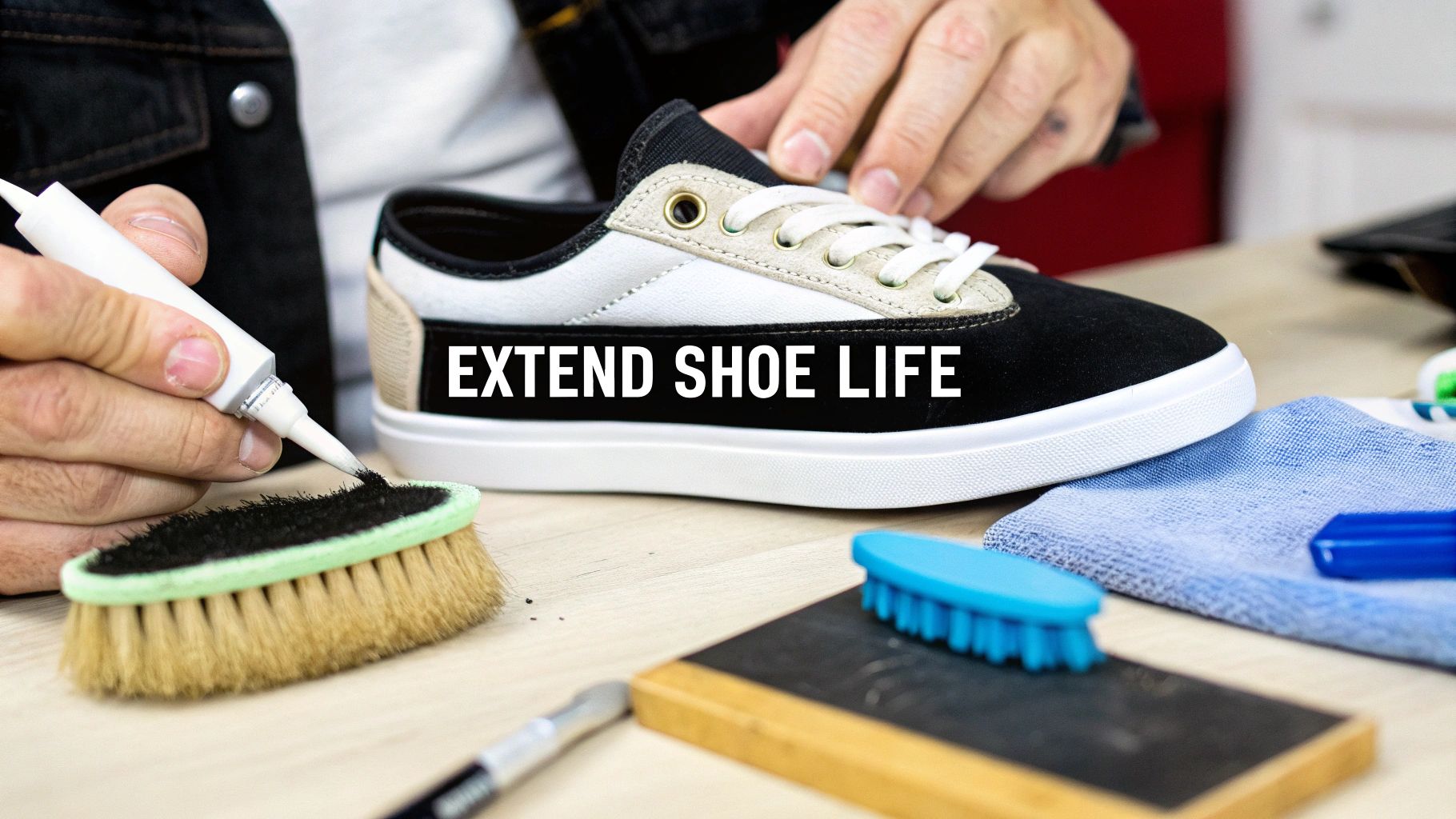
Scoring a fresh pair of skate shoes is a serious investment in your skating. Just like a new deck, they feel amazing but they won’t last forever without a bit of TLC. Looking after that investment starts the second you open the box and can seriously extend their life, which saves you coin and keeps you on your board longer.
The first step is probably the most important one: the break-in. Going straight into a heavy three-hour session with stiff, brand-new shoes is a recipe for painful blisters and a bad time. You've got to ease them in.
Just wear them around the house for a day or two. This gives the materials a chance to soften up and start moulding to the unique shape of your foot, all without the stress of actually skating. It’s a simple move that makes a huge difference, ensuring that when you do hit the park, your shoes feel like they’re already part of your feet.
Long-Term Care and Repair
Once you start skating, grip tape becomes the enemy. It's awesome for keeping your feet locked on your board, but it’s absolutely brutal on your shoes. That constant friction will chew through even the toughest suede or canvas eventually. Luckily, a few good habits can help you fight back.
The first signs of trouble are usually small holes and torn seams, especially in the ollie area. Don't just ignore them and hope for the best. A tiny bit of specialised shoe glue can work wonders here.
A neat little trick is to apply a thin layer of shoe glue over high-wear spots before they even start to tear. This creates a protective barrier that can easily add weeks, or even months, to the lifespan of your favourite pair.
Catching a small tear early stops it from becoming a session-ending blowout. Honestly, it’s the single most effective thing you can do to get more mileage out of your skate shoes. You can find a whole range of skate shoe accessories and care products on our site to keep your gear in prime condition.
Cleaning and Drying Done Right
Let's be real, skate shoes get filthy. It's just a fact of life. But how you clean them makes a massive difference to how long they last. Whatever you do, don't just chuck them in the washing machine. The heat and tumbling can warp the sole and destroy the glues holding everything together.
Instead, follow a few simple rules depending on the material:
-
Suede: Grab a proper suede brush to gently get rid of loose dirt. For stubborn marks, a suede eraser or a tiny bit of special cleaner is your best bet. Try to avoid soaking the material.
-
Canvas: A bit of mild soap mixed with warm water and a soft brush will lift most dirt without wrecking the fabric.
-
Leather: Usually, a damp cloth is all you need to wipe grime off leather uppers.
After a clean-up or a particularly sweaty session, drying them properly is key. Never, ever stick your shoes in a dryer or leave them in direct sunlight. The intense heat shrinks materials, makes rubber brittle, and can completely ruin the shoe’s shape.
The best way is to stuff them with newspaper and just let them air-dry in a cool, ventilated spot. The paper soaks up moisture from the inside out and helps them keep their form, making sure your skate shoes NZ pair is good to go for your next session.
Your Top Skate Shoe Questions Answered
To wrap things up, let's run through a few of the most common questions we get asked here at Blitz. Getting these sorted can make all the difference when you're staring at a wall of shoes, trying to pick your next pair.
How Long Should a Pair of Skate Shoes Last?
This is the big one, and the honest answer is: it all comes down to how much you skate. If you're a dedicated skater hitting the park or the streets a few times a week, you'll likely get anywhere from one to four months out of a pair. People who skate less often or less hardcore might get a couple of years out of a pair.
The materials play a massive role here. Suede is always going to outlast canvas against the constant sandpapering of grip tape—no question. A pro tip? A bit of shoe glue on the high-wear areas from your flip tricks can easily add a few more weeks of life to your shoes.
Can I Just Use My Regular Trainers for Skating?
We'd strongly, strongly advise against it. It's tempting to grab your running shoes and head out, but they're built for a completely different game.
Your average trainers have soft, curved soles designed for heel-to-toe running, not the flat, grippy platform you need to actually feel and control your board. Grip tape will absolutely shred their mesh uppers within a session or two, and they offer next to no impact protection for your heels. It's a fast track to bruised heels and a twisted ankle.
Using the wrong shoes isn't just bad for your skating—it's a genuine safety risk. Purpose-built skate shoes are designed from the ground up to protect your feet and give you the control you need to skate safely.
Are More Expensive Skate Shoes Actually Better?
For the most part, yeah, you get what you pay for. A higher price tag usually means you're investing in better materials like premium suede, proper cushioning tech like gel or foam insoles, and tougher construction with details like triple-stitching in key spots.
A budget pair is totally fine to get you rolling, but premium shoes from the core skate brands will almost always last longer and feel better under your feet. This can actually save you money in the long run, since you won't be burning through them quite so fast.
How Do I Stop My Heel from Lifting?
Heel lift—that annoying slip-slide feeling in the back of your shoe—is a classic problem. It causes blisters and seriously messes with your board control. The first thing to check is your sizing. You want your skate shoes to be snug, not sloppy.
If the size feels right, try changing up your lacing. A 'heel lock' (sometimes called a 'runner's loop') uses those extra top eyelets to cinch the shoe tight around your ankle, stopping any slippage. Sometimes, the fix is as simple as chucking on a thicker pair of skate socks to fill out any empty space.
Here at Blitz Surf Shop, we've been helping Kiwi skaters find the right gear since 1983. Whether you need your very first pair of skate shoes or a high-performance model to step up your game, we've got your back with expert advice and the best brands in the business.
Check out our full range online and find the pair that’ll help you progress at https://blitzsurf.co.nz.


