

Picture this: you're out at Wainui Beach, the waves are absolutely perfect, peeling just right, but your board feels… off. It’s sluggish, it won’t turn how you want, and it just feels unpredictable. Sound familiar? It’s a super common frustration, and more often than not, it’s not your surfing—it's your fins.
Getting the right set of FCS fins under your board can be a total game-changer, turning those sessions that feel like a battle into genuine breakthroughs.
Why Your Surfboard Fins Matter More Than You Think
It’s easy to get fixated on the shape of your board and forget about what are arguably the most critical performance parts: the fins. Think of your surfboard like a high-performance car. The board is the chassis and body, but the fins? They’re the engine, steering, and tyres all rolled into one.
They’re the bits that actually grip the water, controlling everything from how you generate speed to how hard you can lay into a turn. Honestly, swapping out your fins is the quickest and most effective way to completely change how your board feels and responds under your feet.
The Role of Fins in Your Surfing
A good set of fins isn't just for stability. They're what allow you to:
-
Generate Speed: Fins create lift and drive, propelling you down the line.
-
Maintain Control: They give you the bite needed to hold an edge through powerful carves.
-
Execute Manoeuvres: Fins act as the pivot point for everything from sharp snaps to smooth, flowing turns.
Here in New Zealand, from the long walls of Raglan to the punchy beach breaks in Gizzy, FCS fins are pretty much the standard. A recent survey of Kiwi surfers found that over 65% of us regularly use an FCS fin system. It’s no surprise, really—they just work incredibly well in our diverse and often powerful conditions.
Your fins are the secret to unlocking your board’s full potential. A simple change can make a stiff board feel lively or a loose board feel more controlled.
This guide is designed to cut through the jargon and give you the real-world info you need to choose the perfect FCS fins for your board, your surfing, and your local break. As the local crew here at Blitz Surf Shop, we’ve seen firsthand how the right set-up can elevate someone’s surfing.
For a deeper look into the fundamentals, you can also explore our detailed guide on surfboard fins.
Comparing FCS I and FCS II Fin Systems
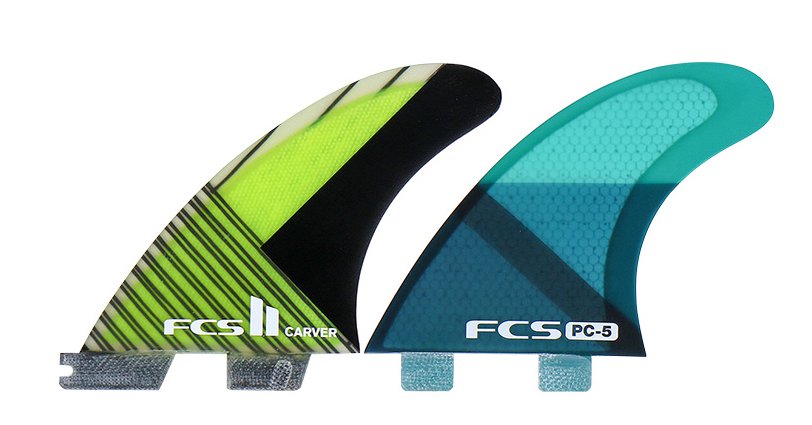
When you're staring at a wall of fins, the difference between the two main FCS systems can seem a bit technical. But it's actually pretty simple.
Think of the original FCS I system like a classic deadbolt lock on your front door. It’s tough, reliable, and uses grub screws (the ‘key’) to lock everything down tight. Then you have the modern FCS II system, which is more like your car’s keyless entry—it’s all about speed and convenience, letting you click your fins in and out without fumbling for any tools.
This jump from a screw-in system to a tool-less one was a game-changer. It means surfers can now tweak their fin setup right on the beach in seconds, swapping fins to match the conditions as they change. For anyone who loves experimenting with how their board feels, this flexibility is massive.
The Original: FCS I System
For years, the FCS I system was the gold standard. You'll also hear it called the dual-tab system, and the name says it all. Each fin has two tabs on its base that slot perfectly into two plugs on the surfboard. You then grab your fin key and tighten a couple of tiny grub screws to lock it in place.
It's a straightforward method that creates an incredibly solid connection between the fin and the board. Sure, it takes a minute or two to swap them out, but plenty of surfers still swear by this time-tested system. Its rock-solid security gives you peace of mind, especially when the surf gets heavy and the last thing you want to worry about is losing a fin.
The Modern Fin System: FCS II
The FCS II system is built for pure efficiency and performance. The keyless design is its standout feature—you just push your fins into the plugs until you hear a 'click', and a clever titanium rod and barrel mechanism locks them in. Done. To get them out, just give them a solid pull upwards and forwards.
This means you can switch your board from a thruster to a quad setup in less than a minute. No lost fin keys, no sandy screws.
A cool little detail with the FCS II system is how the leading edge of the fin sits completely flush with the plug. This creates a seamless surface that cuts down on drag and improves water flow, giving you a faster, more responsive feel under your feet.
So, how do you choose between the two? Let's break it down.
FCS I vs FCS II System At a Glance
| Feature | FCS I (Original Dual Tab) | FCS II (Keyless Click-In) |
|---|---|---|
| Installation | Requires a fin key and grub screws. Slower to install/remove. | Tool-less click-in and out system. Super fast and convenient. |
| Security | Extremely secure and reliable connection. Trusted in heavy surf. | Very secure, though some surfers add screws for extra peace of mind. |
| Performance | Proven, industry-standard performance for decades. | Enhanced hydrodynamics due to the seamless fin-to-board connection. |
| Convenience | Less convenient for quick changes on the beach. | Perfect for surfers who love to experiment and adapt to conditions. |
| Backwards Compatibility | Can screw them in to FCS 2 system, or add an adaptor kit to be completely flush. | Not compatible with FCS 1 plugs |
| Best For | Surfers who prefer a set-and-forget setup or value absolute security. | Surfers who prioritise speed, convenience, and performance gains. |
Ultimately, both systems are fantastic. Your choice really just comes down to whether you prefer the old-school reliability of FCS I or the modern convenience and performance edge of FCS II. Note: as FCS 1 systems are no longer being put into boards there are way more options available in FCS 2
What About Compatibility Between Systems?
So, what happens if you’ve got a new board with FCS II plugs but you're still attached to your favourite set of old FCS I fins? No dramas at all. FCS was smart enough to make the new system backwards-compatible with a simple adapter.
-
FCS Compatibility Kits: These are little kits with silicone infills designed to perfectly fill the gap at the front of the FCS II plug.
-
Easy Installation: You just pop the infill into the plug, slot in your old dual-tab fin, and then use the standard grub screws to lock it down—just like you would in an original FCS I system.
This clever design ensures your trusty old fins never have to gather dust. Here at Blitz, we’ve got you covered with everything you need, from the latest FCS II fin models to those essential compatibility kits that bridge the gap. And if you're looking for a deep dive into one of the most popular models out there, check out our guide on the FCS II Al Merrick fin range.
Finding Your Perfect Fin Configuration
Think of your surfboard's fin setup as its engine and transmission rolled into one. It completely dictates how the board accelerates, turns, and feels under your feet. Just like a car has different gears for different situations, your board needs the right fins to perform at its best in the waves you're surfing.
Nailing this is the key to unlocking what your board can really do. Each setup offers a totally different ride, so getting your head around the main configurations is the first step. Let's take a look under the hood at the three most common setups you'll find out in the water.
The Thruster: The Versatile All-Rounder
The three-fin setup, or thruster, is the most common fin configuration on the planet for a good reason. It’s the trusty all-rounder of surfing—predictable, reliable, and incredibly versatile. Made up of three fins, usually all the same size, it strikes a perfect balance between speed, control, and manoeuvrability.
This is the setup that gives you rock-solid stability and drive, letting you lay into turns with confidence. It’s the go-to for performance surfing in pretty much any conditions, from mushy beach breaks to powerful, overhead point breaks.
-
Best For: All-around performance surfing in most conditions.
-
Ideal Boards: Primarily shortboards, but you'll also find them on performance-focused mid-lengths and hybrids.
-
Feel: Balanced, predictable, and controlled. A trusted setup for your everyday sessions.
The Quad: High-Speed and Full of Drive
Switching to a quad is like dropping the hammer and getting a burst of speed. By ditching the centre fin and using four fins along the rails—two larger ones up front and two smaller ones behind—you cut down the drag and seriously ramp up your acceleration.
This setup channels water cleanly through the tail, giving you incredible down-the-line speed and hold. Quads are perfect for flying across weaker sections or for holding a high line in steep, hollow waves where you need control at serious pace.
A quad setup feels faster and more 'skatey' than a thruster. Without a centre fin, you get quicker rail-to-rail transitions and a looser feel through turns, while the four fins still provide exceptional grip on the wave face.
The Twin Fin: Fast, Loose, and Playful
The twin-fin setup is all about pure, unadulterated fun. With just two large fins on the rails, this configuration has the least drag, which translates into raw, unfiltered speed. It's fast, loose, and asks for a bit more input from the surfer.
The ride is often described as skatey and fluid, opening the door for pivoty turns and a unique sense of freedom on the wave. Twinnies absolutely fly on smaller, cleaner days and feel right at home on retro fish designs and some modern hybrids. They really reward a surfer who loves to generate their own speed and flow with the wave.
Matching these setups to your board and your local break is everything. Here at Blitz Surf Shop, we can help you find the perfect set of FCS fins for what you need, whether that's a versatile thruster for Gisborne's beachies or a speedy quad for lining up a long wall at Raglan. For a few more ideas, check out our guide on the top 5 FCS fins every NZ surfer should try.
How Fin Shape Influences Your Ride
Once you've got your fin configuration sorted, the next layer to peel back is the fin's actual shape. The specific design of your FCS fins is like a personality dial for your board, tweaking how it turns, drives, and feels under your feet on a wave. At the heart of this are two key elements: Rake and Foil.
What Is Rake?
Think of a fin’s Rake, or sweep, as being similar to the rudder on a boat. A fin with more rake—one that has a longer, more swept-back profile—is all about drawing things out. It encourages longer, smoother, flowing turns and provides incredible hold, which is exactly what you want on powerful, open-faced waves where you can really lean on your rail. A perfect real-world example is the FCS II Carver fin collection, which is built from the ground up for powerful carves.
On the flip side, a fin with less rake has a more upright, vertical profile that allows for much tighter, quicker pivots. This design is your best mate if you want to perform sharp, snappy manoeuvres right in the pocket of the wave. It gives the board a looser feel and allows for rapid changes in direction, making it a favourite for punchy, unpredictable beach breaks.
The Science of Foil Explained
The concept of Foil might sound a bit technical, but the idea is actually pretty simple. Picture an aeroplane wing—it's curved on top and flat on the bottom, a shape designed to generate lift. A fin’s foil works in much the same way, using its shape to create hydrodynamic lift and drive, propelling you through the water as you surf.
The outside fins in a thruster or quad setup typically have a flat or concave foil on the inside face and a convex (curved) foil on the outside. This asymmetrical design is what creates lift, helping you accelerate through turns and generate speed down the line. The centre fin, however, is usually symmetrical with foil on both sides, providing a stable, neutral rudder for consistent control.
The interplay between Rake and Foil is what truly defines a fin's character. A high-rake fin with a powerful foil will feel completely different from an upright fin with a flat foil, even if they're the same size.
This diagram breaks down the most common fin setups visually, showing how the number of fins changes the board's handling.
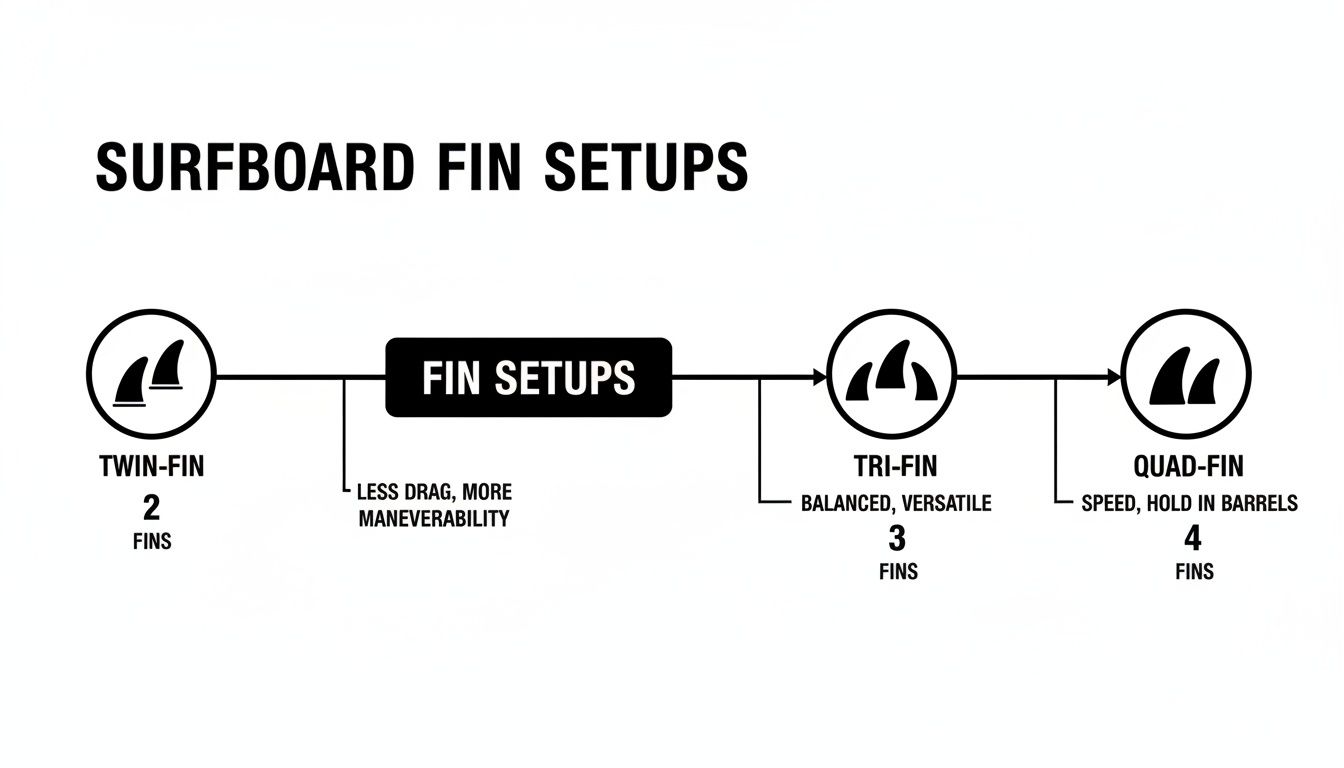
This highlights the distinct roles Twin, Tri, and Quad setups play in tailoring board performance. For a deeper dive into how these setups work in practice, check out our guide on understanding your FCS II thruster fins.
Getting your head around these design elements gives you the power to make a much more informed choice. You can see why a fin like the FCS II Performer feels so balanced and predictable with its neutral rake, while a Carver fin just wants to hold a long, powerful arc. By matching these characteristics to your style, you can find the perfect FCS fins here at Blitz Surf Shop to truly complement your surfing.
Understanding Fin Materials and Construction
Beyond the fin setup and template shape, the stuff your FCS fins are actually made of is a massive piece of the performance puzzle. Each type of construction has its own unique flex pattern, weight, and responsiveness, which directly changes how your board feels under your feet.
Think of it like choosing tyres for a car—some are built for a comfy, durable ride, while others are engineered for pure, unfiltered grip and performance on the racetrack.
Knowing the difference helps you line up your fins with your ability, your board, and your budget. This isn't just about what looks cool; it’s about finding a fin construction that works with your surfing style to squeeze the most out of every single wave.
Neo Glass: The Reliable All-Rounder
If you're just getting your sea legs or you just want a fin that offers predictable, forgiving performance, Neo Glass is a brilliant choice. This construction blends milled fibreglass with a high-grade polymer, creating a lightweight fin with a really consistent and dependable flex.
That forgiving flex means the fins are less twitchy and way more user-friendly. They deliver smooth, easy transitions between turns without needing you to have flawless technique. They’re also incredibly durable and offer fantastic value, which makes them a go-to for groms, weekend warriors, and anyone after a solid set of fins for everyday waves.
Neo Glass fins are engineered to feel familiar and trustworthy. They provide a stable platform that helps build confidence, allowing you to focus on your surfing rather than managing overly sensitive equipment.
Check out our collection of dependable FCS Neo Glass fins for a setup that delivers consistent fun, session after session.
Performance Core for High-Performance Surfing
When you feel ready to step up your game, Performance Core (PC) fins are the answer. These fins are made using a multi-layered resin transfer moulding process, which results in a fin that’s noticeably lighter and way more responsive. The pay-off is a fin that gives you instant feedback and explosive drive coming out of your turns.
PC fins have what’s called a progressive flex pattern. They’re stiff at the base for solid drive and control, but have a more flexible tip that gives you that spring and release off the top of the wave.
This dynamic response is perfect for intermediate to advanced surfers who want to push their board harder and wring more speed out of every manoeuvre. Have a look at our range of high-performance FCS PC fins to really feel the difference. For those chasing the ultimate in stiffness and hold, traditional Performance Glass (PG) fins, made from solid fibreglass, offer maximum control in powerful, heavy waves.
Choosing Sustainable FCS Fins for NZ Waves
As Kiwi surfers, we have a pretty deep connection to our coastlines. It’s just part of the culture, isn't it? That feeling of responsibility for our moana now extends right down to the gear we ride, letting us make eco-conscious choices without having to sacrifice performance. FCS is really stepping up here, creating sustainable options that help us look after the incredible marine environment we call home.
This shift towards greener gear is a big deal in New Zealand. Recent consumer reports from Surfing NZ show a huge percentage of local surfers are actively looking for sustainable products. FCS heard that call loud and clear and developed their Bio-Resin fin line, using recycled materials and cleaner manufacturing to seriously cut down on production emissions. This has really resonated with Kiwi riders, leading to a big jump in sales year-on-year, something we've seen firsthand. You can explore more about these market trends in a recent New Zealand surfing industry report.
The Rise of Bio-Resin Technology
The real standout innovation here is FCS's use of bio-resin. This stuff is a game-changer, blending recycled plastic cores with a resin that comes from renewable, plant-based sources.
What you get is a high-performance fin that dials back the reliance on traditional petroleum-based materials, effectively lowering the carbon footprint of each fin set. It's solid proof that top-tier performance and environmental responsibility can absolutely go hand-in-hand.
This technology means you're not just buying another set of fins; you're investing in a cleaner future for our oceans. It's a way to connect your passion for surfing directly to preserving the spots we all love, from Raglan and Piha right down to Wainui Beach. By choosing sustainable FCS fins, you're supporting a system that values our planet as much as you do.
Here at Blitz Surf Shop, we're stoked to get behind this movement by stocking these eco-friendly options. A fantastic example is the versatile FCS II Connect 8" Neo Glass Eco Longboard Fin, which brings this awesome sustainable construction to the longboarding community.
Your FCS Fins Questions Answered
Even after getting your head around all the different fin shapes, materials, and setups, a few practical questions always seem to pop up. We get asked these all the time at the shop, so here are some straight-up, clear answers to the most common queries about FCS fins.
Getting these little details right can save a lot of hassle and means more time in the water, which is what it's all about.
Can I Use My Old FCS I Fins in an FCS II Board?
Yes, absolutely. You can definitely run your trusty old dual-tab FCS I fins in the newer, keyless FCS II plugs. All you need is a simple compatibility kit. These kits come with small silicone infills that slot into the front of the plug, filling the gap perfectly.
This makes sure your old fins fit nice and snug, with no wiggle room. It’s a brilliant way to keep using a favourite set of fins on a brand-new board without any dramas. We always have these handy FCS II compatibility kits in stock here at Blitz to make life easy.
How Do I Choose the Right FCS Fin Size?
Thankfully, FCS keeps sizing pretty straightforward. They base it on the surfer's weight, which is the best way to make sure the fins perform how they're supposed to. You’ll find this standard guide printed on all FCS packaging.
-
X-Small: Under 55kg
-
Small: 55-70kg
-
Medium: 65-80kg
-
Large: 75-90kg
-
X-Large: Over 85kg
If you find yourself right on the edge of two sizes, think about your board and the kind of waves you usually surf. You might want to size up for a bit more hold and drive in powerful, punchy conditions. On the other hand, sizing down can give your board a looser, more skatey feel, which can be a lot of fun in smaller, weaker surf.
How Tight Should I Make the Screws on FCS I Fins?
With the original FCS I fins, you only need to tighten the little grub screws until they are 'finger tight' with your fin key. The goal is simple: the fin should feel solid in the plug with zero wobble.
The biggest mistake you can make is overtightening. Cranking down on the key too hard can strip the screw, crack the fin tab, or worse, damage the actual fin plug in your board—a much bigger problem to fix. A good rule of thumb is to turn the key until you feel solid resistance, and then just stop. That’s it.
What Is the Best Way to Care for My FCS Fins?
Looking after your FCS fins is easy and will make them last for years. The single most important thing you can do is give them a quick rinse with fresh water after every surf. Salt is surprisingly corrosive over time, so washing it off is key.
When you're storing your board, try to keep it out of direct sunlight for long stretches. Just like anything else, prolonged UV exposure can make the fin material brittle. If you're travelling or putting your board away for a while, it's always a good idea to pop the fins out and store them in a fin wallet. This will protect them from getting dinged up, scratched, or snapped.
At Blitz Surf Shop, we're here to help you get the most out of every session with the right gear and expert advice. Explore our full range of surfboards, fins, wetsuits, and accessories online.


