

Imagine carving smooth, flowing lines on concrete that feel just like dropping into a perfect wave. That's the magic of surfskating, and it's taking New Zealand by storm. A surfskate is a unique type of skateboard engineered to mimic the fluid motion of surfing, making it the ultimate tool for land-based training when the waves are flat along our Kiwi coastlines.
Welcome To The World Of Surfskating In New Zealand
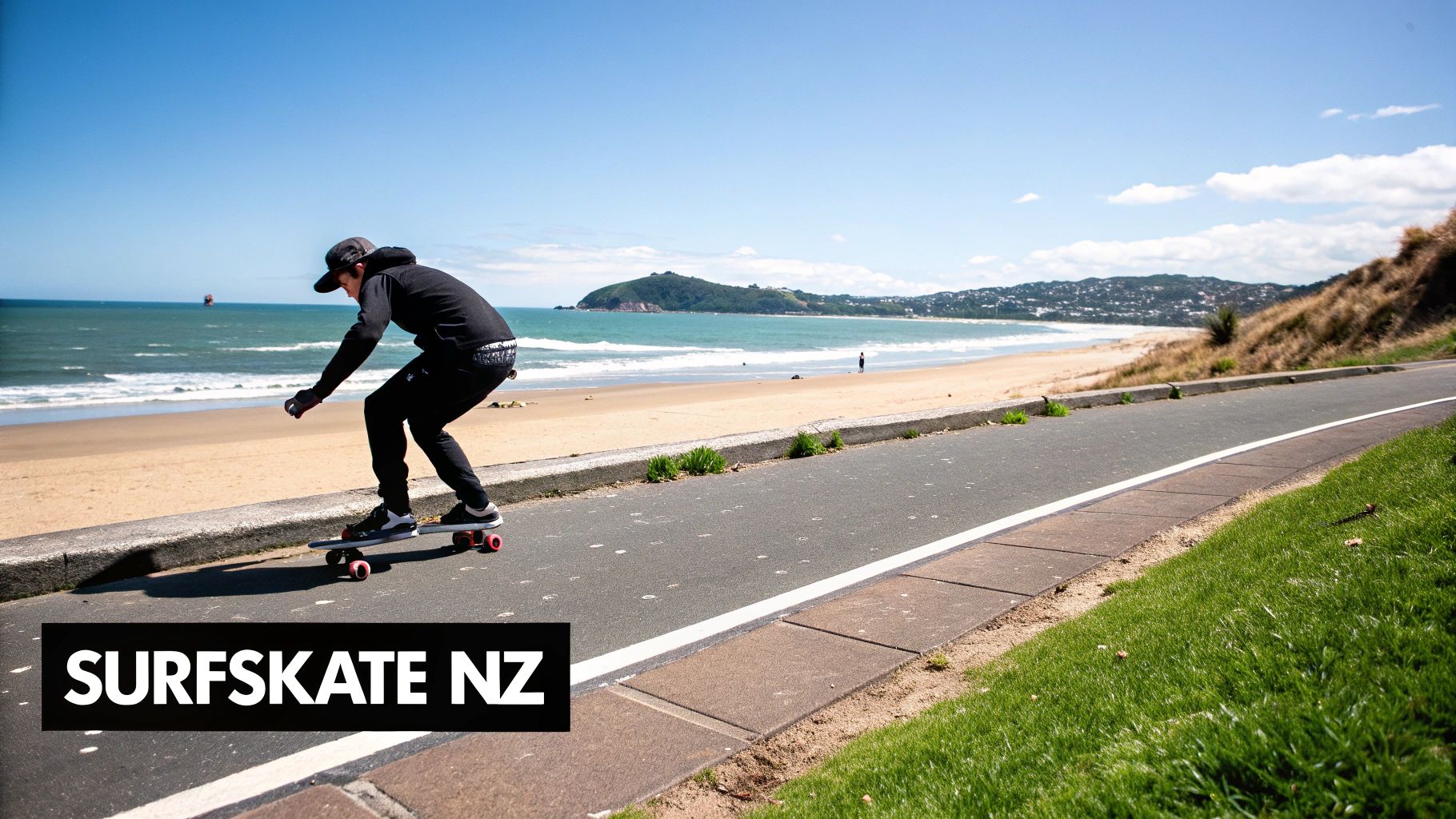
For decades, surfers across Aotearoa have searched for ways to keep their skills sharp when the ocean isn't cooperating. The answer has well and truly arrived in the form of the surfskate, a board that turns city streets, driveways, and skate parks into an endless concrete wave.
It’s more than just a piece of gear; it’s a way to maintain your flow and muscle memory all year round. The appeal of surfskating here in NZ is easy to see – it bridges the gap between our deep-rooted surf and skate cultures, offering a ride that’s both a practical training tool and just a ridiculously fun way to cruise around.
Why Is Surfskating Booming In NZ?
The rise of surfskating in New Zealand is directly tied to the country's passion for surfing. With an epic coastline stretching over 15,000 kilometres, the demand for surf-related gear is always there. This has fuelled a massive boom, and surfskates are riding that wave right into local shops.
A surfskate isn’t just about mimicking surfing; it’s about capturing the feeling. The unique front truck system lets you pump the board to generate speed from your own body movement—just like driving down the line on a wave.
As a family-owned hub for NZ's surf and skate culture since 1983, we here at Blitz Surf Shop in the legendary surf town of Gisborne are stoked to share our expert advice. We've seen firsthand how boards from brands like Carver have become essential for riders all over the country.
To get a deeper look into one of the top brands, check out our guide on Carver surfskates for the ultimate surfing experience on land. Right then, let’s get you rolling.
How A Surfskate Is Different From A Skateboard
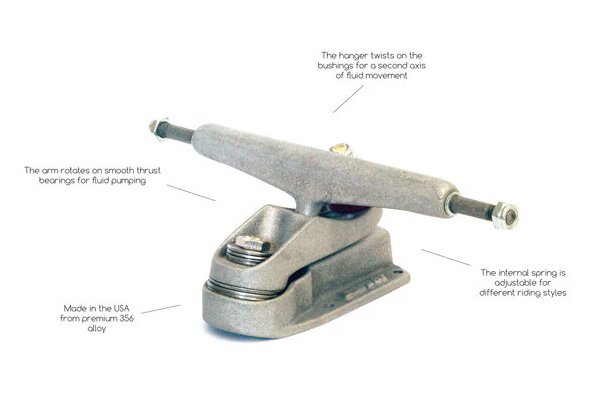
At first glance, you might mistake a surfskate for a regular skateboard or cruiser, but the moment you step on one, you'll realise they are worlds apart. The magic is all in the engineering, specifically the unique front truck system. It’s the heart and soul of a surfskate, built to create that fluid, flowing feeling of riding a wave—something a traditional skateboard just can't do.
Think of a standard skateboard truck as a simple, rigid hinge. It’s designed for stability when you're going fast and needs to be strong enough to handle the impact of ollies and kickflips. Perfect for the skate park and street skating.
A surfskate, on the other hand, features a specially designed front truck with a massive range of motion, allowing it to pivot and turn on multiple axes. This is what lets you ‘pump’ the board to generate speed—by shifting your weight from heel to toe with your upper body, you can create forward momentum without ever putting a foot on the ground. It’s this self-propulsion that feels incredibly similar to generating speed on a wave.
The Front Truck: The Engine Of The Ride
The front truck is what truly sets a surfskate apart. Forget the predictable, stiff turning of a skateboard’s traditional kingpin (TKP) or reverse kingpin (RKP) trucks. A surfskate truck is a dynamic, multi-axis system designed for flow.
Pioneering brands like Carver have led the charge with their innovative C7 and CX truck systems. These setups allow the nose of the board to swing dramatically from side to side, which makes for ridiculously tight turning circles. It’s this huge range of movement that lets you lay into those deep, drawn-out carves that feel just like a bottom turn on your surfboard.
The core difference is simple: a skateboard is designed to be pushed, while a surfskate is designed to be pumped. One is built for tricks and stability; the other is built for flow and carving.
With all that freedom up front, the back truck acts more like a stable pivot point, much like the fins on your surfboard. As you lean into a carve, your back foot drives the turn while the front truck guides the board, creating a seamless, connected feeling with the pavement. If you're keen to get into the nitty-gritty of how decks and trucks come together, you can learn more about how skateboard components work together in our detailed guide.
Comparing The Ride Feel
Jumping from a regular skateboard onto a surfskate for the first time is a pretty unique experience. Here’s a quick rundown of how they stack up in the real world:
-
Turning Radius: A surfskate can pull off incredibly sharp, snappy turns. You can easily carve around in a small space like a driveway, whereas a skateboard needs a much wider arc.
-
Speed Generation: Surfskaters generate their own speed by pumping. Skaters have to push off the ground with their foot or find a hill.
-
Stability: This is where traditional skateboards have the edge. They offer far more stability at high speeds, making them way better for bombing steep hills or landing tricks. The looseness of a surfskate can feel a bit wobbly until you get the hang of it.
-
Primary Use: Surfskates are the ultimate land-based tool for surf training and cruising with that surfy flow. Skateboards are purpose-built for technical street and park skating.
Surfskate vs Longboard vs Skateboard: A Quick Comparison
To help you visualise where each board fits, here’s a simple table breaking down their key differences. It’s a great way to see at a glance which board might be right for the kind of riding you want to do.
| Feature | Surfskate | Longboard | Skateboard |
|---|---|---|---|
| Primary Motion | Pumping & Carving | Pushing & Cruising | Pushing & Tricks |
| Turning Ability | Extremely sharp, tight turns | Wide, gentle carves | Moderate turning radius |
| Best For | Surf training, fluid carving | Commuting, downhill, dancing | Street tricks, skate parks |
| Stability | Less stable, especially at speed | Very stable, great for speed | Stable, designed for impact |
| Feel | Fluid, surf-like, flowy | Smooth, stable, gliding | Responsive, poppy, agile |
Ultimately, choosing between them really comes down to the feeling you’re chasing. For any Kiwi surfer wanting to sharpen their technique on flat days, or for anyone just looking for a cruisy, flowing ride, a surfskate in NZ is an unbeatable choice.
How To Choose The Right Surfskate For You
Picking the perfect surfskate isn't just about grabbing a cool-looking board; it's about finding the right match for your body, your style, and the places you'll be riding. The right setup feels like a natural extension of you, turning every push and lean into a smooth, powerful carve. Get it wrong, and a board that's too long will feel sluggish and boat-like, while one that's too short will feel twitchy and unstable under your feet.
Your own specs are the best place to start. A rider's height and weight are the key ingredients for figuring out the ideal deck length and wheelbase. Generally, taller and heavier riders need a longer wheelbase for a stable, wider stance. On the other hand, shorter, lighter riders will have a blast and feel way more in control on a shorter, more nimble board.
This isn't just a suggestion—it's basic physics. A longer board gives you a more stable platform and draws out your carves, making it perfect for anyone wanting to replicate that cruisy feeling of a mid-length or longboard. A shorter board, however, has a much tighter turning radius, which is exactly what you want for mimicking the snappy, aggressive turns of a performance shortboard.
Your Riding Style And Local Terrain
Next up, have a think about what you actually want to do on your surfskate and where you'll be doing it. Are you a surfer in NZ looking to drill sharp, aggressive cutbacks in a smooth skate park? Or are you chasing a cruisy ride along a slightly rougher coastal footpath? Your answer here will point you straight to the right setup.
-
For Snappy Surf Training: If you're a shortboarder wanting to dial in those tight manoeuvres, look for a shorter deck (around 28”–31”) with a shorter wheelbase. This kind of setup is super responsive and perfect for practising your snaps and roundhouse cutbacks until they're second nature.
-
For Cruising and Flow: If you're more of a longboarder or just want that relaxed, flowing feeling, a longer deck (32” and up) with a wider wheelbase is your ticket. These boards are more stable at speed and really encourage a smoother, more graceful style.
The terrain here in NZ plays a big part too. Smooth concrete skate bowls are a dream, but let's be honest, many local footpaths are far from perfect. Larger, softer wheels are your best friend here, soaking up the bumps and giving you a much smoother ride over cracks and rough surfaces. To get right into the nitty-gritty of how wheel hardness changes your ride, check out our guide on understanding skateboard wheel durometer.
Decoding The Tech: Deck Length And Trucks
Once you've got your size and style sorted, it's time to look at the hardware. Two things really define how a surfskate feels under your feet: the wheelbase and the truck system. The wheelbase—the distance between your front and back trucks—is probably the single most critical factor affecting your turning circle.
The truck system is the real engine of your ride. Here at Blitz, we stock a huge range of Carver surfskate completes, which are built around two main systems.
The choice between Carver’s C7 and CX trucks is one of the biggest decisions you’ll make. The C7 offers a smooth, flowing ride ideal for classic surf-style carving, while the CX provides a snappier, more aggressive feel for progressive manoeuvres.
The Carver C7 is a clever dual-axis truck system that uses an internal spring. This gives it an incredibly smooth, fluid feel that beautifully mimics the effortless glide of a single-fin surfboard. It’s perfect for drawing out long carves and pumping to generate speed with that classic surf flow.
The Carver CX, on the other hand, is a reverse-kingpin truck that's lighter and simpler in its design. It feels much snappier and more responsive, making it the go-to for riders wanting to throw down aggressive surf manoeuvres and hit the skate park.
Choosing the right surfskate can feel a bit overwhelming, but it doesn't have to be. The best first step is always to get some expert advice. The team here at Blitz Surf Shop in Gisborne are all seasoned riders, and we're stoked to help you find the perfect surfskate in NZ, whether you pop into the shop or get in touch with us online.
Mastering The Basics Of Pumping And Carving
Alright, ready to get rolling? That first session on a surfskate is a pretty awesome feeling, but like anything, it all starts with the fundamentals. Before you even think about generating speed, the first job is just to find your footing and get comfortable balancing on the board.
First up, you need to figure out your natural stance. Are you regular (left foot forward) or goofy (right foot forward)? If you've ever surfed or skated, you'll already know this. If not, here's a quick test: imagine you're about to slide across a polished floor. Whichever foot you instinctively lead with is probably your front foot.
Once you’ve got that sorted, place your feet on the board roughly shoulder-width apart, pretty much over the truck bolts. Bend your knees, keep your arms out to the side for balance, and just get a feel for how responsive the board is. Gently rock from your heels to your toes to understand its unique, flowing movement.
The Art Of Pumping
Now for the magic. The core movement that truly defines surfskating is the pump. This is how you create forward momentum without ever having to put a foot on the ground. The whole motion feels a lot like doing a bottom turn on a wave – it’s all driven by your upper body and flows down through your hips and feet.
Think of it like drawing a figure-eight with your shoulders. Start by rotating your shoulders to face forward, then swing them back as you lean into a heelside carve. Follow that by twisting them the other way as you transition into a toeside carve. It’s this smooth, rhythmic motion that gets the pump going.
The real key is to lead with your head and shoulders, letting your hips and the board follow. It’s a full-body movement where the power starts at the top and transfers all the way down to the wheels, creating that addictive forward drive.
This diagram helps show how your own specs, the board's design, and your riding style are all connected.
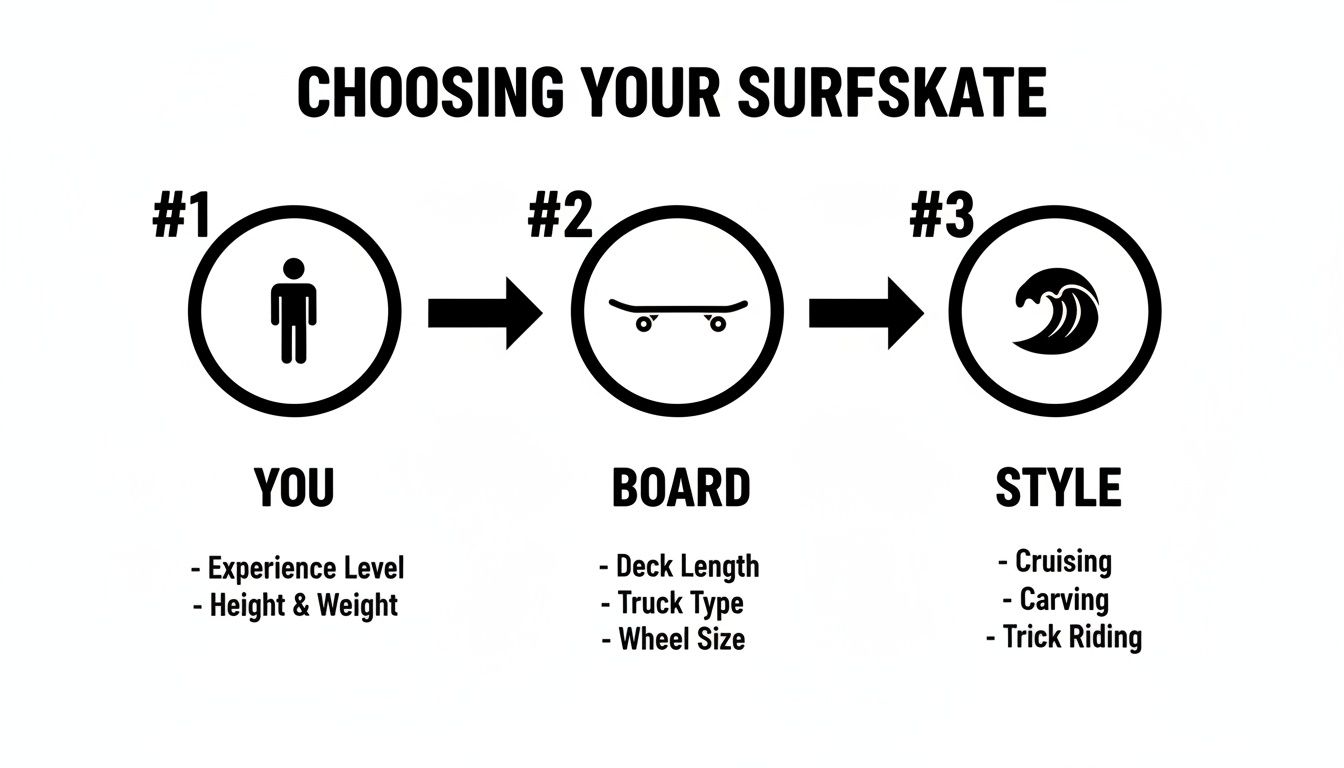
It shows that your personal attributes, the board's features, and how you want to ride all influence each other in finding the perfect setup.
Your First Practice Session
Safety has to be number one, especially when you’re starting out. Falling is just part of learning any board sport, so gearing up properly is a total non-negotiable. Before you even head out, make sure you have the essentials.
-
Helmet: Always protect your head. A certified skate helmet is an absolute must.
-
Pads: Knee and elbow pads will save you from a world of scrapes and give you the confidence to really commit to your carves.
-
Wrist Guards: These are easy to forget but can prevent those common sprains or fractures you get from trying to break a fall.
For your first few rides, find a good, safe, open space. An empty netball court, a smooth car park, or a wide, quiet footpath is perfect. Having a flat, predictable surface lets you focus purely on your balance and the mechanics of pumping, without worrying about traffic or cracks in the pavement.
By putting safety first and starting with the basics of balance and pumping, you'll build a solid foundation for your riding. For a deeper dive into staying safe on your board, check out our guide on 6 skateboarding safety and injury prevention tips. Now, get out there and find your flow
Where To Find The Best Surfskate Gear In NZ
When you’re ready to jump into the world of surfskating, getting your hands on the right gear and solid advice is everything. In New Zealand, your best bet is always a local, trusted shop that properly lives and breathes the surf and skate culture. For riders all over Aotearoa, that place is Blitz Surf Shop.
We're based in the legendary surf town of Gisborne and have been a family-owned cornerstone of the community since 1983. We aren't just a store; we're a hub for riders, run by actual surfers and skaters who use the gear we sell every day. That deep connection means you get genuine, friendly advice that’s actually useful for Kiwi conditions.
Your One-Stop Surfskate Shop
Here at Blitz, we stock a huge range of the best surfskate gear you'll find anywhere. We're genuinely passionate about helping you dial in the perfect setup, which is why we carry top-tier brands like Carver, known for their incredible performance and that true surf-like feel.
Beyond the complete boards, we have everything you need to customise or maintain your ride. Our collection includes a wide selection of decks, hardware, and the all-important protective equipment. We reckon having access to quality gear is the first step to a great session. If you want to know more about what makes our Gisborne shop tick, discover the full story of Blitz Surf Shop and our community vibes.
Choosing a local shop means you're supporting a business that invests right back into the scene. It’s about more than just a sale; it's about being part of a community that shares your passion for riding.
Surfskates are absolutely booming in New Zealand, acting as the ultimate link between the street and the surf, especially for skaters hitting up Gisborne's streets and the Wainui Beach carpark. While the global surfskate market is tipped to hit $250 million in 2025, NZ's unique surf culture is carving out its own serious slice of that action. With over 100,000 active skateboarders nationwide, surfskates are now grabbing 20-25% of hardware sales in coastal shops like ours, where we’ve proudly stocked brands like Carver since the early 2010s. Explore more about the growing surfskate market trends.
Get Your Gear Anywhere In NZ
We know that not everyone can just pop into our Gisborne shop. That’s exactly why we offer NZ-wide delivery, making sure every rider from Cape Reinga to the Bluff can get their hands on the best surfskate gear in NZ. To make it even easier, we also offer free shipping on orders over $150.
Our commitment to the surf community runs deep—you can even check the live Wainui Beach surf cam on our site to scope the waves before you head out. It’s just our way of staying connected to the pulse of the ocean and the riders we serve.
Common Questions About Surfskating
Jumping into a new board sport always throws up a few questions. To get you feeling confident as you start your surfskating journey here in NZ, we've pulled together the answers to the queries we hear most often from new and curious riders. Hopefully, this will clear up any lingering doubts and get you rolling with the right info.
Each answer builds on what we’ve already covered, hitting the key ideas again and offering up some practical, straightforward advice to help you make the best calls for your ride.
Can A Beginner Learn To Ride A Surfskate?
Absolutely! At first, the crazy-responsive front truck feels worlds away from a regular skateboard, but heaps of beginners find the fluid motion is surprisingly intuitive. This is especially true if you’ve got any time on a surfboard, snowboard, or even a wakeboard under your belt.
The trick is to take it slow. Find a safe, flat, open bit of concrete and just focus on getting your balance and feeling out the board's unique side-to-side wiggle.
We always point beginners towards a stable, all-round board to start. Something from our Carver surfskate completes collection is a fantastic choice, as they hit that sweet spot between stability and performance. And it goes without saying: always wear a helmet and pads—safety first!
Honestly, the learning curve is often way quicker than people think. The buzz you get from linking your first few pumps and carves together is unreal.
Is A Surfskate A Good Tool For Surf Training?
Without a doubt. In fact, it's probably the single best tool you can use on land to improve your surfing. The way you use your body to pump a surfskate and build speed—that rotation through your shoulders and hips—is a direct mirror of how you generate speed on a wave face.
Drilling manoeuvres on the concrete builds crucial muscle memory. Here’s how it helps:
-
Bottom Turns: You can practise the full-body coil and release needed for powerful bottom turns, over and over again.
-
Cutbacks: It helps you dial in the timing and weight shifts for sharp, snappy cutbacks.
-
Body Position: It forces you to keep a low centre of gravity and sort out your posture.
All this practice means that when you do get back in the water, those movements feel way more natural and powerful. You'll find yourself surfing with more flow and control.
What Is The Difference Between Carver C7 And CX Trucks?
This is one of the big ones for anyone looking to grab a Carver. Your choice between the C7 and CX truck system makes a massive difference to how your board feels and rides, so getting your head around it is key to finding your perfect setup.
The Carver C7 is the more complex of the two. It’s a dual-axis truck with an internal spring you can adjust.
-
Feel: It gives you an incredibly smooth, flowing ride that beautifully mimics the feel of cruising on a classic single-fin surfboard.
-
Best For: Perfect for riders who want to draw out long, graceful lines and just enjoy that cruisy, flowing feeling.
The Carver CX is a simpler design, basically a very cleverly engineered reverse-kingpin (RKP) truck.
-
Feel: It's lighter, simpler, and has a much more responsive, 'snappy' feel under your feet.
-
Best For: This is the go-to for riders wanting to practise aggressive, modern surf moves. It's also the better choice for taking your surfskate into skate parks and bowls.
The team here at Blitz Surf Shop can have a chat about your riding style and help you figure out which system is the right fit for you.
What Kind Of Shoes Should I Wear For Surfskating?
It might seem like a small thing, but what you wear on your feet makes a huge difference. We’d strongly recommend a good pair of flat-soled skate shoes for surfskating.
Unlike runners, which often have thick, cushioned soles with a bit of a curve, skate shoes give you a totally flat, stable platform. This gives you way better board feel, letting you make those tiny adjustments needed for precise carves and pumps. Plus, that grippy sole helps lock your feet onto the deck.
Brands like Globe or DC are classics for a reason—they’ve got the durability and grip you need for any kind of skating.
Ready to find your flow and start carving up the concrete? The team at Blitz Surf Shop has everything you need to get rolling on your surfskating journey. Explore our full range of completes, hardware, and protective gear online or pop into the shop here in Gisborne. Check out our collection at https://blitzsurf.co.nz.


