

You're halfway through a take-off at Piha when your back foot skates across the deck. At Lyall Bay, the same thing can happen on a clear winter morning, even when the board looked perfectly waxed beside the car. Usually, the problem isn't your surfing. It's a wax formula that doesn't match the water.
Surfboard wax in NZ needs a little more thought than a single bar for every session. New Zealand's coastal water moves from roughly 12°C in southern sites to about 17°C on average nationwide, and coastal waters have warmed by 0.19–0.34°C per decade since 1982, according to NIWA's coastal water data. That range is enough to change how a wax bar behaves under your feet.
A Raglan winter session and a Coromandel summer session can demand different topcoats from the same surfer. The useful part is knowing when to change, how to apply the wax, and where to buy a formula that suits your local break. For a broader look at New Zealand's surf regions, the NZ surf guide is a handy starting point.
Why Your Wax Matters in New Zealand Water
A board may feel grippy beside the car, then turn slippery before you reach the lineup. At a colder South Island break, the wrong formula will be hard to apply to your board. At a warmer North Island break, a soft formula will quickly spread on your board and come off.
The same surfer, two different sessions
Take a regular Gisborne surfer travelling south for a winter swell. Around Wellington in July, or at a colder South Island break, the water can leave warm-water wax too hard. It is hard to apply and not grippy at all. Water temperature controls the wax far more than sunshine on the car park.
Bring that same board back to Northland, the Bay of Plenty, or the Coromandel during a warm summer spell. A soft cold-water formula may just come off. The board has not changed. The water has.
New Zealand's coastal temperatures make a single year-round bar a compromise. NIWA records 11 long-running coastal sea-surface-temperature stations, and the national coastal range runs from the lower teens in southern areas to the high teens in many other locations, as noted in the NIWA report. That spread is enough to change which formula gives reliable traction. A Gisborne surfer might keep a firmer base or cooler formula for southern trips, then use a harder topcoat at home during warmer months. This hybrid setup avoids replacing the whole wax system every time the region or season changes.
For a wider view of local breaks and regions, this NZ surf guide can help you connect your usual spots with the conditions you surf.
The simplest improvement is often a better match between wax and water. With the right hardness, pop-ups feel more predictable, feet stay planted through turns, and you spend less time rubbing fresh wax over a failing layer.
How Surf Wax Actually Works
Surf wax creates a textured, slightly tacky layer between your feet and the board. Your skin or the rubber on your booties presses into that texture, giving you friction when the board accelerates, pitches, or changes direction.
The easiest comparison is butter. Cold butter stays firm on the bench. At room temperature it softens and smears under a knife. When it melts, it slides across toast instead of holding its shape. Surf wax behaves in the same broad way as water temperature changes.
Hardness controls the grip
Wax blends commonly use paraffin, resins, and tackifying ingredients. The blend's melting behaviour determines whether it stays firm enough to keep its bumps or softens enough to create tack under colder water.
That gives you two failure points:
- Too hard: The wax doesn't deform enough under your foot, so it can feel dry, sharp, or slippery.
- Too soft: The wax over-smears, flattens its microtexture, and can lose grip during a session.
- Matched correctly: The surface stays firm enough to hold texture and soft enough to engage with skin or rubber.
Water temperature is the deciding variable because the board is sitting in it. A sunny day can still bring cold water, while a cool-looking day can have relatively warm coastal conditions. Air temperature may affect how the bar feels while you apply it, but it shouldn't decide the formula.
A hard basecoat and a softer topcoat use the same principle. The basecoat gives the deck a durable texture, while the topcoat supplies the tack your feet feel. If either layer is badly matched to the water, adding more wax usually hides the problem rather than fixing it.
Matching Wax Temperature to NZ Breaks
A sunny Gisborne afternoon can still leave the board sitting in cool water, while a grey Northland day may soften wax quickly. Choose the formula by water temperature at the break, not by the air temperature or the season name alone. Retail ranges overlap, so use the label as a guide and follow the product's stated range when it provides one. NZ surf-wax guidance from Blitz Surf places cold below about 15°C, cool around 14–19°C, warm around 18–24°C, and tropical above 24°C.
| Wax Band | Water Temp Range | NZ Regions & Seasons |
|---|---|---|
| Cold | Below about 15°C | South Island winters, the deep south, Fiordland, and colder July to September sessions south of Kaikoura |
| Cool | About 14–19°C | Much of the North Island in winter, plus South Island spring and autumn conditions |
| Warm | About 18–24°C | Northland, Bay of Plenty, and Coromandel from late spring through summer |
| Tropical | Above about 24°C | Uncommon in NZ, but potentially useful in the upper North during the warmest summer runs |
The boundaries are practical guides, not hard borders. A retailer lists soft-formula wax for 14–19°C water in its NZ surf-wax range, covering many sessions between cold and cool conditions. Another local listing gives warm wax a 19–28°C target, shown by this warm surf-wax product. Read the specific bar's instructions before choosing.
Regional examples
Dunedin, southern Otago, Fiordland, and exposed South Island winter breaks generally call for cold wax. Wellington, Taranaki, Raglan, and much of the North Island in winter often sit nearer the cool to cold range. Water temperature can still vary with exposure, swell direction, and the day's conditions.
Summer shifts the North Island map. Gisborne and Hawke's Bay may move towards warm formulas, while Northland, the Coromandel, and the Bay of Plenty can make standard cool wax soften and smear. A local example, FU-Wax Warm, is designed for 20–24°C water and comes in an 80 g bar.
Check the forecast and the guide to New Zealand's best surf spots, then match the wax to the water where you will surf. Since NZ sessions often fall between bands, carrying a harder base with a softer topcoat can handle those changes better than relying on one formula all year.
Choosing the Right Wax Setup for NZ Conditions
A single formula keeps things simple. A hybrid setup gives you more control when the season shifts. Neither choice is automatically right, and your decision depends on how often you move between regions, whether you wear booties, and how much fuss you'll tolerate before a session.
Single formula or two-part setup
For a surfer who stays near one home break, one cold or cool formula may cover most sessions. It's easy to store, easy to recognise, and you won't accidentally grab the wrong bar before dawn. The catch comes during summer travel to the Coromandel, Northland, or the Bay of Plenty, where that same wax can soften and smear on the board rack.
A hybrid setup uses a harder basecoat with a temperature specific topcoat. The base keeps a durable bump structure on the deck, while the topcoat changes with the water. In shoulder seasons, that combination can handle a cold front followed by a warmer afternoon more gracefully than one extreme formula.
| Setup Type | Best For | Pros | Cons |
|---|---|---|---|
| Single cool or cold formula | One home region and a fairly stable season | Simple, low-maintenance, easy to pack | Can feel too hard or too soft when conditions shift |
| Basecoat with cool topcoat | Regular NZ winter and shoulder-season surfing | Durable texture with useful tack | Needs deliberate application and occasional refresh |
| Basecoat with warm topcoat | Summer travel to warmer North Island regions | Better control across regional temperature changes | Requires a second bar and a strip-and-recoat habit |
| Warm or tropical topcoat | Warmest upper-North sessions | Stays firm in warmer water | Can be way too hard in colder water |
Keep scent, organic ingredients, and traction additives in their proper place. They may influence your preference, but they don't replace temperature matching. Natural or eco-positioned wax can be appealing, yet a formula still has to hold its texture in the water you surf.
A tail pad also changes how much deck wax you need and where you apply it. If you're checking board setup as well as grip, the surfboard tail-pad guide can help you think through that layout.
Two bars take more room in the car. Sliding feet take more attention away from the wave.
Applying and Removing Wax the Right Way
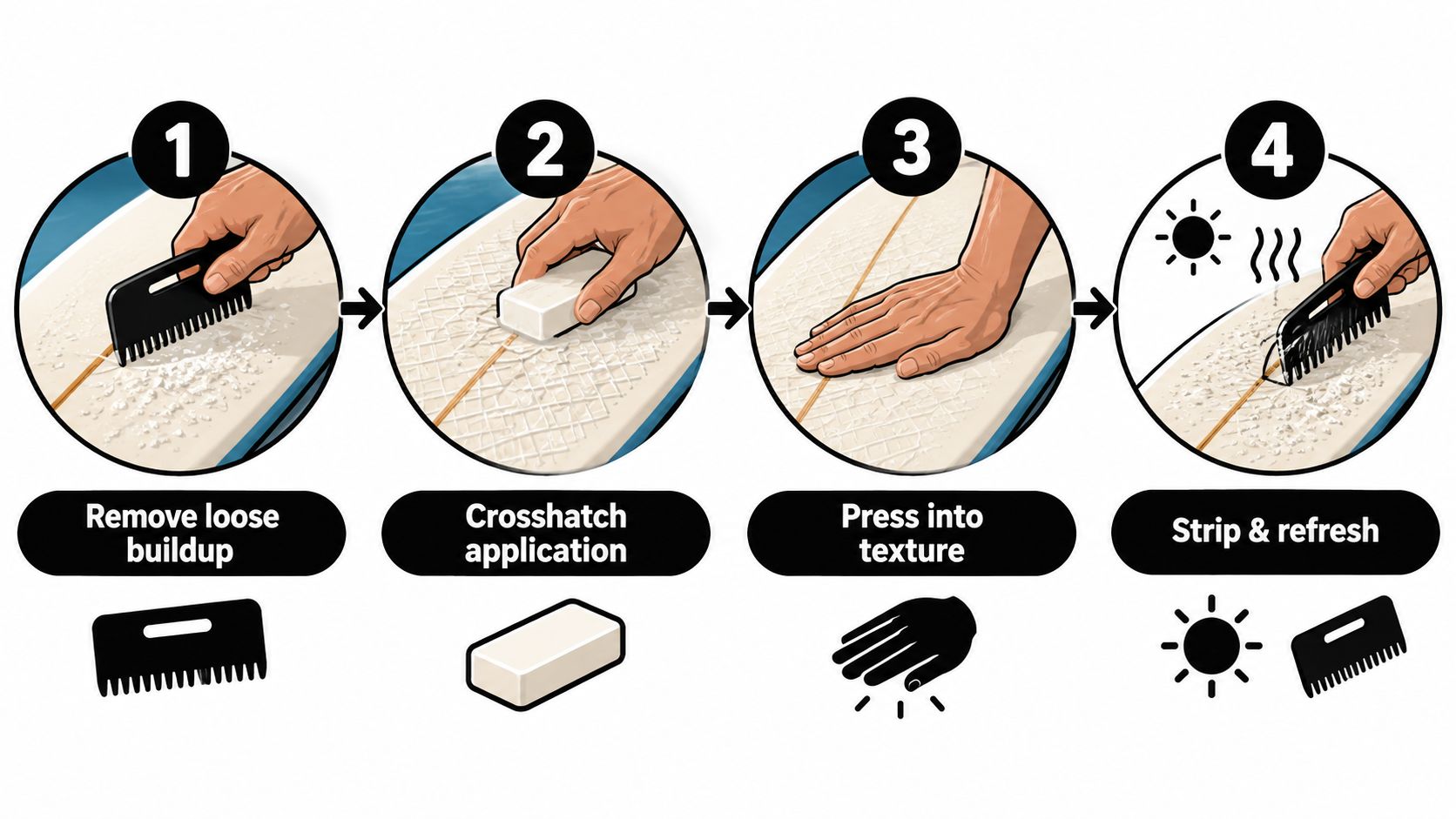
After a cold Raglan morning or a warmer Gisborne session, check the deck before adding more wax. Start with a clean, dry deck. If old wax has turned into a smooth grey film, use a wax comb to scuff it lightly. This breaks up loose build-up and gives fresh wax places to grip the deck.
Build texture, don't build a lump
Press the basecoat on firmly with small circles or a crosshatch pattern. Aim for a thin, even foundation across the standing area. A large mound may feel grippy beside the car, but it can break away or smear beneath your feet once the water softens it.
Use lighter pressure and wider circles for the topcoat. Build visible bumps where your front and back feet land, including enough coverage for changes in stance. A tail pad alters the rear-foot area, so wax the exposed deck rather than automatically covering the whole pad.
Refresh the surface while the bumps remain but the tack has weakened. Many surfers do this every two to three surfs, or earlier when the wax looks shiny and smooth. Treat that timing as a useful check, not a fixed rule. Water temperature, session length, and how much pressure you put through your feet all affect how quickly the texture fades.
For a visual walkthrough, follow this step-by-step guide to waxing a surfboard. You can also watch the process here:
Strip before the next full coat
Remove the old layer when the deck becomes glossy, lumpy, or coated with soft, contaminated wax. A wax comb lifts loose material. For stubborn patches, a plastic scraper warmed in the sun can help without gouging the board. Use a citrus-based cleaner or dedicated wax remover for the remaining film, then let the deck dry fully before starting again.
Keep the routine simple:
- Scuff: Break up loose old wax.
- Base: Press on a thin, even foundation.
- Topcoat: Build raised grip texture.
- Refresh: Reapply when the surface turns smooth.
- Strip: Remove failing build-up before a full re-wax.
Common Wax Mistakes NZ Surfers Make
Myth one, air temperature tells you which wax to use. It doesn't. A sunny afternoon at Lyall Bay can still involve a cold-water swell, so the board needs a formula suited to the sea rather than the weather on the sand. Coastal water temperature controls how the wax softens under pressure.
Myth two, more wax means more grip. A thick pile may feel sticky beside the car, but once water softens the upper layer, the bumps can flatten and smear. You also make later removal harder and use product without solving the mismatch underneath.
If your feet slide, inspect the surface before reaching for another bar. A shiny finish, broad smears, and flattened bumps all point towards a failing layer. Strip the worst of it, let the deck dry, and rebuild with a formula that suits the session.
Natural doesn't mean universal
Eco-positioned and natural waxes have widened the choices available to NZ surfers. Product pages often highlight natural ingredients, local handmade production, or environmental considerations, but those descriptions don't automatically tell you how a particular blend behaves in colder southern water.
The honest test is still practical. Does the wax stay textured in your water? Does it soften at the right point? Does it leave manageable residue? If a natural formula feels excellent at a warm North Island break but goes hard and glassy in the deep south, that's a temperature mismatch, not necessarily a verdict on every natural product.
If the wax feels glassy or your feet slide during pop-ups, strip it and start fresh instead of adding another layer.
Buying Surf Wax in New Zealand
Start with the water at your usual break, not the temperature on the beach. Check the current coastal temperature, then match it with the manufacturer's range printed on the bar. A familiar brand can still perform poorly if its formula sits outside the conditions under your board.
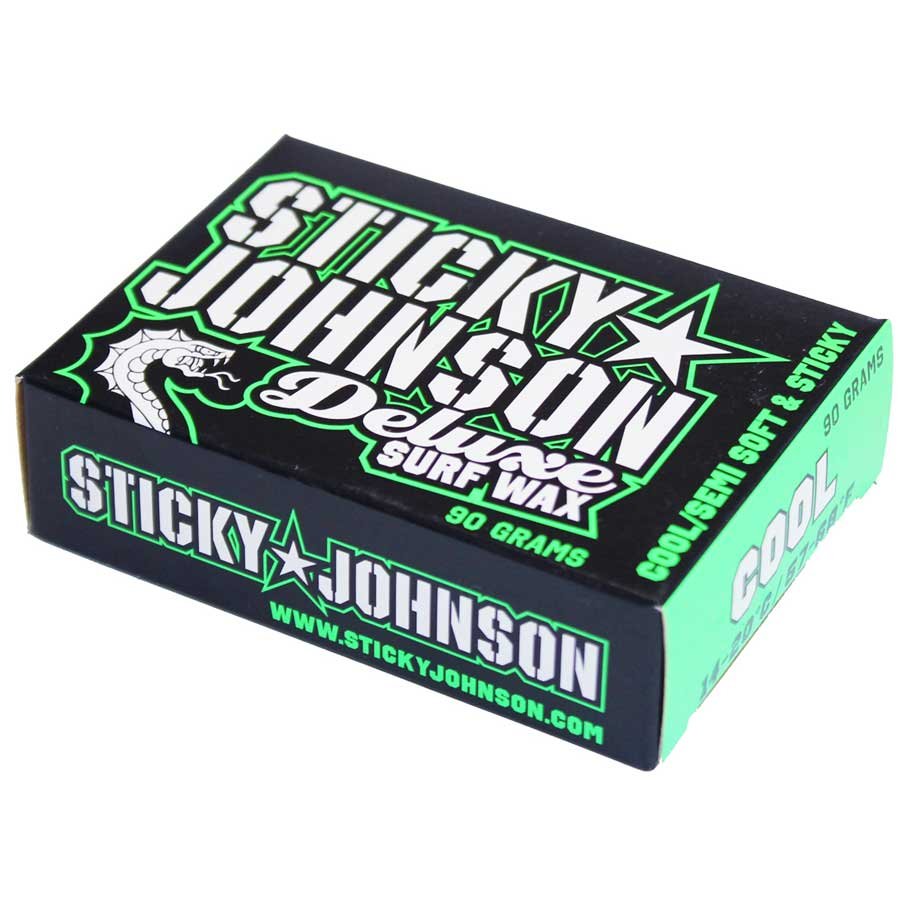
The best selling wax brands in NZ are Sex Wax and locally made Sticky Johnson surf wax.
Read the label for practical details:
- A stated water-temperature range: This is more useful than relying on cold, cool, warm, or tropical wording alone, especially when a Gisborne summer session and a southern winter session need different formulas.
- Separate basecoat and topcoat options: A firm basecoat can create the texture, while a softer topcoat adds traction. That combination gives you room to adjust when the water sits near a temperature boundary.
- A useful bar size: Smaller 50–60 g blocks suit travellers, while larger 85 g blocks suit regular surfers. Treat this as a buying guide, not a fixed rule.
- The ingredient description: Note whether the wax is paraffin-based or blended with softer compounds, then compare that information with the stated temperature range.
- Removal and maintenance tools: A wax comb or scraper helps you keep the deck textured instead of allowing old layers to build into an uneven surface.
For a year-round NZ setup, buying one bar for every session can be a false economy. Keep a firmer basecoat and choose topcoat formulas that match the water you surf most often. A Gisborne or Bay of Plenty summer may call for a different top layer from a Lyall Bay winter session, even if the air temperature feels similar. The basecoat supplies the foundation, while the topcoat is the part you adjust most often.
Specialist shops can help if your local water sits between label ranges. Online NZ retailers may offer more formulas, but check the listed temperature range before choosing by brand name or appearance. Remote delivery can also take longer, so keeping a spare bar in the car or gear bag avoids making a last-minute choice.
New Zealand's surf-wax history includes Steve Morpeth's development of Sticky Johnson in 2007, documented in the Sticky Johnson story. The history of Natural Necessity Surf Shop also records how established surf wax had become as an international accessory.
If you are between ranges, ask shop staff about the water and your board's current setup. Blitz Surf Shop stocks temperature-specific surf wax and removal tools, including Sticky Johnson, Mr Zog's Famous Sex Wax, Mega Johnson, Palmers, and Wax Fresh. Visit Blitz Surf Shop to compare locally available options and ask the Gisborne team which basecoat and topcoat combination suits your next session.


