

Picking a school bag might seem like a small job on the back-to-school list, but getting it right makes a massive difference to your kid's day-to-day comfort and even their health. We've put together this guide to help you find a bag that will not only survive the school year but also keep up with the active Kiwi lifestyle.
How To Choose The Right School Bag
We'll cut through the noise and get straight to what actually matters. Think of it as your inside scoop on everything from telling a classic backpack from a trolley bag, to picking the right size for every age group.
You'll quickly see why tough materials are a must for our unpredictable NZ weather and how a few smart features can be a total game-changer. Let's find a bag that works just as hard as they do.
To make things even easier, this decision guide will help you narrow down the options based on your child's age, what they'll be using it for, and any specific needs they might have.
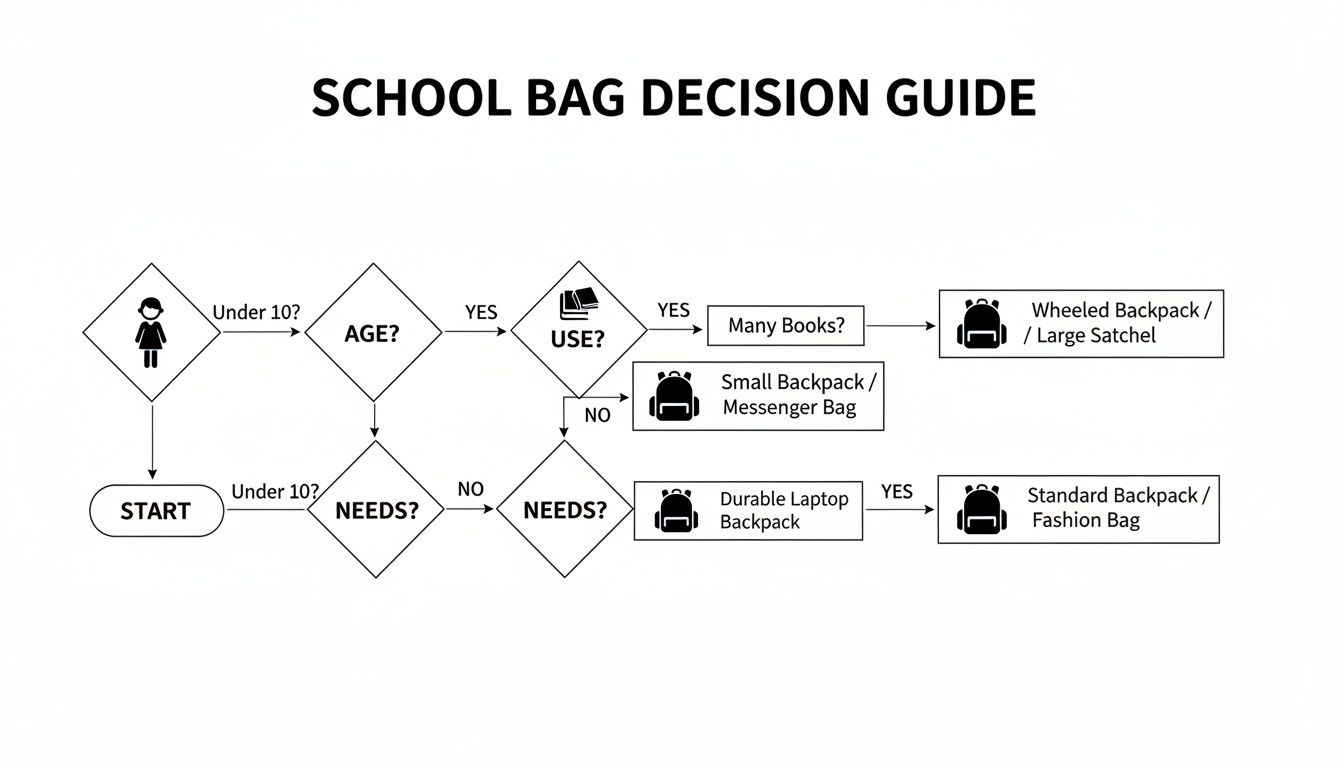
As the flowchart shows, what works for a little one is totally different from what a high schooler needs. It’s all about moving from simple, light bags to more specialised backpacks that can handle a bigger load of books and gear.
To give you a quick overview, here's a simple table to match bag types to your kid's needs.
School Bag Quick Selector Guide
| Bag Type | Best For | Key Feature | Consideration |
|---|---|---|---|
| Backpack | All ages, especially Year 4+ | Versatility and even weight distribution | Fit is everything; poor fit causes strain |
| Trolley Bag | Kids who carry heavy loads | Wheels take the weight off their back | Can be bulky and tricky on stairs |
| Satchel | Older students with lighter loads | Quick access and stylish | Uneven weight can strain one shoulder |
This table is a great starting point, but let’s dive into the details that really make a difference.
Key Factors To Consider
Before you start looking at specific bags, it helps to know what separates a great school bag from one that'll be busted before the first term is over. A good bag is an investment in your kid's comfort and your own peace of mind.
Here’s what you really need to focus on:
- Ergonomics and Fit: This is huge. How the bag sits on their back is vital for preventing strain and encouraging good posture.
- Durability and Materials: The bag has to be tough enough for everything from classroom floors to the skate park, not to mention a bit of rain.
- Size and Capacity: It needs to be big enough for the essentials but not so massive they're tempted to pack everything they own.
- Useful Features: Smart pockets for laptops, water bottles, and skate gear can make a world of difference to their day.
Choosing the right school bag is about balancing what they need right now with their long-term health. A bag that fits properly and spreads the weight evenly isn’t just for carrying books—it’s a tool for their daily wellness.
As you get sorted for the school year, don't forget to check out our guide on back-to-school essentials from Blitz Surf Shop for more tips. Taking a balanced approach means you’ll end up with a bag that’s practical, tough, and supportive.
Finding the Perfect Fit for Health and Comfort
A school bag that doesn’t fit properly is more than just a pain—it can genuinely affect your kid’s posture and long-term spinal health. Getting the ergonomics right is what turns a simple bag into a piece of supportive gear that protects their growing body.
The first and most important rule of thumb is the ‘10% rule’. It’s simple: a fully packed school bag shouldn't weigh more than 10% of your child's body weight. So, if your kid weighs 30kg, their bag should tip the scales at 3kg or less. This is the gold standard for preventing unnecessary strain on their shoulders and back.
Sadly, this is a massive issue. International research shows overloaded backpacks are a major health concern for students, and that includes here in New Zealand. Some pretty eye-opening studies found that only about a third of students in Ireland and New Zealand carried bags within that recommended 10% weight limit. That suggests a huge number of Kiwi kids could be lugging around bags that are just too heavy for them, as you can read about in the full research on student backpack loads.
How To Ensure a Proper Fit
Weight is only half the battle; the actual physical fit of the bag is critical for spreading that load correctly. A well-fitted bag works with the body, not against it.
Here’s a quick checklist to nail the fit:
- Top Position: The top of the bag should sit just below the shoulder line.
- Bottom Position: It should never hang lower than the small of their back or their waist.
- Snug Fit: The bag needs to sit snugly against their back, not sagging or pulling away.
A correctly fitted school bag should almost feel like a part of them, moving as they move. If it’s swinging around or pulling them backward, that’s a clear sign that you need to make some adjustments, or the bag itself is the wrong size.
Essential Ergonomic Features
When you're out shopping, keep an eye out for features specifically designed for health and comfort. These aren't just fancy extras; they are fundamental for proper weight distribution and support. A good bag becomes an extension of their active life, whether they're walking to school or heading to the skate park. For active kids, understanding how to choose the right gear is key, which is why we also put together a guide to selecting a skateboard for kids.
Look for these non-negotiable elements in your next school bag:
- Wide, Padded Shoulder Straps: These are crucial. They stop the straps from digging into the shoulders and help spread the load across a wider area.
- Adjustable Chest Strap: Sometimes called a sternum strap, this connects the two shoulder straps across the chest. It stops them from slipping off and pulls the weight closer to the body's centre of gravity.
- Supportive Waist Belt: This is a total game-changer. A padded waist or hip belt shifts a huge chunk of the bag's weight off the shoulders and onto the much stronger hip and pelvic muscles.
- Firm Back Panel: A padded, firm back panel not only provides structural support to the bag but also stops sharp book corners from poking into your child's back.
Choosing Materials Built for NZ Weather and Wear
A school bag in New Zealand has a pretty tough gig. One minute it’s soaking up the sun, the next it’s getting drenched in a sudden downpour—all before being dumped on the concrete at the skate park. The right materials aren’t just a nice-to-have; they're absolutely essential if you want a bag that’ll actually survive the school year.
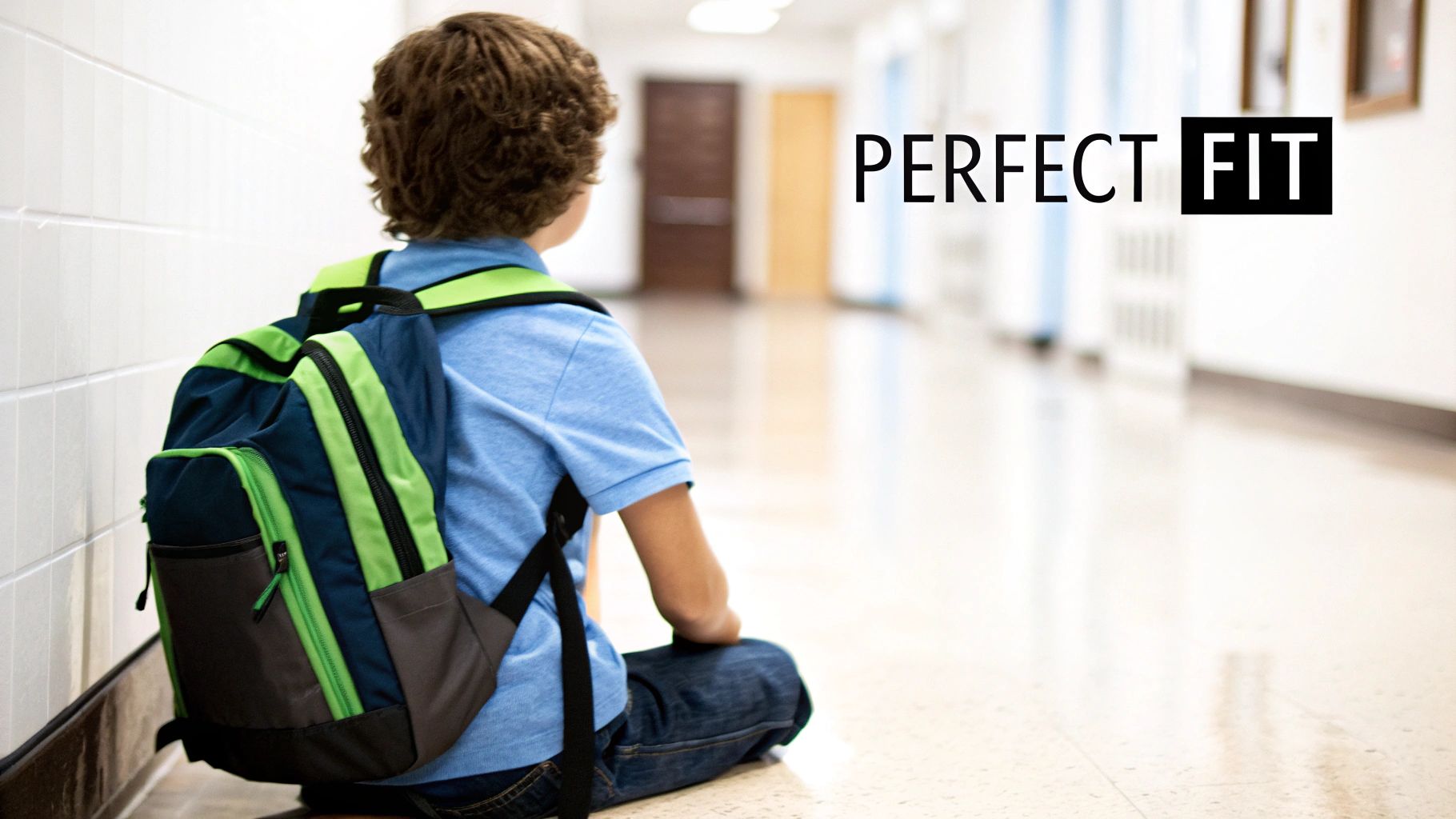
Think of the fabric as the bag’s first line of defence. Most quality bags are made from synthetic fabrics like polyester or nylon because they hit that sweet spot between durability and water resistance. You'll often see a denier (D) count mentioned, like 600D polyester. A higher number means a thicker, tougher weave that’s much less likely to rip or fray.
Canvas is another classic choice and looks great, but it’s naturally heavier and not very water-resistant unless it's been treated with a protective coating.
Spotting Quality Construction
Beyond the fabric, the way a school bag is put together is what really determines its lifespan. Shoddy construction will give out long before the material does, so it pays to have a good look at the details.
Here’s what you want to check for:
- Reinforced Stitching: Pay close attention to the high-stress areas, especially where the shoulder straps connect to the main body of the bag. Look for double stitching or even a box stitch (a square with an 'X' inside) for maximum strength.
- Heavy-Duty Zippers: Zippers are a classic failure point. Go for bags with chunky, solid zippers from trusted brands like YKK. They’re far less likely to snag or bust open mid-term.
- Durable Base: A reinforced or coated base adds an extra layer of protection against rough surfaces and damp ground. You’ll often find this feature on bags from brands like Quiksilver, and it makes a huge difference.
A well-constructed school bag is an investment. Paying a bit more for quality materials and solid construction means you’re buying a bag that will last multiple school years, not just a single term.
For those unexpected downpours, a water-resistant coating is a must-have. Many Rip Curl backpacks come with a DWR (Durable Water Repellent) finish that causes water to bead up and roll right off, keeping books and devices dry. It's also worth considering the wider impact of materials, like exploring sustainable material choices for children's products. After all, a tough bag should also be a safe one.
And speaking of keeping gear dry after a swim, check out our guide on finding the perfect hooded towel in NZ.
Smart Storage For Modern Students
Let's be real, a school bag today is way more than just a sack for books and a lunchbox. It's a mobile command centre, hauling everything from a laptop and sports gear to a wetsuit and skate deck. The difference between a good bag and a great one often boils down to how clever its storage is. Good organisation can turn a chaotic jumble into a system that actually helps students stay focused.
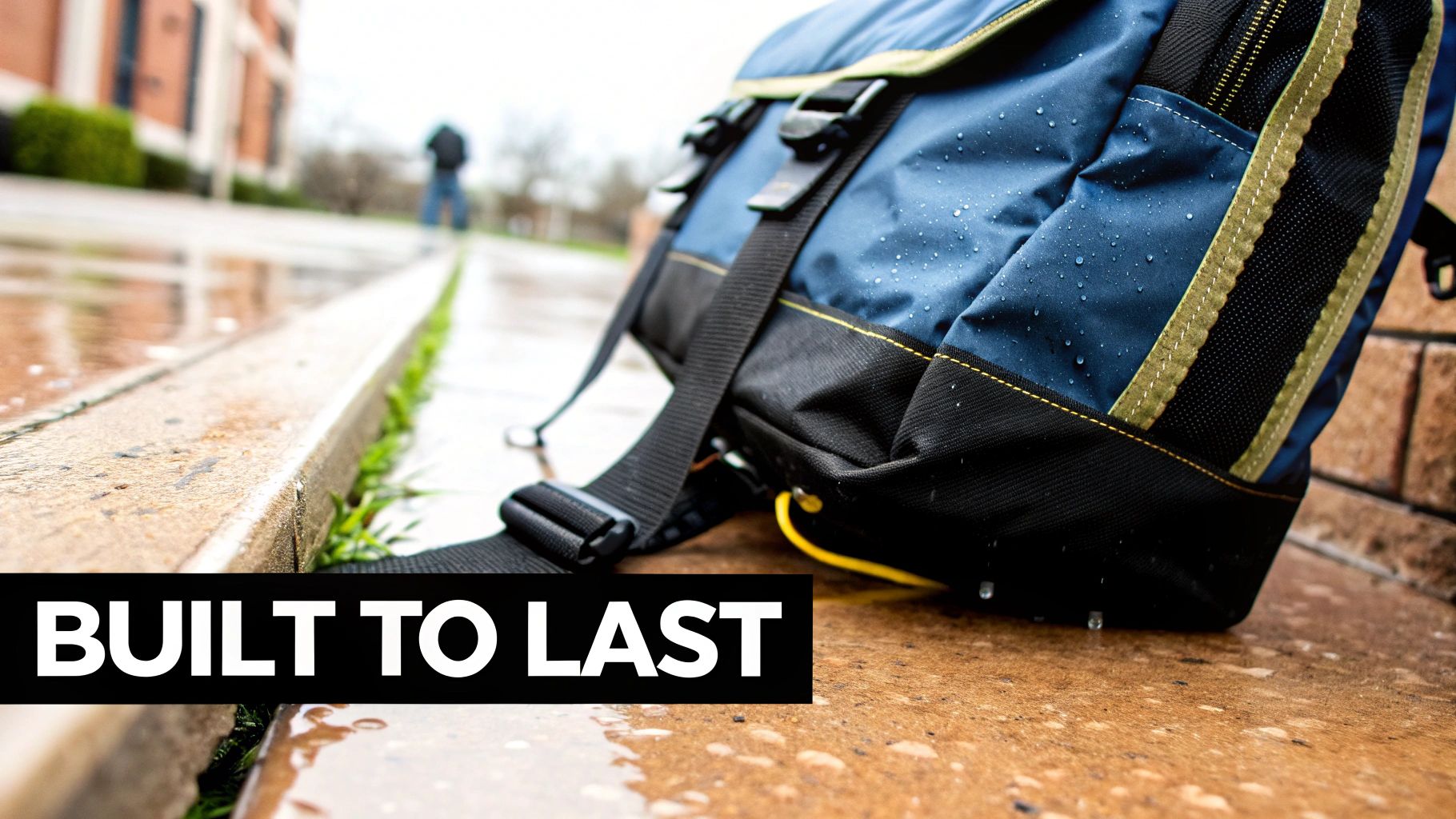
For most students these days, the absolute non-negotiable is a dedicated, padded sleeve for electronics. This separate pocket is designed to cushion laptops and tablets from the inevitable bumps and drops of a school day, keeping that expensive tech safe.
Beyond that, look for internal organisers with a bunch of smaller pockets. These are lifesavers for keeping pens, calculators, keys, and chargers from disappearing into the black hole at the bottom of the bag. Less time spent digging around means less frustration before class.
Features For An Active Lifestyle
For kids who live that classroom-to-coast or skate-park life, a school bag has to pull double duty. The right features make all the difference, keeping their precious gear secure, organised, and easy to grab when the bell rings.
Here are a few game-changing additions to look out for:
- External Straps: An absolute must for skaters. They offer a secure way to carry a skateboard or even a rolled-up jacket, keeping hands free for the important stuff.
- Fleece-Lined Pockets: A small, soft-lined pocket is brilliant for protecting sunglasses or a phone screen from getting scratched up.
- Insulated Compartments: A built-in cooler section is a game-changer. It keeps lunches and drinks cool for hours, perfect for long school days that roll straight into after-school sports.
- Mesh Side Pockets: Simple but essential. These give you quick, easy access to a water bottle, which is key for staying hydrated through the day.
A well-organised school bag doesn't just store stuff; it protects valuable gear and helps a student feel prepared and in control. That sense of order can have a real impact on their ability to focus on what actually matters—their learning.
Brands like Rip Curl are pros at building these features into their bags, making them ready for anything from a pop quiz to an after-school surf. Speaking of which, if you're getting properly kitted out for a day on the coast, check out our local's guide on what to pack for a surf trip to Gisborne.
Of course, smart storage isn't just about the bag itself. Making sure everything is clearly labelled is just as important—you can dive deep with this ultimate guide to school clothing labels. By choosing a bag with smart storage and keeping things organised, you’re setting your student up for a successful day, every day.
Understanding the Impact of School Bag Weight
That constant conversation about how heavy school bags are isn't just chatter; it's a genuine health issue for parents right across New Zealand. It's way more than a daily struggle. An overloaded bag can seriously mess with a kid's developing spine, leading to bad posture and even chronic back pain down the track. Getting your head around why the weight guidelines exist is the first step to looking after your child's long-term health.
This problem has gotten so big that there are nationwide efforts to collect real data on it. A great example is the Census at School New Zealand project, which specifically tracks this stuff to figure out just how widespread the issue is. Their 2023 survey literally asked thousands of students from Year 3 to Year 13 to weigh their bags, creating a massive pool of data. You can discover more about their data collection on school bag weights to see what the research is uncovering.
The numbers pretty much confirm what we all suspected: kids are carrying way too much. Choosing the right school bag isn't just about making it through the school year—it's about playing your part in a bigger push for healthier students.
Practical Steps to Lighten the Load
Making a real difference doesn't mean you have to turn your life upside down. It's the small, consistent habits that really work to take the strain off your kid's back and shoulders.
Give these simple strategies a go:
- Daily Packing Routine: Get them into the habit of packing their bag the night before, taking only what they absolutely need for the next day.
- Use School Lockers: If the school has them, make sure they're actually being used. Heavy textbooks can live there, and only the books needed for homework come home.
- Choose a Lightweight Bag: Don't forget, the weight of the school bag itself adds up. Go for one made from lighter materials like nylon or polyester.
- Utilise Digital Resources: If teachers offer digital copies of textbooks, jump on it. Using them at home means fewer heavy books being lugged back and forth.
A lighter bag is a healthier bag. Every unnecessary item removed is a small victory for your child's spinal health, preventing the cumulative strain that can lead to problems down the track.
Putting these changes into practice can have a massive impact. For more tips on getting organised with the right gear, check out our guide on getting gym-ready—smart packing is a big deal there, too.
Your School Bag Questions Answered
We get it – even after going through all the specs, there are always a few lingering questions when you're trying to pick the right school bag. Here are the answers to the most common queries our team at Blitz Surf Shop fields, so you can make that final decision with total confidence.
How Often Should A School Bag Be Replaced?
There's no hard-and-fast expiry date on a school bag, but a good rule of thumb is to give it a thorough once-over at the end of every school year. Keep an eye out for tell-tale signs of wear like frayed seams, busted zips, or padding on the straps that's gone thin and flat.
A quality bag from a solid brand like Rip Curl can easily last for years. But the single most important reason for an upgrade? Fit. If your kid has shot up over the summer and the bag no longer sits properly on their back, it's definitely time for a new one to keep things ergonomic and comfortable.
What's The Best Way To Clean A School Bag?
First things first, always check the care label from the manufacturer – that's your best guide. For most polyester or nylon bags, you can usually spot-clean spills with a damp cloth and a little bit of mild soap.
If it needs a more serious deep clean, here’s what to do:
- Empty it out completely. And we mean every single pocket. You’d be surprised what you’ll find.
- Hand wash it. Use cool water and a soft brush for any stubborn marks or ground-in dirt.
- Rinse it well. You want to get all the soap residue out.
- Air dry it. Hang it up somewhere out of direct sun, as harsh UV rays can fade the colour over time.
Try to avoid chucking it in the washing machine unless the tag specifically says it's okay. The machine can be pretty rough on the internal padding and can strip away any water-resistant coatings.
Are More Expensive Bags Actually Worth The Money?
In a lot of cases, absolutely. A higher price tag usually means you're getting better materials, tougher construction (like reinforced stitching in high-stress areas), and a smarter ergonomic design. This is particularly true for brands that come from the surf and skate world, as their gear is built to handle a whole lot more than just a trip to and from the classroom.
This isn’t just our opinion; it's a global trend. The school bag market, valued at a massive USD 24.3 billion in 2024, is seeing a big shift towards bags that are more durable and better for your back. Backpacks are still the clear winner, holding 41.2% of the market share because they just can't be beaten for comfort and carrying capacity. You can learn more about the evolving school bag market to see how these worldwide trends are shaping the choices we have here for Kiwi families.
At Blitz Surf Shop, we stock a huge range of school bags from the best surf and skate brands on the planet—gear that’s made to survive the Kiwi lifestyle. Check out our collection online and find the perfect bag that’s tough, looks good, and is ready for whatever the school year throws at it. Come see us for the best school bags gisborne


