

You know the drill. You've just paddled in from a cold Gisborne session, your hands are numb, the wind's doing its best to rip the suit off the ute, and the only thing standing between you and a miserable change is the wetsuit entry system. That's where front zip wetsuits, which surf shops also call chest zip wetsuits, earn their keep. The best suit in the world won't help much if it's a battle to get on, seal up, and keep warm in a windy carpark.
| Feature | Front/Chest Zip | Back Zip | Zip-Free |
|---|---|---|---|
| Warmth | Strong seal, less flushing | Easier entry, usually more flushing | Very sealed, but less forgiving to put on |
| Shoulder freedom | Good when fitted well | Can bind if torso fit is off | Good, but depends heavily on pattern |
| Ease of entry | Trickier at first, learns fast | Easiest for many users | Usually the hardest to put on |
| Best for | Cold-water surfers, performance focus | Kids, limited shoulder mobility, quick changes | Surfers who want maximum seal and accept extra hassle |
| Real-world use | Strong choice for winter and shoulder-season NZ surf | Common for children and some casual users | More niche, less forgiving in cold, windy conditions |
A chest zip is the same thing as a front zip in surf talk, just a different way of describing the closure across the chest rather than a full zip down the front of the body. Once you've worn both, the trade-off becomes obvious. A back zip is easier to step into, but a front zip usually gives you a tighter feel through the torso, which matters when the water's cold and the wind's trying to turn your fingers into hooks.
If you want a solid companion read on staying warm after the session, the hooded towel for adults guide is useful for those brutal winter changeovers. For anyone who treats cold water like a training tool rather than a punishment, the discussion in the Peak Performance podcast cold water therapy also shows why people keep coming back to cold immersion, even when the logistics are a pain.
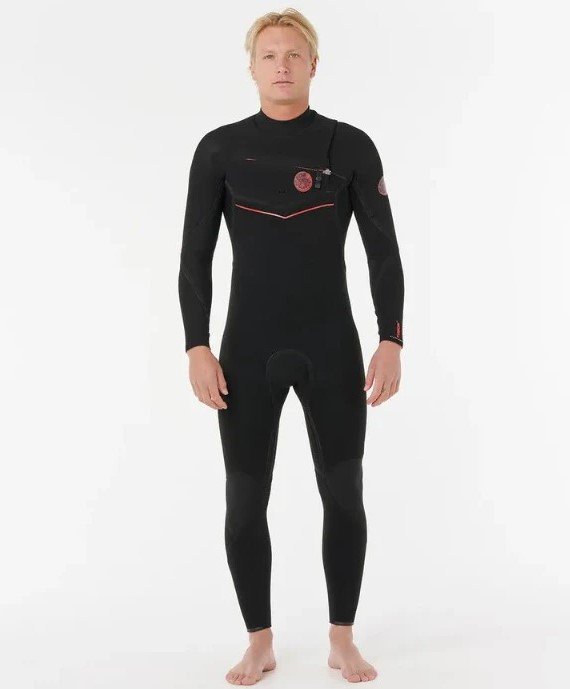
The Reality of Changing in a Cold NZ Carpark
A winter surf in Gisborne ends the same way for a lot of people. You climb out of the water feeling decent, then the wind hits your back, the suit sticks to your ankles, and suddenly every extra second in the carpark feels like a punishment. That's when the entry system stops being a shop-floor detail and becomes the difference between a manageable change and a grim one.
Practical rule: If you hate changing in the cold, the suit's zip style matters almost as much as its thickness.
A lot of surfers talk about warmth as if it's only about neoprene thickness. It isn't. The way the suit closes, how much water sneaks through the neck and chest, and how easily you can get in and out all affect how warm you feel once you're back on the beach or at the ute.
This is also why chest zip wetsuits keep winning over older back zip layouts for many adult surfers. A chest entry can feel awkward the first few times, but once the fit is dialled in, the suit tends to sit tighter across the torso and give less room for water entry than a back zip. That's a real advantage in Gisborne, where winter water can sit around 11–13°C and a 4/3mm steamer is generally essential from June to September, while summer can reach 21–22°C (Gisborne surf guide).
A hot shower after the surf doesn't fix the carpark problem. Neither does standing around talking too long while the wind drains you. If your shoulders are cooked, or you're older and don't want the fuss of reaching behind your back, the front zip starts to make a lot more sense than marketing copy ever will.
How Front Zip Designs Conquered NZ Waters
New Zealand wetsuit design has always been shaped more by cold water than by fashion. Seventhwave's history shows the brand had already developed its own wetsuit models by the mid-1990s, including a Viper 3/3 Titanium ZB Steamer with a velcro neck-entry closure, and it was also producing wetsuits for other brands at that time (Seventhwave history). That matters because it shows chest-entry thinking was already part of NZ surf gear long before today's standard chest-zip layouts became common in retail.
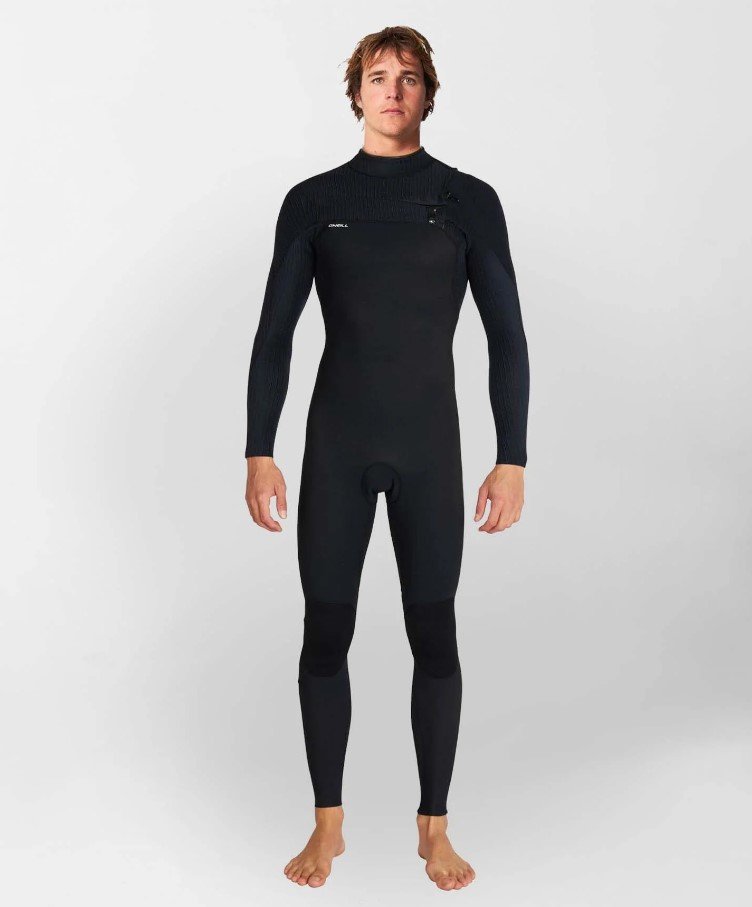
The technical logic is straightforward. In colder water, the suit's job is to cut flushing and hold warmth where it matters. New Zealand surf-resource guidance has linked better wetsuit performance with longer time in the water, and a guideline notes that improved wetsuits let surfers stay out longer, which can reduce turnover and keep more users in the water at once (surf resource guideline). That is a comfort issue, but it also affects access.
Why the local market moved this way
A chest zip gives manufacturers a cleaner way to seal the upper body while keeping the suit usable for long winter sessions. That matches how NZ surfers use their gear. We are not buying suits for one tropical holiday week. We are buying for shoulder season, southerly blasts, early starts, and regional water that changes a lot from coast to coast.
The same guideline also treats wetsuit design and construction as a distinct technical part of surfing equipment. That sounds academic, but it shows up on the shop floor. The gap between an average suit and a good one is usually in the sealing, the panel layout, and how well it sits on a real body after ten minutes in cold water. A practical guide like Rip Curl wetsuits advice makes the same point in simpler terms, fit and closure style change how the suit performs once you are in the surf.
A better wetsuit does not just feel warmer, it keeps the session going long enough to matter.
That is why front zip (chest zip) suits became the default for many adult surfers here. They fit the climate, they fit the use case, and they fit the kind of surfing most of us do in New Zealand.
Comparing Entry Systems for Warmth and Flexibility
The easiest way to judge a wetsuit is not by how it looks hanging in the shop. It's by what happens when you paddle out, duck-dive, pop up, and then sit in a winter lineup for an hour. Entry system changes how the suit behaves across all of that. For NZ surfers, the comparison is front zip, back zip, and zip-free, not just “warm” versus “not warm”.
Winter wetsuit guide advice often frames the choice around warmth first, and that's fair. But warmth alone doesn't settle the question. You've also got to think about shoulder mobility, ease of getting the suit on in a cold shed or carpark, and whether the suit still feels good after the second or third surf of the week.
| Feature | Front/Chest Zip | Back Zip | Zip-Free |
|---|---|---|---|
| Thermal feel | Usually tighter at the torso, less flushing | Easy to live with, but can let in more water | Can seal very well, but fit has to be spot on |
| Shoulder movement | Usually good if the pattern fits your build | Often comfortable for easy entry, but can pull across the back | Often excellent, though donning can be fussy |
| Entry and exit | Takes a bit of technique | Fastest for many users | Most awkward for many surfers |
| Best user fit | Performance-minded adults, winter surfers | Kids, beginners, some mobility-limited surfers | Experienced surfers who prioritise sealing |
Chest zip suits are marketed in NZ as the warmer, lower-flush option. That's consistent with how a 4/3 chest-zip suit is built, with 4mm neoprene in the torso and 3mm in the arms and legs, plus chest and back thermal panels and an anti-flush barrier to reduce water entry and retain warmth (chest zip guide). That barrier is a real feature, not a brochure word.
Back zips still have a place. They're easier for kids, easier for parents, and often more forgiving for surfers who don't want to wrestle a neck entry before dawn. That fits what we see in-store, where men's steamers move more toward chest zip, women's are roughly balanced, and children's suits still sell more often as back zip because they're easier to get on. Zip-free sits in a different category again, usually for surfers who want maximum seal and are happy to work for it.
Shop-floor truth: If the suit is hard to get on but seals well once it's on, that's usually a worthwhile trade for cold-water adults.
The entry system should match the person, not the hype. If you surf hard, surf cold water, and care about staying out longer, front zip usually wins. If you're dressing a kid, or shoulder movement is limited, back zip remains the honest answer.
Mastering the Chest Zip Entry Technique
The common claim that chest zip wetsuits are hard to put on usually stems from using the wrong sequence. Once you learn the correct order, the suit stops fighting you. The goal is to get the neoprene seated before you start forcing the zip or yanking the shoulders into place.
-
Lay the suit flat and undo the zip fully.
Make sure the chest panel is open and the neck loop is ready to come over your head later. That keeps the suit from twisting before you're even in it. -
Get your legs and body in first.
Pull the suit up through the hips before worrying about the arms. If the lower body isn't sitting properly, the top half will always feel wrong. -
Put the right arm in completely before the left arm.
That small order helps the suit settle without bunching across the chest. A lot of first-time users skip this and end up fighting the shoulders. -
Pull the zip gusset over your head and seal it carefully.
Don't rush the final closure. That's where you protect the neck seal and avoid tearing the entry point with a bad pull.
A regular in his 70s gave me a good reminder of why this matters. He'd always said he struggled to even see the zip on a chest zip wetsuit when he was putting it on, so he avoided them for years. He finally took my advice, tried one again for the performance benefit, and ended up staying with front zip wetsuits because the better feel in the water was worth learning the entry properly.
For a visual walkthrough, this front zip wetsuit entry video is worth watching before you wrestle a new suit on for the first time.
Matching Wetsuit Thickness to NZ Seasons
Entry style doesn't save you from choosing the wrong thickness. If the suit is too light for the water, you'll still get cold. If it's too heavy for the season, you'll overheat and lose the easy movement that makes surfing fun in the first place.
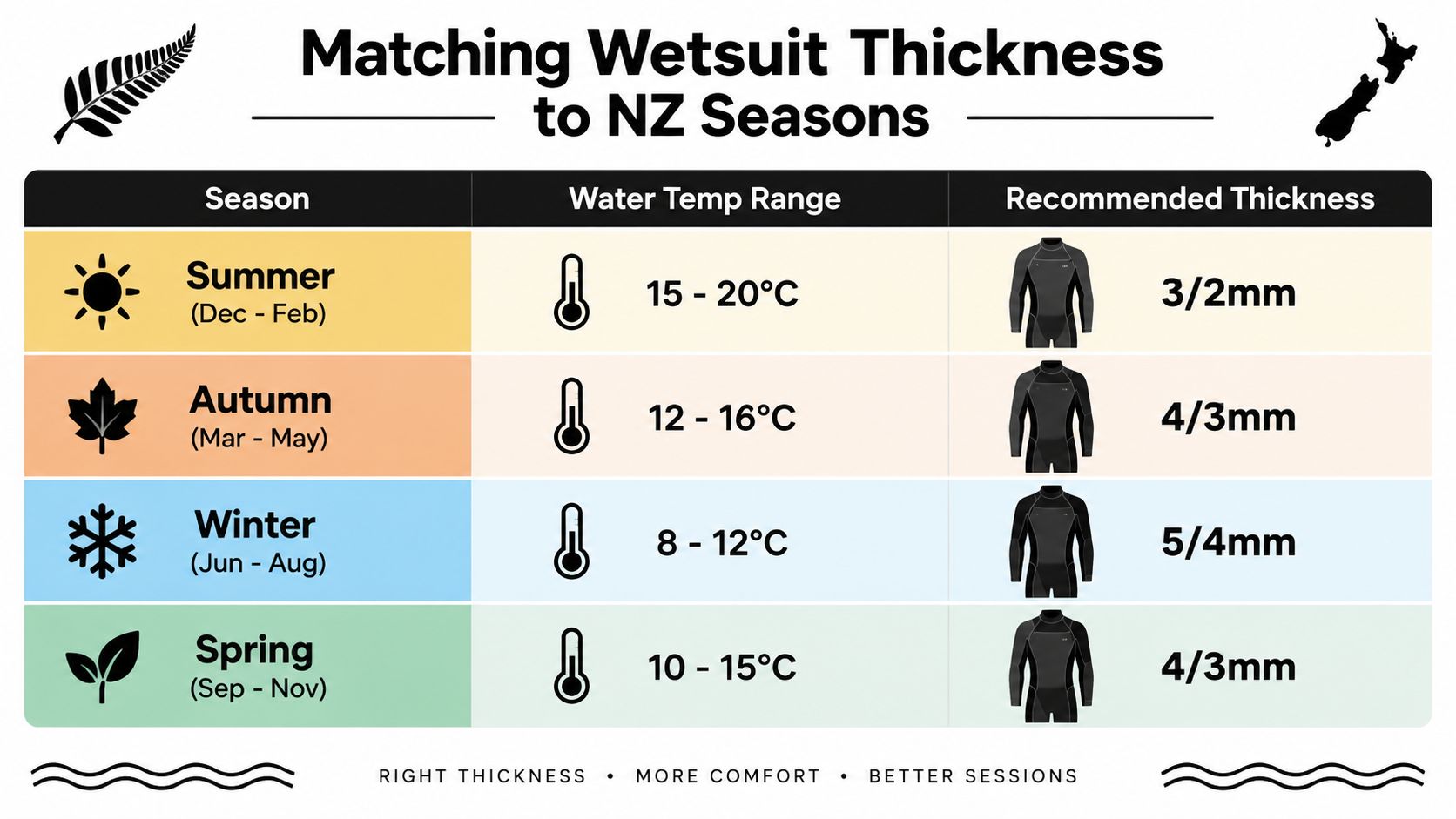
Gisborne gives a good local example. Winter water can sit around 11–13°C, which is why a 4/3mm steamer is generally essential from June to September, while summer can climb to 21–22°C (Gisborne surf guide). That's a long way apart, and it's why a one-suit answer never works perfectly for every surfer.
A front zip suit is usually chosen in the colder brackets because the seal matters more when the water is doing its best to pull heat out of you. Massey University research from Auckland found that 100 minutes of surf practice in a steamer wetsuit caused body-mass loss severe enough to significantly impair surfing performance, cognitive function, and muscular endurance (Massey University study). That's not a subtle effect. If you're doing long winter sessions, you feel it.
NZ wetsuit thickness guide content often frames this as a choice between comfort and warmth, but the real test is how long you plan to stay in. A 3/2 front zip fullsuit sits in the colder shoulder-season range for many North Island surfers, while thicker suits are the winter answer when the water drops and the wind turns nasty.
What that means for local surfers
If you surf mostly Gisborne winter mornings, buy for the coldest sessions you do. If you only surf the occasional milder day, you can choose lighter. The suit should match your pattern, not the best day you imagine yourself surfing.
Front zip wetsuits usually make the most sense once the water temperature drops enough that seal quality matters more than quick entry. For summer-only surfing, they're often more suit than you need.
Top Front Zip Picks for Local Surf Conditions
The model that keeps coming up for local buyers is the O'Neill Hyperfreak Chest Zip. In shop terms, it's the top seller across different thicknesses and styles, and the feedback is consistent. People like the high-performance stretch neoprene and the fact that it sits at a mid-range price point without feeling clunky in the water (Blitz winter 4/3 guide).
That matters because a lot of wetsuits look similar on a rack. The ones that survive real use in Gisborne tend to have a clear purpose. The Hyperfreak works because it doesn't ask the surfer to choose between stretch and warmth in a way that feels extreme. It feels like a surf suit, not a compromise dressed up as one.
What to look for before you pay more
Recent wetsuit coverage points to graphene-infused neoprene, biodegradable or natural-rubber alternatives, faster-drying antibacterial linings, and modular builds as current innovation trends (wetsuit trends overview). Those features can be interesting, but they're not magic. Fit and sealing still do the heavy lifting when the water is cold and the session runs long.
A premium front zip suit can be worth it if you surf often, dislike flushing, or need a suit that stays comfortable across repeat winter sessions. If you only surf occasionally, the gains from the most expensive materials are smaller than the gains from a clean fit and a closure you can manage.
We also carry chest zip options in-store from brands like Rip Curl, including chest-zip models that suit NZ conditions, but I'd still steer most adult local surfers toward the model that fits their body and routine best rather than chasing the flashiest label. The suit has to work in wind, salt, and a cold carpark. That's where the right pattern matters more than brand noise.
A good front zip suit should disappear once you paddle out. If you're thinking about the zip every few waves, something's off.
Essential Care and Maintenance for Longevity
A front zip suit lasts longer when you treat the zip like a moving part, not just a strip of hardware. Salt, sand, and bad drying habits do more damage than most surfers realise. If you want the chest seal to keep doing its job, the suit needs regular care after every session.
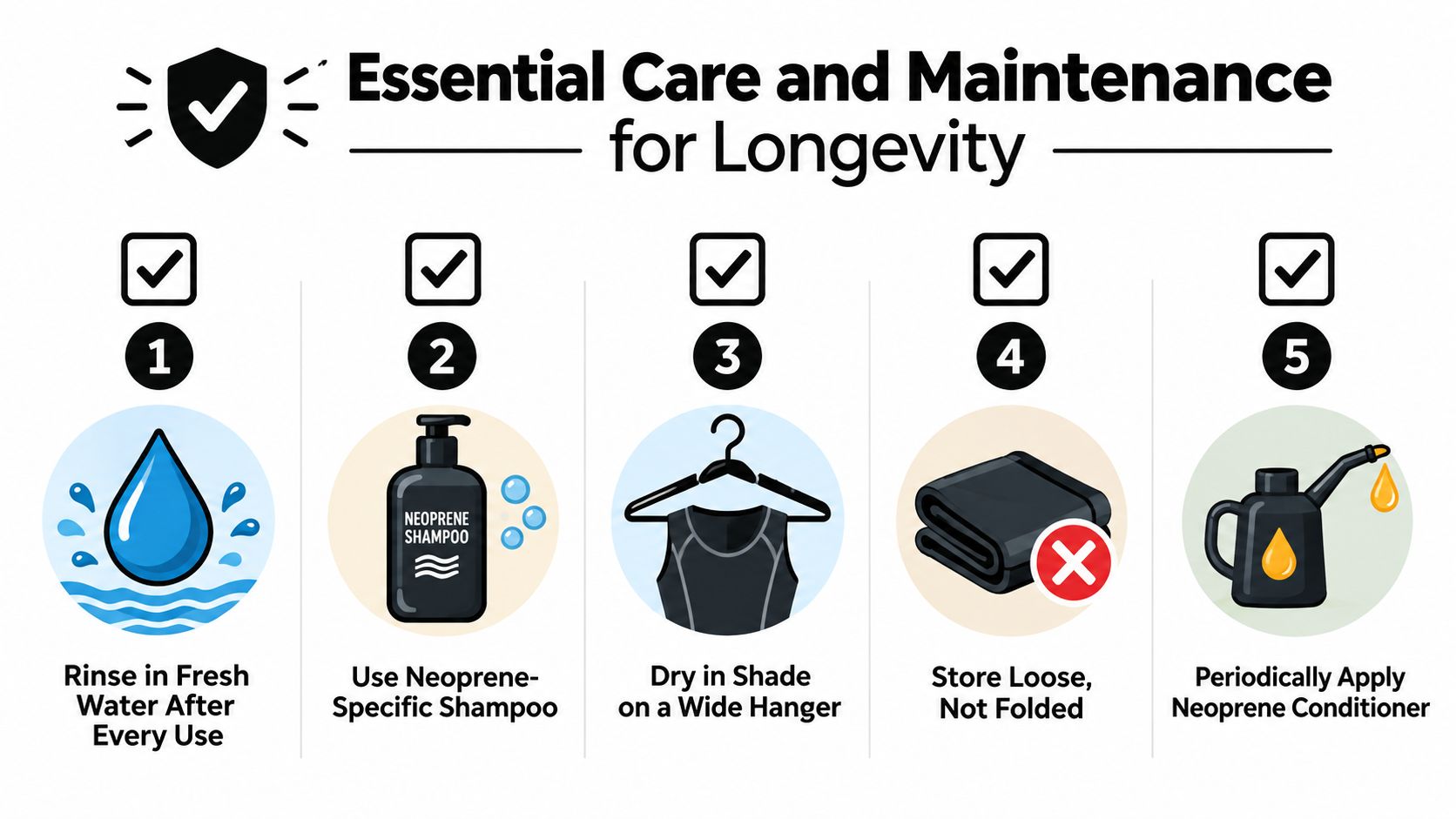
The routine is straightforward. Rinse the suit in fresh water after every use, especially around the zip and neck area. Hang it in the shade on a wide hanger so the shoulders don't stretch out. Store it loose rather than folded, because crease lines break down neoprene over time. For the zip itself, keep it clean and move it gently so it doesn't jam.
For a more detailed wash-and-dry process, the wetsuit wash and dry routine is a practical reference that matches what we tell customers in the shop. The same care principles are laid out in our own wetsuit care guide, and they're especially important on chest zip suits because the entry system has more shape and tension than a simple back zip.
Don't wreck the suit by drying it badly
Never leave a wet suit balled up in the boot for days. That's how the lining starts to stink, the zip gets gritty, and the neoprene loses its fresh feel. A clean suit also makes the next entry easier, which matters more than people think when you're trying to get dressed quickly before sunrise.
Lubrication helps too, but use it sparingly and only when needed. The point is to keep the chest zip moving smoothly without forcing it or dragging sand into the teeth. If the zip starts to feel stiff, sort it out early instead of waiting until it snags hard enough to ruin a session.
A well-cared-for front zip wetsuit gives you the same thing every time, warmth, seal, and a fit you can trust. Neglect it, and even a good suit starts feeling average fast.
If you want help choosing between a chest zip and a back zip for your local break, come into Blitz Surf Shop or check the wetsuit range online. We can talk through Gisborne water temps, fit, and the right thickness for the way you surf, not just the way the tag reads.


