

Getting the right wetsuit is the secret to unlocking New Zealand’s incredible, and often chilly, surf scene. Rip Curl wetsuits are built for maximum warmth, flex, and durability, making them a solid choice for the huge range of conditions we get, from the Far North down to the deep south.
This guide is here to break down everything you need to know to pick the perfect suit for your local break.
Why Rip Curl Wetsuits Dominate NZ Waters
From the powerful beach breaks of Piha and Gisborne, to the rugged coastline of Taranaki and beyond, New Zealand’s coastline demands gear that can handle just about anything. While born across the ditch in Australia, Rip Curl has become part of the Kiwi surfing fabric for one simple reason—its gear just works bloody well in our challenging waters.
The brand's relentless focus on innovation means there's a suit for every session. Whether you need a thick, hooded steamer for a mid-winter mission in Dunedin or a flexible spring suit for a summer's day in Whangamata, Rip Curl has built a wetsuit for the job. That dedication has made them a go-to for surfers all over the country.
A Kiwi Favourite for a Reason
The numbers don't lie. The Australia and New Zealand region made up a massive 45% of Rip Curl's total global sales in the 2022 financial year. More recently, the brand’s sales jumped 18.8% in the first half of the 2023 financial year, thanks to a strong 22% rebound right here in New Zealand. It's clear there's a deep connection with local surfers. You can dig into more details on Rip Curl's market performance if you're interested.
We’ve designed this guide to be your ultimate resource for navigating the world of Rip Curl wetsuits. Drawing on our decades of experience here at Blitz Surf Shop, we'll help you:
-
Understand the core models like the Flashbomb, E-Bomb, and Dawn Patrol.
-
Decode the tech behind the neoprene and seams that keep you warm.
-
Choose the right thickness for your specific region and season.
-
Nail the perfect fit and learn how to look after your investment.
Our goal is simple: to give you practical, real-world advice that gets you into the best possible wetsuit. That way, you can spend less time feeling the cold and more time actually enjoying the waves. As surfers ourselves, we know exactly what it takes to stay comfortable and perform at your best in New Zealand’s waters.
Comparing Rip Curl Wetsuit Models for Every Surfer

Trying to figure out the differences between Rip Curl wetsuits can feel a lot like picking a new surfboard. Each one is built with a certain type of surfer and condition in mind. Getting your head around the core differences between the Flashbomb, E-Bomb, and Dawn Patrol ranges is the best way to land on the right suit for you.
Basically, you’ve got three distinct tools in the shed: one built purely for warmth, one for pure flexibility, and one that’s the dependable all-rounder.
So, what's most important to you when you’re in the water? Are you that person who's first in and last out on a frosty winter morning? Or maybe you need total freedom to throw down manoeuvres without feeling restricted? Or are you just after a solid, reliable suit that’ll see you through countless sessions without costing the earth? Let's dive into each model.
Flashbomb Series: The Gold Standard for Warmth
When it comes to warmth, the Rip Curl Flashbomb is in a league of its own. The absolute hero feature here is the FlashDry lining, that fleecy internal layer that not only keeps you incredibly warm but also dries out insanely fast. This is a game-changer for dedicated Kiwi surfers who want to smash out a second session without wrestling into a cold, soggy wetsuit.
Picture this: you surf a chilly dawn patrol at St Clair, get out for a couple of hours, and by the time you're ready to head back out, your suit is almost bone dry. That's the magic of the Flashbomb. It’s made for those of us who won't let the cold cut a session short.
The real win with the Flashbomb isn't just about being toasty during your surf; it's about being comfortable and keen enough to surf more often. That quick-dry tech completely changes the game for two-a-day surfs.
This laser focus on warmth and top-end tech makes it Rip Curl's premium offering. You can check out our full range of Men's Flashbomb, Women's Flashbomb, and Youth Flashbomb suits to see what's new.
E-Bomb Series: The Pinnacle of Performance
If the Flashbomb is all about warmth, the E-Bomb is dialled in for one thing: ultimate flexibility. This is Rip Curl’s high-performance machine, built for surfers who need maximum freedom of movement, no compromises. It’s packed with the brand's stretchiest E7 and E6 neoprene, using a "less is more" design philosophy with minimal seams and taping to shed weight and boost stretch.
Think of the E-Bomb like a piece of high-performance athletic gear, but for surfing. It's so light and ridiculously flexible that it honestly feels like you're wearing a thinner suit, giving you that unrestricted paddle power and explosive freedom you need. It’s the go-to for competitive surfers or anyone who puts performance above everything else. You trade off a bit of the thermal lining found in the Flashbomb, but for pure, unadulterated flex, it’s untouchable.
Check out our full range here at Blitz:
Dawn Patrol Series: Unbeatable Value and Durability
The Dawn Patrol is the absolute workhorse of the Rip Curl family. It nails that sweet spot, delivering a killer mix of warmth, decent features, and durability, all at a price that’s hard to beat. It’s the perfect first steamer for someone just getting into surfing, or a super reliable backup for a seasoned local who needs a suit they can depend on.
Sure, it doesn't have the lightning-fast drying fleece of the Flashbomb or the crazy stretch of the E-Bomb, well it does have small sections of each of those, but don't mistake it for a basic, entry-level suit.
The Dawn Patrol cleverly borrows features from its high-end siblings where it counts most. You get quality E5 neoprene in the arms for easy paddling and tough E5 taping on critical seams to make it last. It's built to take a beating and keep you warm for season after season, which is why it's one of the most popular Rip Curl wetsuits you'll see out in the water across New Zealand.
Kit out the whole family with our collections of Dawn Patrol wetsuits.
Decoding the Tech Inside Your Wetsuit
When you start comparing Rip Curl wetsuits, you’ll probably see a bunch of technical terms flying around – E7 Neoprene, FlashDry Lining, GBS seams. It’s easy to get lost in the jargon, but understanding what these innovations actually do is the key to figuring out why a top-shelf suit like a Flashbomb feels so different—and costs more—than a reliable workhorse like the Dawn Patrol.
Think of it this way: the tech inside your wetsuit is what stands between you and the biting cold of a southerly swell. It dictates how freely you can paddle, how warm you stay, and ultimately, how long your suit will last. Getting your head around the basics of neoprene and seams will help you put your money into the features that really matter for your surfing.
The Heart of the Wetsuit: Neoprene Innovation
Neoprene is the core of any wetsuit – it’s a synthetic rubber filled with tiny nitrogen bubbles that trap your body heat. But not all neoprene is created equal. Rip Curl is constantly tweaking its formula to make it lighter, stretchier, and warmer.
The jump from old-school neoprene to today's high-tech rubber is like comparing a classic rugby jersey to modern, moisture-wicking compression gear. Both get the job done, sure, but one offers a whole different level of performance, comfort, and flexibility.
Rip Curl's Neoprene Hierarchy
-
E7 Neoprene: This is the absolute pinnacle of Rip Curl’s tech. It's 25% stretchier and 10% lighter than its predecessor, E6. You'll find it in the upper body of high-performance suits like the E-Bomb, where it provides an almost ridiculous level of paddling freedom.
-
E6 Neoprene: Still a premium, lightweight, and super-stretchy material. It’s often used in the main body panels of top-end suits, giving you an amazing balance of flexibility and the durability needed for the core of the wetsuit.
-
E5 Neoprene: The tried-and-true performer. It offers great stretch and warmth and is the foundation of the ever-popular Dawn Patrol series series, delivering excellent value without making you feel like you're missing out.
In practical terms, upgrading from E5 to E7 neoprene means you'll feel far less resistance with every single paddle stroke. This translates to less fatigue and more power, letting you surf longer and perform better, especially during those marathon sessions when your shoulders are starting to burn.
Seams: The Unsung Heroes of Warmth
While neoprene gets most of the spotlight, the way a wetsuit is stitched together is just as crucial for keeping you warm and making sure the suit lasts. Wetsuit seams are your first line of defence against cold water flushing in, which can end a session in a heartbeat.
Think about the difference between a standard t-shirt seam and the fully waterproof, taped seams on a high-end rain jacket. One lets water seep in, while the other creates a proper barrier. That's exactly the difference between basic and advanced seam construction in wetsuits.
To give you a quick overview, here’s a breakdown of the key technologies you'll find in Rip Curl's lineup.
Rip Curl Wetsuit Technology At a Glance
| Technology Feature | What It Means | Primary Benefit | Found In Models |
|---|---|---|---|
| E7 Neoprene | The most advanced, lightest, and stretchiest neoprene. | Unrestricted paddling, less fatigue. | E-Bomb |
| E6 Neoprene | High-performance, super stretch neoprene. | Excellent flexibility and warmth. | Flashbomb, E-Bomb |
| E5 Neoprene | Premium high-stretch, lightweight neoprene. | Great all-round performance and value. | Dawn Patrol |
| GBS Seams | Glued & Blind Stitched. Panels are glued, then stitched halfway through. | Creates a fully waterproof seam. | All steamers (Flashbomb, Dawn Patrol) |
| Internal Taping | Flexible tape glued over internal GBS seams. | Reinforces the seam, adds durability and waterproofing. | Flashbomb (E6 Tape), Dawn Patrol (E5 Tape) |
| Flatlock Stitching | A breathable stitch that goes through the neoprene. | Strong and durable, but not watertight. | Summer suits and spring suits. |
This table shows how different combinations of neoprene and seam tech create suits for different needs and budgets. It's all about matching the right features to the conditions you'll be surfing in.
Common Seam Types in Rip Curl Wetsuits
The way a suit is put together directly impacts how waterproof and flexible it is. Here’s what you’ll generally find:
-
Glued and Blind Stitched (GBS): This is the gold standard for any cold-water steamer. The neoprene panels are first glued edge-to-edge, then a special sewing machine stitches only partway through the material, so the needle never pokes a hole all the way through. This results in a strong, watertight, and flexible seam that's essential for a winter wetsuit.
-
Taped Seams (Internal Taping): To make GBS seams even tougher and more watertight, a flexible tape is applied over the stitching on the inside of the suit. This adds another layer of waterproofing and durability. You'll see E6 and E5 tape used in models like the Flashbomb and Dawn Patrol, especially in high-stress areas like the shoulders and crotch.
-
Flatlock Stitching: You'll typically find this on summer suits or gear designed for warmer water. The stitch is visible on both sides and is very strong, but the needle holes go all the way through the neoprene. This means it isn't fully waterproof and will let a bit of water seep through, which can be quite refreshing on a hot day but is a definite deal-breaker in winter.
Understanding these details helps you see exactly what you’re paying for. The combination of premium E7 neoprene and fully taped GBS seams in a Flashbomb is what delivers its incredible warmth and performance. For a deeper dive into this critical topic, you can learn more about surfing wetsuit seams in our detailed guide.
Selecting the Right Thickness for NZ Waters
Choosing the right wetsuit thickness is easily the most critical call you'll make when gearing up for New Zealand's waters. The difference between a 3/2mm and a 4/3mm might sound tiny, but it's the difference between a solid two-hour session and a numb, 30-minute paddle that ends in retreat.
Aotearoa's coastline serves up a massive range of water temperatures, from the almost subtropical Far North to the properly cold breaks of the South Island. Getting this right means you can surf comfortably and safely all year round. Think of your wetsuit thickness as your personal thermostat; you need to dial it in depending on where you're surfing and what time of year it is. A suit that’s perfect for a summer session in Raglan will be next to useless for a winter mission in Dunedin.
Regional Wetsuit Guide for New Zealand
Water temperature is the main driver here, but you can't forget about wind chill and your own personal tolerance to the cold. Here’s a general guide to help you pick the right Rip Curl wetsuit for the main surfing regions across the country.
-
Northland & Auckland: In summer (Dec-Feb), the water can get pretty balmy, making a 2/2mm spring suit or even just boardies and a wetsuit top a good option. For the rest of the year, a quality 3/2mm steamer will have you covered, though some might reach for a 4/3mm in the depths of winter (Jun-Aug), especially on those windier west coast days.
-
East Coast (Gisborne, Bay of Plenty): Summer is prime time for a 3/2mm. As autumn rolls in and the water cools, a 4/3mm becomes essential for staying warm right through winter and into spring. Here in Gisborne, a good 4/3mm is the true year-round workhorse for some people that feel the cold.
-
Taranaki & West Coast: The 'Naki gets plenty of swell but is way more exposed to the wind. A 3/2mm works for the warmest summer months, but a 4/3mm steamer is the standard kit for the majority of the year. You'll find most locals have a 4/3mm as their daily driver.
-
South Island (Christchurch, Dunedin, West Coast): Down south, the game completely changes. Summer might let you get away with a 3/2mm on the sunniest days, but a 4/3mm is a much safer bet. Come winter, it's non-negotiable: a 5/4mm hooded steamer is an absolute must. Don't even think about paddling out in the middle of winter without one.
This handy flowchart helps you decide between Rip Curl's top models based on whether you're chasing performance or warmth.
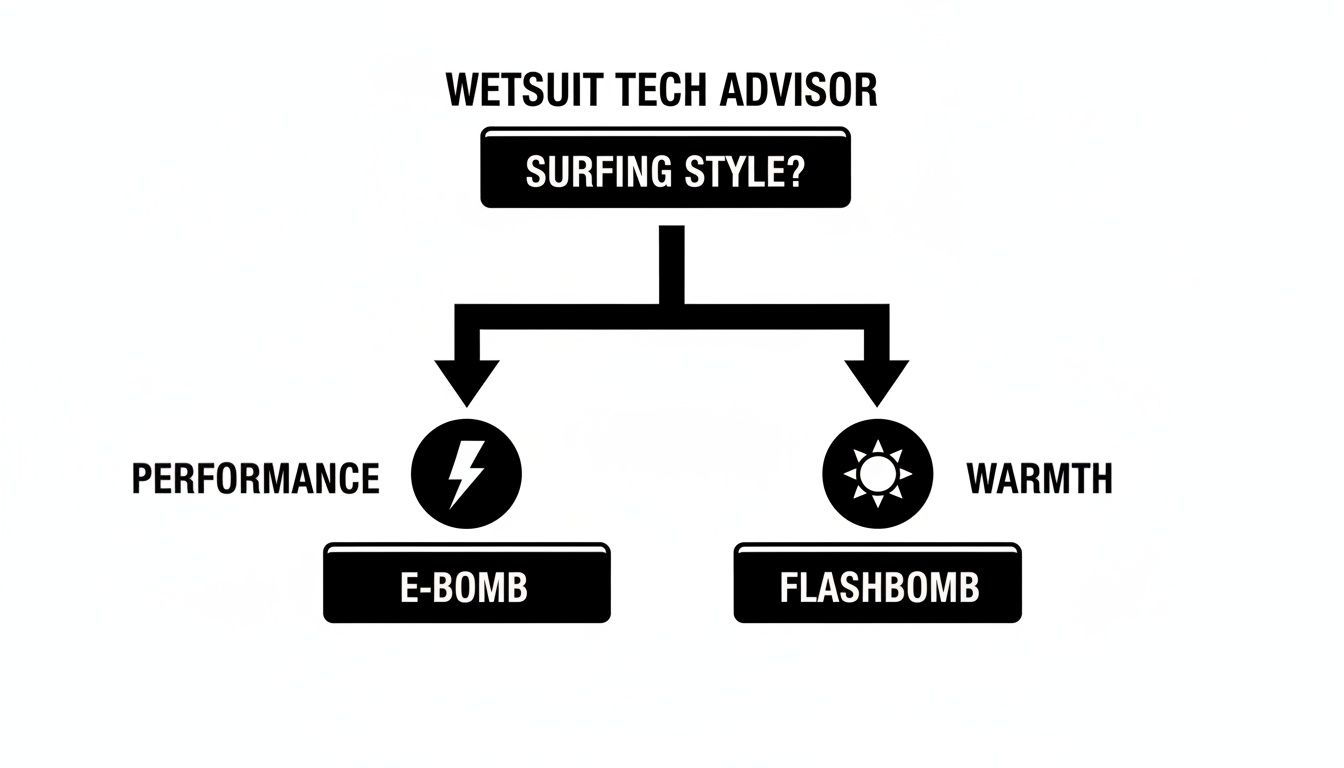
It’s a simple decision tree: if you want maximum flex and performance, the E-Bomb is your suit. If staying as warm as possible is the goal, the Flashbomb is the way to go.
When Boots, Hoods, and Gloves Become Essential
These aren't just accessories for the pros; they're critical bits of gear for extending your time in the water, especially when the mercury drops. Your extremities lose heat the fastest, and that's often what cuts a session short.
Think of it this way: you wouldn't go hiking in the snow wearing sneakers. Surfing a cold South Island break without boots, a hood, and gloves is just asking for trouble.
Here’s a quick breakdown of when to gear up:
-
Boots (3mm-5mm): Essential for most of the country from around May to October. In the South Island, they are a year-round necessity. They also give you great protection from rocks. Check out our range of wetsuit boots.
-
Gloves (3mm-5mm): When your hands start to feel like claws and you can't grip your board properly, it’s time for gloves. This usually happens in the middle of winter for most regions. Find the right pair in our wetsuit gloves collection.
-
Hoods: A built-in hood on your steamer is the ultimate weapon against brain freeze from icy winds and duck dives. For South Island winters, a hooded 5/4mm Flashbomb is the gold standard for a reason. Browse our wetsuit hoods and hooded suits.
Rip Curl's success in our local market has been huge. Their performance helped drive parent company KMD Brands' sales to a record NZ$547.9 million in the first half of FY23. This strong local focus means their top-tier suits are perfectly suited for our conditions, from thick winter steamers to lightweight summer options.
Ultimately, picking the right thickness is about being honest about your local conditions and how much you feel the cold. For a more detailed look into this topic, check out our complete NZ wetsuit thickness guide, which breaks down everything you need to know.
Getting the Perfect Fit and Making It Last
You can have the most advanced Rip Curl wetsuit on the planet, but if it doesn't fit properly, it's not going to keep you warm. Simple as that. A good fit is what lets that thin layer of water get trapped against your skin and warm up, acting as your personal insulation against the cold.
If your suit is too loose, it’ll constantly flush with icy water. Too tight, and it’ll cut off your circulation and make paddling feel like a wrestling match. You're looking for that sweet spot.
Nailing the Perfect Wetsuit Fit
Think of your wetsuit as a second skin. It needs to be snug everywhere, with no baggy spots or air pockets. Pay close attention to the lower back, chest, and under your arms. It'll feel pretty tight when you first try it on dry, but it should never be so restrictive that you can't paddle freely or take a deep breath. Getting this right is crucial for both warmth and performance. The principles are the same whether you're surfing Raglan in winter or figuring out what wetsuit is best for diving in Hawaii—fit is everything.
Here’s a quick checklist for when you’re in the changing room:
-
No Sagging: Check the lower back and crotch area. If there's any drooping fabric, the suit is too big and will scoop up water.
-
Arm and Leg Length: Cuffs should finish right at your wrists and ankles. Too short and they’ll let water in; too long and they’ll bunch up uncomfortably.
-
The Paddle Test: Go through the motions of paddling. You should feel a slight resistance, but your shoulders shouldn't feel painfully pinned back.
-
Breathing Room: The neck seal needs to be firm to stop flushing, but it shouldn't feel like it’s choking you out.
Grab a tape measure and check your chest, waist, and height against Rip Curl's official size chart. If you’re between sizes, we almost always recommend sizing down for a performance fit. The neoprene will give a little and mould to your body once it’s wet.
Protecting Your Investment with Proper Care
Right, you've found the perfect suit. Now you've got to look after it. A bit of simple care can easily double the lifespan of your wetsuit, keeping the neoprene supple and the seams strong for seasons to come. Neglect is the number one killer of a good wetsuit.
The golden rule? Always rinse it with fresh, cold water after every single surf. Saltwater is a menace; it’s corrosive and will slowly eat away at the rubber and stitching if you let it dry on the suit.
Simple Steps for Wetsuit Longevity
Looking after your suit isn't hard, but you have to be consistent. Just follow these steps and you’ll keep your gear in top nick for years.
-
Rinse It Right: Get a bucket or a hose and give the suit a proper rinse inside and out. Get all that salt, sand, and grime off it.
-
Hang It Correctly: Never, ever use a standard clothes hanger. The weight of a wet wetsuit will stretch the shoulders out for good. Fold it in half over a wide, purpose-built wetsuit hanger or a thick railing.
-
Dry in the Shade: Direct sunlight is neoprene’s worst enemy. UV rays absolutely cook the rubber, making it brittle, faded, and weak. Always hang your suit to dry in a shaded, airy spot.
-
Store It Properly: Once it's bone dry, store it in a cool, dark place, either lying flat or on that wide hanger. Don’t just jam it in a bag or leave it baking in the boot of your car.
For a more detailed breakdown, have a read of our complete guide to wetsuit care to make sure you get the maximum life out of your gear.
Why Trust Blitz Surf Shop With Your Gear
Picking the right Rip Curl wetsuit isn't just about clicking "add to cart." It’s about getting the right advice from people who actually get in the water and put the gear through its paces. That’s where we come in. At Blitz Surf Shop, we’re not some faceless corporation. We’re a family-owned shop, born and bred in Gisborne, and we’ve been a fixture of the local surf community since 1983.
We live and breathe this stuff. Our team surfs the same waves you do, from the long lines at Wainui Point to the fickle beach breaks scattered along the coast. This isn't just a job for us; it's our life. That decades-long, hands-on experience means we can give you real-world advice that you just won't find on a generic size chart or an anonymous online store. We know what works in NZ waters because we're out there testing it ourselves, day in and day out.
More Than Just a Shop
When you choose Blitz, you're not just buying a wetsuit; you're plugging into a genuine Kiwi surf hub. We’re proud to carry one of the biggest ranges of Rip Curl wetsuits in the country, giving you a proper selection to find the perfect fit for your needs and budget.
We also make sure surfers all over Aotearoa can get their hands on the good stuff. We offer NZ-wide delivery with free shipping on orders over $150, bringing our expert service right to your front door. The demand for quality Rip Curl gear is undeniable—the brand saw a massive 22% growth in New Zealand during the first half of FY23. With online sales across the country hitting around NZ$26 million, it’s clear how vital it is for surfers everywhere to have access to a reliable online store.
At the end of the day, supporting Blitz means you’re backing a real local business that ploughs everything back into the surf community. We’re just surfers helping surfers, and that’s a promise we’ve stuck by for over 40 years.
Your Local Surf Connection
Our roots in the Gisborne surf scene run deep. Before you even wax up, you can check the conditions on our live Wainui Beach surf cam right on our website. It’s that sort of commitment to the lifestyle that sets us apart. We’re here to offer friendly, knowledgeable advice, whether you’re walking through our doors in Gizzy or shopping with us online from the bottom of the South Island.
We're committed to stocking the best gear and providing the best service to keep you warmer and in the water for longer.
Rip Curl Wetsuit FAQs
Picking the right wetsuit can feel like a bit of a minefield, but it doesn't have to be. Get a few key questions answered, and you'll be well on your way to making a choice you're stoked with.
We get asked these questions all the time by Kiwi surfers, both here in our Gisborne shop and online, so we’ve put all the answers in one place for you.
What Is the Main Difference Between the Flashbomb and E-Bomb?
Think of it as a straight choice between maximum warmth and maximum flex.
The Flashbomb is Rip Curl’s warmth machine. It’s engineered with a full thermal lining that not only keeps you incredibly warm but also dries in a flash. This makes it the go-to suit for those icy winter sessions, windy days, or for anyone who surfs multiple times a day and hates pulling on a cold, damp wetsuit.
On the other hand, the E-Bomb is all about pure, unadulterated performance. It’s built with Rip Curl’s stretchiest E7 neoprene to give you total freedom of movement. It's the top pick for competitive surfers or anyone who wants to feel as loose and unrestricted as possible when paddling and throwing turns.
How Tight Should My New Wetsuit Feel?
Your new suit should feel like a second skin – snug everywhere, but not suffocating. You want it tight enough to stop cold water from flushing through, especially around your neck, back, wrists, and ankles. It’s normal for it to feel a little restrictive when it’s brand new and dry; the neoprene will always give a bit and feel more comfortable once you get in the water.
The key is that it should never restrict your breathing or your ability to paddle properly. If you feel like your range of motion is seriously limited or you can’t take a full, deep breath, then it’s definitely too small.
Our Tip: If you're sitting between two sizes on the Rip Curl size chart, we almost always recommend sizing down. A snugger fit is way better for performance and, most importantly, for warmth.
Is a 3/2mm Wetsuit Warm Enough for a South Island Winter?
In a word: no. A 3/2mm steamer is a fantastic all-rounder for summer pretty much anywhere in New Zealand, but it’s completely out of its depth in the frigid waters of a South Island winter. Trying to surf in a 3/2mm in places like Dunedin or the West Coast in July isn't just uncomfortable—it's downright dangerous.
For winter missions down south, you absolutely need a 4/3 at the bare minimum with all accessories or a 5/4/3. You’ll also want to pair it with some decent boots (at least 5mm) and gloves to stay safe, warm, and actually enjoy yourself out there.
What Is the Best Way to Store My Wetsuit?
Looking after your wetsuit properly is the single best thing you can do to make it last. A few simple habits will easily double the life of your suit by keeping the neoprene healthy and flexible.
Here’s what you should do after every single surf:
-
Rinse It Out: Always give your suit a thorough rinse inside and out with fresh, cold water. This gets rid of the salt and sand, which will slowly eat away at the neoprene and seams.
-
Hang It Right: Never, ever use a standard clothes hanger. The weight of the wet suit will stretch out the shoulders permanently. The best way is to hang it folded over at the waist on a chunky wetsuit hanger or a railing.
-
Dry It in the Shade: Direct sunlight is the ultimate enemy of neoprene. UV rays break down the rubber, making it brittle and weak. Always hang your suit to dry in a shaded, well-ventilated spot.
-
Store It Smart: Once it’s completely dry, store it either lying flat or on the same wide hanger in a cool, dark place. Never leave it crumpled in a bag or, even worse, baking in the boot of your car.
Ready to find the perfect suit for your next session? At Blitz Surf Shop, we've got one of New Zealand's biggest ranges of Rip Curl wetsuits and the local advice to match. Check out our full collection online and get sorted for whatever the coast throws at you.


