

You pull on a new wetsuit before dawn, paddle into a clean Gisborne line-up, and feel cold water run straight through the neck. The suit may be thick enough on paper, yet a loose collar, a short torso, or a gap across the bust can turn an ordinary session into a shivering one. That's the practical problem behind shopping for womens wetsuits NZ. The right suit must match your body and the coast where you surf.
A women's wetsuit isn't just another item in the kit bag. It controls warmth, shoulder movement, comfort, and how long you can stay useful in the water. New Zealand's conditions change sharply between regions, so buying by brand name or thickness alone often leads to the wrong result.
Navigating the Search for Women's Wetsuits NZ
A suit can look right on the hanger and fail within minutes in the water. If the torso is too short, it pulls at your shoulders when you paddle. If the bust is not supported by the panels, a gap opens across the chest. If the hips are too narrow for your shape, water flushes through the legs and lower back. Those fit problems often matter more than the logo or the thickness printed on the sleeve.
Along the East Coast, the difference becomes obvious on exposed mornings. Gisborne's air can feel sharp before sunrise, while a sheltered summer afternoon may be comfortable in a lighter suit. Wind, cloud, water temperature, and the time spent waiting between sets all change how warm you feel. The same suit may work for a short, active session in one bay and leave you cold during a longer paddle at another break.
Why generic sizing causes trouble
Many unisex suits are cut around a straighter torso, a smaller difference between waist and hips, and less variation through the bust. Women's suits are not automatically perfect, but their panels, shoulder placement, leg openings, and torso lengths are usually designed with those differences in mind.
Start by identifying the failure point in your current suit. A neck gap usually indicates the collar or upper-body shape is wrong. Tightness across the shoulders can come from restrictive panels or an entry system that limits reach. A loose waist, short rise, or hip gap allows flushing around the lower body. For surfers with a fuller bust, excess space above the chest can also create cold spots even when the waist feels snug.
Practical rule: A thinner suit that seals cleanly can feel warmer and paddle better than a thicker suit with loose areas.
Fit also affects fatigue. Excess rubber across the shoulders makes paddling feel stiff, while an overly tight chest or short torso limits your stroke and encourages the suit to ride up. Compare construction, flexibility, and cost using this guide to how much should I pay for a good wetsuit before judging individual models.
Women's participation has created a clear local market for suits built around female proportions. Trade Me's women's wetsuit marketplace shows the range available to New Zealand buyers, but a large selection does not remove the need to check torso length, bust fit, hip sealing, and shoulder movement.
Choose the suit that matches your body and your regular coastline. Thickness handles heat loss, while accurate shaping keeps cold water from circulating inside the suit and lets you paddle without fighting the neoprene.
Matching Wetsuit Thickness to New Zealand Seasons
Thickness is a thermal decision, not a badge of quality. Neoprene slows heat loss by creating insulation around the body, while the lining and fit help retain warmth during a session. If water moves freely through a loose suit, your body has to warm fresh cold water repeatedly, so a thicker but poorly fitted design can disappoint.
New Zealand guidance commonly places 3/2 mm suits in roughly 15 to 18°C water, 4/3 mm suits in about 12 to 15°C, and 5/4/3 mm suits with a hood below 12°C. Thermal loss rises quickly once water drops below about 15°C, so the local temperature matters more than a broad label such as “winter suit”. See the NZ wetsuit season guidance for the underlying temperature ranges.
A practical thickness guide
| Wetsuit Style | Thickness | Water Temp | Best Season |
|---|---|---|---|
| Spring suit | 2/2 mm | Warm summer conditions | Summer |
| Steamer | 3/2 mm | Roughly 15 to 18°C | Autumn and spring |
| Steamer | 4/3 mm | Roughly 12 to 15°C | Winter in many North Island areas |
| Hooded full suit | 5/4/3 mm | Below 12°C | Colder winter sessions |
A 2/2 mm spring suit suits warm-water paddling, beach breaks, and summer sessions when you need coverage without the weight of a full steamer. It is not a sensible substitute for a winter suit just because the sun is shining. Wind and long waits between sets can make a warm-looking day feel very different in the water.
The 3/2 mm steamer is the useful shoulder-season option for many surfers. It balances insulation and paddle mobility, making it a sound choice when a spring suit feels marginal but a 4/3 mm would feel restrictive.
When thicker rubber earns its place
A 4/3 mm full suit adds core insulation for colder sessions. A 5/4/3 mm hooded suit goes further by protecting the head and increasing coverage when water temperatures fall below the comfortable range for a standard steamer. Booties, gloves, and hoods become increasingly important as water approaches single digits, particularly when wind chill and repeated duck-diving drain warmth.
The trade-off is straightforward. More neoprene generally gives you more insulation, but it can reduce shoulder freedom and make paddling harder. A chest and core panel with greater thickness, combined with thinner limb panels, often gives a more usable balance.
For a deeper comparison of common suit categories, use the NZ wetsuit thickness guide. Buy for the water you surf, not for the coldest possible day if that choice will leave you unable to paddle comfortably for most of the year.
Finding the Perfect Fit for Female Surfers
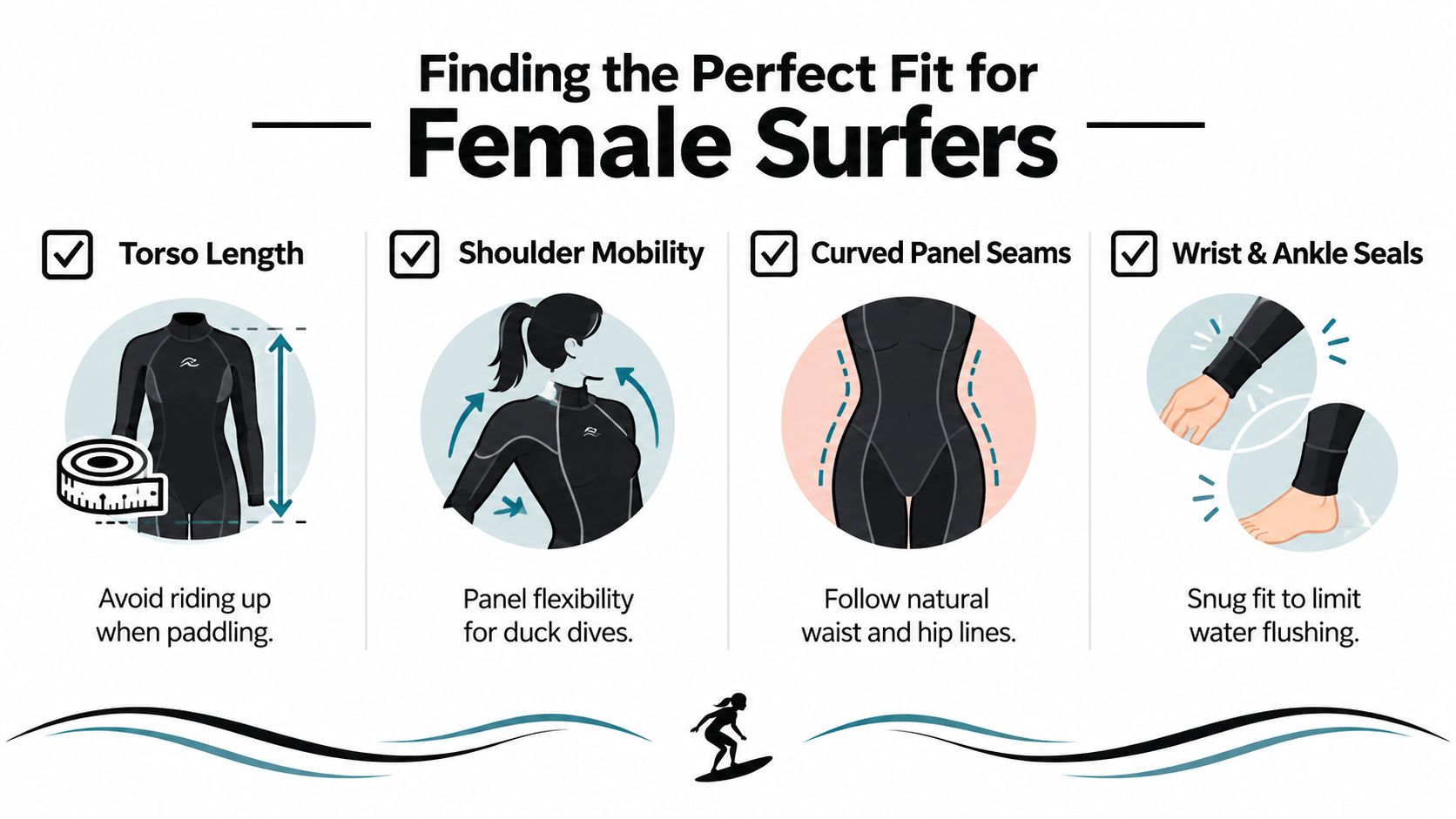
The most common fitting mistake is choosing a suit by height and weight, then hoping the rest of the body follows the pattern. Women's bodies vary through the bust, waist, hips, and torso, and those differences affect both comfort and water entry. A suit can fit your legs well while riding up through the torso, or sit neatly at the waist while leaving a bust gap that fills during every duck-dive.
Start with a soft tape measure and record your bust, waist, hips, and height. Measure without pulling the tape tight, then compare those measurements with the specific brand's chart. One NZ retailer lists size 4 at 79 cm bust and 60 cm waist, size 6 at 81 cm bust and 61 cm waist, size 8 at 86 cm bust and 66 cm waist, size 10 at 91 cm bust and 71 cm waist, and size 12 at 96 cm bust and 76 cm waist. The retailer also warns that sizing varies by brand and that the chart is a guide only. City Beach's NZ women's wetsuit size chart provides those measurements.
Read the suit by problem area
Torso length is easy to overlook. Raise both arms, lean into a paddling position, and check whether the suit pulls into the crotch or rides over the shoulders. If it does, going up a size may add unwanted gaps elsewhere. A different cut or a longer-torso model is often the better solution.
Bust fit requires close attention to the chest panels. The neoprene should sit against the body without crushing the chest or creating a pocket that fills with water. Try the suit in your normal paddling position, not just standing upright in front of a mirror.
Hip and waist sealing affects flushing. Curved panel seams should follow your natural waist and hip line rather than creating a straight gap. Boyleg cuts can feel more secure for some hip shapes, while full-leg cuts provide more coverage and may reduce movement at the leg opening. Neither is automatically better. The seal and comfort decide it.
Chest-zip suits usually provide a close upper-body seal and can reduce water entry, but they demand enough shoulder mobility to pull the entry panel into place. Back-zip suits are easier to enter and can suit surfers who value convenience or have limited shoulder flexibility, although the back closure needs to lie flat and seal properly.
Check the neck by turning your head and lifting your arms. The collar should touch the skin without choking you or leaving a visible channel.
Wrist and ankle cuffs should sit snugly without cutting circulation. A loose cuff lets water travel through the limbs, while an excessively tight cuff becomes uncomfortable before the session has properly started. If you also use a surf shirt for sun protection or layering, compare materials and construction in this best women's surf shirts review.
Adapting Your Gear to Regional Surf Conditions
New Zealand doesn't have one universal wetsuit season. A surfer in Northland, a surfer on the Gisborne coast, and a surfer in the lower South Island can all call the same month “winter” while needing very different levels of insulation.
Northland and parts of the East Coast generally offer milder conditions than the colder southern coasts, but the decision still depends on the break, wind exposure, and how long you stay in the water. A summer spring suit may be comfortable in warm, sheltered conditions, while an exposed dawn session can call for more coverage. On the East Coast, I'd rather see a surfer choose a well-fitted 3/2 mm than squeeze into an oversized 4/3 mm that restricts paddling and flushes at the neck.
North Island choices
Taranaki's winter surf can justify a 4/3 mm steamer, particularly when the wind is strong or you're surfing regularly. The same suit may also make sense for colder East Coast mornings, especially for surfers who feel the cold quickly or spend long periods waiting between sets.
The North Island choice often comes down to flexibility. Look for stretch through the shoulders, a clean chest seal, and panels that don't bunch under the arms. If the torso and core feel warm while the arms remain mobile, the suit is doing its job.
South Island choices
Cooler coasts and South Island winter sessions push many surfers towards 4/3 mm or 5/4 mm full suits. As water approaches single digits, booties, gloves, and hoods become necessary additions rather than optional extras.
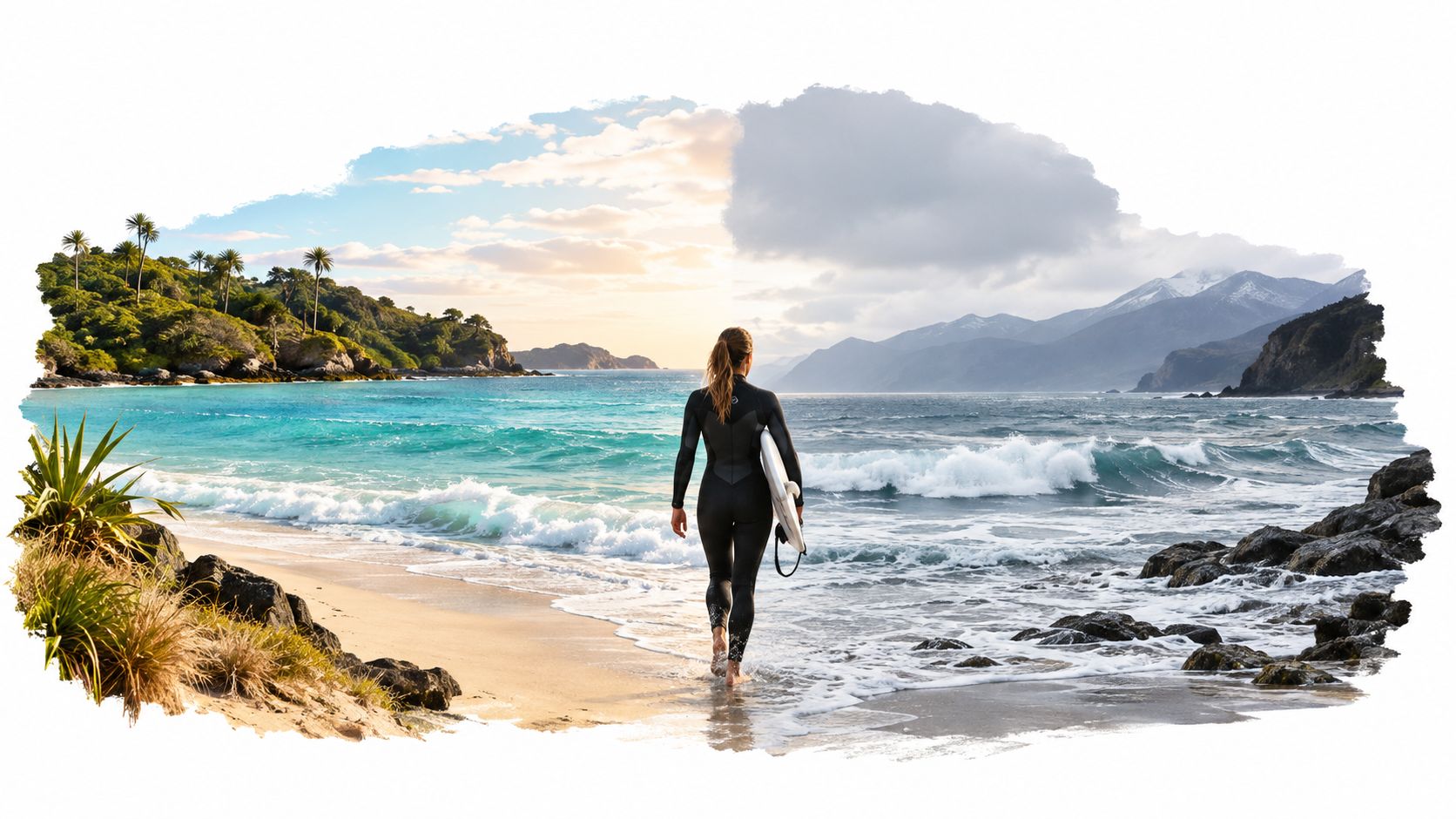
A standard 4/3 mm may work for a Taranaki winter but feel inadequate for a July session in Dunedin. A hooded 5/4 mm may be sensible in the colder setting, yet overkill for a warm North Island afternoon. Premium construction becomes worthwhile when it adds warmth without turning the shoulders into stiff panels.
Many NZ buyers choose suits with thicker chest and core sections but thinner limbs. That arrangement protects the torso while preserving paddle movement, which is often more useful than making every panel equally thick. Before travelling between regions, check the NZ surf guide and adjust the suit and accessories to the actual coast, not just the calendar.
Essential Wetsuit Care and Maintenance
A good wetsuit fails early when salt, sand, heat, and careless drying become part of its daily routine. Proper care doesn't need to be complicated, but it does need to happen after every session.
The post-surf routine
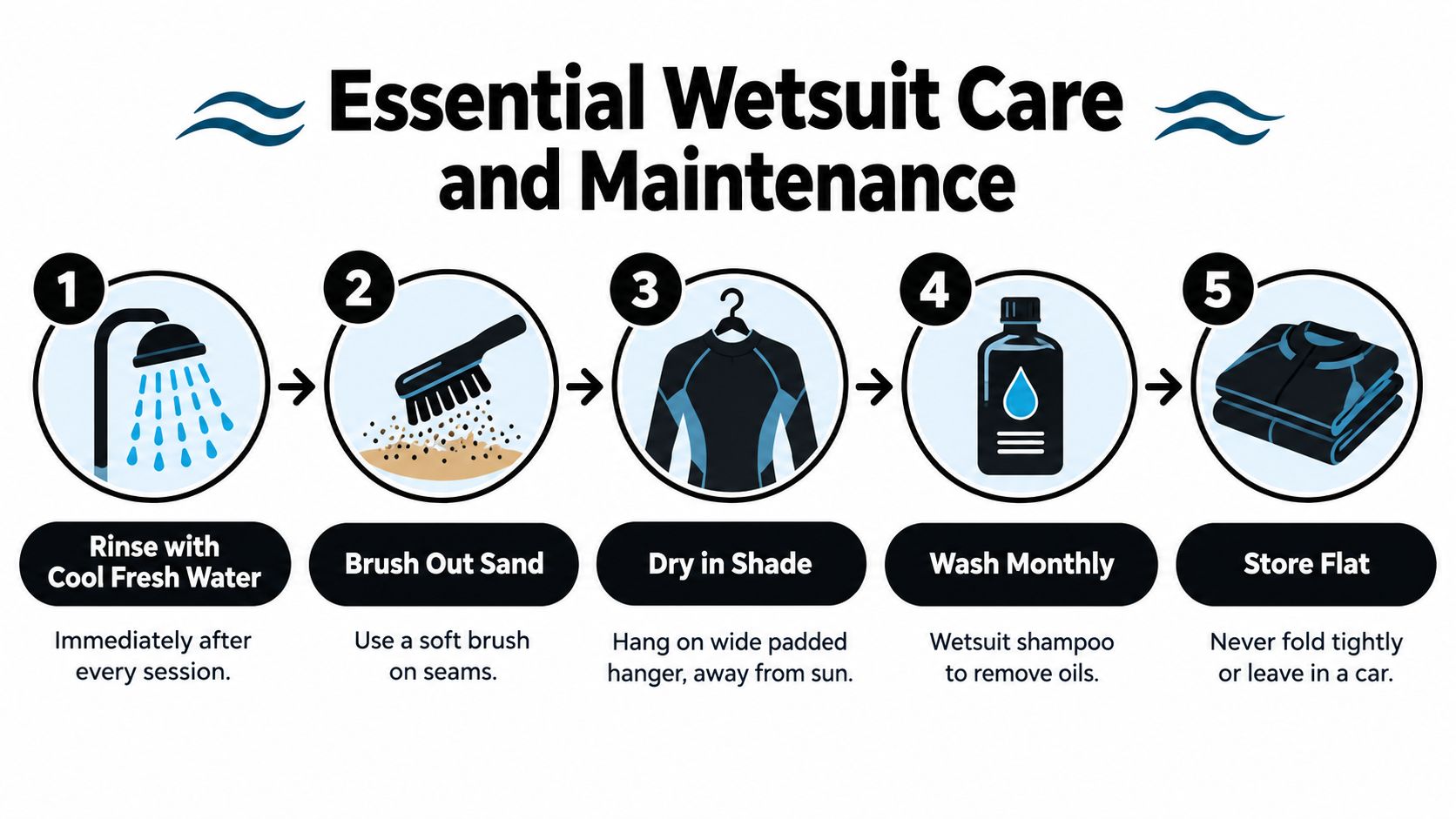
- Rinse immediately: Use cool, fresh water to remove salt and sand from the neoprene, seams, zip, cuffs, and lining. Avoid harsh detergents, which can damage the material and leave residues that irritate skin.
- Clear the seams: Feel around the ankles, wrists, collar, and zip for trapped sand. A soft brush can remove grit from seams without scraping the outer fabric.
- Dry in shade: Turn the suit inside out first and place it on a wide, padded hanger or drape it so the shoulders don't carry the full weight. Direct sun and hot surfaces can dry and weaken neoprene, while hanging from a thin hanger can stretch the shoulder area.
Never leave a wet wetsuit folded in the boot of the car. It traps odour, encourages material breakdown, and makes the next session unpleasant.
After the suit dries inside, turn it right-side out so the outer surface can dry as well. Don't pull hard on the arms or legs when removing it. Use the pads of your fingers to ease the material over cuffs, rather than digging fingernails into the seams.
Repairs, washing, and storage
Wash the suit occasionally with a wetsuit-specific shampoo to remove body oils and persistent salt residue. Rinse the zip after use and run it gently rather than forcing it through sand or tangled fabric. A small tear can often be treated with wetsuit adhesive, but damage around a seam, zip, or critical seal deserves professional attention.
For the off-season, store the suit flat or loosely draped in a cool, dry place. Don't fold it tightly for months, pile heavy gear on top, or leave it compressed inside a board bag.
This wetsuit care guide covers the routine in more detail. The video below also provides a visual reminder of the basic process.
Getting Fitted in Gisborne and Shopping Online
Trying on a women's wetsuit in a shop gives you information that a size chart can't. You can check whether the torso stays in place while you crouch into a paddling stance, whether the chest panels sit flat, and whether the collar seals without restricting your breathing. Those details are difficult to judge from a product photograph.
At a Gisborne fitting, bring the body position you use in the water. Reach forward as if paddling, raise your arms for a duck-dive, rotate your shoulders, and bend through the hips. Pressure across the shoulders is a warning sign, but so is excess material behind the knees or at the lower back. A suit should feel close and deliberate, not painfully tight and not baggy.
What to check before buying online
Online shopping can work well if you measure first and treat the chart as a starting point. Product pages should help you identify the entry system, thickness, coverage, and intended season. Compare those details with your local break and the fit problems you've already identified.
Use this checklist before ordering:
- Measure your body: Record bust, waist, hips, and height in the units used by the brand.
- Check the cut: Look for torso information, leg coverage, panel shaping, and zip position.
- Compare the return terms: Confirm the allowed condition for trying on the suit and keep tags attached until you're satisfied.
- Ask before guessing: A retailer can often identify whether a brand runs longer, narrower, or roomier through the upper body.
Blitz Surf Shop is a family-owned Gisborne retailer with in-store service and online delivery across New Zealand. Its women's range includes steamers, springsuits, and jackets from brands such as O'Neill, Rip Curl, and Billabong, with additional thermal accessories available for colder sessions.
For local advice, the Gisborne surf shop guide gives visitors a starting point for finding the store and combining a fitting with a day on the East Coast. Online buyers should use the product measurements, contact the team when two sizes seem close, and confirm delivery and returns before completing the order.
New Zealand aquatic events can also have their own equipment rules. Surf Life Saving New Zealand's May 2025 wetsuit memo states that only wetsuits approved for events involving swimming may have a maximum thickness limit, so check the event's current policy if you're buying for organised competition. The local wetsuit memo listing provides the relevant document context.
Final Thoughts on Choosing Your Next Suit
Your home break will expose a poor fit quickly. A suit can have the right thickness yet still leak around the hips, leave a bust gap, or pull across a short or long torso. Choose the cut that seals against your body and lets your shoulders rotate freely for paddling.
Use this checklist:
- Fit first: Check the collar, torso length, bust coverage, waist, hips, cuffs, and shoulder movement. A snug chest and hip seal matters more than a size label.
- Match the water: Choose a spring suit, 3/2 mm, 4/3 mm, or 5/4 mm for the water you surf, not the season name alone.
- Respect regional differences: Gisborne and other East Coast breaks can call for different gear from colder South Island winter sessions.
- Balance warmth and movement: Extra neoprene helps only if you can still paddle comfortably and duck-dive without tiring early.
- Maintain the neoprene: Rinse with fresh water, dry it in shade, protect the seams, and store it without crushing the panels.
Female participation in surfing continues to grow nationally, increasing the need for guidance that addresses torso length, bust shape, and hip sealing rather than repeating generic thickness charts. Surfing New Zealand's annual report information reflects a customer base that needs practical advice built around real proportions and varied New Zealand water temperatures.
The right suit should disappear once you reach the line-up. If your core stays warm, your neck remains sealed, and your shoulders move freely, you can concentrate on wave selection instead of adjusting your gear.
Explore womens wetsuits, springsuits, jackets, and cold-water accessories at Blitz Surf Shop. The Gisborne team can provide an in-store fitting, while online shoppers can check size guidance and contact the shop when two cuts or sizes seem close.


