

A 4/3mm full steamer is the versatile year-round baseline for most Gisborne and East Coast surfers, with a 3/2mm for warm summer days and a 5/4mm for winter, wind, or cold-sensitive surfers. Why do so many thickness charts still give you one national number when your local water, session length, and fit can shift the answer completely?
That's the gap worth fixing. If you're asking what thickness wetsuit should I get, don't start with a label that says New Zealand suit. Start with the water you'll surf, then adjust for exposure and how long you'll stay out. Thickness works best as a system, with a core suit plus boots, gloves, or a hood when conditions demand them.
Wetsuit Thickness by New Zealand Region
For most Gisborne surfers, start with a well-fitting 4/3mm steamer, then check whether your usual sessions push you thinner or thicker. Your starting point is representative local sea temperature, not air temperature on the day or a generic national recommendation.
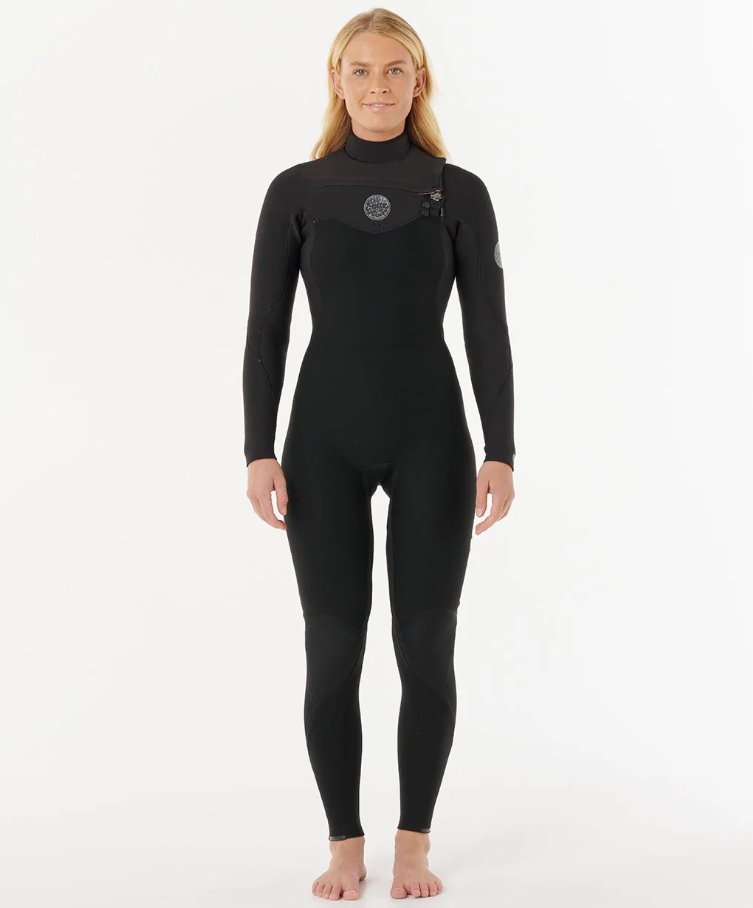
Find your regional row
The Stats NZ sea-surface temperature indicator, using NIWA-derived data in mid spring, reports 18.7°C in the North Eastern region, 18.3°C on the Western North Island, 16.8°C on the Eastern North Island, 16.2°C on the West Coast South Island, 14.2°C on the East Coast South Island, and 13.6°C around the Southern South Island. Those differences explain why a suit that feels perfect up north can leave a southern surfer cold within the hour.
| Region | Representative water temp | Suggested steamer | Notes |
|---|---|---|---|
| North Eastern region | 18.7°C | 3/2mm steamer | Warm summer use, thinner options for hot days |
| Western North Island | 18.3°C | 3/2mm in summer, 4/3mm in shoulder seasons | Move up a category on windy or cloudy days |
| Eastern North Island (includes Gisborne) | 16.8°C | 4/3mm steamer year-round | Versatile baseline, 3/2mm for warm summer sessions |
| West Coast South Island | 16.2°C | 4/3mm steamer, 5/4mm in winter | Wind and long sessions push toward 5/4mm |
| East Coast South Island | 14.2°C | 5/4mm steamer | Add a hood for long or winter sessions |
| Southern South Island | 13.6°C | 5/4mm steamer plus hood | Consider boots and gloves for extended time in the water |
Neoprene thickness increases conductive insulation. A close, low-flush fit also matters, because it stops cold water repeatedly replacing the thin layer your body has warmed inside the suit.
How to check your own beach
Find the regional figure closest to your break, match it to the table, then move one category up or down for season, wind, and session length. Gisborne sits in the Eastern North Island row, so the 16.8°C figure supports that 4/3mm baseline before you personalise it.
If you're pairing a new suit with a local trip, the Gisborne surf guide helps you match breaks and exposure to the session you're planning. Sheltered town beaches and exposed points can feel different on the same morning, even when the regional reading doesn't change.
Practical rule: Pick thickness from the coldest water you'll regularly surf, not from the warmest day you hope for.
That approach stops you buying a light summer suit in January and then avoiding the water by May. It also stops you sweating through a heavy winter steamer when a flexible 3/2mm would paddle better.
Why Water Temperature Decides More Than Air Temperature
Think of a wetsuit as a thermal blanket that holds a thin layer of water against your skin. Your body warms that layer, and the neoprene slows heat escaping into the sea.
This visual shows that trapped layer and why flushing ruins it.
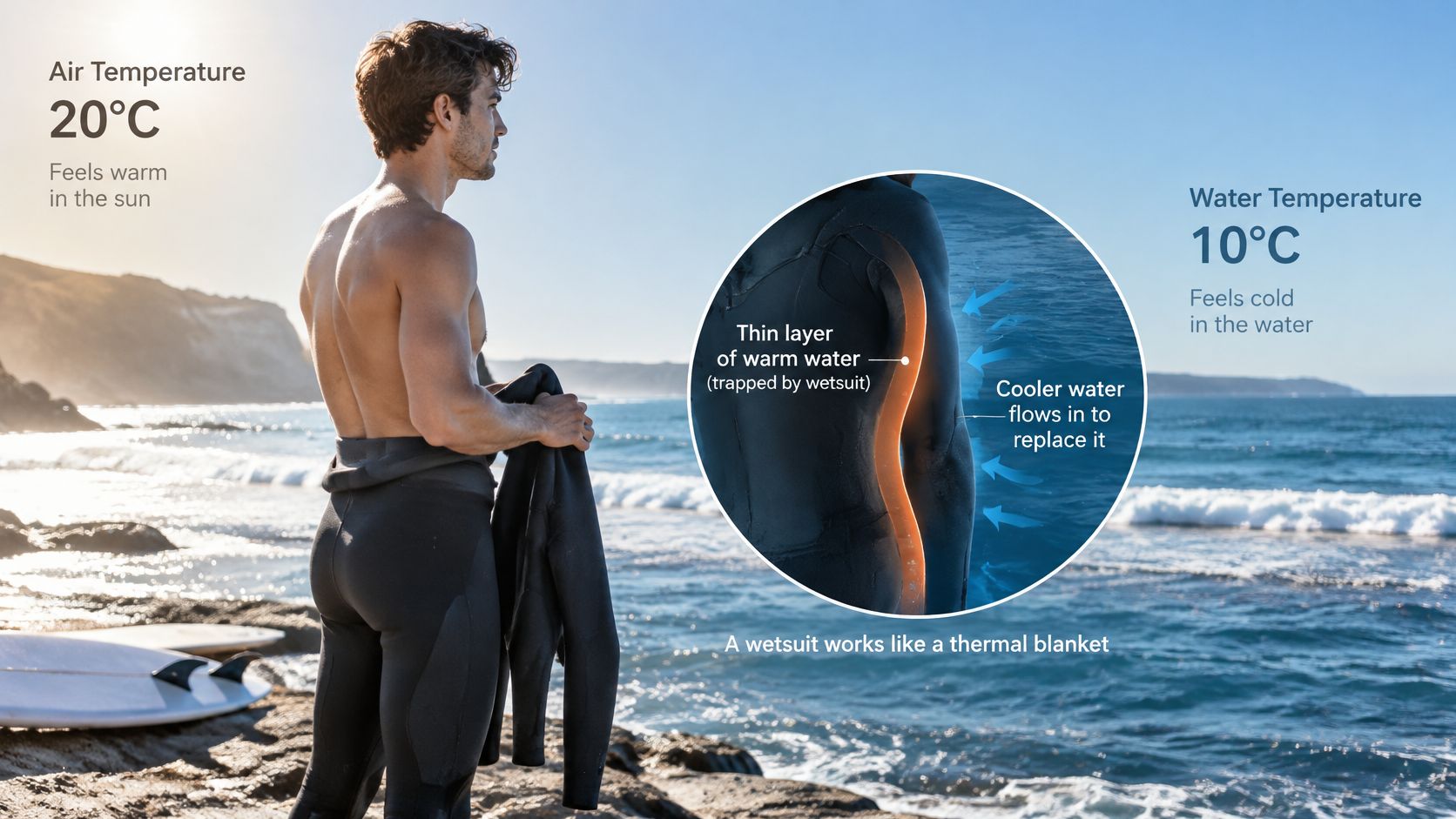
A sunny day can still mean cold water
Say it's warm on the sand, you're in a T-shirt, and the carpark feels like summer. You'll still spend most of the session immersed, sitting on your board, or duck-diving, so water temperature sets your heat loss. A loose suit makes things worse because every paddle and duck-dive pumps fresh cold water in and pushes the warmed layer out.
Conductive heat loss never really pauses while you're in the sea. Thicker neoprene slows it, but it can't compensate for a baggy neck, loose wrists, or a suit that balloons around your lower back.
Averages and forecasts need careful reading
NIWA reports that New Zealand coastal sea-surface temperatures warmed by approximately 0.2–0.3°C per decade from 1982 to 2022, with particularly pronounced warming along eastern New Zealand, in its marine heatwaves research update. That long-term trend doesn't guarantee a warm surf next Tuesday, especially after wind, cloud, or a run of cooler water.
The video below is a useful visual check on how suits manage that heat loss in practice.
Forecast language trips people up too. NIWA's sea-surface temperature forecast explains that its forecasts are anomalies against a historical reference based on observations from 1993–2016, so +0.5°C means the forecast monthly average is expected to be 0.5°C above the relevant historical average.
Use that anomaly to judge whether a season may run warmer or cooler than normal. Use the absolute local water temperature to choose your baseline suit. Never turn a forecast anomaly directly into a millimetre recommendation.
How Wind, Session Length and Fit Shift Your Choice
Two surfers can enter the same East Coast water and need different suits. One surfs a short, sheltered summer session and paddles constantly. The other waits through long lulls in an exposed line-up while offshore wind cuts across a wet back. The millimetre number on the label is one part of the system. Wind, time in the water, fit, and what you add at the wrists, feet and head decide how warm that suit feels.
Exposure changes the maths
NIWA's fundamental climate observations show that sea-surface temperature varies by region and season and that coastal waters have warmed over the long term. Those records are local and seasonal, not a single national value. As a rough guide rather than a measured threshold, 60 to 120 minutes in exposed East Coast wind will drain more heat than a short sheltered session at the same measured water temperature.
- Wind and cloud: Moving air strips heat from wet neoprene faster. Cloud removes the solar warmth that can make a thinner suit feel fine.
- Waiting versus paddling: Continuous paddling generates heat. Sitting still between sets lets you cool quickly.
- Body composition: Lean surfers and those with lower body mass often feel cold sooner, especially in the hands, feet and around the kidneys.
Fit acts as a multiplier
A 4/3mm suit with sealed seams, a snug chest or back seal, and minimal flushing can outperform a poorly fitted 5/4mm. Extra millimetres don't help much if cold water keeps entering at the neck or sloshing through loose legs.
After a few minutes, your core should feel warm, with no cold rush at the neck, wrists or ankles when you duck-dive. On land, you should be able to rotate your shoulders and mimic a full paddle stroke without the suit pulling hard across your chest.
Current local readings should override calendar-based advice. April isn't automatically 3/2mm weather, and August doesn't always demand the thickest suit you own. If you feel the cold in your hands and feet before your torso, add accessories before you add another millimetre to the suit. That order matters more than the label.
Warm, dry layers after you get out also shorten the chill, so this guide to what to wear after surfing is worth a look if you tend to cool down fast in the carpark. It won't fix a wrong suit, but it helps you recover between sessions.
Add Boots, Gloves and Hoods Only When Needed
Cold hands and feet usually end a session before a cold torso does. If your extremities go numb first, targeted accessories often improve comfort more efficiently than jumping straight to a thicker steamer.
This checklist keeps the order simple, extremities first, extra bulk only where it earns its place.
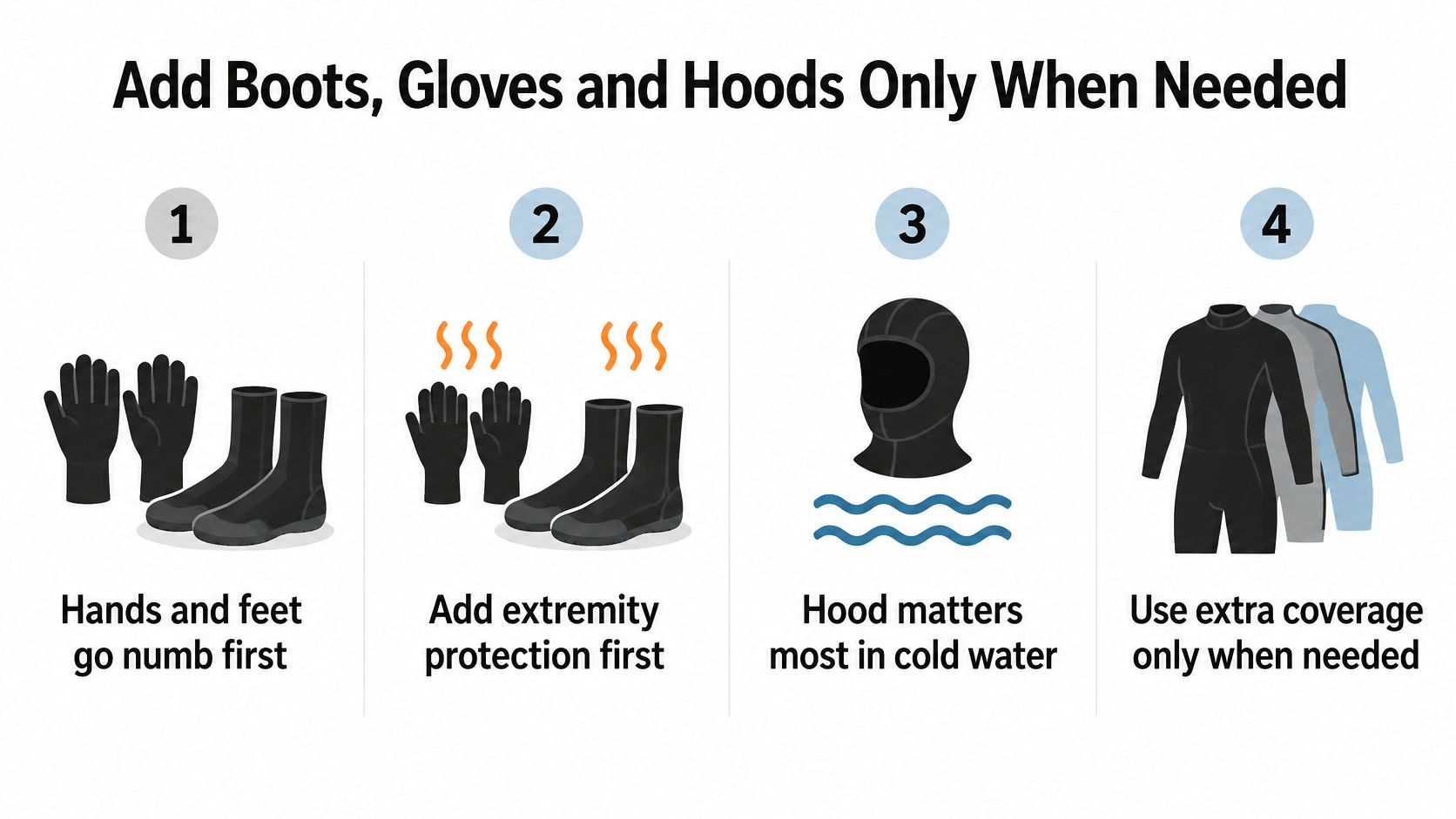
Use symptoms, not habit
A hood matters most in water around the mid-teens Celsius and during long winter sessions, because your head stays exposed between waves and loses heat your torso suit can't protect. Boots help when feet go numb on cold, windy entries or over rock. Gloves help when hands stiffen, grip fades, or paddling starts to feel clumsy.
| Accessory | When to add it | Suggested thickness | Why it helps |
|---|---|---|---|
| Hood | When you are starting to get ice cream headaches | 1.5-5mm | Stops the head losing heat that the torso suit cannot hold |
| Boots | Feet go numb before the body does | 3-5mm | Protects feet on cold, wind-exposed entries and rocky shorelines |
| Gloves | Hands stiffen or lose grip while paddling | 1.5-4mm | Keeps paddling comfortable during long cold sessions |
Match accessory flexibility to the suit. Stiff boots can blunt board feel, and thick gloves can tire your forearms if they fight every paddle stroke. I'd add one item at a time so you can tell what solved the problem.
For boot fit and sole choices, this guide to best-selling wetsuit boots is a practical next read. Look for a snug heel, no toe crunch, and a sole that suits your usual entry, sand, reef, or rock.
Winter East Coast dawn checklist
- Core suit: Your 4/3mm, or 5/4mm if you run cold.
- Head and feet: Hood in the bag, boots on if numbness is your usual limiter.
- Hands: Gloves packed, even if you decide at the beach.
- Afterwards: Dry towel, warm top, and somewhere out of the wind to change.
Steamer, Summer Suit or Vest
Thickness and cut are separate decisions. Thickness controls insulation through the covered panels, while cut controls how much skin you leave exposed to water, wind, and sun.
Start with the full steamer
A full steamer covers your torso, arms, and legs, so it's the default for most New Zealand surfing from shoulder seasons through winter. The 4/3mm version gives the widest usable range for East Coast surfers who surf year-round. A 5/4mm adds warmth for colder southern water, but it's heavier, slower to dry, and can feel restrictive if the fit or neoprene quality isn't right.
A 3/2mm steamer keeps full coverage while paddling more easily in warm summer water. It's often the better choice for cold-sensitive surfers who want sun and wind protection without the insulation of a 4/3mm.
| Cut | Coverage | Best water conditions | Main trade-off |
|---|---|---|---|
| Full steamer 4/3mm | Full body, arms and legs | Shoulder seasons through winter, around 14 to 18°C | Most versatile, but warmer than needed on hot days |
| Full steamer 5/4mm | Full body with extra thickness | Cold southern water and winter, near 14°C or below | Heaviest and slowest to dry |
| Full steamer 3/2mm | Full body, thinner neoprene | Warm summer water, roughly 18°C and above | Less warmth for cold mornings |
| Summer suit or springsuit | Torso with short arms and legs | Warm northern summers | Not suitable for cold water or long winter sessions |
| Vest, shorts or lycra | Torso only or limbs only | Very warm water | Little protection from wind or cold |
Where lighter cuts win
A summer suit or springsuit suits warm northern water and shorter sessions where overheating is a bigger risk than chilling. Vests, shorts, and lycra suit very warm water, sun protection, or adding a light torso layer, but they won't rescue you in a cold southerly. The ultimate guide to summer surfing wetsuits goes deeper on those lighter options.
If you surf through autumn and winter, buy the full steamer first. If you mainly surf warm summer days, a springsuit saves weight and heat. Let cut follow coverage needs, and let thickness follow the coldest session you realistically expect.
How to Build a Seasonal Layering Plan
Build the system in order, water first, suit second, accessories last. That sequence stops you buying bulk to solve a fit or exposure problem.
This four-step visual mirrors the process, from local reading to mobility check.
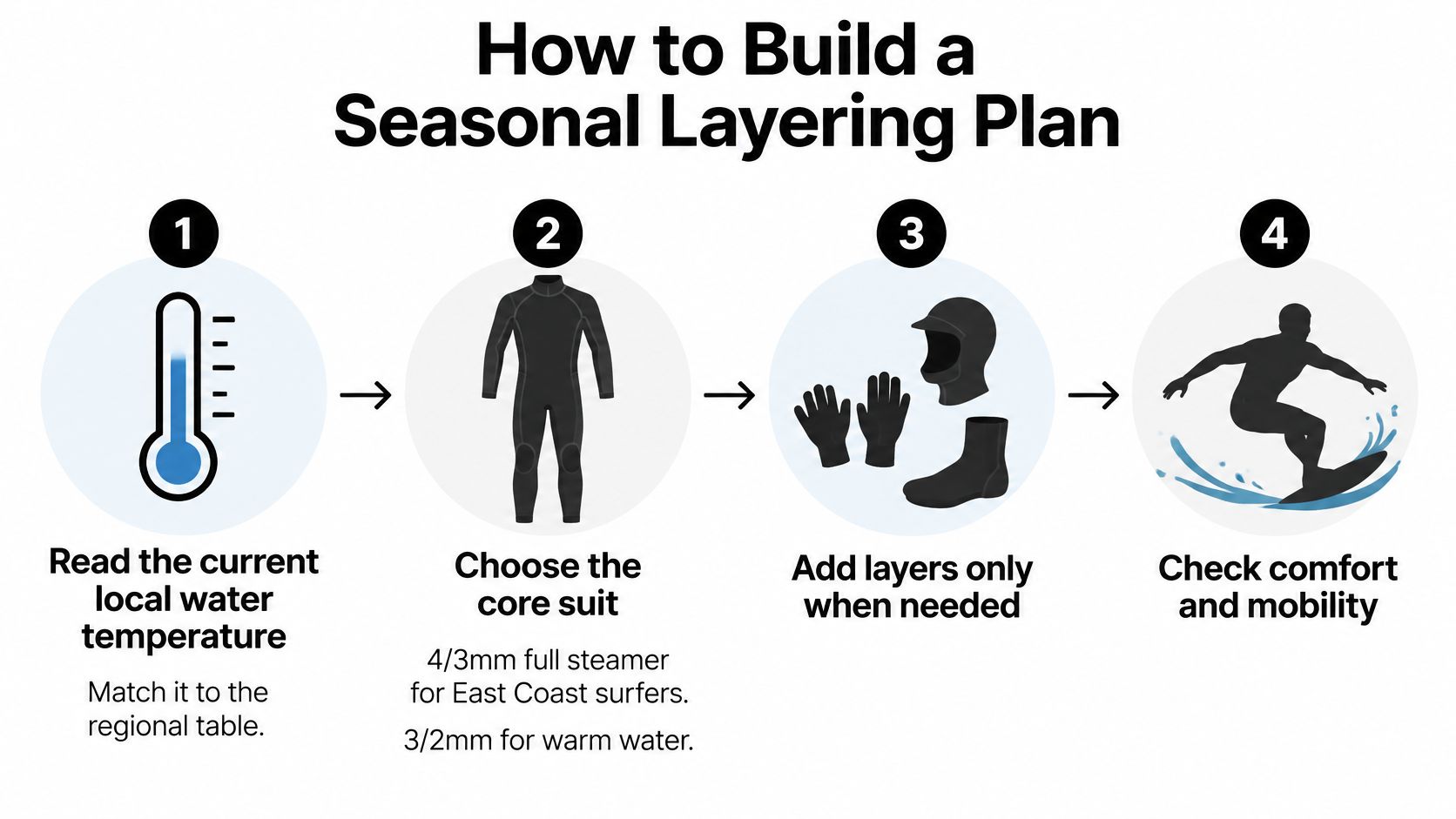
The six-step check
- Read the current local water temperature. Match it to your regional row. The common slip is choosing by air temperature because the beach feels warm.
- Choose the core suit. Use a 4/3mm full steamer as the East Coast default, or a 3/2mm for warm summer sessions. Don't buy a bigger size hoping trapped water will add warmth, it does the opposite.
- Check the session profile. If it's windy, exposed, cloudy, or likely to run past an hour, move up one category or plan a hood. Short, active, sheltered sessions can stay thinner.
- Add extremity protection by symptom. Boots if feet go numb first, gloves if hands stiffen, hood if duck-dives leave you chilled. Don't wait until the session's already ruined to wish you'd packed them.
- Test the fit in the water. A snug suit with minimal flushing and no cold rush at the neck or wrists is right. Persistent flushing means size, seal, or entry system needs attention before thickness does.
- Keep a simple seasonal rotation. Use 3/2mm for summer, 4/3mm for shoulder seasons and most of the year, and 5/4mm with hood and boots for winter or if you run cold.
For planning cold-month sessions, this guide to how to surf in winter helps you think through daylight, wind, and warm-up routines as well as gear. Your layering plan should make winter surfing repeatable, not just survivable once.
The core suit is your year-round base. Accessories and cut change with conditions.
Confirm Your Thickness and Size Before You Buy
Bring it back to one decision. For most Gisborne and East Coast surfers, a 4/3mm full steamer is the versatile year-round choice, with 3/2mm for summer and 5/4mm for winter or cold-sensitive surfers.
Do the final fit check
Try the suit on and check the chest or back seal sits flat without gaps. The neck and wrists should seal firmly, but your shoulders must still rotate freely for paddling. Crouch, twist, and mimic popping up; sharp pulling through the shoulders or lower back usually means the size or model shape isn't right.
Seam construction affects both warmth and durability, so the guide to surfing wetsuit seams is worth reading before you compare models. Sealed seams generally reduce flushing compared with basic stitching, which matters in cooler water.
A concrete starting option
At Blitz Surf Shop, the O'Neill Reactor 2 GBS BZ 4/3mm steamer is a 4/3mm full steamer with a single seal collar, listed at $320 NZD, reduced from $400 NZD, though it's currently sold out in all sizes, so ask us for the closest current alternative. We also stock men's full steamers in 4/3mm for winter, 3/2mm for spring and autumn, and 2mm for warmer water, with wetsuits from Billabong Wetsuits, O'Neill, Rip Curl, and Roxy.
Note your local water temperature and the session you plan most often, then choose the matching thickness row. If you're between sizes or categories, get a fit check in person before you commit.
Bring your usual break, session length, and the season you surf most, and we'll help you choose between 3/2mm, 4/3mm, and 5/4mm steamers plus the right boots, gloves, or hood. Visit Blitz Surf Shop to browse the range or plan an in-store fit check in Gisborne.


