

It's a Gisborne Saturday morning. The swell is running at Wainui, the kids are yelling about boogie boards, and someone in the lineup is drifting sideways because their supermarket flippers can't hold a clean line. The right swim fins in NZ won't turn poor technique into good surfing, but the wrong pair can waste energy, slip off in the shore break, and finish a session before the waves do.
NZ water asks more from fins than a calm resort pool. You might be dealing with chilly spring water, a rocky entry, a long surface swim, or a competition rule that limits blade dimensions. By the end of this guide, you'll know which fin type suits your activity, how to size it properly, and where to buy without gambling on the first pair you see at the dairy. If cold feet are part of the problem, sort the rest of your water kit with this practical guide to wetsuit boots.
Why Picking the Right Swim Fins in NZ Matters
Cheap, soft, generic flippers usually fail in predictable ways. The foot pocket pinches once your feet go cold, the blade folds instead of driving water, and the heel loosens when a wave hits from behind. You then kick harder to get less movement, which loads the calves and arches before the enjoyable part of the session has started.
At Wainui, a bodyboard fin needs to stay secure while you duck-dive and kick into a wave. Over the Poor Knights, a snorkeller needs controlled propulsion, not a long blade that clips the reef or encourages heavy kicking. On a longer swim at Orewa, a fin that creates hot spots will matter more than the brand printed on the blade.
Fins change how you spend energy
A fin increases the surface area pushing against the water. That can improve drive, but it also magnifies poor fit and unsuitable stiffness. A blade that's too rigid for the swimmer becomes hard work, while a blade that's too soft collapses under a strong kick.
NZ has a long organised swimming culture behind today's recreational fin market. The New Zealand Amateur Swimming Association, now Swimming New Zealand, formed in 1890, national championships began in Wanganui in 1905, women's championship racing began in 1912, and New Zealand swimmers first appeared at the Olympic Games in 1912. Public swimming pools were being built from the 1860s, and Te Ara records that at least 15 similar swimming bodies existed nationwide by 1895. Those foundations helped create the aquatic infrastructure in which specialised training and recreational equipment could take hold. Te Ara's history of swimming in New Zealand provides the wider context.
The payoff is straightforward. Match the blade, pocket, and fin length to your water time, and you'll get better control with less wasted effort. Ignore those details, and even a costly pair can feel wrong.
The Four Main Types of Swim Fins Explained
Start with the activity, then choose the fin. Snorkelling fins are generally compact, forgiving, and comfortable for surface swimming. Swim-training fins are shorter and flatter, helping swimmers practise a quick flutter kick rather than relying on a long blade for easy propulsion.
Bodyboarding and surf fins are a different tool. They're commonly full-foot designs with rubber construction, firm blades, and enough reinforcement to handle shore break, sand, and repeated impacts. Freediving and scuba fins use longer blades and a more deliberate kick. They suit a long, slow sweep rather than the compact flutter used in a pool.
| Fin Type | Blade and Foot Pocket | Best For in NZ | Kick Style |
|---|---|---|---|
| Snorkelling | Short to medium, soft or moderately firm blade, usually full-foot or open-heel | Goat Island, Bay of Islands, surface reef swimming | Smooth flutter |
| Swim training | Short, flat blade with a close full-foot pocket | Pool drills, harbour swims, squad work | Quick flutter |
| Bodyboarding and surf | Firm rubber blade, secure full-foot pocket, often with side reinforcement | Wainui, Lyall Bay, Piha, shore-break sessions | Powerful snap |
| Freediving and scuba | Long, often channelled blade with full-foot or open-heel options | Poor Knights, Tutukaka, Aldermen Islands | Long, slow sweep |
Choose the kick before the marketing language
A short blade keeps your cadence lively and makes it easier to practise body position. A medium blade gives a relaxed snorkeller more push without demanding the leg strength of a technical diving fin. A long blade rewards patience and ankle movement, but it feels clumsy if you're trying to sprint, turn quickly, or swim under a board.
Don't buy a scuba fin just because it looks powerful. For a shallow snorkel, it can be excessive. Likewise, a soft travel fin might feel pleasant in still water but fold when you need to drive through chop. This guide to Manta fins is useful when you're comparing purpose-built options rather than shopping by appearance.
Full-Foot vs Open-Heel Fins
The choice is simple when you focus on temperature, entry conditions, and what you'll wear inside the pocket. Full-foot fins have a closed rubber pocket moulded around the whole foot. They're quick to put on, light to carry, and commonly worn barefoot or with a thin sock. These are usually used for snorkeling or diving
That makes them a strong choice summer snorkelling around the Poor Knights. The downside is drainage.
Open-heel fins leave the back of the foot open and use a strap. They're designed to work with or without a neoprene fin sock, which adds warmth, grip, and protection over rocks.
| Feature | Full-Foot Fins | Open-Heel Fins |
|---|---|---|
| Footwear | Bare foot or thin fin sock | Neoprene bootie or dive boot |
| Adjustment | Limited, fit must be accurate | Strap accommodates more foot shapes |
| Warmth | All conditions | All conditions |
| Entry protection | Minimal | Fin sock can provide grip, warmth and protection |
| Convenience | Fast to put on | Easy to put on |
| Typical use | Diving, bodyboarding, swim training | Diving, bodyboarding, swim training |
How to Size and Fit Swim Fins Properly
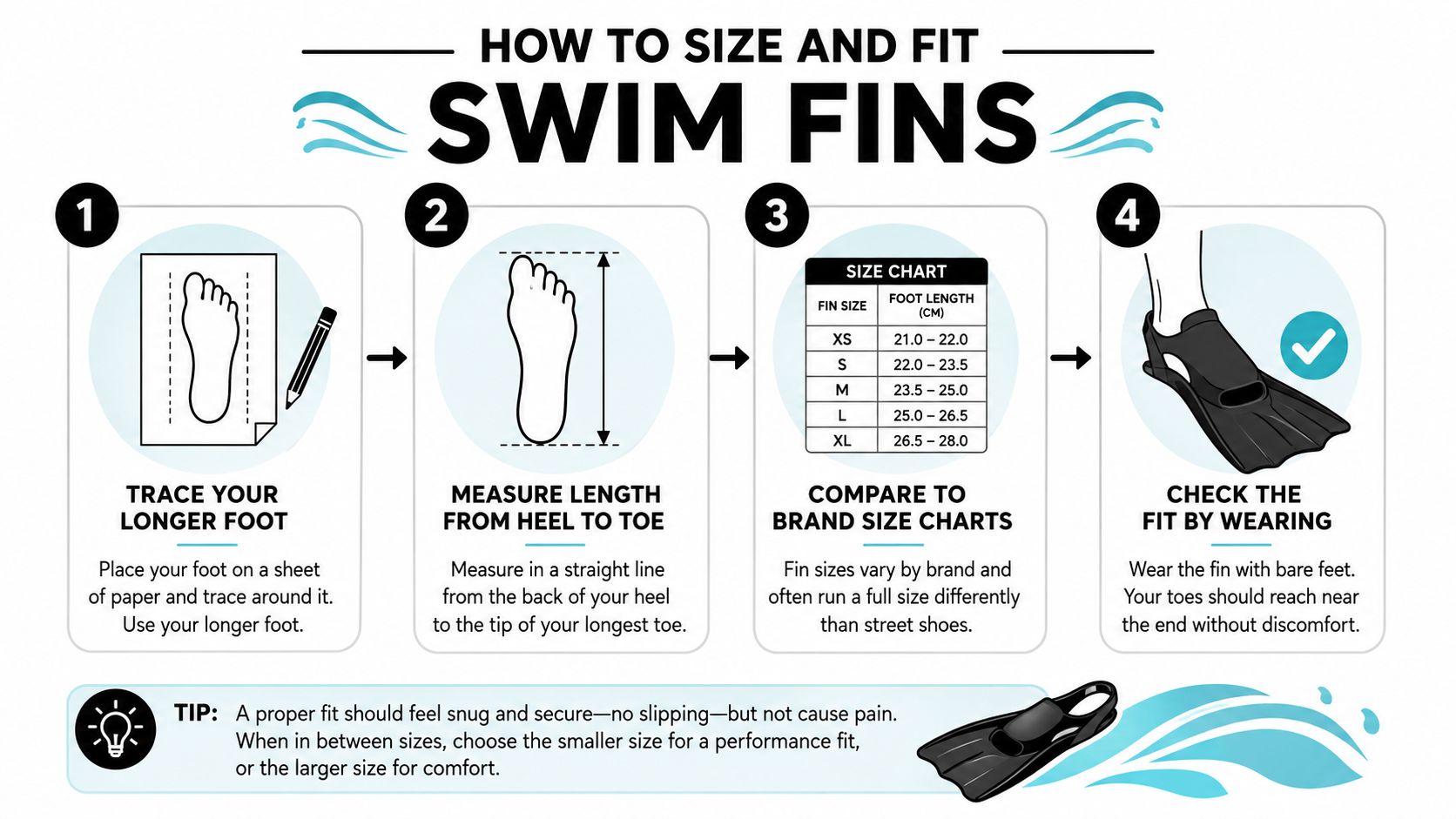
Fin sizing starts with your longer foot, not an average between both feet. Trace it while standing so the foot carries weight, measure heel to toe and across the widest part of the forefoot, then compare those measurements with the manufacturer's chart. Street-shoe sizing is only a starting point, because brands and pocket shapes vary.
For a warm-water full-foot fin, allow a small amount of room for natural movement. If you'll use a neoprene sock or dive bootie, measure with that layer in place and choose the pocket around the actual equipment, not your bare foot.
Use the pocket as the final test
Your toes should clear the end without being forced back, while the sidewalls must not squeeze the metatarsals. The heel should stay seated during a pointed-foot kick. With an open-heel model, the footplate needs to feel snug and the strap should hold the heel without lifting or cutting into the skin.
Try new fins with the exact sock or boot thickness you'll use in the ocean if you are going to. Stand in a pool lane or kneel in shallow water and kick several strokes. Foot cramps, heel rise, numbness, and hot spots mean the fin is wrong. They're not signs that you need to change your technique.
For a practical product starting point, compare Hydro swim fins against the measurements and use case you've established.
Watch the fitting process in motion before you head to the beach.
Matching Fins to Your Activity in NZ
Most buyers make the same mistake. They choose the most technical-looking fin on the shelf, then use it for an activity that needs something shorter, softer, or easier to control. A bodyboarder doesn't need a deep-diving blade, and a pool swimmer shouldn't train in a long scuba fin.
Four practical matches
For bodyboarding at Wainui, Lyall Bay, or Piha, choose a secure rubber fin with a firm blade and strong side rails. Keep the blade compact enough that your legs can work under the board without catching on the sand or losing cadence. Use this bodyboarding fin guide when comparing surf-specific shapes.
For snorkelling at the Poor Knights or Goat Island, a full-foot soft composite fin with a medium-stiff blade is the sensible middle ground. You want gentle, efficient kicks and a comfortable pocket for a longer surface swim, not the heavy response of a specialist scuba fin.
Pool lap swimming needs a short, flexible training fin. It supports kick drills, helps maintain tempo, and doesn't exaggerate the leg movement the way a long blade can. For freediving around Tutukaka and Waihau Bay, choose a long, soft-blade carbon or fibreglass fin with a full-foot pocket. The longer blade suits a slow sweep and controlled depth changes.
| Activity | Fin Type | Blade Length | Key Reason |
|---|---|---|---|
| Bodyboarding | Surf or bodyboard fin | Short to medium | Keeps drive under the board |
| Poor Knights or Goat Island snorkelling | Snorkelling fin | Short to medium | Comfortable control for surface swimming |
| Pool training | Training fin | Short | Reinforces quick kick tempo |
| Freediving | Long freediving fin | Long | Converts a slow sweep into efficient propulsion |
Fit still outranks the label. A well-fitting snorkelling fin beats a badly fitting diving fin every time.
Where to Buy Swim Fins in NZ
A fin can feel fine in a shop and still fail in the water. Buy from a local surf shop when you are unsure about pocket shape. From Gisborne to New Plymouth, you can handle the rubber, test the strap, and compare sizes before paying. Use Blitz Surf Shop's guide to NZ surf shops to find a store where staff understand local conditions.
Dive stores in Auckland and Wellington suit open-heel and freediving equipment, especially when boot compatibility matters. Ask staff to check the pocket with the boot you will wear. For bodyboarding at Wainui, the fin should stay secure during duck-dives without pinching your heel.
Online retailers give you more access to more brands and easy delivery. Read the exchange policy before ordering. Confirm whether a brief fitting is allowed, whether the fins must remain unused, and whether the replacement size is held in NZ. Product pages often list measurements but rarely explain how a pocket behaves with a cold-water boot.
Check the fin before it enters the water
Overseas orders can lose their apparent saving through freight, GST treatment, inspections, and difficult returns. Check the fin before wearing it outside.
- Blade symmetry: Place both fins on a flat surface and compare their curve.
- Pocket finish: Run a finger around the seam. Reject rough edges or incomplete moulding.
- Strap elasticity: Check that the strap returns smoothly and has no cracks.
- Rail integrity: Inspect the blade-to-pocket join, where loading concentrates.
- Material consistency: Avoid bubbles, splits, and thin spots in rubber or polymer.
Local listings range from budget fins to purpose-built training models. That choice only helps when the pocket, blade, and intended use match. The NZ fins collection shows the range available locally, but compare construction and fit rather than choosing on price alone.
Caring for Your Fins and Using Them Safely
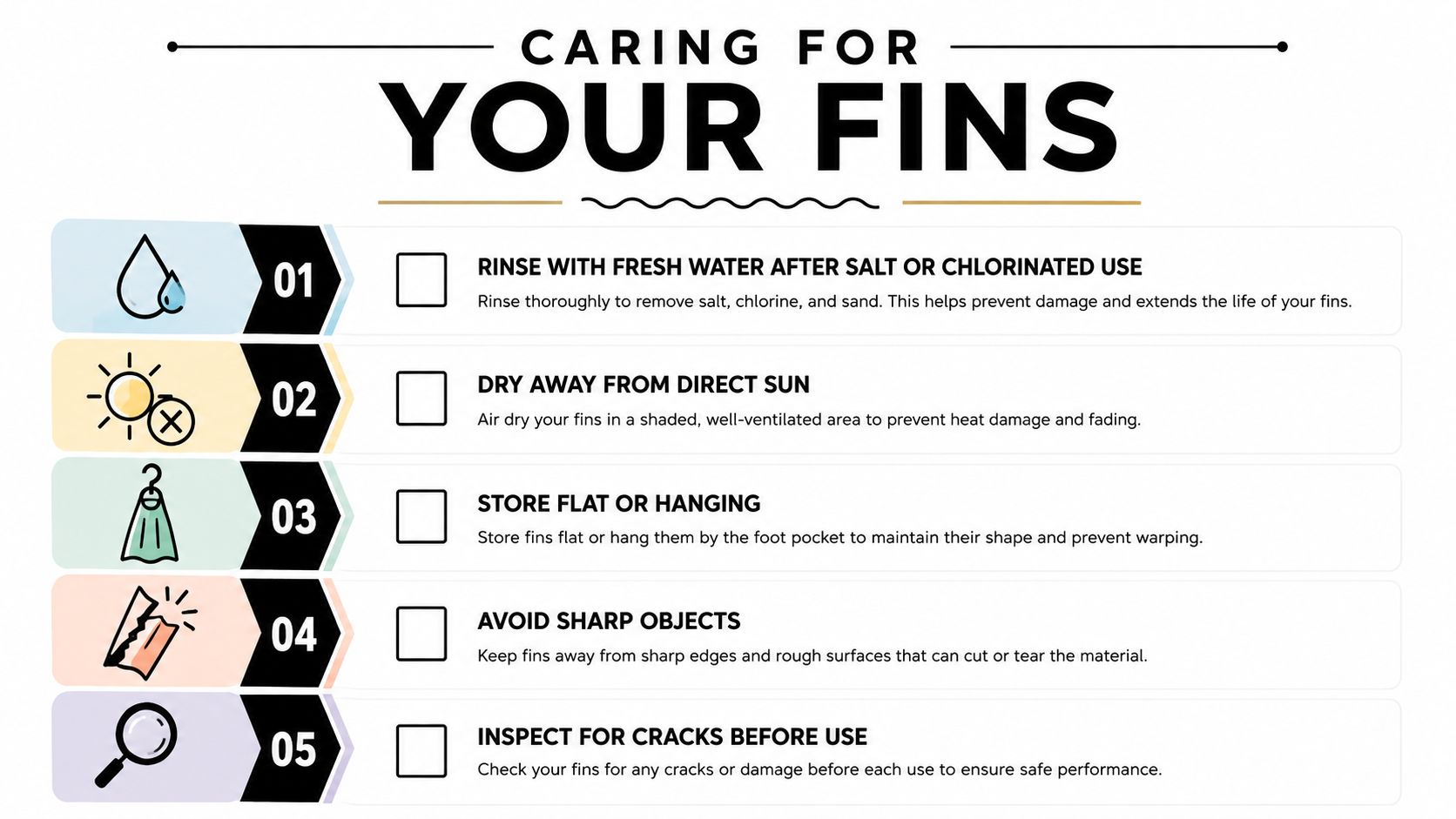
Rinse fins with fresh water after every saltwater or chlorinated session. Salt crystals and pool chemicals can leave the material brittle over time, while sand works its way into straps and foot-pocket seams. Let the fins dry fully in shade, not on the dashboard or in direct midday sun.
Inspect the pocket, strap, blade edge, and blade-to-pocket join before the next session. Small cracks become splits when the fin is loaded in surf. A fin-saver strap is cheap insurance for bodyboarders getting worked at Wainui or Shipwrecks, because a broken strap can end the session immediately and leave the fin in the impact zone.
Protect the water as well as the gear
Marine reserves require disciplined fin use. NZ marine reserve rules prohibit fishing and the taking, disturbing, or removing of marine life and natural materials. DOC guidance for the Hauraki Gulf allows swimming, snorkelling, kayaking, and boating only when you don't harm marine life. The marine reserve regulations set out the restrictions.
Keep your kick controlled over reef and avoid pushing off the seabed. DOC's Poor Knights guidance advises divers to be neutrally buoyant and aware of where their fins are, and gives a 5-knot boat navigation limit in New Zealand waters. DOC's Poor Knights marine reserve brochure connects good fin awareness with low-impact movement.
Store fins flat or hanging. Don't stack heavy boards, tanks, or bins on top of them, because a warped blade won't recover its intended shape. Replace a pair when you find a spreading crack, a strap that no longer holds tension, a pocket seam opening, a permanently distorted blade, or edges that have become sharp.
Swim Fins NZ FAQs
Do swim fins help with bodyboarding?
Yes. Short, firm blades give you stronger drive when you're paddling into a wave and help you hold a line through moving water. Long blades are a poor choice under a bodyboard because they fight the pop-up, catch the sand, and get in the way during shore-break transitions.
When should NZ swimmers wear booties under fins?
Use booties for cold water, rocky entries, or a loose open-heel pocket. They add warmth and protect the foot on entries around places such as the Coromandel and Kaikoura. The fit must be tested with the exact boot thickness you'll wear, because adding a boot changes the pocket volume.
Are Surf Life Saving New Zealand competition fins regulated?
Yes. Surf Life Saving New Zealand measures fins while they aren't worn and limits overall length to 650 mm, including the shoe or ankle strap, with a maximum blade width of 300 mm. Competitors in U11 to U14 can't use fibreglass-type fins in any event, including the mega relay. Check the Surf Life Saving New Zealand equipment specification before buying for nippers or competition use.
Are cheap supermarket flippers ever adequate?
They can be adequate for pool play or basic kick drills when comfort and retention are good. They're usually a poor choice for the Goat Island channel, bodyboarding, or rough shore break, where the blade needs to hold its shape and the pocket must stay secure. The NZ market ranges from budget flippers to technical models, so spend according to the water you'll enter.
Blitz Surf Shop carries surf hardware including Hydro Tech 2 Swim Fins and Manta Clone Swim Fins, alongside practical advice from its Gisborne team. Visit Blitz Surf Shop to compare fins for bodyboarding, snorkelling, and training, then choose the pair that matches your foot, your water temperature, and your next session.


