

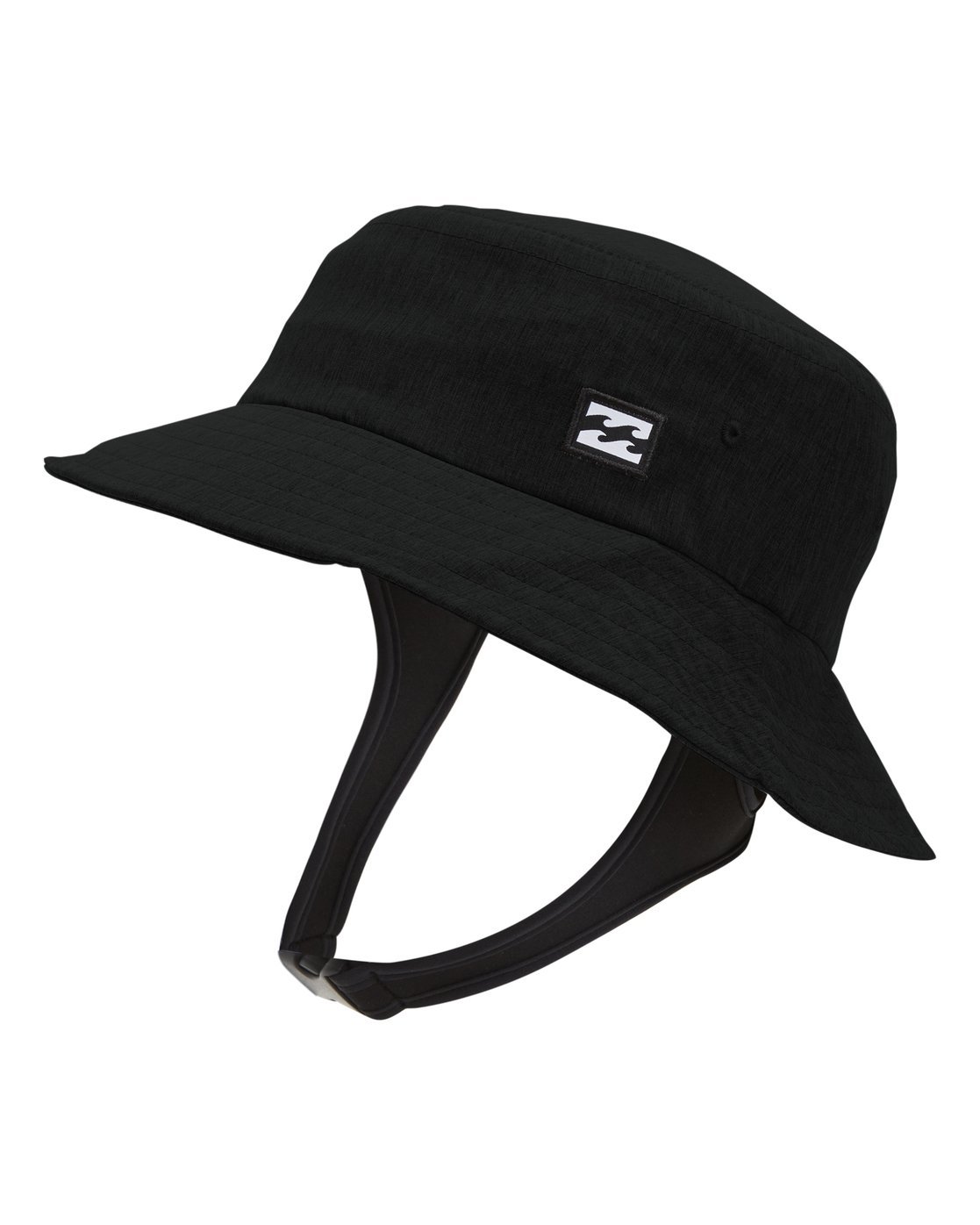
A bucket-style hat with a legionnaire's flap gives the most face, ear and neck coverage for New Zealand sun. Peak summer UV sits at about 12, so a standard cap that only shades the crown leaves ears and the back of the neck open on a long paddle.
That gap shows up on the East Coast whether the day feels hot or not. Cloud, a cool breeze, or rain doesn't cancel exposure, and a hat that lifts in the afternoon sea breeze stops working the moment it leaves your head. A surfing hat NZ sessions need has to cover more than the scalp and stay put through a duck-dive. Match the style to how long you'll be out, then check brim width, retention, and the fabric label before you spend.
Which Surf Hat Style Suits NZ Conditions
A bucket hat with a legionnaire's flap is the first style to reach for in NZ sun. It shades the face, covers the ears, and puts fabric over the back of the neck while you paddle or sit in the lineup. On a cool, cloudy session it earns its place the same way it does in mid-summer heat, and the brim sheds light drizzle instead of letting it run down your face between sets.
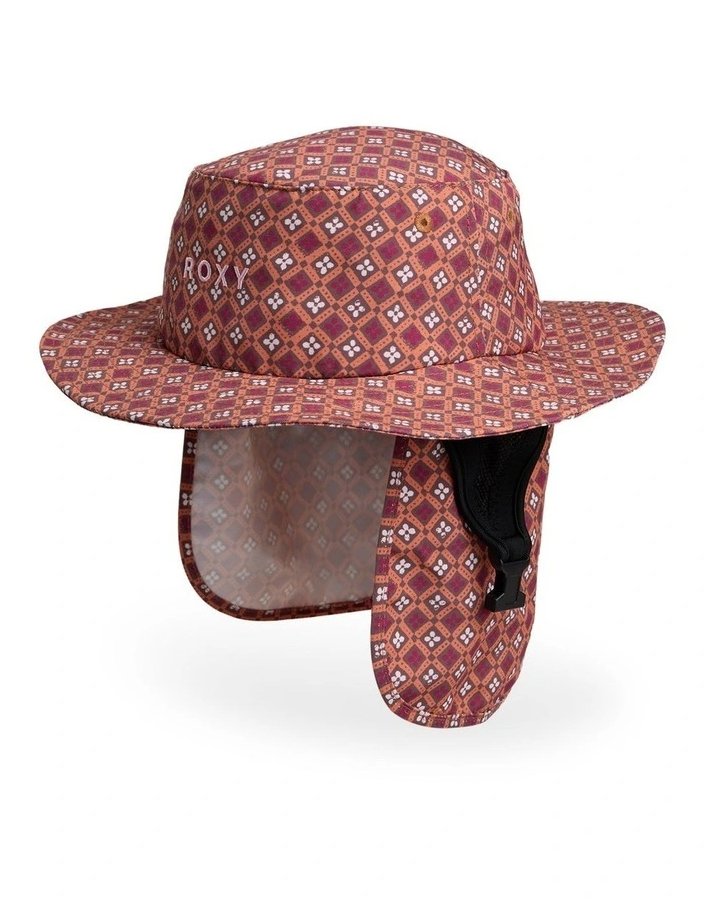
A broad brim can match that coverage on the beach. It pays for it in wind: the wider the brim, the more it catches gusts, and the edge can clip your side view when you're watching a set come through. Caps sit at the other end of the scale. They work for the walk from the car when shade is close, and they give up once you're parked in open water for an hour.
| Style | Coverage | Best for | Watch for |
|---|---|---|---|
| Bucket hat with legionnaire's flap | Face, ears and back of neck | Long paddles and waiting in exposed water | Needs a snug adjustable fit |
| Broad-brim surf hat | Face and neck evenly | All-day beach and water sessions | Can catch wind and narrow peripheral view |
| Medium-brim cap style | Partial face, little neck cover | Short, lower-UV sessions | Ears and neck left exposed |
| Standard cap | Crown and front of face | Brief trips with shade nearby | Ears and neck left exposed |
| Neoprene surf hood | Ears, head and neck for warmth | Cold-water winter sessions | Throws no shade over face or neck |
A neoprene hood keeps heat in during winter. It puts no shade across your nose or neck, so it answers a cold-water problem rather than a sun one. If you want the wider range of caps, beanies, and buckets kept beside the surf styles, the headwear guide at Blitz Surf Shop sets those options out.
Get the silhouette right first, because every check after it assumes the hat covers what it should.
Why NZ Sun Makes Surf Hat Coverage Essential
New Zealand's summer UV is strong enough to punish a short session. NIWA reports that the country's peak UV Index is generally about 12 and can exceed 13 in the far north. The same guide puts sunburn at about 12 minutes for unprotected skin at UVI 12, and about 24 minutes at UVI 6. NIWA's Sun Protection Alert applies when the forecast clear-sky UVI exceeds 3.
A three-hour surf doesn't leave much margin at those burn times. You can't reapply sunscreen to your scalp mid-paddle, and the back of the neck stays square to the sky while you wait for a wave. That's why a bucket with a legionnaire's flap beats a crown-only cap. Glare off the water is the same problem other marine sports deal with, and the Kona Snorkel Trips sun protection guide is a clear walk-through of staying covered on a bright day on the water.
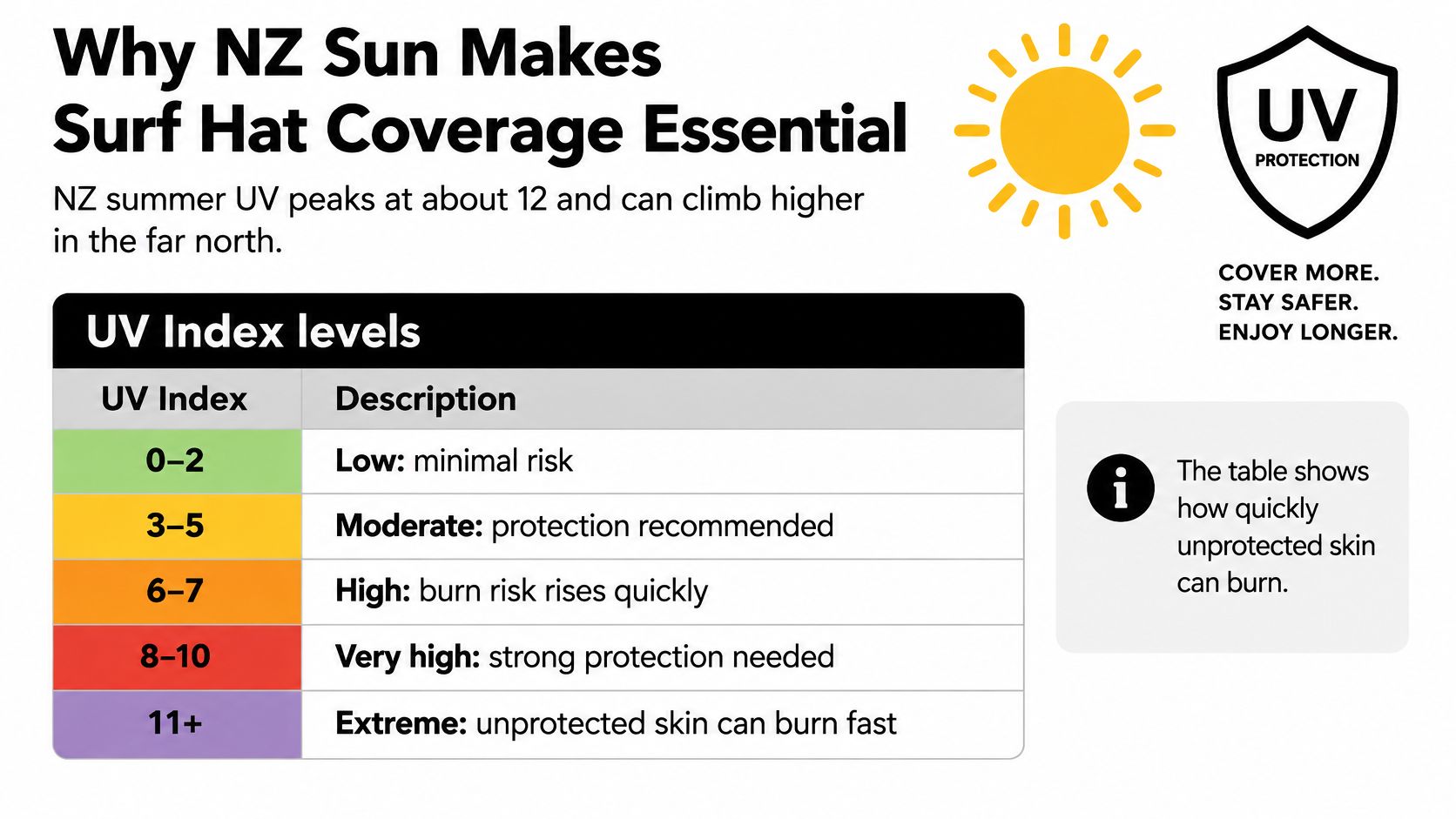
What each UV Index asks of you
| UV Index | What it means | Action for surfers | Unprotected burn time |
|---|---|---|---|
| 3 | Protection needed | Hat, sunscreen and shade from here | Longer than at UVI 6 |
| 6 | High | Cover head and neck with a brim | about 24 minutes |
| 8 | Very high | Avoid midday sun where possible | Faster than the 24-minute mark |
| 12 | NZ summer peak | Full cover: hat, shirt, sunscreen and eyewear | about 12 minutes |
Look up the daily UV Index before you leave. If it reads 3 or higher, take the hat. Our sun protection guide sits alongside that check for sunscreen and clothing, so the hat isn't doing the whole job alone.
Brim Width and Coverage Numbers Explained
Brim width decides how much of the face and neck stays in shade, and the gap between a wide brim and a cap brim is large. A NIWA UV workshop paper puts a brim wider than 7.5 cm at about SPF 7 on the nose, SPF 3 on the cheek, SPF 5 on the neck, and SPF 2 on the chin. The same paper passes on guidance to avoid the peak when UVI is above 8, and to combine clothing, a wide-brimmed hat, sunglasses, and broad-spectrum sunscreen once UVI climbs past 3.
Below that width, cover falls away fast. A medium brim shades part of the face but leaves the neck largely exposed, and a narrow brim under 2.5 cm gives little shade anywhere. A cap brim on a grey, breezy morning still feels like protection because the sky looks mild. It isn't doing what the numbers suggest once the UV burns through cloud.
| Brim width | Nose | Cheek | Neck | Chin |
|---|---|---|---|---|
| Wide, over 7.5 cm | SPF 7 | SPF 3 | SPF 5 | SPF 2 |
| Medium, 2.5–7.5 cm | Less shade than a wide brim | Partial shade | Little shade | Little shade |
| Narrow, under 2.5 cm | Little shade on the face | Little | Little | Little |
The wind trade-off
A wider brim shades more skin and also acts like a sail. It can block your side view, lift on a paddle stroke, and dump water into your eyes if the front isn't structured. On a gusty East Coast afternoon that drag gets worse, so we prefer a legionnaire flap: the brim handles the face, and the flap covers ears and neck without an enormous circle of fabric catching the wind.
Zinc on the nose and lips still matters where even a wide brim only reaches SPF 2 on the chin. Our zinc sunscreen notes cover that layer so you aren't relying on fabric alone for the lower face.
Retention, Fit and Hood Compatibility
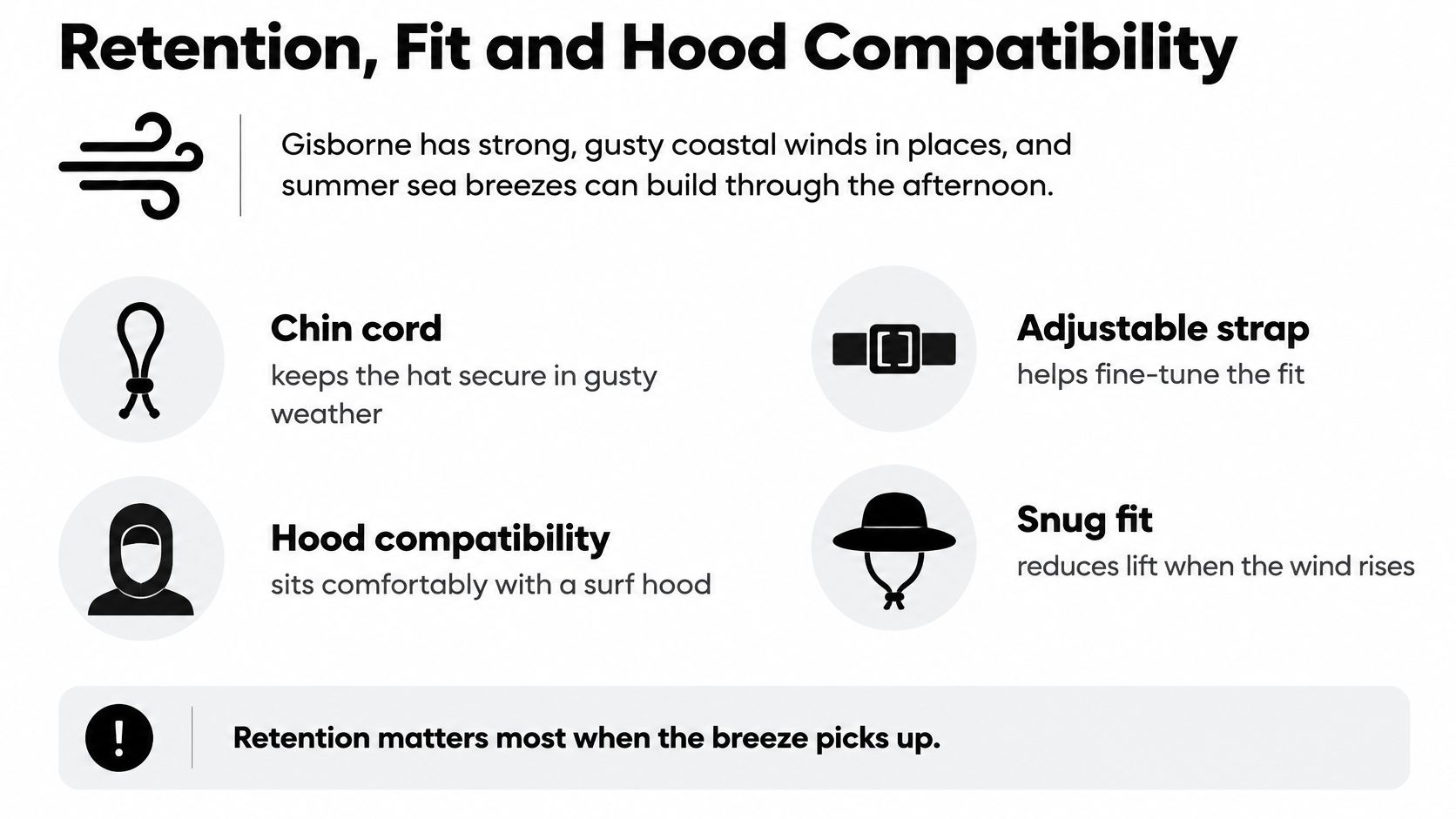
Gisborne is a useful stress test for any surfing hat. NIWA's climate assessment for the district records 2,219 bright-sunshine hours a year, summer sea breezes that build and push inland through the afternoon, and coastal winds that can be strong and gusty. Sun-protection warnings in that forecast run from about 9:00 a.m. to 5:30 p.m. A loose hat is gone by the time the breeze fills in.
The chin cord or adjustable strap is the retention system. It should sit snug under the jaw without digging in or catching your mouth when you breathe hard. A cord that rides up onto the throat is too short. One you can slip a fist under is too long for a wipeout.
Fit before you leave the shop
Sit the hat level. Tilt your head to paddle position and watch the brim. If it pushes down over your eyes or flips up off your brow, the crown is the wrong depth or the adjuster is uneven. Tighten until a firm head shake doesn't shift it. A snug fit beats a loose one, because a loose crown lifts in gusts and slides when you duck-dive.
Hoods change the fit. A bucket that feels right on bare hair often sits high once a neoprene hood is underneath, which lifts the brim and pinches the ears. Try the hat over the hood you'll wear.
- Chin cord: Holds through a gust without choking you.
- Adjustable strap: Lets you tighten after the hat is wet.
- Level brim: Stays put when you look down the line.
- Hood check: Brim doesn't lift and ears aren't pinched.
- Flap: Covers the ears and lies flat on the neck.
Shake your head in the shop before you pay. If it moves then, it will leave on the first solid duck-dive.
UPF Ratings, Materials and the AS/NZS 4399 Standard
The look of a hat tells you almost nothing about how much UV the cloth blocks. Read the label. Cancer Society guidance prefers broad-brimmed, bucket, and legionnaire styles because they shield the face, ears, and neck, and it flags a UV Index of 3 or higher as the trigger to cover up. Across New Zealand that level commonly runs from September to April, and it is strongest from about 10 a.m. to 4 p.m.
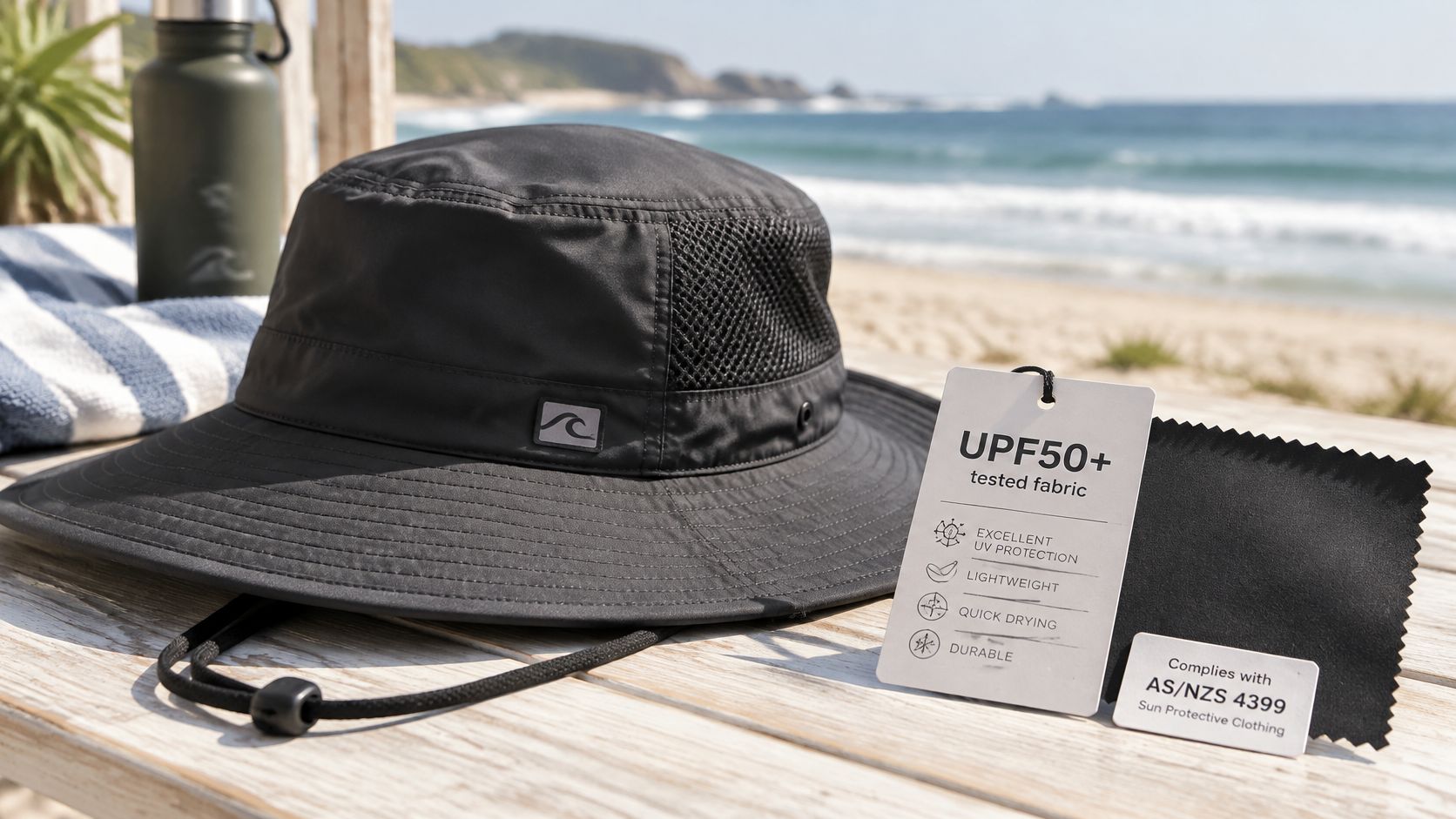
What to read on the label
Prioritise a hat that states compliance with AS/NZS 4399:2017 and a tested UPF50+ fabric where that is available. AS/NZS 4399:2017 is the Australian and New Zealand sun-protective clothing standard. A brand name on the crown is not the same thing as that test. Even well-made hats vary, so confirm the rating on the swing tag before you buy.
Reflected light off the water keeps reaching your face and neck when the air feels cool or the sky is grey. That counts double on long sessions, surf lessons, beach patrol, and for children, where the exposure adds up faster than the conditions suggest. Beyond the rating, look for a deep crown and a brim that holds its shape once the cloth is soaked through.
Quick-drying nylon or polyester blends shed water and keep their shape after a session. Cotton holds water, sags over your eyes, and takes much longer to dry, which also lets salt sit in the fibres and stiffen the cloth. Mesh panels help airflow on a still day, and that matters more than it sounds when a wet hat sits on your head for a few hours. Check the stitching around the brim join and the flap, because that is where salt and flex show up first.
The hat works alongside other gear rather than covering the same ground. Broad-spectrum SPF30+ sunscreen, UV-rated eyewear, and a long-sleeve top each handle exposure a brim cannot. A surf rash guard for NZ conditions covers the shoulders and back that no brim can reach while you are prone on the board.
Choosing for Cloudy, Cool, Rainy and Windy Sessions
Choose the hat for the session you do most often, not for the forecast on the day you happen to be shopping. Heat and UV are different problems. A hood can keep you warm and still leave your face in the sun. A light cap can feel fine in the rain and still leave your neck bare.
| Condition | Priority | Hat choice | Practical note |
|---|---|---|---|
| Sunny summer session, 10 a.m. to 4 p.m. | Maximum brim and neck cover | Bucket hat with legionnaire's flap | Add sunscreen and take breaks in shade |
| Cloudy day with UV Index 3 or higher | Keep UV coverage | Same bucket style in lighter fabric | Cloud does not block UV |
| Cool or winter session | Warmth plus UV cover | Neoprene hood with a brim-style hat when UV is 3 or higher | Hood alone does not replace a brim |
| Rain or wet session | Quick-drying fabric and drainage | Drain-friendly bucket hat | Dry fully before storing |
| Strong wind | Secure retention | Adjustable fit with chin cord | Check the brim does not lift in gusts |
On a grey day, stay with the bucket and drop to a lighter cloth if you run hot. In winter, put the hood on for warmth and keep a brim in the bag for the bright spells. Our winter surf notes cover the rest of the cold-water kit. In rain, drainage and a full dry-out matter more than extra brim width. In wind, retention beats another centimetre of shade.
How to Rinse, Dry and Store Your Surf Hat
Salt left in the cloth goes stiff, then cuts the fibres. A short routine after every surf keeps the shape and the flap doing their job.
- Rinse in fresh water after every session so salt and sand leave the cloth before they dry in place.
- Squeeze gently. Twisting the brim bends the stiffener and leaves a permanent flop over one eye.
- Reshape the crown and brim while the hat is still damp, so it dries in the shape you paddle in.
- Dry in the shade on a flat surface. Direct sun fades the cloth, and high heat can warp a structured brim. A car dashboard gets hot enough to do that damage, so don't store the hat there.
- Check the cord and the stitching. A frayed strap fails on the next gust, not in the car park.
- Store the hat loosely in a dry spot out of direct sun so the brim isn't crushed and the cloth isn't baking between sessions.
Replace the hat when the brim won't hold its line, the UPF label area is faded or stained past reading, the cord is fraying, or the flap no longer sits flat on your neck. A worn hat costs less to replace than a session with your ears and neck bare.
Choose Your Surf Hat and Check Blitz Stock
We stock surf hats from Rip Curl, O'Neill, FCS and Roxy, plus caps and children's bucket hats, so a family can kit more than one rider in a single order. Blitz Surf Shop has sold headwear from Gisborne since 1983, and the counter team can point you at where the banks are working that week.
Online, read the product page before you order. You want the brim width in centimetres, a UPF50+ rating tied to AS/NZS 4399:2017, a retention cord, and the size chart for that brand. Sizes are not shared across labels, so a medium in one brand can sit a size off in another. Headwear ships NZ-wide, and clothing and small items also go to Australia.
Shortlist two styles from the comparison above, one for your long exposed sessions and one for the cloudy, windy or winter days that still burn ears and necks. Weigh the pair against the conditions you surf, then buy online or visit the Gisborne store.
Surf Hat Sizing and Fit Check
Measure before you trust a letter on the tag. Brand charts don't line up with each other, and a hood steals a size you thought you had.
Use a soft tape just above the ears and across the brow, where the inner band will sit. Keep the tape level and snug, not tight enough to dent the skin. Write the centimetres down and match them to that brand's chart only. If you fall between sizes, take the smaller one for surf. A loose crown lifts. You can usually add a touch of room with the adjuster, and you can't shrink a hat that's already swimming.
Blitz Surf Shop fits surf hats for Gisborne and East Coast sessions, with bucket styles, caps, and kids' sizes from the brands we trust in salt and wind, plus free shipping within New Zealand on orders of $165 and over for eligible gear. Bring your hood if you wear one, and try the fit before your next paddle. Have a look at what's in stock at Blitz Surf Shop.


