

You duck-dive the first wave, come up paddling, and feel your hat sliding towards the back of your head. Tighten it too much and the strap digs in. Leave it loose and you're chasing it through the whitewater. Meanwhile, the back of your neck is still uncovered. A good surf hat needs to solve both problems, not just stay attached.
What a Surf Hat Does and Who Needs One
A surf hat has two separate jobs: retention in moving water and coverage against the sun. A secure fastening helps keep it with you through wind, duck dives and wipeouts. The brim and any neck flap determine how much skin stays shaded while you paddle, sit and turn.
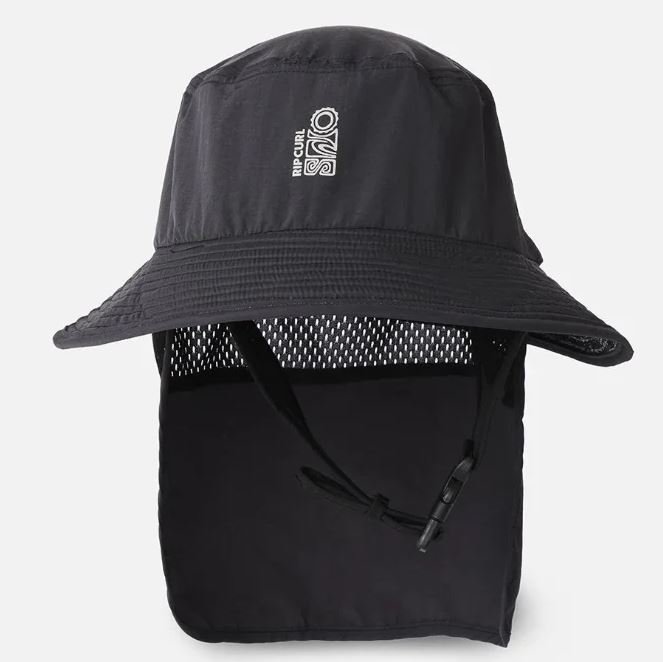
Those jobs don't always favour the same design. A close-fitting neoprene hat can feel tidy underwater but leave the cheeks and neck exposed. A wider brim offers more shade, yet can catch wind or fold across your eyes if it's too soft.
Beginners, children and bodyboarders have plenty to gain from getting that balance right. So do instructors and surfers who stay out for long sessions. You don't need to be catching waves constantly to accumulate exposure, waiting between sets still means sitting outside without much opportunity for shade.
The difference between ordinary headwear and protective headwear matters. In a New Zealand observational study, only 4.3% of people observed across outdoor recreation settings wore sun-protective hats, according to the published study on outdoor sun-protection practices. Putting something on your head isn't the same as shading vulnerable skin.
On Gisborne's sunny East Coast, coverage deserves as much attention as a comfortable fit. Think about your whole session, including the walk down, the paddle-out and the time spent on the beach afterwards.
Start with the shape that shades the right areas. Then assess the fastening, fabric, fit and suitability for your conditions. A hat that's comfortable to wear, easy to rinse and difficult to forget is more useful than one that stays in the car.
Surf Hat Styles Compared at a Glance
Surf hat styles by coverage and retention
| Style | Brim or coverage | Retention | Best for |
|---|---|---|---|
| Bucket hat, brim 6 cm or wider | Ears and neck covered when the brim sits correctly | Chin strap and stiff brim | Most sessions and all-round use |
| Broad-brim hat, brim 7.5 cm or wider | Widest face, ear and neck cover | Chin strap, may catch more wind | Long sessions, high UV and teaching |
| Bucket hat with neck flap | Full neck and ear cover when correctly positioned | Chin strap, flap can lift in wind | Heavy sun and East Coast summers |
| Baseball-style cap | Cheeks, chin, ears and neck exposed | Often no chin strap | Not suitable as a main surf hat |
| Low-profile neoprene hat | Scalp coverage, check ear coverage; little face or neck shade | Snug fit, lowest drag | Cold water and wind, check coverage first |
Those brim figures come from WorkSafe's solar UV guidance: at least 6 cm for bucket-hat brims and at least 7.5 cm for broad-brimmed hats, in close-weave, high-UPF fabric. Measure the brim itself rather than trusting the style name. A small fashion bucket and a properly proportioned water-sports bucket aren't interchangeable, even when they share a label.
At Blitz Surf Shop we stock surf hats from brands including Rip Curl, FCS, Billabong, O'Neill and Roxy. Our broader headwear range covers caps, beanies, straw hats and bucket hats, and the differences between them are set out in our guide to surf and skate headwear.
Why a bucket is the useful default
For most riders, a bucket hat is the most workable starting point. Its continuous brim shades the head all round without the extra width of a broad-brim hat. Pick a structured brim that holds its position once wet, rather than a floppy edge that turns into a damp curtain across your eyes.
A neck flap adds coverage behind the ears and down the neck. That matters when you lean forward on the board and your collar drops away from the skin. Check how the flap sits when you turn your head, though. A flap that lifts in wind or bunches under the strap gives less coverage than its shape suggests.
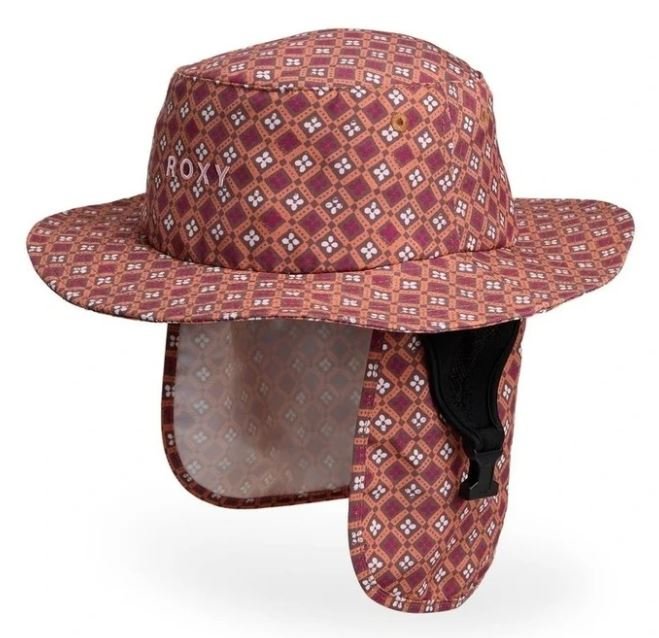
Where the alternatives make sense
A broad-brim hat favours shade over compactness. It can suit teaching, gentle sessions and long stretches on the beach, provided the brim doesn't interrupt your view. Extra width is no advantage if you keep pushing it out of your eyes between sets.
A baseball-style cap leaves the ears, neck and lower face open to the sun, so it can't serve as your main surf hat. Even a water-sports cap with a strap keeps the same coverage limitation. A better fastening doesn't create shade where there is none.
Neoprene designs answer a different priority: a close profile for cold water and wind. Treat warmth and sun coverage as separate specifications, and don't confuse a soft surf hat with an impact-protection helmet.
Pick the style on coverage first, then judge its fastening on its own merits. A hat that fails either test stays a compromise, no matter how well it passes the other.
Features That Keep Your Hat On in Waves
Gisborne city averages 2,219 bright sunshine hours annually, according to NIWA's Gisborne climate report, placing the region among New Zealand's sunniest. A hat sitting in your board bag does nothing with those hours, so the job is finding one you'll keep on.
Retention and coverage are separate tests. A hat can grip through every duck dive and still leave your ears and neck exposed, so check both before you buy.
Check the fastening and structure
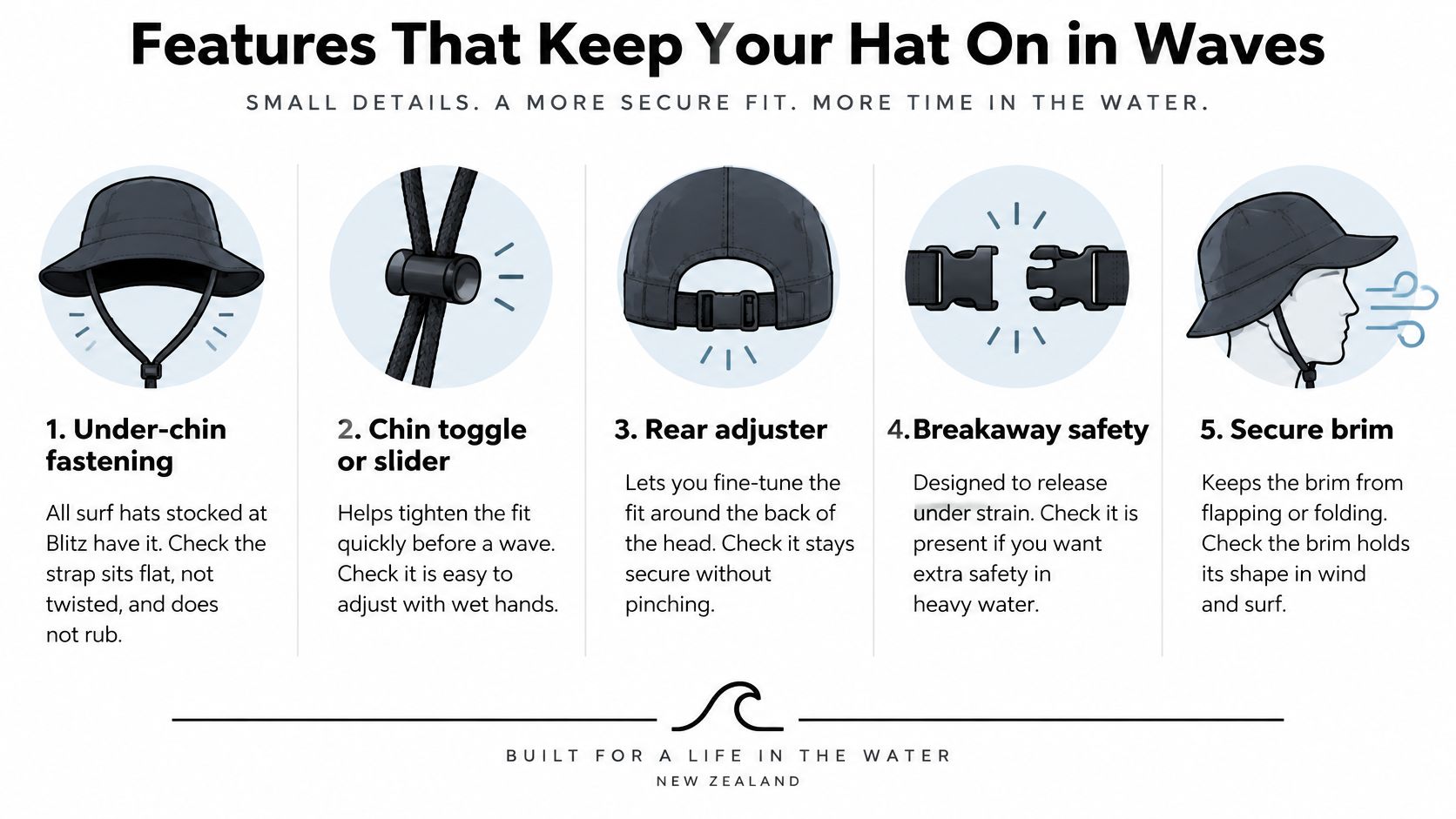
- Under-chin fastening: This is what holds a hat on in surf, so confirm the model you're looking at has one. The strap should lie flat, without twisting, rubbing or pressing against your throat.
- Wetsuit attachment: Some hats have an extra clip for the wetsuit zip. Check that it reaches without pulling when you turn your head; it's a backup attachment, not a substitute for fit.
- Removable back flap: Keep it attached when you need neck coverage. Remove it for separate drying or a lighter feel when conditions allow.
- Stiff brim: Look for an edge that resists folding over your eyes after immersion. Check its shape with the hat fastened, not just on the shelf.
- Quick-drying fabric: Low-absorption material avoids unnecessary wet weight and makes drying between sessions easier.
Use this checklist to inspect the adjusters and brim on the particular model you're considering.
What to check on a bucket hat
Fit varies from model to model across our surf-hat range, so run three checks on any bucket hat you try. The brim should stay rigid after a soak, the strap should tighten with no leftover slack, and the flap should sit flat against your neck instead of lifting in wind.
No model name changes how a hat fits your head.
Before paddling out, tug the brim gently and shake your head side to side. The fastening should hold without uncomfortable tension, and the brim should spring back rather than fold forward. Then check the shade line: if your ears or neck sit outside it, the hat stayed on but your skin didn't get covered.
Sun Coverage and UPF Ratings Explained
A hat can stay on through every set and still leave your ears burnt by the end of the session. Retention and coverage are separate tests, and a surf label, a dark colour or a thick-looking fabric proves neither. Check the UPF rating and the hat's actual outline together.
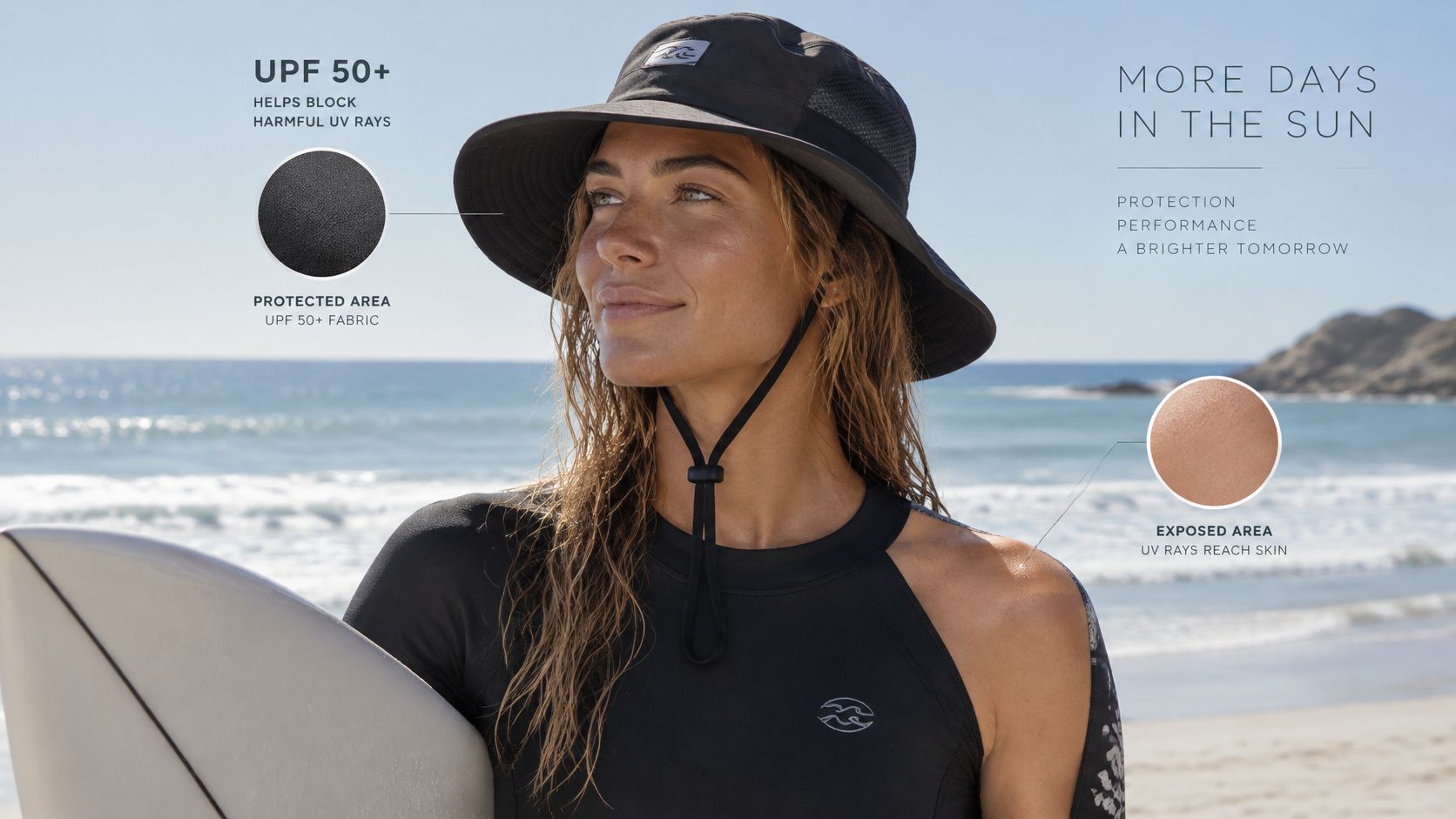
The image below illustrates a brimmed design, but appearance alone can't establish a hat's protection rating.
What the rating tells you
Standards New Zealand identifies AS/NZS 4399:2020 as the standard for assessing clothing and materials against solar UV radiation, using an objective, reproducible UPF test. Manufacturers making sun-protection claims under it must provide a UPF rating and meet relevant design requirements.
Read the label or product specification for that rating, then look at the whole construction. A tested fabric protects nothing outside the hat's outline, and side panels or mesh sections may not share the main fabric's rating. I'd treat any see-through panel as unprotected skin, whatever the label says for the crown.
Hold the brim towards a window or lamp for a basic close-weave check. Visible light getting through is a warning that UV can get through too, though it won't give you a number. Check opacity again when the fabric is wet, because dry appearance isn't enough to judge its condition in the water.
A secure hat with exposed ears still leaves your ears exposed. Tightening the strap adds retention; it adds no coverage.
Use the UV Index, not the temperature
SunSmart's categories are UVI 3–5 moderate, 6–7 high, 8–10 very high and 11 or above extreme, with protection needed from UVI 3 upward, including on cloudy days, as set out in the University of Otago's sun-protection advice.
For Gisborne, NIWA's representative summer UV information spreads the caution window across most of the daylight hours rather than just midday, while noting the lack of district-wide direct UV measurements. Check the day's forecast instead of assuming protection only matters around lunchtime.
This video gives a further sun-protection reference.
A hat can't shade the whole face or stop reflected UV reaching exposed skin, so combine it with sunscreen, UV-protective clothing and sunglasses where practical; our sun-protection guide covers the wider routine.
For eyewear worn ashore rather than in the lineup, offshore resources such as this sunglasses guidance for South Florida residents cover lens protection in general terms. New Zealand conditions call for local UV guidance, and ordinary sunglasses are not built for breaking waves.
How to Fit a Surf Hat Before You Buy
Trying it on in store is the best option if you can. Head circumference helps with sizing, but it won't tell you whether a seam presses on your temples or the brim sits in your sightline.
If you're shopping online, use a soft tape around your head where the hat will sit and compare the result with the brand's size chart. Don't assume the size you wear in a casual cap transfers directly to a surf bucket.
Run the movement checks
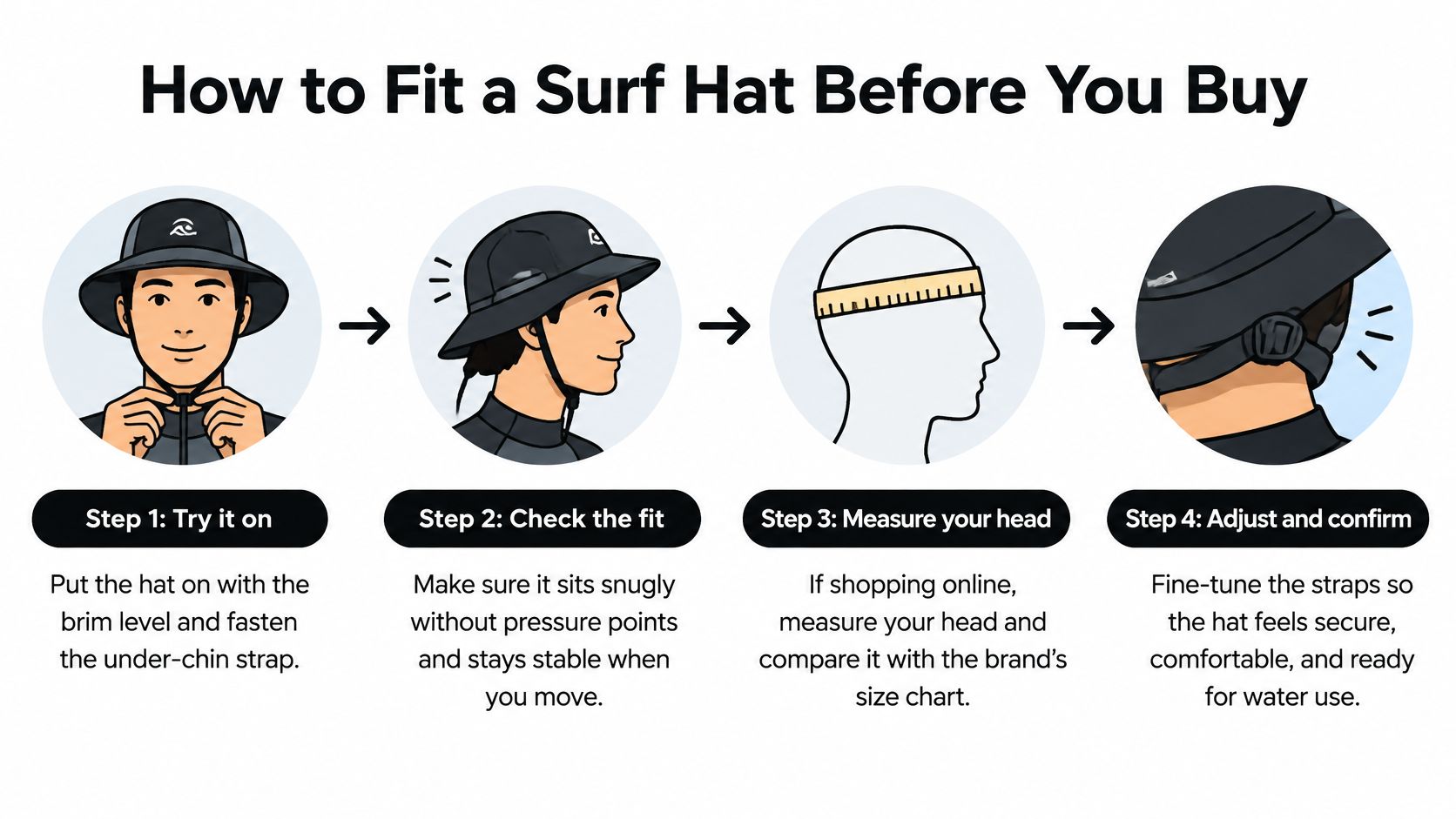
- Set the position first. Put the hat on with the brim level and fasten the under-chin strap. It should sit securely without pressing on your temples; overtightening a strap won't correct a poorly matched crown.
- Nod and shake your head. Start gently, then make the movements you'd use while checking the line-up. The hat shouldn't rotate independently or creep backwards.
- Check your sightlines. Look sideways and upwards without tipping your whole head to compensate. If the brim hides an approaching wave or another surfer, change the adjustment or try another shape.
- Inspect the shaded areas. Use a mirror or ask someone to check the tops of your ears and the back of your neck. Turn your head as well, because a flap can shift away from the area you want covered.
- Test the brim gently. Pull lightly at the front and sides, then release. It should return to a useful shape rather than hang across your face.
- Connect any wetsuit clip. Test it with your suit if possible, including turning and looking up. The connection needs enough freedom for movement without pulling the hat backwards or loading the zip.
- Keep it on for at least ten minutes. Use that time to notice rubbing, pressure and whether you keep adjusting it. This is a practical comfort test, not a reason to tolerate a hat that already feels wrong.
The fitting sequence below is a useful reminder when comparing shapes and sizes.
Don't sacrifice visibility for shade
Health New Zealand's SunSmart guidance stresses protection around water and recommends avoiding direct UV where possible between 10:00 a.m. and 4:00 p.m. from September through April. For surfing, choose coverage you can wear without compromising your view.
Don't solve an obstructed sightline by permanently tipping the hat backwards. That changes both stability and shade. A different brim shape is a better fix than continually correcting the wrong one.
Sizing Surf Hats for Kids and Beginners
Children and beginners need useful face, ear and neck coverage without a hat that distracts them from the water. A loose crown isn't growth allowance if it slides over their eyes.
Make the wearer part of the check
- Measure above the ears. Run a soft tape around the widest part of the head, keeping it level. Compare the measurement with that brand's chart rather than choosing by age alone.
- Resolve an in-between fit carefully. Try the smaller size first if it remains comfortable and agrees with the size guidance. Don't squeeze a child into it or use the chin strap to compensate for a badly fitting crown.
- Practise the fastening. Check that the wearer can adjust and release it with the hat on. Children still need adult help and supervision appropriate to their ability.
- Add surfing movements. Ask them to nod, shake their head, bend forward and look up towards an imaginary wave. Watch for sliding and blocked vision.
- Check the edges. Inspect the tops of the ears and the rear neck while they move. A neat fit around the forehead doesn't prove those areas are covered.
- Reassess as they grow. Use the available adjusters rather than buying an oversized hat, and re-measure at the start of each season.
For young bodyboarders, test any attachment against the actual wetsuit so it doesn't pull in the prone position. Pair the equipment checks with the basic water skills in our beginner's surfing guide.
Matching Your Surf Hat to Your Conditions
Surf hat choice by surfing condition
| Situation | Priority | Suggested style |
|---|---|---|
| East Coast summer, long sessions | UV coverage and strap | Bucket hat with neck flap or broad-brim |
| Gisborne days with strong wind or big drops | Chin strap and stiff brim | Stiff bucket hat, such as Rip Curl Surf Series |
| Kids and beginners | Ear and neck cover, comfortable fit | Bucket hat with under-chin strap |
| Bodyboarding in shore break | Retention and clip-on security | Snug bucket hat with strap, check any clip fit |
| Cold or overcast sessions | UV protection when the index warrants it | Same bucket hat, add sunscreen |
| Short dawn session, minimal sun | Lowest drag | Low-profile neoprene hat, check coverage first |
For a long East Coast session, favour continuous shade rather than the smallest possible profile. A flap is particularly useful while leaning over the board, whereas a broad brim may suit slower-paced teaching and beach time.
Wind-driven sessions demand more attention to brim structure. The Rip Curl Surf Series bucket is a common local choice because its stiff brim, fastening and removable flap address those competing needs. Check that your chosen configuration stays stable rather than assuming every feature must remain attached.
Match the hat to your body position
Bodyboarders should test their hat while lying prone and looking forwards. That position can reveal rear-flap bunching or a clip connection that feels fine standing up but pulls on the suit in the water.
Cold air and cloud don't tell you how much UV is present. Check the forecast, then choose your sun protection accordingly, even if you're wearing warmer water gear.
A low-profile neoprene hat makes more sense for a low-UV dawn session when warmth and minimal drag take priority. Reassess if the session runs longer than planned.
Our guide to surfing in New Zealand offers broader context for planning around local conditions. The useful choice is the hat that works for the session you'll surf.
Caring for Your Hat and Stopping It Being Left Behind
The surf-hat problem customers report most often is leaving it at the beach.
Where the design allows, clip it to the wetsuit zip or secure it to the board bag for carrying. Before leaving the car, check your hat, leash and sunscreen; after changing, put the hat straight into the same bag pocket or attachment point.
Give the hat a fixed place in your kit. Don't leave it loose on the sand while you pack everything else.
Rinse, dry and inspect
- Rinse after every session: Use fresh water to flush salt and sand from the fabric, fastening and adjusters. Work the buckle gently so grit doesn't remain trapped.
- Dry in shade: Open out the flap and straps and let air circulate. Avoid a hot car or leaving it on the dashboard.
- Protect the brim: Store it flat or hang it without crushing the edge. Gently reshape a sagging brim while damp, without forcing any stiff insert.
- Check before reuse: Inspect stitching, strap stretch, buckle operation and fabric thinning. Replace failed components only where the design allows a proper repair.
Retire the hat when the brim won't hold a usable shape, the fastening no longer stays secure or the fabric shows clear deterioration. If it starts blocking your peripheral vision, refit it or change styles rather than accepting the obstruction.
Add the hat to your Gisborne surf-trip packing checklist, including the final check before you drive away.
Try One On and Choose Your Surf Hat Today
A useful surf hat doesn't need the longest feature list. It needs enough coverage for your session, a fastening that works in moving water and a fit you won't spend the whole paddle-out adjusting.
Make the final choice
- Choose coverage first. Start with a properly proportioned bucket hat, or consider a broad brim for extended exposure. Add a neck flap when that extra rear coverage suits your surfing.
- Check retention separately. Inspect the under-chin fastening, brim structure and any optional wetsuit attachment. Make sure the system works without uncomfortable tension.
- Confirm the fit. Run the movement and visibility checks in store, or measure carefully against the brand's chart before ordering online.
We sell surf hats alongside wetsuit boots, hoods and gloves, so Gisborne riders can assess the hat as part of their water kit. NZ-wide readers can shop online, using the fit and coverage checks to narrow the options rather than choosing on colour alone.
Keep the wider routine in place too: sunscreen for exposed skin, suitable protective clothing, sunglasses where practical and a UVI check before paddling out. Your hat should make that routine easier to maintain, not become a reason to skip the rest.
At Blitz Surf Shop, we offer surf hats and water accessories for Gisborne locals and riders across New Zealand. Visit us in store to try a hat on and check its coverage, fastening and sightlines, or browse online with your head measurement ready.


