

For most Gisborne surfers, a 4/3 mm steamer covers May/June through October, while a 3/2 mm handles the shoulder months around it. Choose for local water temperature and session length rather than expecting one suit to work all year.
You're checking the waves before work, the wind's already up, and yesterday's suit still feels damp. That's when buying advice gets practical: can you paddle freely, stay comfortable between sets, and leave because you've had enough waves rather than because you're cold?
My advice is simple. Buy the right coverage, construction and fit before you buy the badge. A familiar logo won't rescue a suit that lets cold water run down your back.
Why a Steamer Matters for New Zealand Surfers
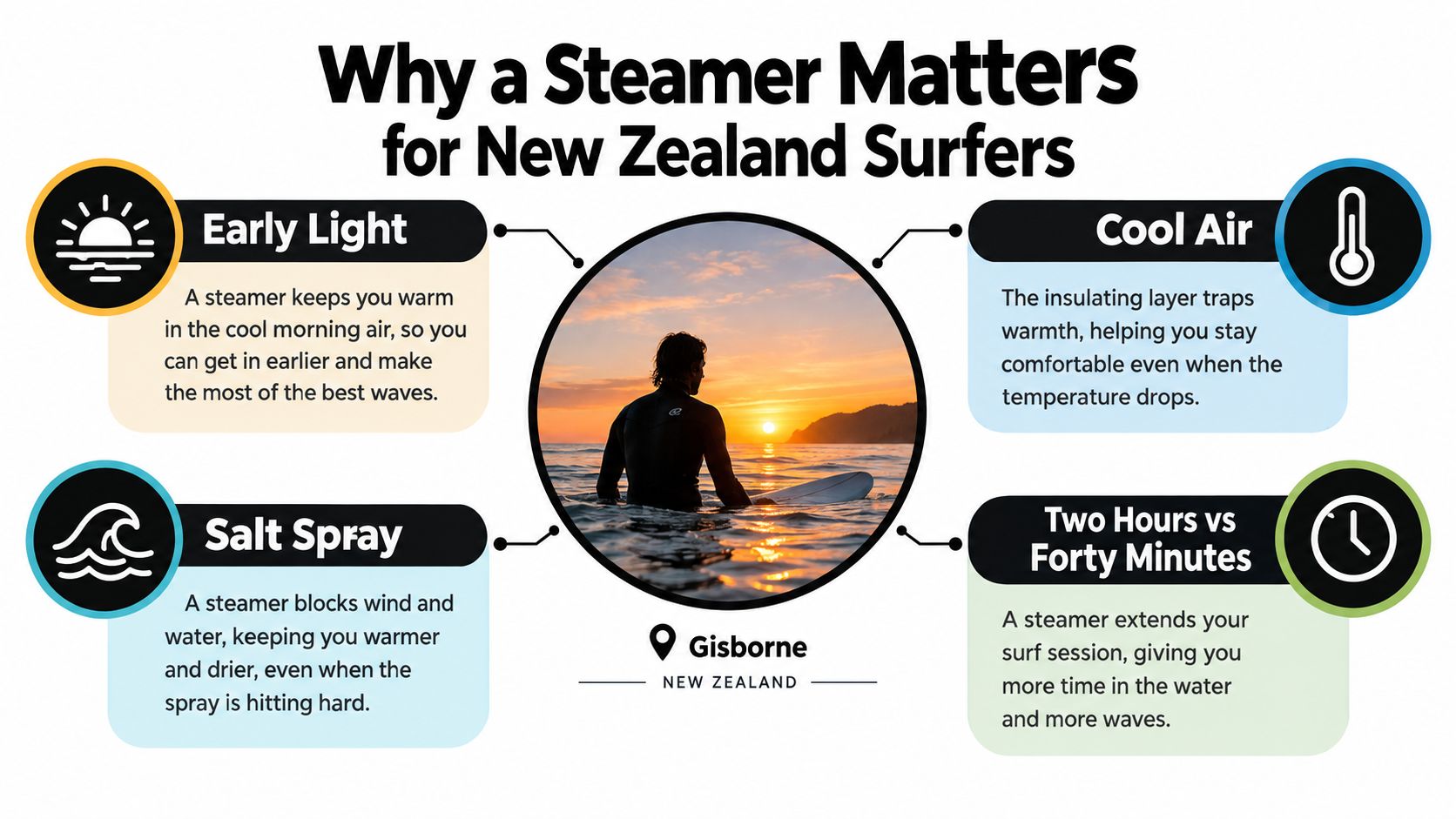
At a Gisborne dawn session, the beach can look inviting while the water tells a different story. Early light catches the spray, the offshore breeze feels sharp, and you're sitting still waiting for a set. The suit you barely noticed while paddling becomes much more important once you stop moving.
A steamer wetsuit is a full-length wetsuit covering your torso, arms and legs. It isn't another name for a thick winter suit. Full coverage defines the category, while thickness, seam construction and fit determine which conditions it suits.
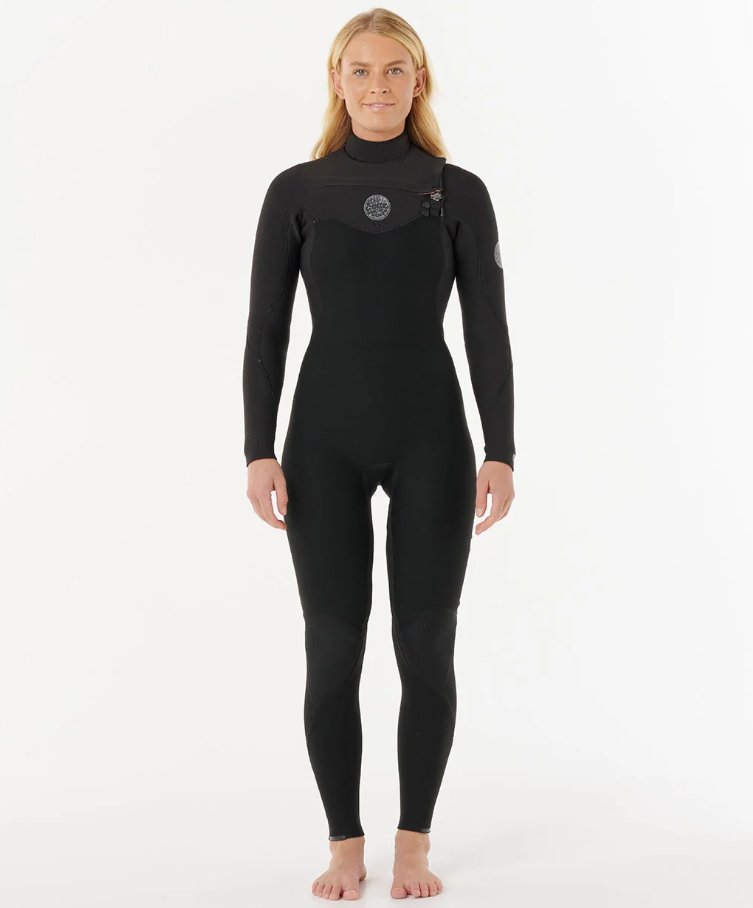
That distinction matters for beginners. A shorty or spring suit leaves more skin exposed, so it serves a different purpose even if its material feels similar in the shop. A lighter full suit can still be the sensible choice when the sunshine says summer but the breeze and water don't.
NZ water deserves proper insulation
The regional differences are substantial. Stats NZ's sea-surface-temperature indicator records an Eastern North Island annual average of 16.8°C in 2023, compared with 14.2°C for East Coast South Island and 13.6°C around Southern South Island.
Those are regional annual benchmarks, not readings for your favourite bank this morning. They're useful for understanding why advice from a warmer North Island beach shouldn't automatically follow someone travelling south. They also explain why a full suit belongs in the regular kit bag, not tucked away as emergency winter equipment.
The combination of coverage and insulation matters most when you're waiting rather than working. You might feel comfortable walking down the beach and warm during the paddle out, then gradually cool while watching other surfers catch the better waves. Dress for that quieter part of the session too.
The dawn-session picture below captures the conditions worth thinking about before you pull a suit off the rack.
Think insulation, not a dry barrier
Think of a steamer loosely as a thermos for your body. It isn't designed to keep you completely dry. Neoprene slows heat transfer, while a close fit limits the replacement of the thin water layer next to your skin, as described in the NIWA sea-temperature dataset context.
The thermos analogy has limits. You're moving, duck-diving and exposing wet material to wind, so warmth depends on the whole garment rather than a thickness label alone. Flexible material is valuable because you still need to paddle, but softness in your hands isn't proof of thermal performance.
Practical rule: Choose equipment for the coldest part of your normal session, not the warmest moment in the car park.
There's also a difference between having enough equipment to try surfing in summer and having equipment that makes regular surfing realistic. Sport New Zealand's historical surfing profile recorded peak participation from December through February, with activity lowest from April to October.
That doesn't prove a wetsuit makes someone surf more. My view is that suitable thermal gear removes an avoidable reason to stay home when the conditions otherwise suit you.
Picking the Right Thickness for NZ Water
Start with the water, then adjust for the session. A calm afternoon surf and a windy dawn patrol don't ask the same thing of your equipment.
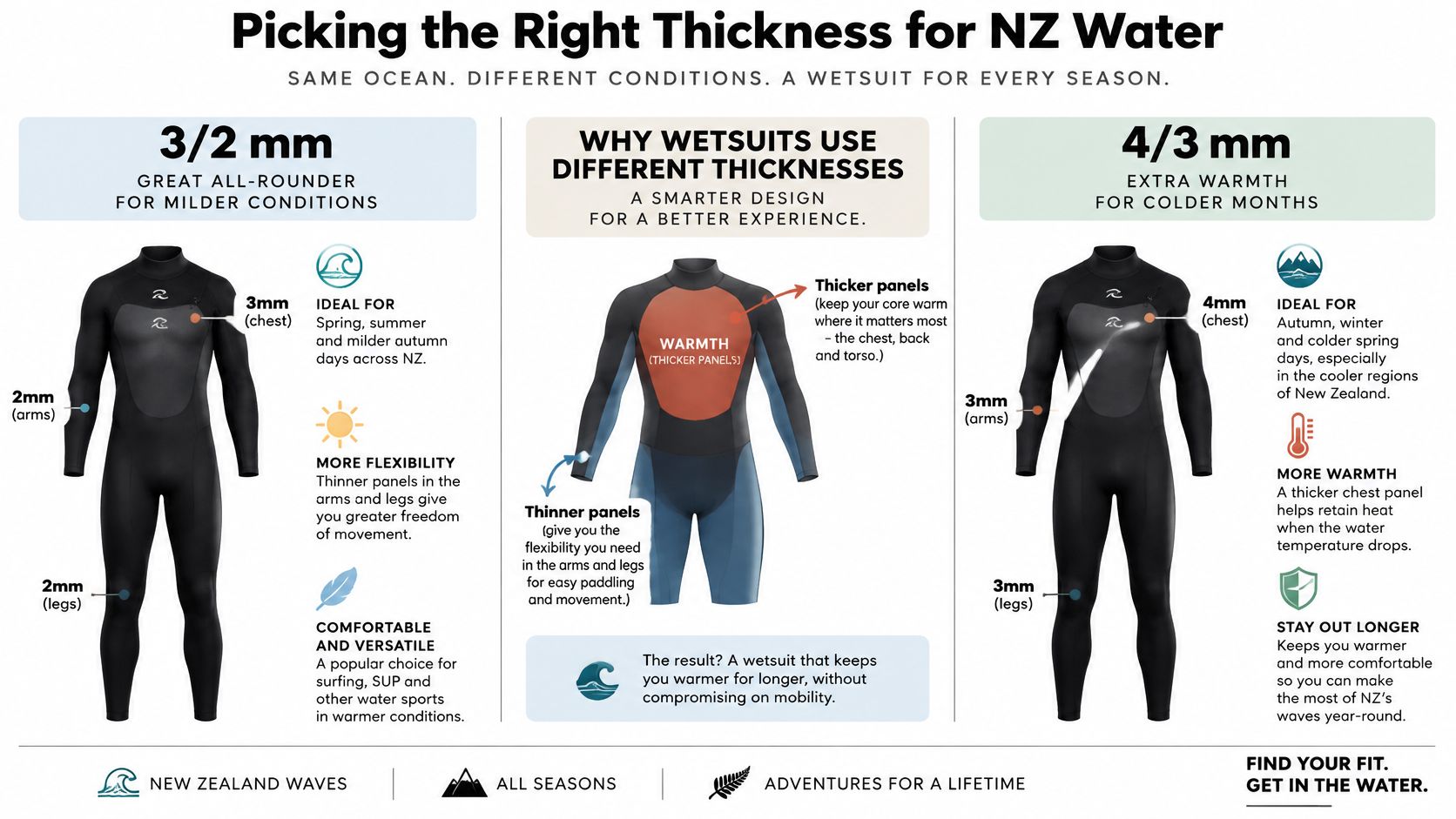
The numbers describe different panel thicknesses. Manufacturers combine thicker insulation around the body with thinner material where movement matters, although exact panel layouts vary. Check the model rather than assuming every suit uses the same arrangement.
Choose a useful starting point
Independent NZ wetsuit-season guidance places 3/2 mm suits around 15–18°C and 4/3 mm suits around 12–15°C. Treat those as starting bands, not promises of personal comfort.
For Gisborne, our fitting advice favours the warmer option through the cooler season. Regional Gisborne temperature information puts both May and October averages at approximately 15°C, which helps explain why those transition months can catch people out.
| Surf scenario | My recommendation | Trade-off |
|---|---|---|
| Warmer North Island east-coast sessions | Lighter full suit when conditions suit it | Easier movement, less warmth margin |
| Longer, exposed Gisborne sessions | Better-insulated, well-sealed steamer | More material to paddle in |
| Southern water or particularly cold dawn patrols | Consider a 5/3 mm or heavier hooded option | Greater insulation, potentially more restriction |
The southern recommendation is a fitting starting point, not a universal temperature rating. A surfer in Southland shouldn't buy from a Gisborne calendar, and a cold-sensitive surfer shouldn't copy a mate who rarely feels the cold.
The panel comparison makes the basic thickness distinction easier to see.
Don't buy from the calendar alone
Use our NZ wetsuit thickness guide to narrow the choice, then consider exposure, duration and your own cold tolerance.
Warmer averages aren't permission to automatically downgrade insulation. NIWA's sea-surface-temperature updates provide regional context, but your actual surf still requires a local conditions check.
Seams and Linings That Actually Last
Buy seam construction before fancy lining names if your priority is staying comfortable through colder sessions. A plush interior is pleasant, but it doesn't repair a leaking join.
Flatlock, glued and blindstitched, taped, sealed and fused aren't interchangeable descriptions. They describe different ways of joining or reinforcing panels, and you should know which construction you're paying for.
Steamer Seam Types Compared
These are buying categories, not measured lifespan rankings. Price positioning varies by model, and no seam type comes with an automatic durability guarantee.
| Seam Type | Water Resistance | Durability | Typical Price Band |
|---|---|---|---|
| Flatlock | Allows water through stitched joins | Inspect thread and panel condition | Entry-level |
| Glued and blindstitched | Designed to limit through-panel leakage | Depends on glue and stitch integrity | Mid-range |
| Taped or liquid-sealed | Adds protection over the underlying join | Check reinforcement for lifting or cracking | Mid-range to premium |
| Fused | Reduces reliance on conventional stitching | Promising construction, not a verified lifespan ranking | Premium |
The mechanical argument for fused construction is straightforward: fewer needle penetrations mean fewer potential pathways through the material. The Rip Curl Flashbomb technical review describes Fusion Dry Seam construction as reducing conventional stitching while retaining flexibility and warmth.
Our customer feedback has favoured Flashbomb fused seams as the most durable after a season's use. That's shop feedback, not a controlled comparison. We don't track returns or repairs in a way that produces a verified longevity rating, so I won't turn those conversations into a statistical claim.
What lining labels actually tell you
Flash lining, graphene and polypro describe interior materials or technologies, not equivalent standards of waterproofing. Ask what the specific lining is intended to do, where it's placed and what the manufacturer says about drying.
- Prioritise the joins: Check seam construction before getting distracted by the interior colour or texture.
- Match your routine: Drying characteristics deserve attention if you regularly surf again before the suit has dried.
- Inspect the actual model: Similar names don't guarantee identical construction across a range.
Our surfing wetsuit seams guide helps decode the labels. My preference is sound joins and useful reinforcement over an impressive lining attached to compromised seams.
Fit and S-sizing That Make or Break Warmth
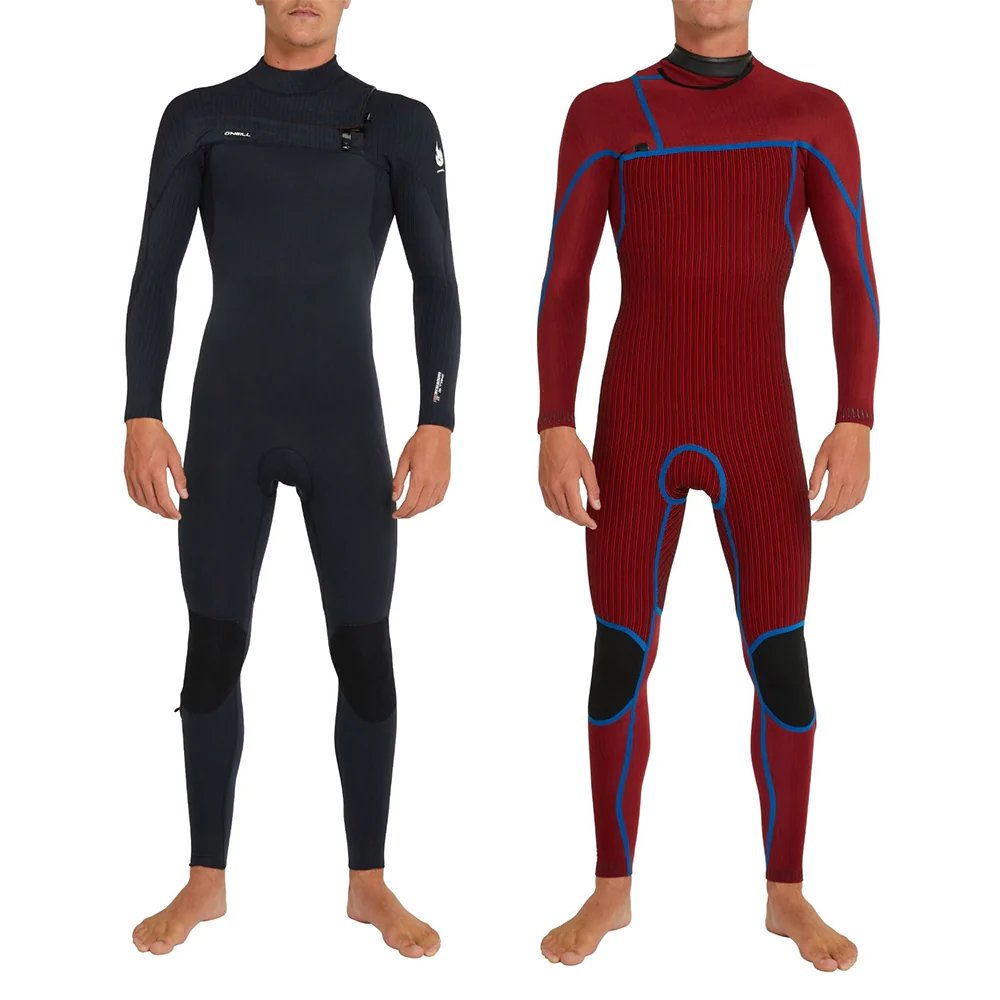
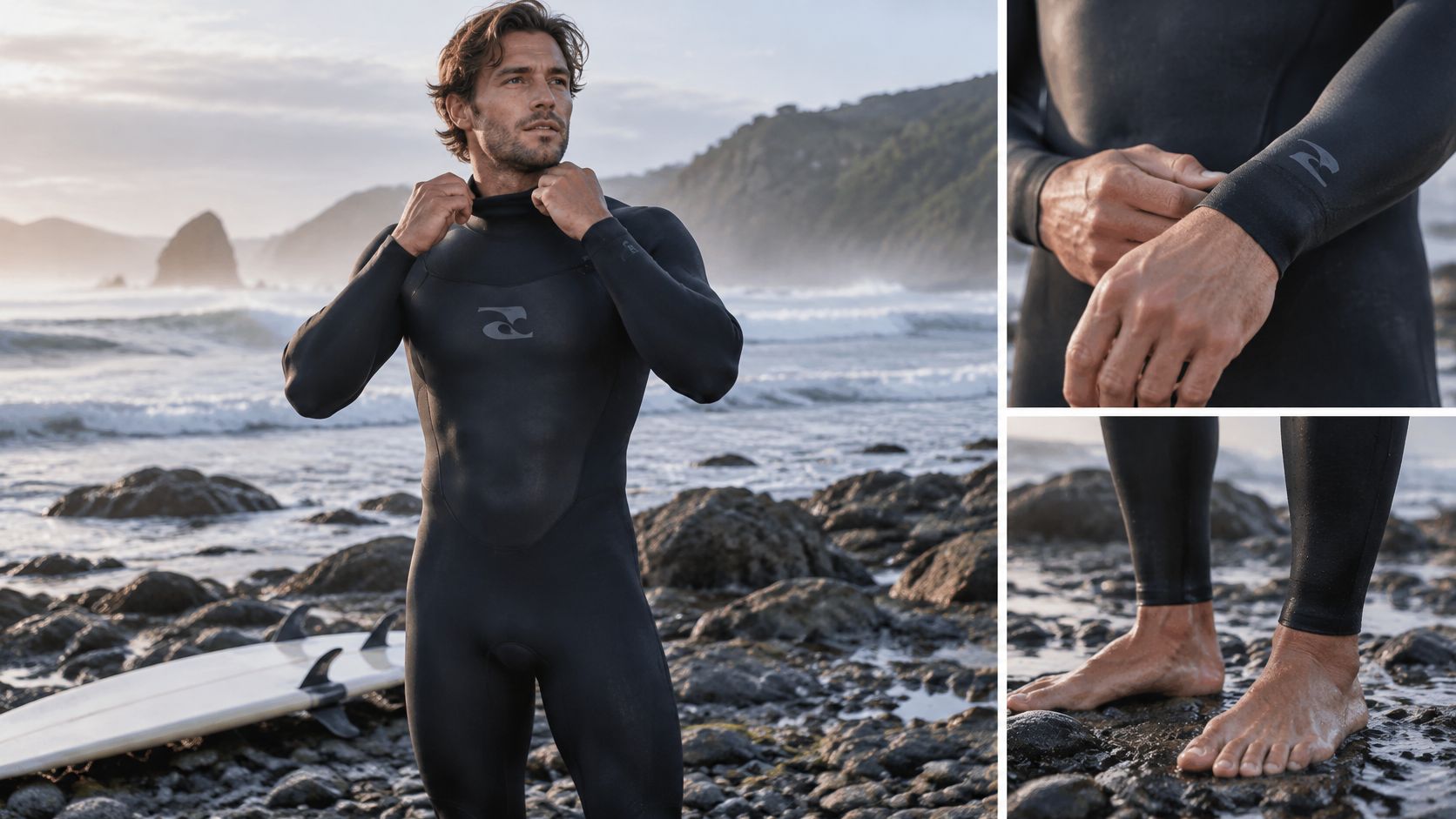
A suit that's effortless to slide into isn't necessarily the right size. Snug and unrestricted is the target, not baggy comfort or chest-crushing tightness.
Use the beach image as a reminder to assess the whole silhouette, not just whether the zip closes.
Test it properly before deciding
Pull the suit into position gradually before judging its size. Material left low around the hips can make the shoulders feel tighter than they should.
- Check the seals: Neck, wrists and ankles should sit closely without painful pressure.
- Inspect the lower back: Avoid an obvious pocket or gap where the suit should follow your body.
- Move like a surfer: Squat, reach overhead and make slow paddling movements.
- Breathe normally: You shouldn't need to accept uncomfortable torso compression to get a close fit.
Loose openings allow flushing, which repeatedly replaces warmed water with cold water. That's why a poorly fitting thicker suit can disappoint beside a thinner suit that fits properly.
Use measurements as a starting point
Men's, women's and junior cuts deserve separate attention because body proportions matter beyond the label or colour. Don't assume changing size within the wrong cut will solve every shoulder, torso or hip mismatch.
If you're comparing body proportions before shopping online, Robosize offers a way to visualize shopper measurements for fit. Use that as background context, not a substitute for the wetsuit manufacturer's chart or a physical fitting.
This fitting video is another reference to consider alongside those movement checks.
Bring your awkward-fit concerns to the fitting rather than hoping they'll disappear in the water. Shoulder gapping, an uncomfortable neck and restricted reach are reasons to compare another cut.
Matching Accessories to Conditions
Don't keep adding torso thickness while ignoring the rest of your coverage. Boots, a hood and gloves deserve a place in the buying decision, particularly if you already like how your steamer paddles.
For a Gisborne winter reef session, I'd consider a 3 mm boot as a starting option, then assess fit, sole feel and the day's conditions. That's a practical recommendation, not a promise that the same boot will suit southern water or every surfer.
Add coverage where you need it
A hood vest is worth trying when you want head coverage without replacing a suit you otherwise like. An attached-hood steamer makes sense when that coverage will be part of your normal cold-water setup rather than an occasional addition.
Gloves need a more deliberate compromise. I'd rather have functional, comfortable hands than bare-hand feel at all costs, but I wouldn't choose bulkier gloves without checking how they affect my grip and paddling comfort.
The accessory checklist below helps frame that decision.
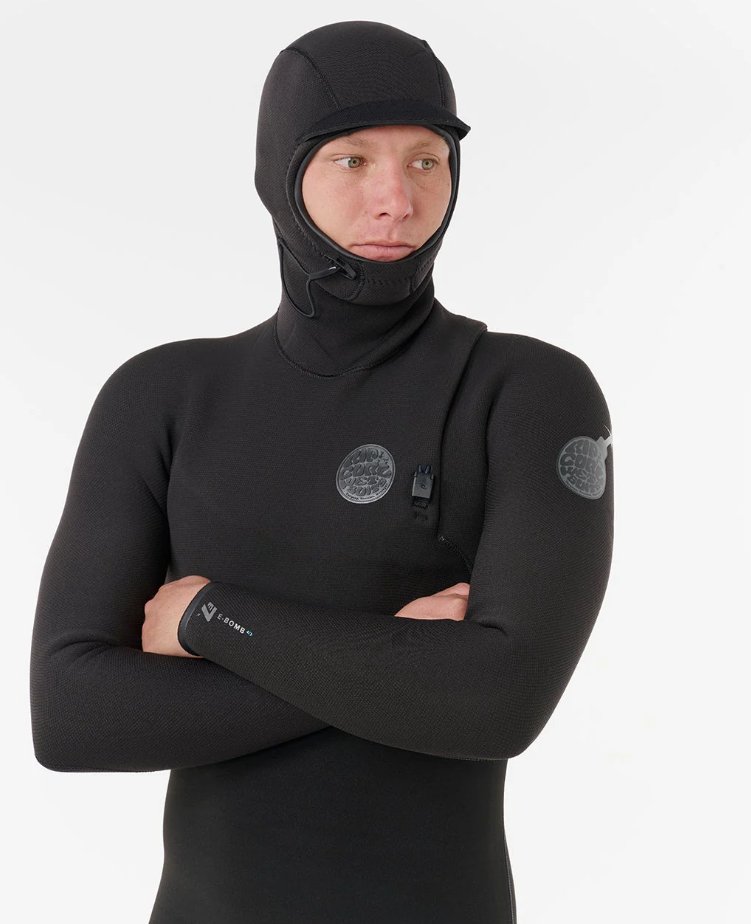
A useful accessory solves a problem you actually have. It shouldn't simply make the equipment list longer.
Our cold-water surfing accessories guide can help you compare the options without defaulting to the heaviest version of everything.
The O'Neill Hyperfreak at a Glance
The O'Neill Hyperfreak is our top-selling 4/3 and 3/2 across men's, women's and children's categories. That's our shop experience, not a published national sales ranking.
Customers tell us they like the performance and consider it well priced. That combination makes it a sensible first suit to try for Gisborne conditions, but it doesn't make it an automatic purchase.
Why it belongs on the shortlist
The Hyperfreak appeals to surfers who want a light, flexible feel without shopping purely by the most expensive ticket. TechnoButter and TB-X are material names you may encounter within the range, but check the exact suit's specification rather than treating the family name as a complete description.
I'd judge it in this order:
- Movement: Does the shoulder and upper-body cut suit your paddling?
- Seasonal purpose: Is this version intended for the conditions you surf?
- Construction: Do the seams and lining match your warmth priorities?
- Value: Are you paying for features you'll use?
Our O'Neill Hyperfreak review gives you a closer look before trying one on. Don't confuse popularity with proof that its cut will suit every body.
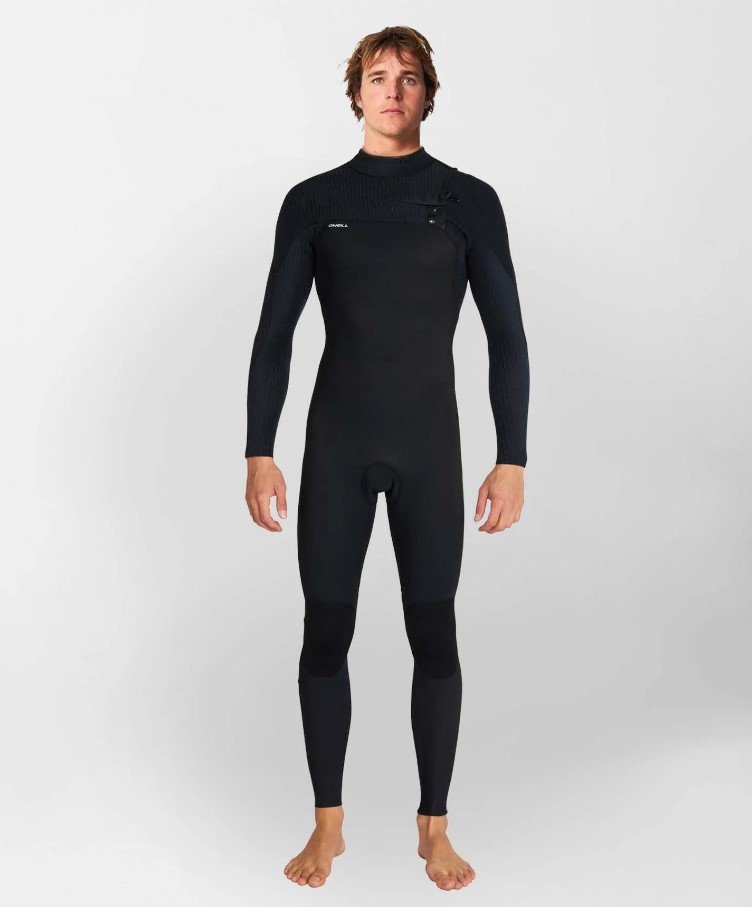
Hyperfreak or a premium rival
I'd put the Hyperfreak beside the Rip Curl Flashbomb and Hyper Fire when helping someone narrow their options. Then I'd compare the actual garments rather than declare a winner from the names. The Hyperfreak is the lighter, higher performance model of the 3 but the Flashbomb and Hyperfire combine flex with greater warmth characteristics
If a Flashbomb's construction and fit better match your priorities, that's a valid reason to spend differently. If the Hyperfreak feels right and covers your intended use, you don't need to upgrade just because another suit sits higher in a range.
Buying advice: Pay for a clear benefit you can explain, not a premium badge you hope will make the decision for you.
Caring for Your Steamer Through the NZ Seasons
A good steamer deserves better than being left wet under a board. You can't stop normal wear, but you can avoid making the material and seams work harder than necessary.
Stats NZ's coastal-temperature reporting provides the broader context for treating thermal equipment as a long-term system rather than a fixed calendar purchase. My practical advice is to maintain the suit you have and reassess its condition before assuming the season alone tells you what to wear.
Build a simple after-surf routine
- Rinse with fresh water: Make it part of putting your gear away, not something reserved for when the suit smells.
- Dry inside-out first: Keep it away from direct sun and heat, then let the outside dry too.
- Store without crushing it: Use a suitable wide hanger and avoid leaving it folded beneath heavy equipment.
- Check the vulnerable areas: Look at cuffs, entry panels and seam joins while the suit is clean.
Skip the hot car boot and don't use a machine wash as a shortcut. Follow the garment's care directions, particularly where the manufacturer specifies cleaning products or storage methods.
The aim isn't to make your wetsuit look new forever. It's to preserve the material and joins that you rely on in the water.
Repair small damage before ignoring it
A small nick may be suitable for neoprene cement, provided the product and method suit the garment. Clean and dry the area, follow the repair instructions and resist the urge to improvise with household glue.
For opening seams, entry damage or a repair under tension, ask a repairer before making it harder to fix. Warranty questions should go through the retailer before you start altering the suit.
Our wetsuit care guide gives you a routine to follow. No honest retailer can promise a fixed working life without knowing how you use, handle and maintain the garment.
Frequently Asked Steamer Questions
How should I size a child's steamer for Wainui summer sessions?
Buy for the child wearing it now, not the child you expect next season. Extra growing room around the torso and openings works against the close fit you're trying to achieve.
Ask them to reach, squat and move their arms rather than standing still for a parent's inspection. If they're uncomfortable before reaching the beach, compare another junior cut rather than assuming they'll get used to it.
Is a hood essential for Gisborne winter?
Not for every surfer or every session. I'd make that decision from your own cold tolerance, exposure and how long you intend to stay out.
If you regularly finish because your uncovered head feels uncomfortable, try a hood option. Don't buy an attached-hood suit solely because someone else calls it essential.
Should a beginner rent or buy?
Renting makes sense while you're finding out whether surfing will become a regular habit, provided the available suit fits and suits the conditions. Check availability and what's included before arriving.
Buy when regular use, dependable sizing and having your own equipment justify it. A carefully chosen entry-level suit is a better start than an expensive model bought without understanding your needs.
What if competing suits both fit?
Use the details that matter to your routine:
- Frequent sessions: Compare care requirements and stated drying features.
- Cold-sensitive surfing: Look closely at coverage and construction.
- Paddling comfort: Choose the suit that allows your natural movement.
Have a fitter check both before deciding. Once the essentials are right, price and personal preference are perfectly reasonable tie-breakers.
Blitz Surf Shop offers men's, women's and children's steamers alongside boots, hoods and gloves, with fitting advice grounded in Gisborne conditions. Visit Blitz Surf Shop in-store or online, tell us where you surf and what makes you cold, and we'll help you narrow the choice without paying for features you don't need.


