

Forget the glossy catalog advice. In New Zealand, a stand up paddle board is only as good as the conditions you paddle, the rules where you launch, and whether the board under your feet suits the job. A cheap board that looks fine in a shop can feel dead on the water, while a proper epoxy all-rounder will track cleaner, hold shape in light wind, and give you a much better first season.
That's the honest starting point for anyone looking for stand up paddle board New Zealand advice. If you want a board that makes sense in Gisborne, Tauranga, Taupō, or a sheltered bay on the coast, buy for the water you'll face, not for the photo on the box.
Shop our range of stand up paddleboards
Why the SUP You Pick Matters More Than the Marketing
A lot of first-time buyers get sold on colour, price, and a big promise printed across the deck pad. That's backwards. Construction and shape decide how the board feels under your feet, how it handles a breeze, and whether you'll still enjoy it after the first wobbly hour.
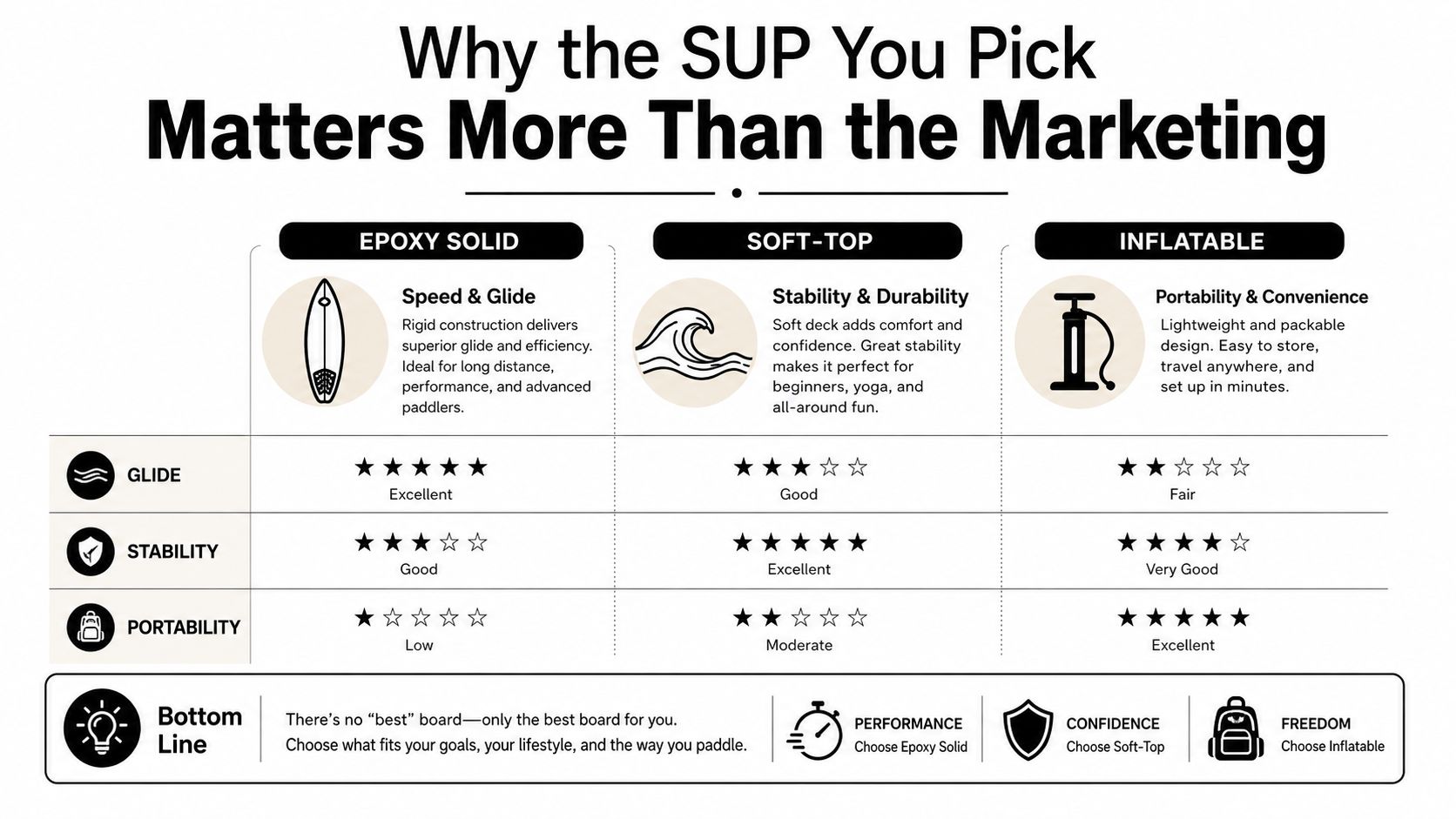
Epoxy beats hype for real paddling
An epoxy solid board is what I'd put most Kiwi beginners on if they want proper glide and better surf performance. It feels more direct, and it behaves like a real board instead of a compromise. That's why we don't stock inflatables, and why a board like the NSP Elements 10'6 All Rounder Epoxy SUP makes sense for a lot of first-timers who want one board that can grow with them.
Soft-tops have their place for pure beginner durability, but they usually give up performance. Inflatable boards win on storage, not on how nicely they paddle when the wind gets annoying, or overall performance at all. There is also more admin to get them ready to hit the water. Only buy an inflatable SUP if you have no means of transporting a proper SUP or want to stash one somewhere tight like in a boat.
If you want to understand how beginner mistakes snowball with the wrong board and gear, the breakdown on common surf equipment mistakes is worth a look.
Shape matters more than the sticker says
A 32-inch wide all-rounder and a 28-inch surf-style board are not the same thing once you're dealing with a cross-breeze at Wainui. Width, rocker, and fin setup all change how the board behaves, especially when the water stops being calm.
Practical rule: if you want to enjoy your first sessions, buy the board that forgives bad balance and still moves cleanly.
That's also where your body and core come in. If you want a simple off-water way to feel steadier on the board, the MEDISTIK resources for core strengthening give you a useful starting point without overcomplicating it. A stronger centre helps, but the board still has to do its part.
Sizing Your First Paddle Board for NZ Conditions
Sizing a first board is not about chasing the longest number you can fit on a roof rack. It's about matching weight, skill, and intent to the water you'll paddle. For most beginners, a stable all-round shape is a smarter buy than a narrow board that looks fast but punishes every correction.
Use your weight and goal, not ego
For a total beginner under 80 kg who wants flat-water cruising, I'd look at a 10'6 to 11'0 board with around 32 to 34 inches of width. That gives you a calmer platform around places like Taupō or the Whanganui, where balance matters more than snap-turning. If you want to surf small East Coast waves, you should move shorter and narrower, roughly 9'0 to 10'0 at about 28 to 32 inches, because a surf board needs to fit the wave face and turn properly.
Heavier paddlers should think volume first, length second. A longer board that sinks under you will feel worse than a slightly shorter board with enough litres underfoot. Skill changes the equation too. A confident paddler can step down earlier than a nervous first-timer, but there's no prize for buying something twitchy on day one.
My straightforward sizing advice
- Under 80 kg, flat water: go 10'6 to 11'0, wider is better.
- Under 80 kg, small-wave surf: go 9'6 to 10'0, with enough rocker to handle punchy take-offs.
- 90 kg and up: prioritise more volume, not just more length.
- New but athletic: you can step down a little sooner, but don't cut stability too hard.
A board that's too narrow turns your first season into constant correction work. That's not skill-building, that's frustration.
For a more technical view of volume choice, how to choose the right volume for your surfboard is a useful reference point, even if you're buying a SUP rather than a shortboard.
| Paddler Weight | Flat-Water Cruise | Small-Wave Surf |
|---|---|---|
| Under 80 kg | 10'6 to 11'0, 32 to 34 inches wide | 9'6 to 10'0, 28 to 30 inches wide |
| 80 to 90 kg | 10'6 or bigger all-rounder, with extra volume | Shorter surf shape only if you already paddle well |
| 90 kg+ | Prioritise volume and width, not just length | Only step down if the board still floats well under load |
Renting vs Buying Your First SUP in New Zealand
Renting is fine if you're treating paddleboarding like a one-off holiday activity. Buying is the better move once you know you'll use the board more than a few times a year. Don't pretend those are the same decision.
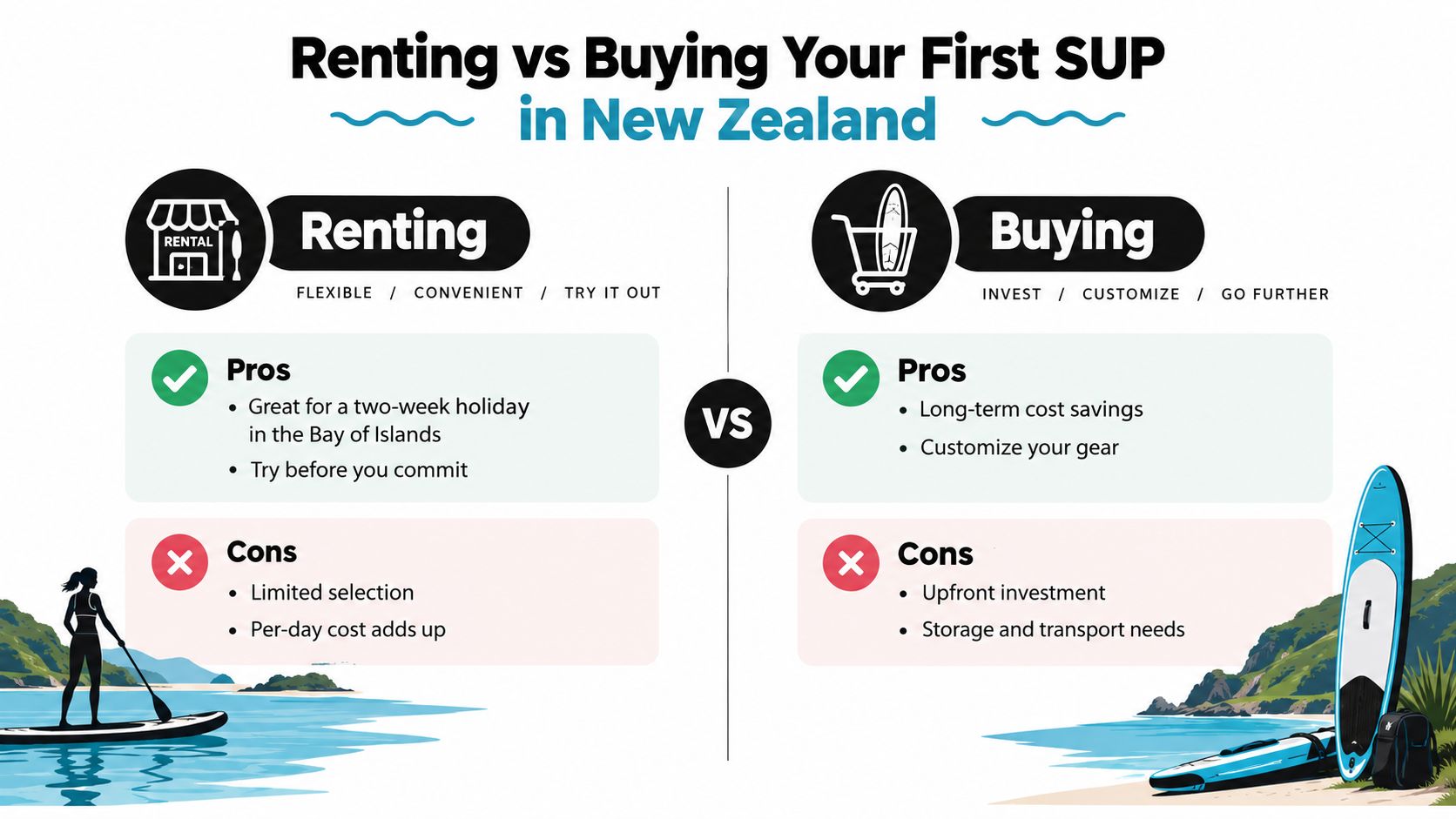
When renting makes sense
Rent if you're on a short trip, trying the sport once, or sharing a board across a household that barely paddles. It keeps commitment low and lets you feel the sport before spending proper money. If you're comparing options, the surfboard hire mindset is basically the same, try it first if you don't yet know what you like.
When buying wins
Buying starts to make sense when you're paddling often enough that booking and returning gear becomes annoying. It also wins if you live near reliable water and want to head out on your own timetable. A solid epoxy all-rounder from a proper shop gives you consistency, and consistency matters more than saving a bit up front. Having said that, you can get a great quality epoxy board for a decent price these days.
Here's the trade-off in plain English. Renting is easy, but it keeps costing you every time. Buying costs more on day one, but it gives you a board that's always there, already fitted to you, already familiar, and easier to improve on.
If you've already decided you like being on the water, stop renting and get the board that fits you.
The other practical issue is transport and storage. If you've got roof racks and room in a garage, buying becomes much less painful. If you don't, renting still has a case, but only if you're paddling infrequently.
NZ SUP Safety Rules by Region
Treating New Zealand as one neat SUP zone is lazy and risky. Rules change by region, by waterway, and by what you're doing on the board. If you travel with your SUP, check the local setup every time.
What the patchwork means in practice
Canterbury requires lifejackets for everyone on paddlecraft, including stand up paddleboards, even in calm water. Waikato allows SUPs in surf to be exempt from carrying a lifejacket or communications only if they're leashed to the board, according to the regional guidance in the brief. That's why the usual “just wear a PFD” advice is too blunt for New Zealand. It is often good advice, but legality depends on the place and the situation.
The flat legal baseline still matters. NZSUP says a personal flotation device is required on a small craft under 5 m unless you're actively surfing, and Maritime Rules Part 91 requires carriage of personal flotation devices on recreational craft. Northland Regional Council also recommends wearing a lifejacket, and says that if you don't wear one, a wetsuit or tether or leash appropriate to the conditions must be worn for any board sport.
| Region/Waterway | Required Gear | Key Rules | Common Pitfall |
|---|---|---|---|
| Canterbury | Lifejacket for paddlecraft users, including SUP | Treats calm conditions seriously | Assuming a relaxed beach launch means relaxed rules |
| Waikato surf zones | Leash can change the carriage expectation | Surf exemption depends on being leashed | Surfing without checking the local bylaw |
| Northland exposed coast | Lifejacket recommended, leash or wetsuit required if no lifejacket | Beginners should get advice and ideally a lesson first | Copying inland habits on an exposed coastline |
| Coastal and harbour paddling generally | PFD and visibility gear expectations rise with exposure | Check whether you're in sheltered or beyond sheltered water | Assuming one rule set covers every bay and harbour |
For a wider read on surf safety basics, use New Zealand surf safety guidance before you head into anything with proper push.
The simple way to stay out of trouble
Read the local bylaw before you drive. Check whether you're launching into sheltered water, open coast, or a region with its own rules. If you're not sure, carry the gear and keep the leash on.
Northland paddleboard safety guidance is a good example of how specific local advice can be, and the Canterbury summer safety reminders show how quickly councils push education and enforcement. The smart paddler checks first.
Where to Actually Paddle in NZ
The best paddle spot is the one that matches your skill on that day. Not the one with the nicest drone shot. If you're new, you want light wind, manageable swell, and water that won't punish a bad step.
Start by reading the forecast like a paddler, not a tourist. For beginners, wind under 15 knots and swell under 1 m is the kind of day that gives you a fair chance to stand up, relax, and learn. Once the wind is pushing across or offshore, a session that felt easy at breakfast can turn into a drag by lunchtime.
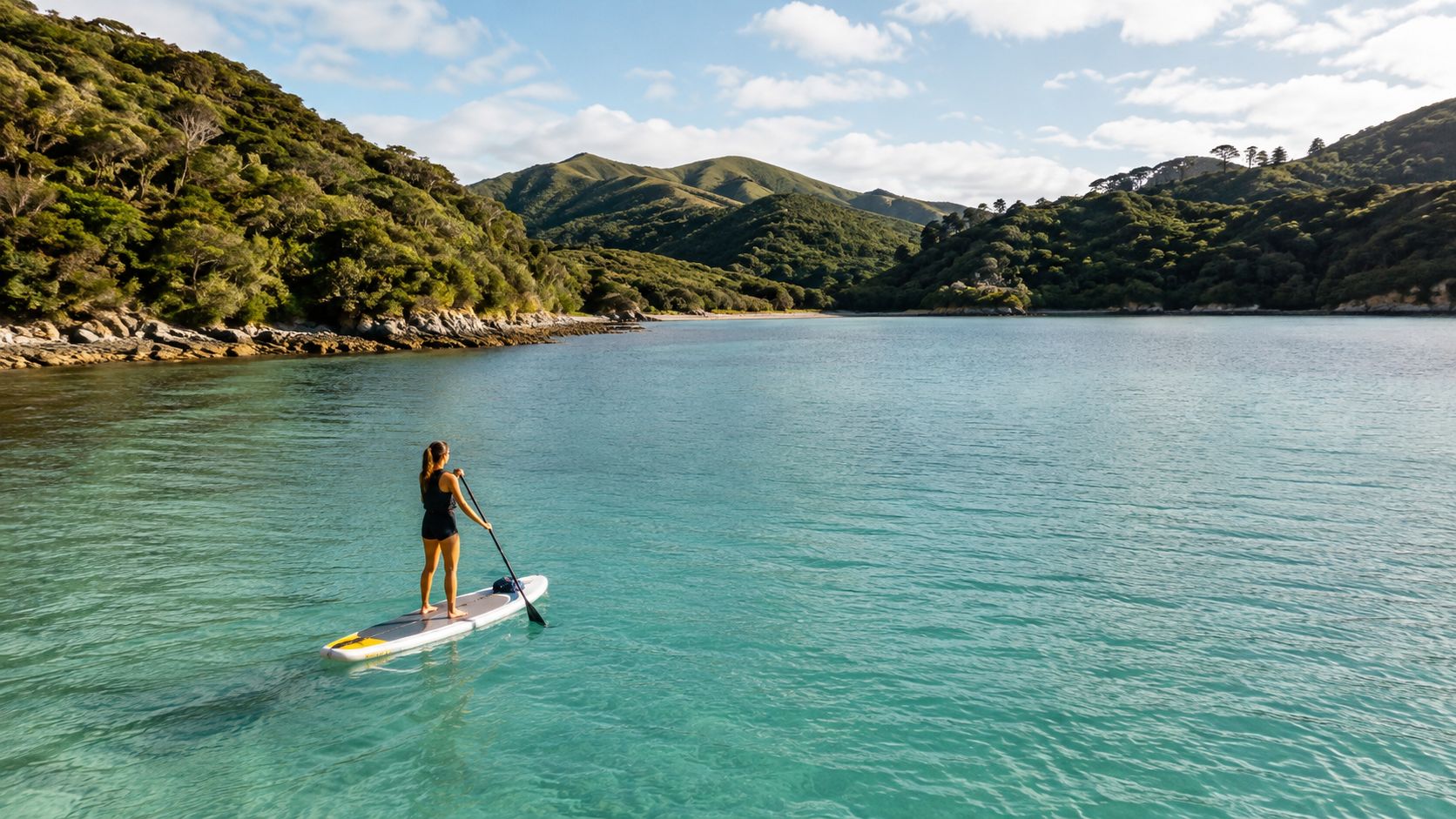
Gisborne and East Coast picks
For a first paddle in Gisborne, I'd choose the river for first-timers, then move to the town beaches once you've got some balance. Makorori is the next step when you're ready for small, clean waves. Don't start there if you're still falling off on land.
The East Coast teaches fast. You'll learn quickly whether your board trims well, whether your leash choice makes sense, and whether you can handle a side-on breeze without fighting the whole way back. That's why I tell first-time paddlers to go somewhere sheltered first, then earn the surfy spots.
Good options elsewhere
The Bay of Islands has sheltered bays that suit cautious beginners. The inner Hauraki Gulf gives you more protected water if you pick the right day. Abel Tasman tidal estuaries can be excellent when conditions line up, and Lake Wanaka gives you a calm morning window that's hard to beat for confidence building.
You can also use the local surf spot logic from best surf spots in New Zealand as a filter, just with a beginner's restraint. The famous break might look tempting, but your first sessions should build balance, not ego.
If you're unsure, choose flat water first. A good day on easy water beats a messy day at a famous break.
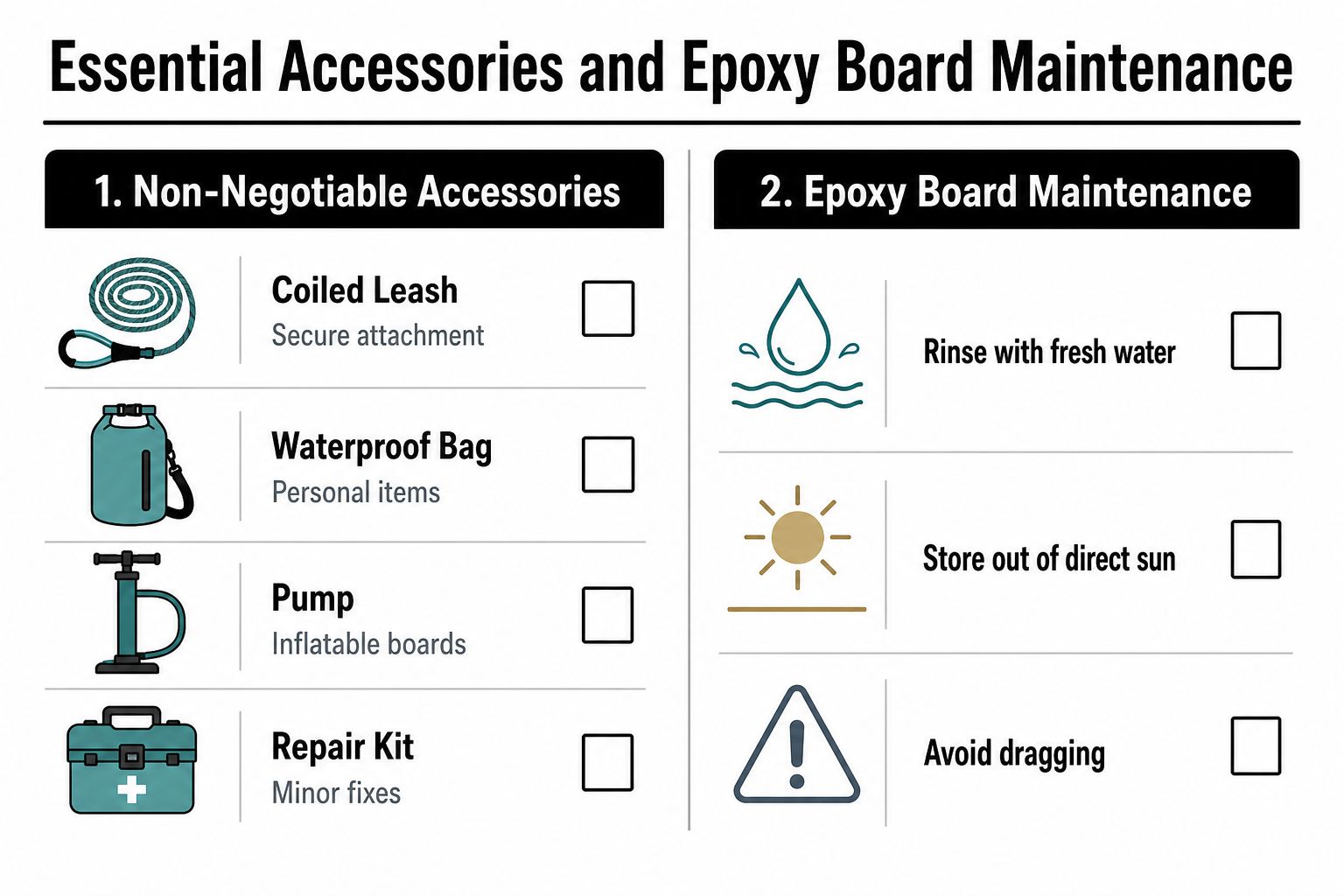
Essential Accessories and Epoxy Board Maintenance
A good epoxy board deserves better than being thrown on the lawn and forgotten. The right accessories make your session safer, and the right maintenance keeps the board performing instead of slowly getting cooked by salt, sun, and rough handling.
Buy the gear that actually matters
Start with a leash that matches the conditions. In waves, use a surf leash. On flat water, a coiled leash can be the cleaner choice. You also need a PFD that fits your torso properly, not just your body weight, because a loose vest is a nuisance and a bad fit when you need it most.
A paddle should suit your height and the board volume, not just “fit roughly”. If the paddle is too short, you'll hunch. If it's too long, you'll work harder than you need to. A dry bag is sensible for keys and phone, and a simple repair kit belongs in the car if you paddle around rocks.
All the paddles we sell are adjustable
Keep epoxy boards alive
Rinse the board with fresh water after a session, and don't leave salt sitting on it. Check the vent plug regularly if it has one, because neglected hardware can become a real problem. Inspect the rail and nose after rocky sessions, and store the board out of direct UV whenever you can.
If you've ever looked at washing a boat with foam, the same basic idea applies here, keep the grime off before it settles in. Epoxy boards don't need pampering, they need routine.
- Rinse after use: salt is the enemy of long board life.
- Check the vent plug: do it regularly, not when damage already shows.
- Inspect dings fast: a small knock becomes a bigger problem if you ignore it.
- Store out of sun: UV is brutal on gear left outside.
Five minutes after each session saves you money later. That's not theory, that's board ownership.
Putting It All Together and Where to Buy
The buying decision gets simple when you strip away the noise. Pick your primary use, match the board to your weight and skill, choose epoxy over an inflatable if you want proper feel and glide, check the local rules where you'll paddle, and start on a spot that suits the day. After that, add the leash, PFD, paddle, and storage plan.
If you're a 75 kg absolute beginner who wants flat-water cruising around Tauranga, I'd put you on a 10'6 all-rounder with 32 inches of width, paired with an adjustable alloy paddle and a coily leash. That setup gives you stability without turning the board into a barge, and it's the sort of board you'll still be happy with after the first month.
| Rider Weight | Intended Use | Recommended Board | Construction |
|---|---|---|---|
| Under 80 kg | Flat-water cruising | 10'6 to 11'0 all-rounder | Epoxy solid |
| Under 80 kg | Small-wave surf | 9'6 to 10'0 surf-leaning SUP | Epoxy solid |
| 80 to 90 kg | Mixed use | Stable all-rounder with extra volume | Epoxy solid |
| 90 kg+ | Confidence first | Wider, higher-volume all-rounder | Epoxy solid |
Avoid no-name imports, avoid anything sold as a vague “universal” paddle, and don't buy a board unless the fin box setup is clear and checked. A shop that paddles is a better bet than a faceless warehouse listing. In Gisborne, we stock NSP and Adventure paddleboards, both aimed at beginner to intermediate riders and family use, and we ship nationwide if you're not local.
The easiest next move is to ring through your weight, where you plan to paddle, and whether you want more cruising or more surf. Then buy the board that suits your first season, not the fantasy version of yourself.
Blitz Surf Shop stocks SUPs, paddles, leashes, and the basic gear you need to get started without guessing. If you want straight advice on a board that fits New Zealand conditions, visit Blitz Surf Shop, talk through your weight and intended use, and lock in a setup that makes your first season easier instead of harder.


