

In 2021, ACC recorded 2,136 new e-scooter injury claims in New Zealand. By 2025, that number had reached 3,992, while 2,781 more claims had already been lodged by 30 June 2026. (NZTA safety review report) That's the truth behind the casual “you don't legally need one” attitude. A helmet may be voluntary for an e-scooter rider, but head protection is still one of the smartest decisions you can make before rolling down a footpath, driveway, skatepark edge, or road.
For Kiwi families, the buying rule is straightforward. Choose a properly fitted, certified helmet with scooter-appropriate coverage, not just the cheapest shell on the shelf. This guide cuts through the legal wording, explains the standards, compares helmet types, and gives you a practical fitting and shopping process that works for both children and adults.
Shop Skate, Scooter and Surf helmets with Blitz
Why Scooter Helmets Matter More Than You Think
Helmet use isn't legally required for e-scooters in New Zealand, yet ACC and Waka Kotahi NZ Transport Agency recommend wearing one. (NZTA low-powered-vehicle guidance) That legal gap matters. Voluntary does not mean unnecessary. A cracked footpath, wet surface, clipped kerb, or sudden loss of balance can put your head into concrete before you have time to react.
The injury trend is hard to dismiss. ACC recorded 2,136 new e-scooter injury claims in 2021, rising to 3,992 in 2025. Active claims increased from 2,289 to 4,290, and active costs rose from $6,913,523 to $15,886,463 over the same period. (NZTA safety review report) Those figures put the legal position in context. Scooter injuries are a growing, recognised source of harm for riders, families, and the health system.
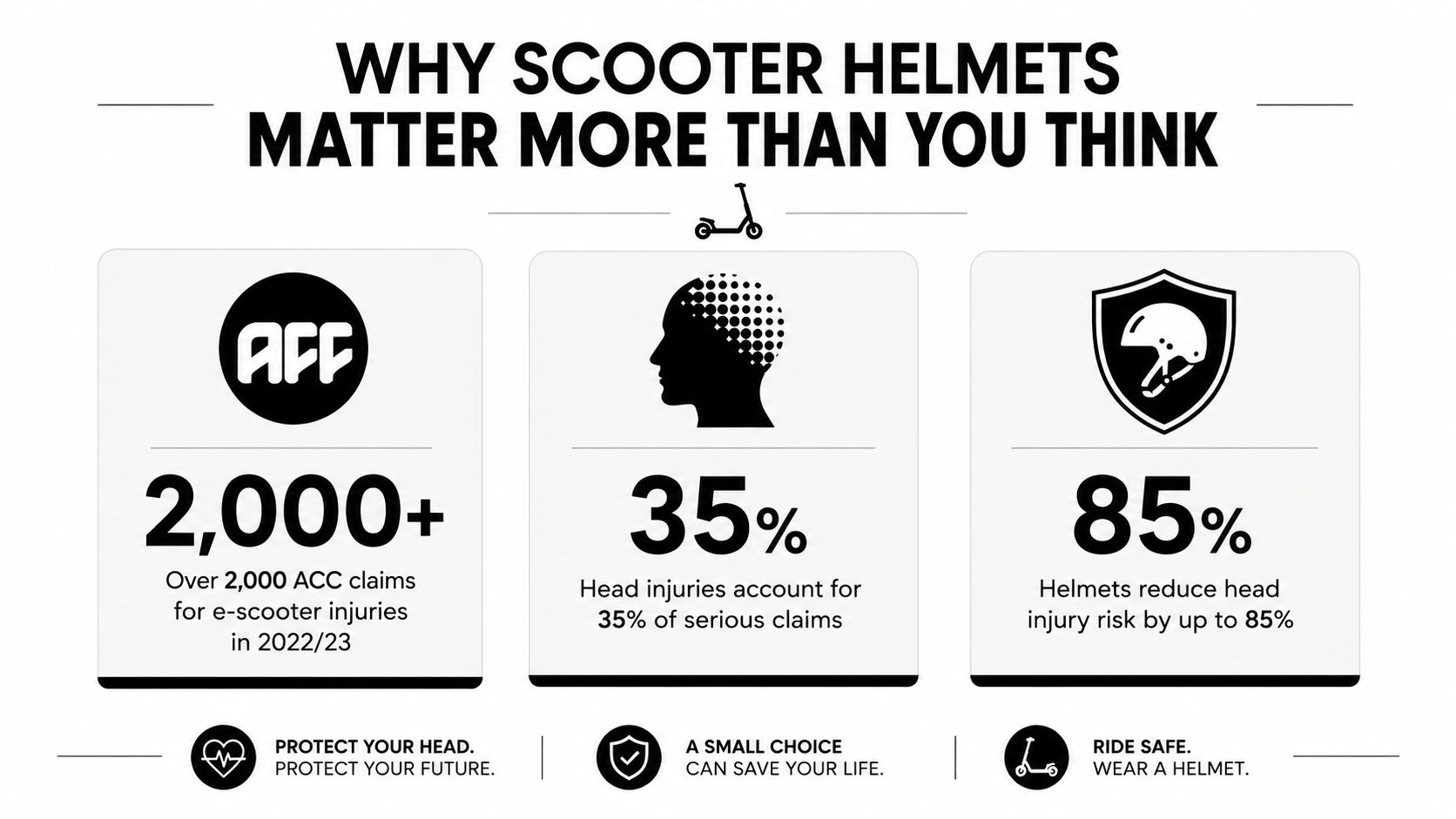
The gap between law and risk
A major Auckland City Hospital study found that only 3 of 180 injured e-scooter patients, or 1.7%, were documented as wearing a helmet, while 22.2% required an operation. (New Zealand Medical Journal study) These were not limited to minor grazes. A head can strike concrete, a kerb edge, or another vehicle with serious consequences.
ACC concussion claims also rose from 72 in 2021 to 190 in 2025. The figures reinforce the practical choice: regular scooter riders should wear a certified helmet with a secure fit and coverage over the back and sides of the head. A helmet cannot fix excessive speed, poor supervision, or careless riding. It adds impact protection when those controls fail.
Shop-floor rule: If someone rides a scooter regularly, a helmet is standard equipment, not decoration.
Activity-specific coverage matters across wheeled sports. The surf helmet guide explains why helmet shape and coverage should match the activity. For scooter riding, start with certification and fit, then choose a design that stays stable and protects the back and sides of the head.
NZ Helmet Laws and Safety Standards Explained
New Zealand does not require e-scooter riders to wear a helmet, although NZTA recommends helmets for everyday riding. (NZTA low-powered-vehicle guidance) Treat that voluntary rule as the legal minimum, not sound riding advice. Concrete, kerbs, and vehicles still create the same impact risk whether a helmet is compulsory or not.
The Land Transport (Road User) Rule 2004 recognises approved helmet standards including AS/NZS 2063, EN 1078, AS 2063.2, Snell bicycle-headgear, ASTM F1447, and CPSC Part 1203. (New Zealand legislation) The standard must apply in the relevant jurisdiction at the date of manufacture, or be a newer version where safety is not adversely affected.
What to check inside the helmet
For scooter riding, I recommend starting with AS/NZS 2063:2020 certification. Standards New Zealand includes kick-scooters, including power-assisted models, within this standard. It covers impact energy attenuation, stability, load distribution, retention-system strength, peripheral vision, and helmet markings. (Standards New Zealand, AS/NZS 2063:2020)
Look inside the shell for a clear compliance label. “Sports protection” and “safety inspired” are marketing language, not certification. The label should name the applicable standard and provide traceable manufacturer information. Missing, faded, or vague markings are a reason to reject the helmet.
Motorcycle helmets follow a separate standard, AS/NZS 1698, and suit different riding conditions. Do not assume a motorcycle helmet is appropriate for a kick-scooter, or that a generic sports helmet has scooter certification.
Certification is only half the job
A certified helmet that shifts during a fall cannot protect the rider properly. NZ road-safety guidance recommends an AS/NZS 2063-approved helmet that is securely fitted and fastened, with straps meeting below the earlobes and enough tension to stop wobbling. (Safety Central Road Safety guidance)
Use the skate helmet guide for a closer look at construction and activity-specific protection. For scooter riding, check certification and fit first, then choose a shape that protects the back and sides of the head properly.
Choosing the Right Helmet Type for Scooter Riding
A standard bike helmet can be certified and still be the wrong shape for the way many scooter riders fall. Bike helmets commonly prioritise ventilation and low weight, with a raised profile that leaves more of the lower rear and side head exposed. That design makes sense for cycling, but it isn't the coverage I want for a child repeatedly stepping off a scooter or a rider learning tricks.
A skate-style helmet has a rounder profile and generally sits lower around the back and sides of the head. That coverage is the main reason brands such as Triple 8, Pro-Tec, and Globe are strong choices for scooter and skateboard riders. They're built around the kind of short, unpredictable falls that happen during everyday wheeled recreation.
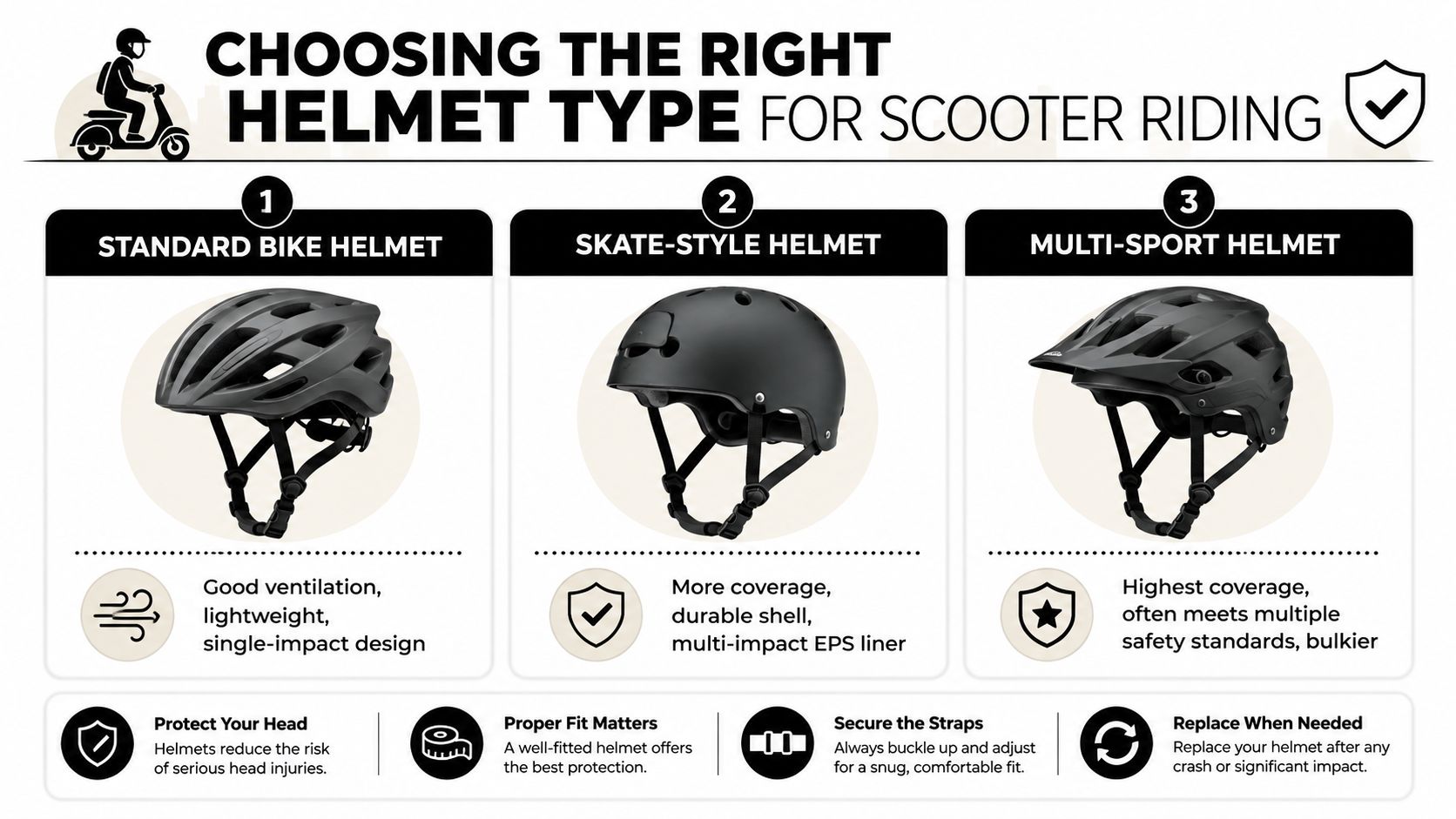
Three common choices
| Helmet type | What it does well | My view for scooter use |
|---|---|---|
| Standard bike helmet | Light, ventilated, and familiar | Acceptable only if it fits correctly and provides suitable certified coverage. I wouldn't choose one automatically for a child who scooters or skates frequently. |
| Skate-style helmet | Rounded shell, lower coverage, and a stable recreational-sport shape | The sensible starting point for most scooter and skateboard riders. |
| Multi-sport helmet | May cover several activities and standards | Useful for families wanting one helmet for several sports, but check the actual certification and accept the extra bulk. |
Bike helmets aren't “bad”. They're not the automatic answer for scootering. Kids are slamming on scooters and skateboards all the time, and a bike helmet often doesn't cover enough of the child's head for those falls. In our range, the skate-style options from Triple 8, Pro-Tec, and Globe are designed around that fuller coverage approach.
A helmet should match the fall pattern, not just the activity label on the box.
Don't jump to an enduro or motocross helmet for a regular kick-scooter. Those helmets address a different riding environment, with different weight, ventilation, and protection priorities. This enduro and motocross helmets guide explains that distinction well. For scooter and skateboard protection, stay with a suitable certified recreational helmet and focus on coverage and retention.
For broader setup advice, the NZ skateboard protective gear guide can help you pair a helmet with wrist, elbow, and knee protection. A helmet matters most when it's part of a sensible riding setup, not an excuse to ride beyond the rider's ability.
How to Size and Fit a Scooter Helmet Properly
Fit decides whether a helmet stays over the rider's head during a fall. Start with the rider's head, not their age or clothing size. Use a flexible tape around the widest part of the head, keeping it level across the forehead and around the back. No tape? Use string, measure it against a ruler, then check the result against that brand's sizing chart.
A reliable fitting process
- Start with a flat head position. Remove bulky hair accessories and place the helmet level. The front should sit just above the eyebrows without restricting vision.
- Check movement before buckling. Have the rider nod and shake their head. The helmet should stay planted, without sliding backwards, forwards, or sideways.
- Adjust the rear fit system. Use the dial or other adjuster until the shell feels secure. It should sit snugly without creating pressure points or pain.
- Set the side straps. The straps should meet below the earlobes and form a clean “V” around each ear. Keep them firm, with enough room for comfort. The helmet should not wobble.
- Fasten the chin strap. Leave room for comfortable breathing and swallowing, but not enough for the helmet to lift over the chin. Give the buckle and strap a firm tug after fastening.
Run through every step with the rider standing naturally. If the shell rocks, pinches, blocks vision, or shifts during the movement test, reject that model. A different shape is the answer, not tighter straps.
Don't buy room to grow
A helmet that is too large can move during a fall, while tighter straps cannot make an oversized shell fit correctly. Try it on properly and choose the size that fits now. Children grow, but protection cannot be adjusted into place later.
Head shape varies between riders, so try several shells rather than assuming one brand will suit everyone. Keep the helmet level, check the retention system, and reject anything that rocks or pinches. For another reference on recreational helmet construction and fit, read this Oakley skate helmet guide. The same practical checks apply to a scooter helmet nz shopper is considering, especially coverage, stability, and comfortable retention.
Helmet Maintenance and When to Replace
A helmet can look fine after a fall and still be finished. The outer shell may show only a scuff while the protective liner underneath has absorbed energy and lost its ability to perform as intended. After a crash, impact, or hard drop, retire the helmet rather than handing it back to the rider.
That rule matters especially for children. A kid may say, “It's only scratched,” but the scratch isn't the test. If the helmet hit the ground with the rider's head inside it, replace it.
Inspect the parts that keep doing the work
Check the shell, liner, buckle, side straps, and rear adjustment system regularly. Look for cracks, crushed or compressed foam, loose components, frayed webbing, damaged buckles, and a fit system that no longer holds tension.
Sweat, sunscreen, dirt, and ultraviolet exposure also age helmet materials. Clean the helmet with mild soap and water, then let it air-dry away from direct heat. Don't use harsh solvents, glue, paint, or stickers that cover certification markings or alter the shell.
Practical rule: If you can't trust the helmet's history, you can't trust the helmet.
A second-hand helmet can be difficult to assess because you may not know whether it has been dropped, crashed, stored in heat, or modified. For a child's regular scooter use, a known history and a clean fit are worth more than a small saving.
Replace the helmet when the manufacturer's guidance says it has reached the end of its service life, or earlier if any component is damaged. The children's helmets guide is a useful reference for families checking fit, construction, and replacement decisions.
Your NZ Scooter Helmet Shopping Checklist
Take this list into a shop or keep it beside your online order. It stops a quick purchase turning into a poor fit.
- Confirm the standard: Look for a clear label identifying AS/NZS 2063:2020 or another standard recognised under the Land Transport (Road User) Rule 2004. Don't accept vague wording such as “impact resistant” as proof of certification.
- Choose the coverage: For most scooter and skateboard riders, start with a rounded skate-style helmet that protects the sides and back of the head. A bike helmet may be suitable in some cases, but don't assume it provides the coverage you want.
- Try before buying: Measure the head, consult the brand chart, then try the helmet on. The best verification is physical. All brands should carry the correct certification labels, so inspect the inside rather than relying only on packaging.
- Check the fit: Keep the helmet level. It should remain stable during nodding and shaking, with straps meeting below the earlobes and a secure chin buckle.
- Avoid growth sizing: Don't buy a little-big helmet for a child's future growth. Proper protection depends on the helmet fitting the rider now.
- Compare established options: Triple 8, Pro-Tec, and Globe are the NZ-certified helmet brands we sell most often at Blitz Surf Shop. Look at the exact model's label and fit rather than choosing a brand name blindly.
- Inspect before use: Check the shell, liner, straps, buckle, and adjustment system. Reject anything cracked, crushed, loose, or missing its certification information.
The safest purchase is the one the rider will wear, so let them choose a colour or finish within the right safety and fit requirements. Comfort and appearance help with acceptance, but certification and stability come first.
Common Questions About Scooter Helmets in NZ
Is a bike helmet acceptable for a scooter?
It can be acceptable if it carries a recognised certification, fits correctly, and provides adequate coverage. For regular scooter and skateboard use, I generally favour a certified skate-style helmet because it sits lower around the back and sides of the head. Don't choose by category alone. Inspect the label and try it on.
What if my child refuses to wear a helmet?
Give them a choice between suitable colours and models, not a choice between protection and no protection. Let them take part in measuring and fitting, and make the rule consistent for scooters, skateboards, and similar wheeled activities. A comfortable helmet that looks good has a better chance of becoming part of the routine.
Is a second-hand helmet safe?
Only if you know its complete history, can verify its certification, and can confirm it has never taken an impact. In practice, that history is often unclear. I'd buy new for a child, especially when a helmet's liner, straps, or shell condition can't be confidently checked.
What should I do if there's no certification label?
Don't guess. Ask the retailer or manufacturer for documentation that identifies the applicable standard, and choose another helmet if the information can't be verified. A missing label is a buying red flag, not a minor cosmetic issue.
Does the law require an e-scooter helmet in NZ?
No, helmet use isn't legally required for e-scooters, but NZTA and ACC recommend it. The rising injury figures make voluntary protection a sensible choice, regardless of whether a rider is commuting, cruising, or learning tricks.
Blitz Surf Shop stocks certified skate-style helmets from brands including Pro-Tec and Globe, along with other protective gear for scooter and board riders. Visit Blitz Surf Shop online or call into the Gisborne store to try helmets on and get practical advice before your next ride.


