

Think of the gear you never leave home without for a day at the beach. Togs, towel, sunblock... and for anyone spending serious time in the water, the humble rashie. Known as a rash guard or rash vest, it's that stretchy, close-fitting shirt made from lycra or spandex that has become an absolute staple for Kiwi beachgoers. It's the unsung hero of any good session in the waves.
Your Essential Guide to the Humble Rashie
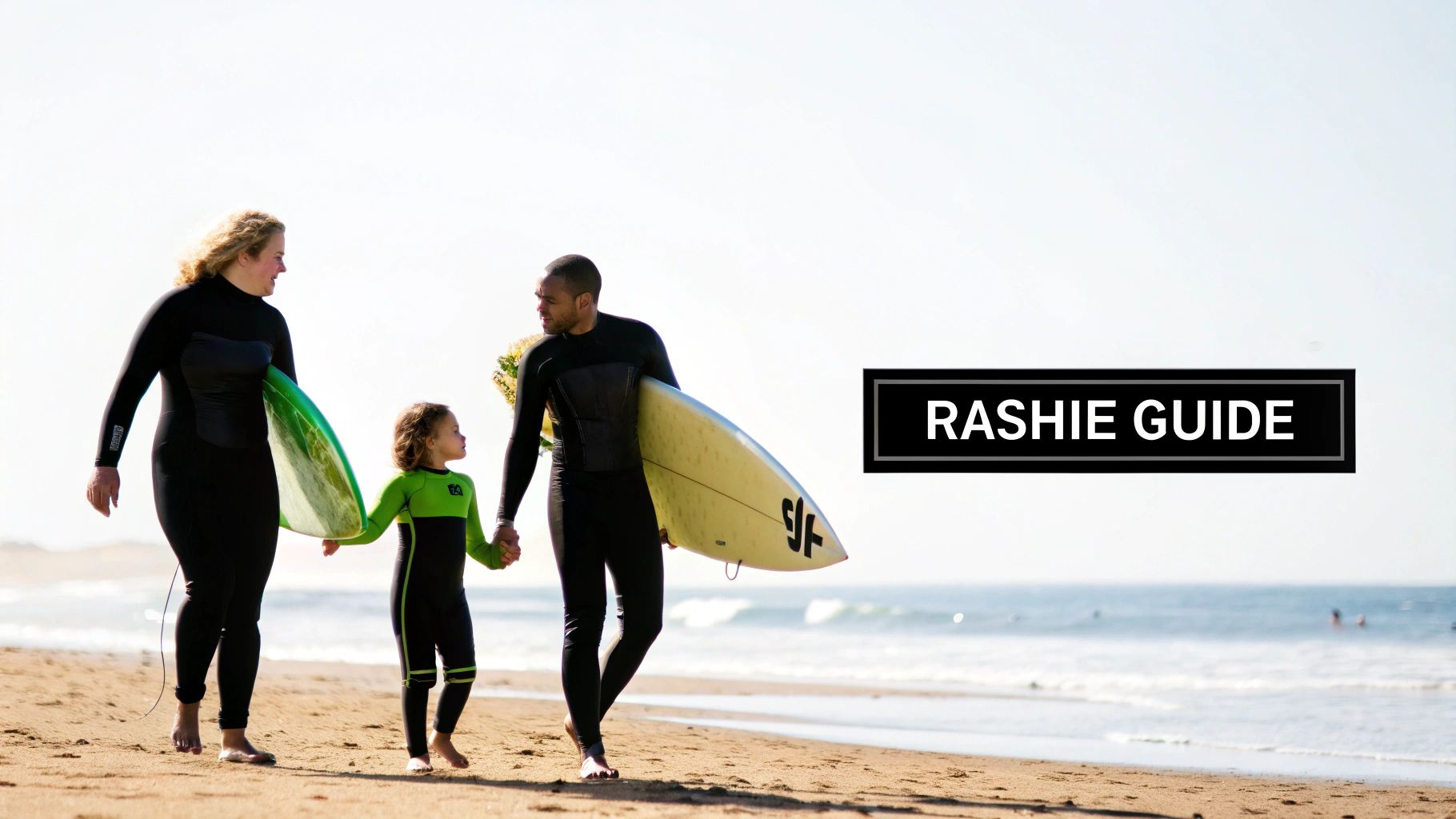
From the golden sands of Mount Maunganui to the rugged coastline of Gisborne, one piece of kit is essential to the New Zealand water experience. Once just for hardcore surfers, the rashie has found its way into the beach bag of families, swimmers, and ocean lovers all over the country.
At its core, a rash guard is your personal shield against the elements. It provides a solid physical barrier against that harsh Kiwi sun, often with a UPF (Ultraviolet Protection Factor) rating of 50+. That means it blocks over 98% of harmful UV rays, making it way more reliable than sunscreen that just washes off in the surf.
More Than Just a Surfer's Shirt
But its job goes way beyond sun safety. For surfers, the name says it all—it was created to stop that painful chest rash you get from rubbing against a waxed board. It’s a smooth, frictionless layer that lets you stay out for longer, more comfortable sessions.
Today, a good rashie serves three main purposes that every Kiwi can get behind:
-
Sun Defence: It’s a constant, chemical-free layer of UV protection that won't disappear after your first duck dive.
-
Chafe Prevention: It guards your skin against irritation from surfboard wax, bodyboard foam, or even the seams of a wetsuit.
-
Lightweight Warmth: It's not a full-blown wetsuit, but a thermal rashie can provide just enough insulation to take the bite out of a cool breeze or chilly water, keeping you in the ocean that little bit longer.
A good rashie is a multi-tool for the water. It’s your sunblock, your anti-chafe layer, and your first line of defence against the elements, all rolled into one comfortable garment.
This versatility is exactly why they've become so popular. Being prepared is everything when you're planning a day in the water, whether it's surfing, swimming, or snorkeling. If you’re heading out for a snorkel, it's worth checking out a complete guide on what to wear for snorkeling to make sure you've got all the right gear.
The numbers back it up, too. General surf apparel, including the rashie, made up a massive 85.81% of the NZ surfing apparel market revenue in 2022, a slice of the pie that's only expected to get bigger. It shows just how vital this simple piece of gear has become.
Why Every Kiwi Beachgoer Needs a Rashie
Look, a good rashie is much more than just another bit of swimwear. Think of it as a crucial piece of gear that makes your days in the water safer, longer, and a hell of a lot more comfortable. For anyone enjoying our beautiful Kiwi coastline, the benefits are real, turning a good beach day into a great one by solving a few classic problems.
Let's break down why a rash guard should be a non-negotiable part of your kit. We'll get into how it offers serious sun protection, stops nasty chafe, and provides awesome versatility for pretty much any water activity, from surfing Gizzy's best breaks to paddling a calm lake.
Ultimate Sun Defence
We all know the New Zealand sun has a serious bite. Relying on sunscreen alone can be a bit of a gamble, right? It washes off, needs reapplying all the time, and it's so easy to miss a spot. A rashie is the simple, bulletproof solution, creating a physical barrier between your skin and that harsh UV radiation.
It's like wearing your own personal shade sail. Most quality rash guards come with a UPF 50+ rating (Ultraviolet Protection Factor). This isn't just marketing fluff; it’s a proper standard that means the fabric blocks at least 98% of UVA and UVB rays. This physical shield won't wash off or wear out, giving you solid protection for as long as you've got it on. For a deeper dive on staying safe out there, check out our full guide on sun protection strategies.
A rashie with a UPF 50+ rating is one of the most effective forms of sun protection you can get. It provides a constant, reliable barrier that doesn't require reapplication, giving you peace of mind during long hours in the water.
The Surfer's Second Skin
For surfers, the name "rash guard" is pretty literal. Lying on a freshly waxed surfboard for hours is guaranteed to cause chafing and skin irritation—the dreaded surfboard rash. A rashie acts as a smooth, frictionless layer that completely knocks this problem on the head, letting you focus on the waves instead of the growing sore patch on your chest or stomach.
This same protection is a game-changer when you're wearing a wetsuit. A rashie underneath stops the wetsuit’s seams and neoprene panels from rubbing you raw, especially around your neck and under the arms. As a bonus, it makes wriggling into a snug-fitting wetsuit (and getting it off again) way easier, acting as a slick layer that helps it glide right on.
Versatility Beyond the Waves
But a rashie’s usefulness doesn't stop with surfing. Its core benefits—sun protection and comfort—make it perfect for a huge range of water sports we love here in New Zealand.
-
Stand-Up Paddleboarding and Kayaking: When you're out on the water for hours at a time, a lightweight, breathable rashie gives you full upper-body sun protection without making you overheat.
-
Snorkelling and Swimming: It's perfect for protecting your back and shoulders, the bits that are most exposed when you're face down in the water. A rashie is essential gear for anyone spending a lot of time in the water, whether you're at Waikanae or you plan your next Kona snorkel tour.
-
Beach Play with the Kids: For a long day building sandcastles and splashing in the shallows, a relaxed-fit rashie keeps the whole family protected without the endless hassle of sunscreen top-ups.
This adaptability is why they've become so popular. The global rash guard market was valued at $9.1 billion in 2021 and is tipped to hit $12.7 billion by 2031. It just shows that a rashie is no longer just for surfers; it's now seen as essential kit for swimming, diving, and even running.
Understanding Rashie Materials and Technology
A good rashie should feel like a second skin, but what exactly makes it perform so well in the water? The secret is in the fabric. Modern rashies are a blend of clever materials and fabric tech all working together to shield you from the harsh NZ sun, stop chafe in its tracks, and keep you comfortable.
Getting your head around the tech helps you pick the right tool for the job. After all, what you need for a summer splash at the Mount is very different from what you'd wear for a chilly autumn session in Gizzy. Let's pull back the curtain on what goes into a quality rash guard.
Lycra and Spandex Blends
When you picture a classic rashie, you’re probably thinking of a Lycra, spandex, nylon, or polyester blend. This combo is the go-to for a good reason—it’s brilliant in warmer water. These fabrics are known for their incredible four-way stretch, meaning you can paddle, swim, and move with total freedom. No restrictions here.
This type of fabric is also super quick to dry and breathes well. Once you're out of the surf, it won’t hang heavy and soaked, which is a massive win for beach comfort. Its main purpose is to give you a smooth, tough layer of protection from the sun and wax rash, making it the perfect choice for summer surfing and long days at the beach. You can find excellent examples in our men's and women's collections.
This diagram breaks down the core benefits a quality rashie brings to the table.
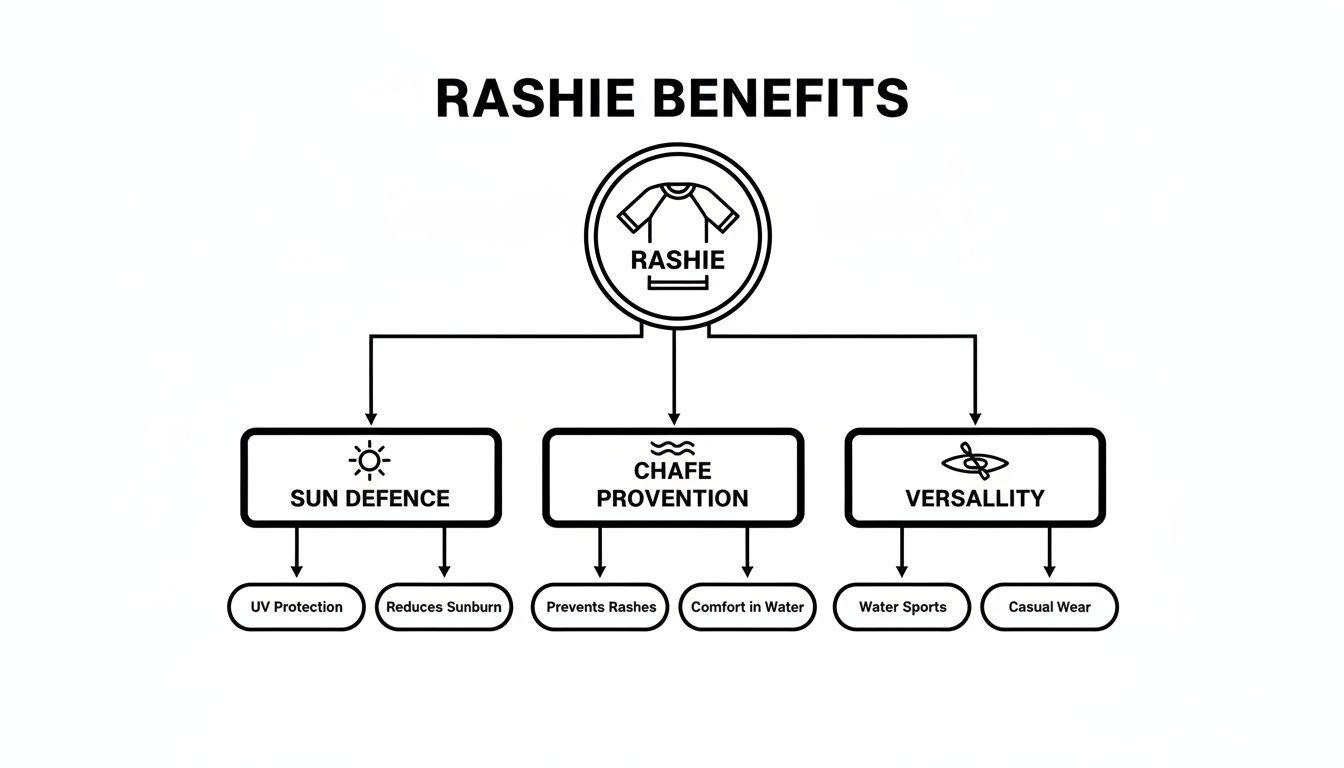
As you can see, it's a versatile piece of kit designed for sun defence, preventing chafe, and general comfort in and around the water.
Neoprene and Polytherm
For those cooler days when the southerly has a bit of bite, a standard lycra rashie just won't cut it. This is where thermal materials like neoprene and Polytherm step up. They’re the perfect middle ground, bridging the gap between a lightweight rashie and a full wetsuit top to give you a welcome dose of warmth.
A thermal rashie is usually made from a thin layer of neoprene (around 0.5mm to 1mm) or a fleece-lined polytherm fabric. It won't be as toasty as a 3/2mm steamer, but it provides just enough insulation to trap a thin layer of water against your skin, which your body quickly heats up. This simple trick makes a huge difference on those brisk mornings or during an autumn surf, letting you stay out for longer without feeling the chill.
Think of a thermal rashie as the perfect shoulder-season warrior. It offers the flexibility of a standard rash guard but with an added layer of insulation—ideal for stretching your time in the water without the bulk of a full wetsuit.
The Power of UPF Fabric
Perhaps the most critical bit of tech in any Kiwi rashie is its UPF (Ultraviolet Protection Factor) rating. This tells you exactly how much UV radiation the fabric lets through to your skin. A garment with a UPF 50+ rating is the gold standard, blocking over 98% of the sun's harmful rays.
So, how does it work? Think of the fabric as your personal, wearable shade cloth. The magic lies in the incredibly tight weave of the fibres.
-
Dense Construction: The threads are woven so closely together they create a physical barrier, literally stopping most UV rays from getting through.
-
Fabric Type: Synthetic fibres like polyester and nylon are naturally better at scattering UV light compared to natural fibres like cotton.
-
Colour and Treatment: Darker colours absorb more UV rays than lighter ones, and some fabrics are even treated with UV-inhibiting solutions to boost their protective power.
This built-in sun protection is far more reliable than sunscreen alone, which can wash off in the surf or be applied patchily. The way your rashie is put together, especially the seams, also affects its durability and comfort. If you're into the finer details, you can learn more about wetsuit seams in our guide, as many of the same principles apply here too.
To make things even easier, here's a quick comparison of the main materials you'll come across.
Rashie Material Comparison
This table gives you a quick-glance guide to help you choose the right rashie material for your needs, comparing the most common options for New Zealand conditions.
| Material | Primary Use | Flexibility | Warmth | Best For |
|---|---|---|---|---|
| Lycra/Spandex | Sun & rash protection | Excellent | None | Summer beach days, warm water surfing, layering |
| Neoprene (0.5mm-1mm) | Insulation & protection | Very Good | Good | Cool mornings, autumn sessions, windy days |
| Polytherm (fleece-lined) | Insulation & comfort | Good | Very Good | Cold water, shoulder seasons, layering under a wetsuit |
Choosing between these really comes down to when and where you’ll be in the water. For most Kiwi summer days, Lycra is all you need. But for extending your sessions into the cooler months, a thermal option is a game-changer.
Finding Your Perfect Style and Fit
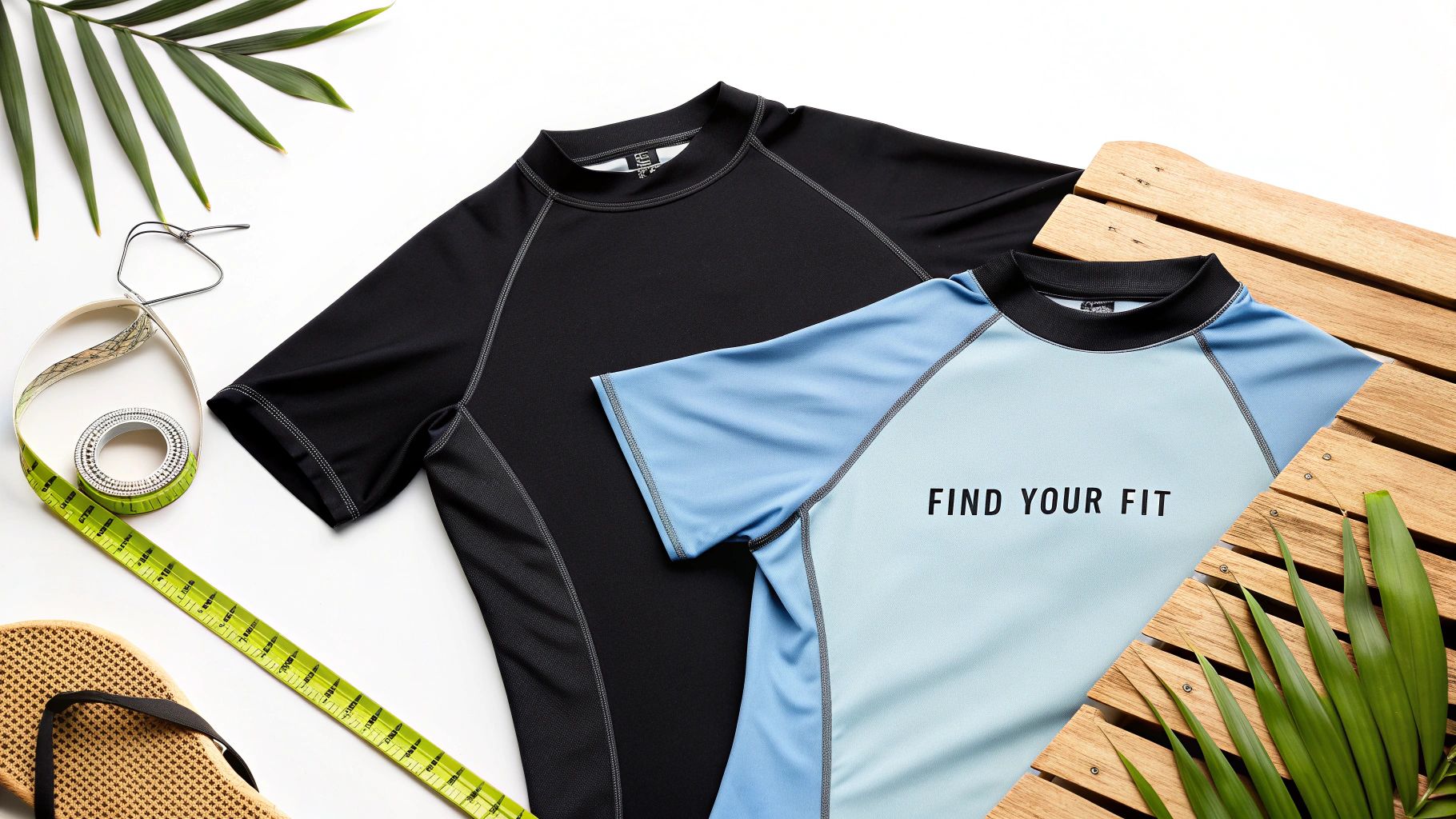
Alright, we’ve covered the materials. Now let's get into what’s arguably the most important part of picking a rashie: getting the fit just right. This is about more than just looking good – the right cut has a massive impact on your comfort, how well you can move, and your overall performance in the water.
Nailing the fit is a bit of a balancing act. If it’s too tight, you’ll feel restricted, and paddling will feel like a chore. Go too loose, and it’ll balloon up with water, creating an annoying drag that just gets in the way. The perfect fit really boils down to what you’re planning to do.
Performance Fit
Think of a performance fit as a second skin. This style is meant to be completely form-fitting, hugging your body without any bunching or wrinkling. For anything high-intensity like surfing, this is the only way to go.
That snug design slashes drag, letting you glide through the water without feeling held back. It also guarantees the rashie stays exactly where it should, so it won't ride up your back while you're paddling hard or getting tumbled in the waves. This is the cut you’ll see on competitive surfers and anyone who needs their gear to work with them, not against them. You can check out performance styles in our men's rashies collection.
Relaxed Fit
The relaxed fit is your go-to for all-day comfort and more casual days out. It fits and feels just like a regular t-shirt, giving you a looser, more forgiving cut that doesn’t cling. This makes it an awesome choice for pretty much any activity where being super streamlined isn’t your top priority.
This style is perfect for:
-
General Beach Days: Ideal for a casual swim, mucking around in the shallows, or building sandcastles with the kids.
-
Paddleboarding and Kayaking: Gives you full sun protection with a comfy, breathable feel for long stints on the water.
-
Boating and Fishing: A great way to stay protected from the sun and sea spray without feeling constricted.
Basically, if sun safety and casual comfort are what you're after, the relaxed fit is your best mate. Our range of women's rash vests includes fantastic relaxed-fit options.
Choosing Your Style: Sleeve Length Matters
Once you’ve sorted the fit, the next decision is sleeve length. This usually comes down to a mix of personal preference, how much sun you’ll be getting, and the conditions you'll be out in.
Long-sleeve rashies give you the absolute maximum sun protection by covering your entire arms. It's the most popular choice here in New Zealand for a very good reason – they’re a complete shield against our harsh sun. For long surf sessions or any activity where you're exposed for hours, they're essential.
Short-sleeve rashies offer a bit more freedom and a cooler feel, which some people prefer on those scorching summer days or for less intense activities. They'll protect your shoulders and upper arms, but don't forget to slap sunscreen on your forearms. For more advice, you might find our complete swimwear guide for the whole family helpful.
The right fit is non-negotiable. For surfing, a performance fit is key to reducing drag. For everything else, a relaxed fit prioritises comfort. Choose the style that best matches your activity to get the most out of your gear.
Finding the Right Rashie for Everyone
Here at Blitz Surf Shop, we know every member of the family needs solid protection from the sun and elements. That's why we've put together collections to suit everyone, from the seasoned surfer to the youngest grommet splashing in the shallows.
-
Explore our range of men's rashies for performance and relaxed fits from top brands.
-
Discover our stylish and functional women's rash vests designed for comfort and protection.
-
Keep the little ones safe with our durable collection of kids' rash guards.
The demand for good protective water gear is on the rise, especially in womenswear. New Zealand's apparel retail industry hit $4.2 billion in 2022, and womenswear was the biggest slice of the pie, making up $2.5 billion of that. This just shows how many people are looking for quality gear, including the perfect rashie. You can discover more insights about the NZ apparel market and its growth.
How to Care for Your Rashie So It Lasts
A good rashie is an investment, not just in your gear, but in your comfort and sun safety out on the water. With a little bit of love, you can make sure it lasts season after season. The very things that make your rash guard so stretchy and protective—those delicate modern fabrics—are also pretty vulnerable to the harsh stuff like salt, chlorine, and heat.
Just follow a few simple steps after every surf or swim, and you'll seriously extend its life. The number one rule, and the most important one to remember, is to always rinse it in fresh, cool water as soon as you can. This simple act washes away the corrosive salt and chlorine that break down the fabric's fibres over time.
The Dos and Don'ts of Rashie Care
To keep that material in top shape, you need to handle it with a bit of care. It's easy to make a few common mistakes that can completely ruin the elasticity and snug fit of your favourite rashie.
Here’s a quick checklist to nail the washing and drying every time:
-
Rinse Thoroughly: After that initial rinse, you can gently hand wash it with a mild, non-bleach soap if it's looking a bit grubby or starting to smell. Definitely never use harsh detergents.
-
Use Cool Water Only: Hot water is the absolute enemy of spandex and lycra. It literally breaks down the elastic fibres, which is what leads to your gear losing its shape and comfortable fit.
-
Dry in the Shade: Hang your rashie inside-out, preferably on a wide plastic hanger, and keep it well away from direct sunlight. The sun's UV rays are brutal; they'll fade the colours and damage the material surprisingly quickly.
-
Never Use a Dryer: The intense heat from a machine dryer is pretty much the fastest way to destroy your rashie. Always, always let it air dry.
Heat is the number one enemy of your rashie. Both hot water in the wash and direct sun or a machine dryer will permanently damage the delicate spandex fibres, leading to a stretched-out, saggy fit.
It's also worth noting that some oil-based sunscreens can stain the lighter-coloured fabrics of a rash vest. If you can, try to use a reef-safe, mineral-based sunscreen on your exposed skin to sidestep this problem. Taking these simple steps ensures you get the maximum value and performance out of your gear for years to come.
A lot of these principles apply to your other surf equipment too. For more tips on looking after your gear, check out our comprehensive wetsuit care guide.
Your NZ Rashie Buying Checklist
Picking out the right rashie can feel like a big deal, but it's actually pretty straightforward once you know what you’re looking for. Think of this as your final pre-buy check, just a quick run-through to make sure you walk away with the perfect bit of gear.
Get this right, and you're set for more comfort, better protection, and a rashie that’ll last you for seasons to come. Let's nail the decision.
What's Your Main Mission?
First up, be honest about what you'll be doing most of the time. Are you a dead-set surfer hitting the waves every chance you get, or are you just after something for those classic family beach days?
-
For Surfing: You'll want a performance fit. This skin-tight cut is non-negotiable for minimising drag and stopping your rashie from ballooning up with water. Look for durable, flatlock seams that won’t chafe during a long paddle session.
-
For SUP, Kayaking, or Beach Fun: A relaxed fit is your best bet here. It gives you the same full UPF 50+ sun protection but feels just like a regular t-shirt, making it primo for all-day wear.
This one decision—performance versus relaxed—is probably the most important one you’ll make.
What Season Are You Buying For?
The time of year you'll be in the water has a massive say in the material you should choose. New Zealand’s conditions can change in a heartbeat, so your gear needs to keep up.
Your rashie has to work for the conditions you're actually going to face. A standard lycra top is perfect for summer, but a thermal rashie will seriously extend your season when the water's got a bit of a bite.
Here's a simple way to think about it:
-
Summer (Warm Water): A standard lycra/spandex rashie is all you need. It’s light, breathes well, and gives you maximum sun protection without making you overheat.
-
Autumn/Spring (Cool Water): This is where a thermal rashie becomes a game-changer. Made from a thin layer of neoprene or a polytherm blend, it offers just enough insulation to keep the chill off, letting you stay out for that one last wave.
Have You Checked the Sizing Chart?
This sounds like a no-brainer, but it's a step people skip all the time. Every brand fits a little differently, so don't just assume your usual t-shirt size will be the one.
Always take a moment to look at the specific brand’s sizing chart. A proper fit is everything; too tight and you’ll feel restricted, but too loose and it’ll just get in the way. Taking a quick measurement before you buy ensures you get a rash guard that feels like it was made for you.
Why Shop for Your Rashie with Blitz?
When you’re ready to pull the trigger, we’re here to help. At Blitz Surf Shop, we’re more than just a store; we’re a crew of passionate surfers and skaters who live and breathe this stuff.
Our expert team in Gisborne can give you personalised advice to make sure you find the perfect rashie. We stock a massive selection of trusted brands for the whole family, from high-performance surf gear to comfy options for a day at the beach.
Ready to find your perfect fit? Check out our full collection of men's, women's, and kids' rashies online, or swing by the shop for a chat.
Maori Design Rashies
Check out the amazing locally designed rashies from Wai-Tai Aotearoa. From long sleeve thermal rashies to short sleeve t-shirt fit rashies with designs influenced by Te Ao Maori and our love of the Moana
Frequently Asked Questions About Rashies
Even after getting the lowdown on materials, fits, and features, you might still have a couple of questions rattling around. That’s totally normal. To make sure you’re completely sorted, here are some quick answers to the questions we get asked all the time here at the shop.
Think of this as your final check-in before you grab the perfect rashie for your next session.
Can I Wear a Rashie Instead of a Wetsuit?
It really depends on the water temperature. A standard lycra rashie is amazing for sun and rash protection, but it offers pretty much zero warmth. It’s your best mate in warm, summer water. But for properly cold conditions, a full wetsuit is non-negotiable for staying safe and comfortable.
There is a middle ground, though: the thermal rashie. These are made from thin neoprene or a polytherm blend and give you a small but noticeable amount of insulation. They're spot-on for stretching out your surf on a cooler day or for layering under your wetsuit to give your core an extra blast of warmth when the water really starts to bite.
What Is the Difference Between a Rashie and a Swim Shirt?
Good question! While a lot of people use the terms interchangeably, there’s a subtle but important difference. A ‘rashie’ (or rash guard) is usually a piece of performance gear. It’ll have a snug, athletic fit with features like flatlock seams, all designed to minimise drag and stop chafing when you’re surfing or being active in the water.
On the other hand, a ‘swim shirt’ is generally a more ‘relaxed fit’ garment. It’s cut more like a regular t-shirt, prioritising all-day comfort for general sun protection while you’re chilling at the beach or pool. Here at Blitz, we stock both styles to cover all bases, from high-performance surfing to cruisy family days by the sea.
The easiest way to think about it is this: a rashie is technical gear built for performance, while a swim shirt is casual wear built for comfort. Both give you awesome sun protection.
Do I Need to Wear Sunscreen Under My Rashie?
Nope, you don't need to apply sunscreen to any skin that’s covered by your rash guard. A quality rashie with a UPF 50+ rating acts as a solid physical barrier against nasty UV rays, blocking over 98% of them.
However, it's absolutely vital to slop on high-SPF, broad-spectrum sunscreen on all your exposed skin. That means your face, neck, ears, hands, and legs need to be covered to protect you from that harsh New Zealand sun. For bulletproof facial protection, it's worth learning about the benefits of using zinc for sun protection.
How Tight Should a Rashie Be?
The ideal fit really comes down to what you're doing. For surfing, a snug, second-skin ‘performance fit’ is what you want. This stops the rashie from riding up your back or ballooning with water, which creates annoying drag and slows you down when you’re paddling.
For just hanging out at the beach, swimming, or paddleboarding, a looser ‘relaxed fit’ is often way more comfortable for all-day wear while still giving you full sun protection. The most important thing is that your rashie should never restrict your movement—you need to be able to paddle and swing your arms freely, no matter the fit.
Ready to find the perfect rashie to keep you safe and comfortable in the water this season? Explore the full collection at Blitz Surf Shop. Whether you shop online or visit us in Gisborne, our team is here to help you get the right gear. Check out our range at https://blitzsurf.co.nz.


