

You're at the beach with a big board under your arm, the wind's doing its own thing, and every wave you paddle for seems to slip past before you've even stood up. That's the normal start for a lot of beginners in New Zealand, and it usually means one thing, the board is working against the wave, not with it. How to longboard surf for beginners in NZ starts with getting the gear, the conditions, and the safety right before you even think about a flashy pop-up.
Choosing the Right Longboard for NZ Conditions
If you've been stuck on a board that feels fine on the sand but useless in the water, the problem is usually volume, not just length. In New Zealand, a true longboard is commonly understood as a board over 9 feet, while some mini-longboards sit closer to the 8-foot mark and can suit smaller riders, but the bigger point is how much float you've got under you (Blitz Surf Shop longboard guide).
A useful local rule is based on the 100% body-weight-to-volume threshold which would float you completely on top of the water, 1 litre of volume displacing 1kg of weight. Then you go back down form there depending on what you want to be able to do. Eg If you weigh 80 kg, a board that has 80 litres of volume will completly displace your weight and float on top of the water, and if you weigh 70 kg, start at 70 litres or more (NZ surfboard volume guide). Then you go back down form there depending on a range of factors...age, weight, fitness, agility, how often you will surf etc
Why volume beats ego
A longer board isn't automatically better if it's awkward for your body or the wave you're surfing. A lighter or smaller surfer may be fine on a shorter, high-volume shape, while a heavier beginner usually needs more foam to keep early sessions from turning into a paddle-fest. That's why the board should suit you and the local wave, not the photo on the rack.
Practical rule: choose the board that helps you catch more waves, not the one that looks most advanced on the wall.
High-performance longboards and old-school heavy logs can make learning harder because they ask more of your timing and footwork. A forgiving all-rounder shape is easier to paddle, easier to trim, and less punishing when your stance is still messy. If you want a deeper breakdown of board types, the Blitz Surf Shop longboard guide is a sensible place to compare shapes before buying.
| Beginner Longboard Sizing Guide | ||
|---|---|---|
| Surfer Weight (kg) | Minimum Volume (Litres) | Ideal Board Length |
| 50 | 45+ | 8'0" to 9'0" |
| 70 | 50+ | 8'0" to 9'2" |
| 80 | 60+ | 8" to 9'4" |
| 90 | 70+ | 9'0" to 9'6" |
Reading the Surf and Prioritising Water Safety
New Zealand surf is shaped by its geography. The country sits in the Roaring Forties and gets both Antarctic Southern Ocean groundswells and subtropical Pacific cyclone swells, which means surf can shift quickly from manageable to heavy if you pick the wrong day (Water Nomads on NZ surf conditions). That's why beginners should hunt for smaller, softer beach breaks rather than chasing clean lines at the biggest spot in town.
The sweet spot is 1 to 2 ft whitewater or gentle reform waves, especially in summer, when the sea is generally smaller and more user-friendly for learners (SurfCheck NZ forecast guidance). Autumn often gets described locally as the more consistent window, but that doesn't mean it's the best learning season for a beginner still working on balance and confidence. Start in the softer window, then move up only when you're making waves, not surviving them.
What to look for before you paddle out
A beginner spot should let you see the wave clearly from the beach. You want a soft shoulder, a manageable channel, or a whitewater reform that breaks with enough push to glide, but not so much power that you're getting slammed on every attempt. If the waves are steep, hollow, or crowded with advanced surfers, it's the wrong session for you.
Safety rule: if the spot is unfamiliar, stand on the beach for a while first. Watch where people are getting out, where the rips are running, and where the board keeps getting pushed after falls.
Surf Lifesaving New Zealand's advice is blunt and useful. Wear a leg rope, check for rocks, rips, and crowds, keep your board under control, and don't surf a spot that's beyond your ability or unfamiliar to you (Surf Lifesaving NZ surfing safety advice). If you get caught in a current, don't fight straight against it. Move diagonally or parallel to the shore until you're out of it, then head back in.
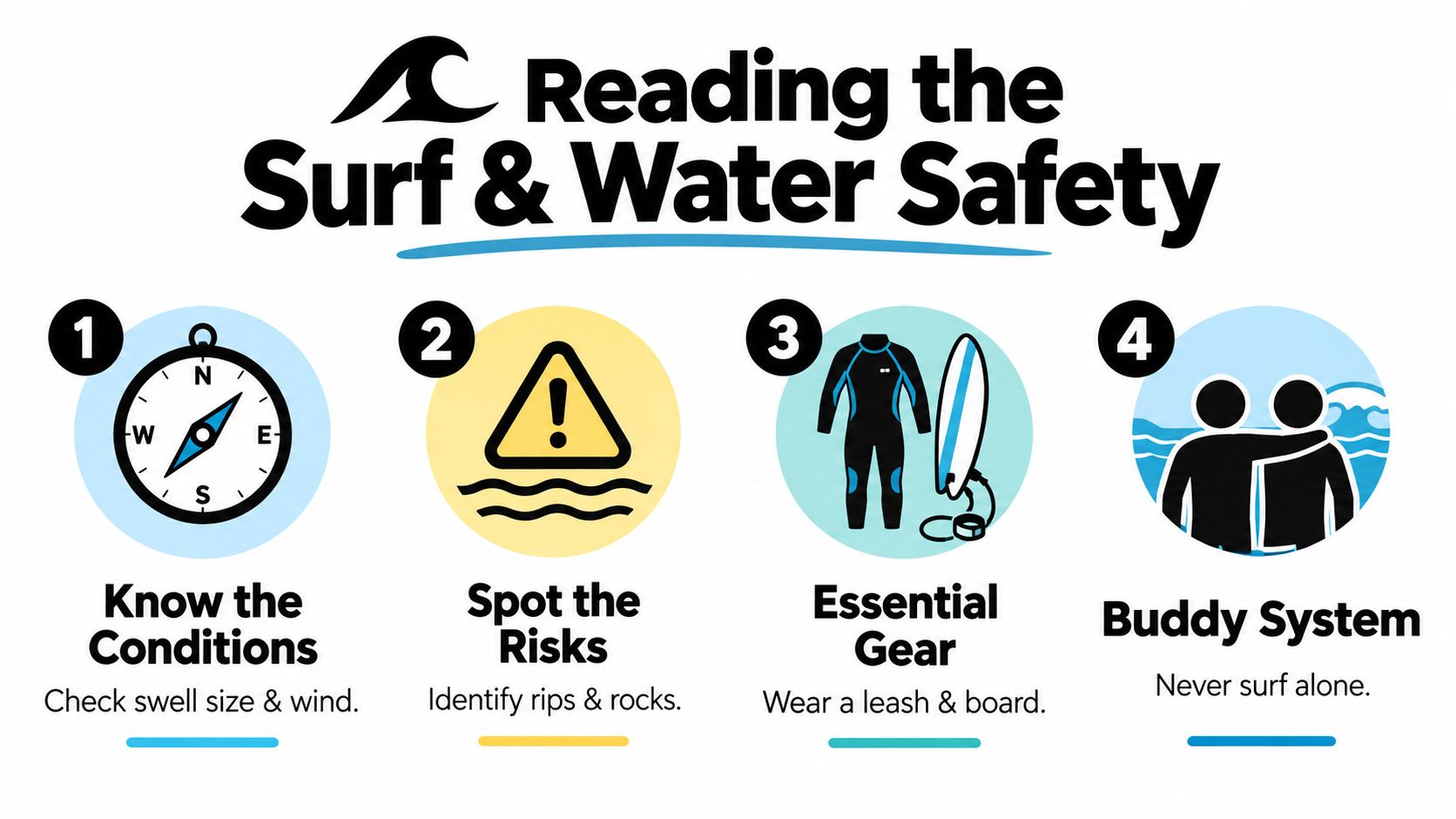
If you want a simple visual on how waves build and why some breaks are friendlier than others, the Blitz Surf Shop wave-form guide helps connect forecast reading with what you see in the water.
Mastering the Paddle and Pop-Up Technique
The biggest beginner mistake is trying to stand too early. On a longboard, the wave should already have enough glide before you pop, otherwise you're just jumping on a board that hasn't started moving properly yet. Start off by catching broken whitewash, progress to paddle into unbroken whitewater or a soft reform, keep your chest low, and let the board do the first part of the work.
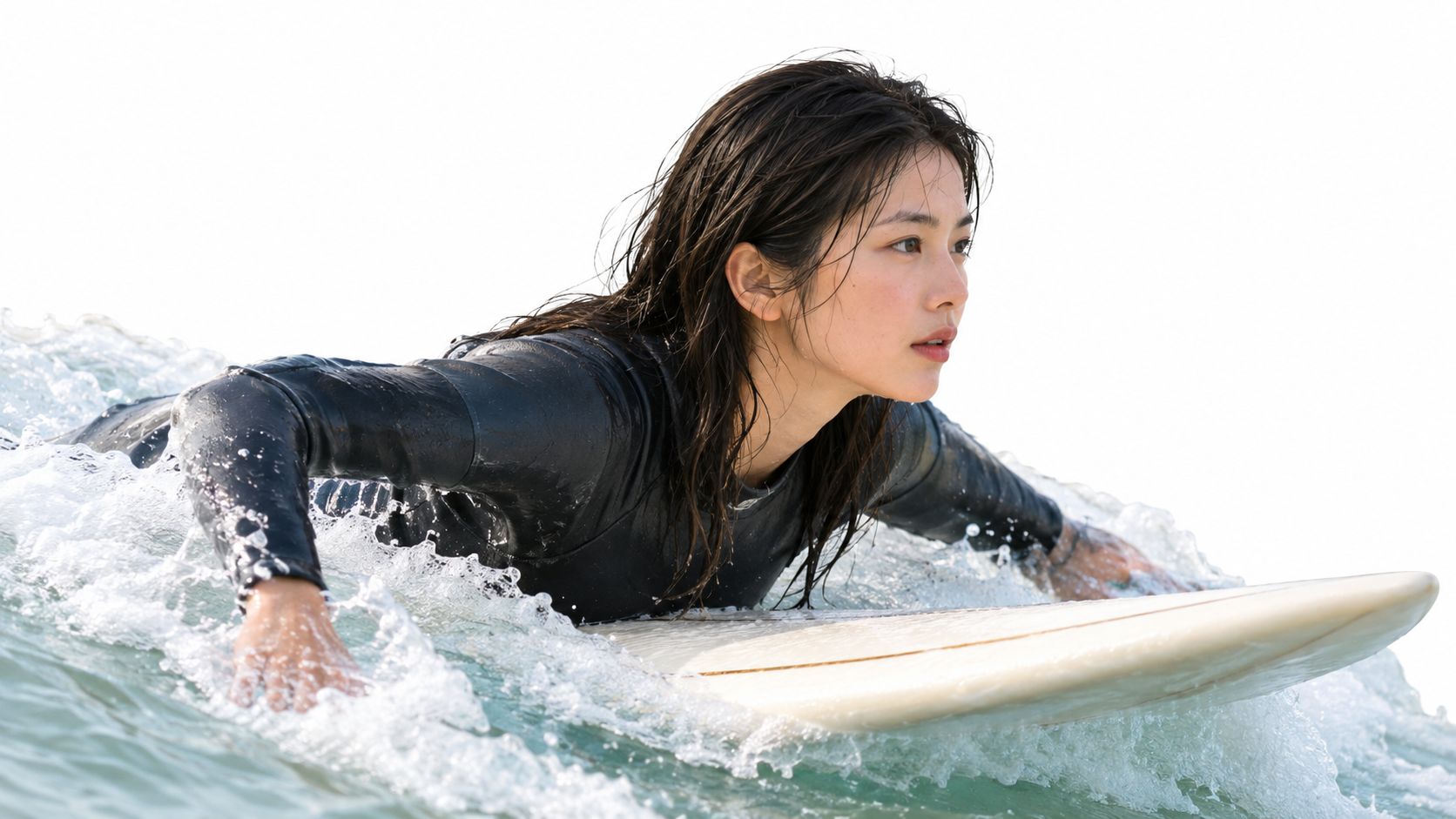
On the paddle, keep your strokes clean and even. Short, frantic paddling burns energy fast and usually gets you nowhere. Use alternate motion (one arm in the water at a time), not both arms paddling at the same time. A longboard gives you a little more glide than a smaller board, so use that to your advantage and stay calm until the wave picks you up.
The pop-up should feel smooth, not explosive
Think one fluid movement. Hands under the chest, push up, bring the front foot through first, then the back foot lands with knees bent and your weight centred. Looking down at your feet usually makes you wobble, because your head and shoulders follow the movement and throw the board off line. Put a bit of weight on your front foot to make the board accelerate.
The stance itself is simple. Front foot points slightly forward/slightly across the board, back foot sits at an angle, and your knees and hips stay soft enough to absorb the board's movement. If you lock your legs, you'll lose balance the moment the board hits chop or the wave bumps under you. This is normal for a complete beginner so tell yourself to relax once you are up
Once you're timing the glide better, revisit the basics with the Blitz Surf Shop beginner surf guide. That gives you a clean framework for what to repeat until your body stops overthinking every step.
Finding Your Stance and Learning to Turn
The first good ride feels weirdly quiet. You stand up, the board keeps moving, and for a second your job is just not to ruin it. That's the stage where trimming matters more than turning, because the board needs small weight shifts to stay in the pocket and keep running down the line.
Shift a little forward if the board starts to stall. Step back if it starts to race away or feel too loose under your feet. On a longboard, those tiny changes do more than people expect, because the board responds to trim rather than snap-turn power.
How to move without overdoing it
The aim isn't to throw the board around. It's to stay centred enough to keep speed, then learn the smallest lean that changes direction. Gentle pressure on the toes or heels starts the turn, but a beginner longboard is happier drawing smooth arcs than trying to whip into sharp cuts. Push more weight on your back foot when you turn and lighten up the front foot. Don't just lean the same on both feet, your rail will dig in and you will fall off.
A clean fin choice helps here too, especially when you're still learning what the tail is doing under your back foot. The Blitz Surf Shop longboard fin guide is useful if you're trying to understand why one setup feels stable while another feels twitchy. If your hips feel tight after paddling sessions, why hip stiffness returns is a decent outside resource for understanding why surf posture can make that lower-body stiffness show up again.
What to feel for: speed comes from trim, control comes from balance, and turning comes later.
A lot of beginners try to force turns before they can trim cleanly. That usually ends with a late wobble, a whitewater tumble, or a missed ride because the board was never settled in the first place. Ride straight first, then angle the board only when you can stay on the trim line without staring at your feet.
Avoiding Common Mistakes and Lineup Etiquette
Surfing isn't a solo test of fitness. It's a shared space, and your habits in the water matter just as much as your stance. That's especially true on a longboard, because a runaway board can hit someone fast and hard if you let go of it.
New Zealand surf safety guidance puts the basics plainly, always wear a leg rope, keep your board close, check hazards before paddling out, and cover your head when you fall (Surf safety advice with mechanics). Local injury research also shows surfing injuries are common overall, with one study finding 34.1% of surveyed surfers reported a major traumatic injury, and the board striking the surfer was a frequent mechanism (Surfing injury research summary). That's not there to scare you off, it's there to explain why board control is not optional.
The mistakes that get beginners into trouble
Dropping in on someone else's wave is the quickest way to annoy a lineup. So is paddling straight across the face of a surfer who already has priority. If you're unsure who has the wave, sit wide, watch, and wait.
Sailing out alone into a spot you don't know is another bad move. Surf Lifesaving New Zealand recorded 726 rescues, 887 assists to safety, 47,463 preventative actions, and 63 fatal drownings across the 2025 to 2026 patrol season, with no drownings inside the red and yellow flags (Surf Life Saving NZ patrol season report). That's a hard reminder that supervised, patrolled water gives you a margin you don't get elsewhere.
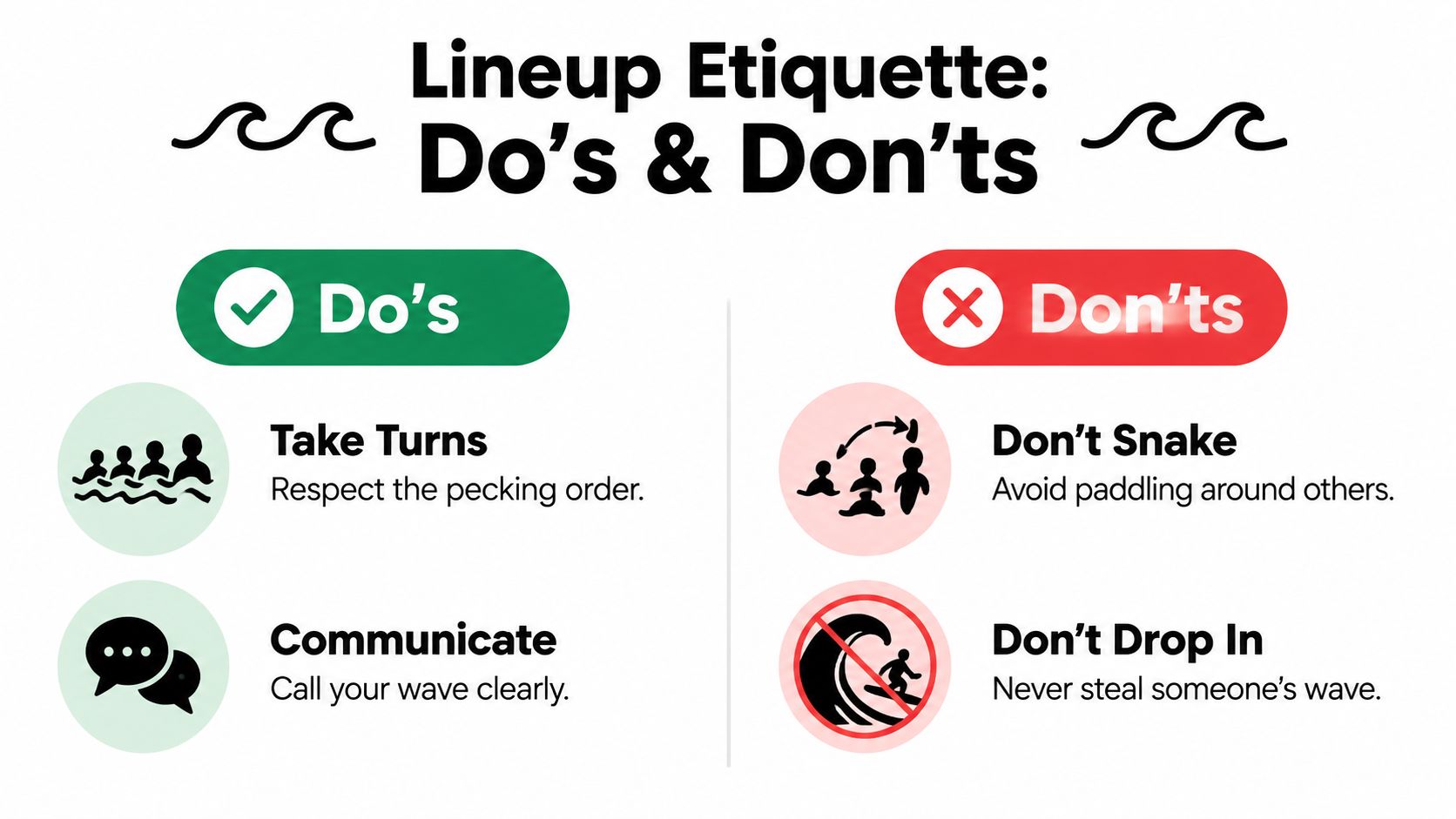
If you want the basic social rules laid out clearly, the Blitz Surf Shop etiquette guide is worth a look before you paddle into a crowded break. The goal is simple, leave the lineup calmer than you found it.
Progressing Your Skills and Next Steps
Once you're catching whitewater consistently, the next step is to angle your take-off and ride the unbroken shoulder instead of heading straight to shore every time. That shift is where surfing starts to feel less like survival and more like line choice. You don't need a different sport for that, just better timing and a little more patience.
Some beginners eventually step down in volume, but only when their paddling strength, balance, and wave-reading have improved enough to justify it. If the board is still doing half the work, keep the foam. If you're making clean entries and trimming without panic, then a smaller shape can make sense later.
Keep the progression simple
Start with clean take-offs in soft conditions. Move to angled rides once you can stand without looking down. Then try new breaks along the East Coast only after you've learned how different sand banks, wind directions, and wave sizes change the feel of the board.
Surfers in New Zealand often learn with friends, family, and local coaching, and that social path makes sense. The sport is easier to stick with when someone else is checking the forecast, carrying the spare wax, or telling you the set is about to clean up. That's how longboarding stays fun instead of becoming a solo grind.
Keep the sessions small, the goals honest, and the board forgiving until your surfing earns the upgrade.
If you want help choosing a longboard that suits NZ waves, visit Blitz Surf Shop for boards, fins, leashes, wax, and local advice that lines up with real conditions. They stock beginner-friendly gear and can help you narrow down the right volume, shape, and setup so your first sessions feel easier, not harder.


