

You've clicked through a Havaianas product page, selected the NZ size you normally wear, and felt confident right up until the parcel arrived. Then the front strap sat too tightly across your toes, or the sole extended well beyond your heel and the thong started flapping with every step. That frustrating result usually isn't a footwear mystery. It's a measurement and conversion problem.
Havaianas sizing works differently from the single-number sizing many New Zealand shoppers use for sneakers. The brand uses Brazilian sizing, and many styles are labelled in paired ranges such as 35/36 or 37/38. The fit also depends on the model, your foot shape, and whether you're buying for a growing child. This guide takes you from a proper centimetre measurement to the right paired size, then shows what to do if the first fit still isn't right.
Shop Havaianas online with Blitz
Why Havaianas Sizing Trips Up So Many NZ Shoppers
A common order goes like this. You wear a familiar NZ sneaker size, see a Havaianas option that appears to match, and choose it without measuring. At home, the sole may look fine until you walk. The strap digs into the forefoot, your heel sits near the edge, or the thong catches the ground because the flip flop is longer than your foot.
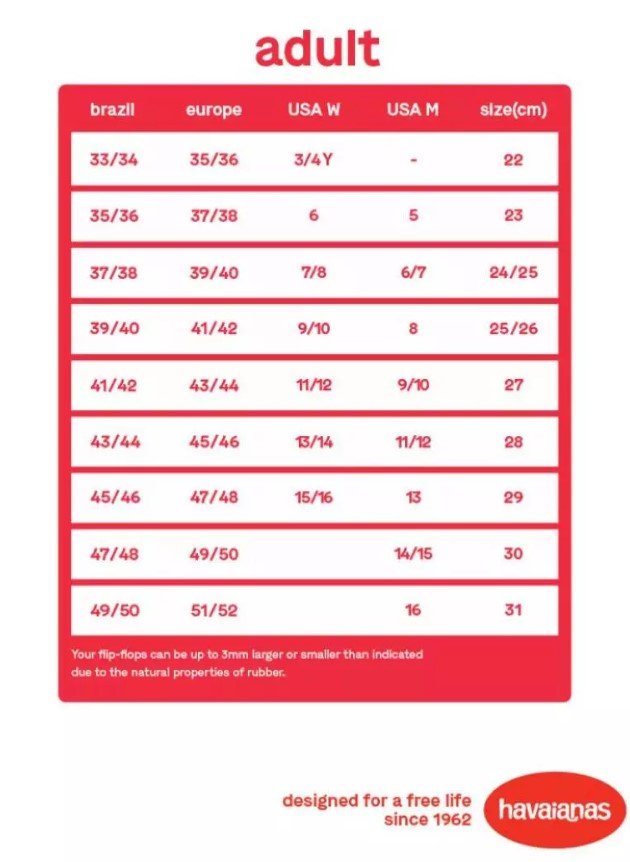
The first complication is the numbering system. Havaianas sold in New Zealand use Brazilian sizing, not EU sizing, and the brand's local chart provides a Brazilian-to-US (we tend to go by US sizing in NZ) conversion based on foot length in centimetres. The official Havaianas NZ size chart also tells shoppers to measure diagonally from the centre of the heel to the big toe, rather than relying on an EU number alone.
Paired sizes change the decision
Havaianas flip flops commonly use paired labels, including 35/36, 37/38, 39/40, 41/42, 43/44, 45/46 and 47/48. That label doesn't behave like a standard single-number shoe size. You're choosing the paired sole that covers your measured foot length, then checking how your foot sits inside that specific model.
A rubber jandal also behaves differently from a leather sandal. Leather may soften and mould with wear, while a Havaianas sole and strap shouldn't be chosen on the assumption that they'll stretch into a dramatically different fit. Your feet can also feel different later in the day, during warmer weather, or between seasons. Children add another variable because their feet can move through a size range sooner than expected.
Practical rule: A previous Havaianas pair is useful only if it's the same model and still fits correctly. Your sneaker size alone isn't a reliable shortcut.
If you're comparing styles or trying to understand why jandals fit differently from other summer footwear, this guide to thongs in NZ adds useful local context. For the actual order, though, start with your foot in centimetres.
How to Measure Your Foot the Havaianas Way
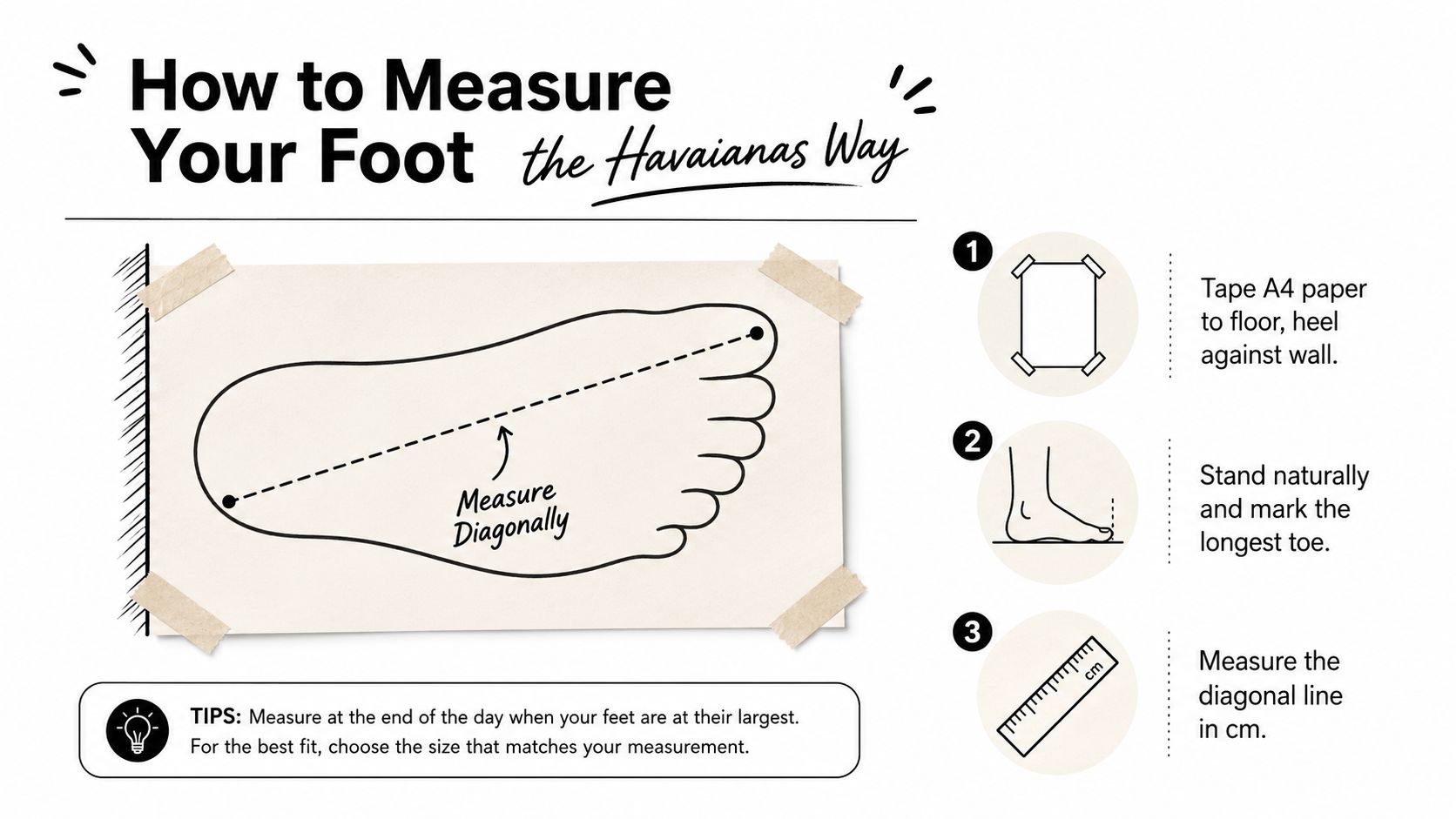
Havaianas' fitting method is specific. The brand recommends measuring diagonally from the heel to the big toe, and records the approximate result in centimetres, as shown in its official Australian size guide. That diagonal line is the number you'll use when reading the chart.
Measure at home
- Prepare a hard surface. Tape a sheet of A4 paper to the floor, with one edge against a wall. Avoid measuring on carpet, because your heel can sink and alter the result.
- Stand naturally. Place one foot on the paper with your heel gently against the wall. Keep your weight evenly distributed rather than sitting back or lifting your toes.
- Mark the longest point. Mark the end of your longest toe. For many people that's the big toe, but use whichever toe reaches furthest.
- Measure diagonally. Measure from the centre of the heel to the toe mark, following the diagonal direction rather than measuring a straight line across the paper. Record the result in millimetres, then round to the nearest whole centimetre.
- Repeat both sides. Measure the other foot as well. If one foot is longer, use the longer measurement when selecting your size. A sole that fits the shorter foot may still feel cramped on the longer one.
Small details that affect the result
Measure in the late afternoon, when feet are often at their largest after a day of standing and walking. The aim is to reproduce the way you'll use the sandals, not to create an artificially small measurement.
For a fuller walkthrough of Havaianas fit and product selection, use the Blitz Havaianas guide. Once you have one centimetre figure for the longer foot, the conversion chart becomes much easier to use.
Reading the Havaianas Size Chart
The official NZ guidance is the best starting point for local shoppers because it's specific to Havaianas products sold in New Zealand. It explains that the sizing is Brazilian and provides a direct conversion table in centimetres, rather than asking you to guess from an EU label.
The independent NZ chart from Amazon Surf's Havaianas size guide gives the following foot-length bands:
| BR Size | EU | US Women | US Men | UK | Foot Length (cm) |
|---|---|---|---|---|---|
| 35/36 | 35/36 | 5/6 | 3/4 | 3/4 | 23.4 to 24.6 |
| 37/38 | 37/38 | 7/8 | 5/6 | 5/6 | 24.7 to 25.9 |
| 39/40 | 39/40 | 9/10 | 7/8 | 7/8 | 26.0 to 27.3 |
| 41/42 | 41/42 | 11/12 | 9/10 | 9/10 | 27.4 to 28.6 |
| 43/44 | 43/44 | 13/14 | 11/12 | 11/12 | 28.7 to 29.9 |
| 45/46 | 45/46 | 15/16 | 13/14 | 13/14 | 30.0 to 31.3 |
| 47/48 | 47/48 | 17/18 | 15/16 | 15/16 | 31.4 to 32.6 |
The conversion rows are practical guides, not a replacement for trying the product. For example, a measured foot length between 24.7 and 25.9 cm falls into the 37/38 band, while 26.0 to 27.3 cm falls into 39/40. The chart also makes clear why a women's US conversion and a men's US conversion shouldn't be treated as interchangeable.
How to handle the paired label
A label such as 37/38 represents a paired Brazilian range, not two separate products. If your measurement sits comfortably within the relevant centimetre band and your foot is average in width, start with that row. If you're right at a boundary, consider both the foot length and the shape of the model.
A narrow foot may feel less secure in a larger paired sole because the strap has more room to move. The right choice isn't “always size up” or “always size down”. It's the size that leaves your toes and heel sitting safely on the footbed without excessive movement.
For shoppers who also compare fit across travel footwear, California Cowboy's size guide for cabin wear is a useful reminder that different product categories can use different measurement conventions. For a narrower, dressier Havaianas option, compare the chart with the Havaianas Slim range, then check the model notes before ordering.
Model by Model Fit Notes for Popular Styles
Two Havaianas pairs can share a size label and still feel different on your foot. The strap width, toe-post position, and the amount of room across the forefoot all influence whether a style feels stable or irritating. Use the model first, then use the chart to select the size.
| Model | Strap / footbed | Best for | Sizing tip |
|---|---|---|---|
| Brasil Flip Flop | Slim Y-bar strap and flat footbed | Average-width feet and everyday beach use | Check toe room carefully, as it can feel short at the front |
| Brasil Mix | Slightly wider strap with a familiar flat footbed | Shoppers who want more coverage across the forefoot | Consider it when a classic Brasil strap feels restrictive |
| Slim | Glossy, narrower strap and flat footbed | Narrower feet and a more delicate look | A wider foot may feel pinched under the narrower strap |
| Brasil Crops | Chunkier strap and shorter toe post | Broader forefeet and shoppers wanting a more substantial feel | Check the toe-post position, especially if your toes sit close together |
| Square Crops | Chunkier strap and square-front shape | Broader forefeet and a roomier visual profile | Use your measured length, then make sure the square front doesn't leave excess sole |
| You Metallic | Dressier strap treatment with the classic footbed | Casual outfits that need a more polished finish | Judge it by the underlying footbed and strap placement, not the decoration |
| Brasil Logo | Dressier logo detail with the classic footbed | Everyday wear with a slightly more finished appearance | Check whether the strap junction sits securely over your arch |
| Mini and Baby | Children's shapes and paired kids' sizing | Toddlers and younger children | Leave sensible growing room without allowing the foot to slide forward |
The classic lines
The Brasil Flip Flop has a standard Y-bar strap and a flat footbed. It's a sensible match for an average-width foot, but the toe area can feel short when a shopper chooses by their usual sneaker size instead of measuring. If your toes reach the front edge or the strap sits hard against the forefoot, don't assume the rubber needs wearing in. Recheck the measurement and compare the next size option.
The Brasil Mix uses a slightly wider strap, so it's often the more comfortable direction when the classic Brasil feels too narrow across the front. The Slim has a narrower strap and suits a narrower foot better as it has a narrower sole shape. It can look refined, but that narrower strap gives a broad forefoot less room to spread.
Crops and dressier options
The Logo Metallic is a dressier choice built around the classic flat footbed. Choose them for the finish and strap arrangement, but size them from your foot measurement rather than treating a decorative upper as a different sizing system.
For a narrower-foot option, the Havaianas Slim Basic gives you a clear example of how a slimmer strap changes the fit conversation.
Kids and teens
Havaianas children's sizing can start at 17/18, and the kids' chart includes ranges such as 23/24 for feet measuring 15.4 to 16.6 cm and 27/28 for 18.0 to 19.3 cm, according to the NZ retailer guide linked earlier. Children need room to grow, but too much extra length can make a jandal unstable and encourage the foot to slide forward.
For a child between bands, inspect both the length and strap position. A slightly larger sole may be sensible if the foot remains held securely, but don't choose extra length that lets the thong catch the ground. As teens move into adult ranges, compare the foot measurement with the adult chart rather than assuming the largest kids' option will feel like an adult style.
Solving Common Fit Problems
The first try-on tells you more than the product photo. Put both Havaianas on indoors and walk naturally. Watch your heel, toe placement, and the way the strap moves as your foot lifts.
If the flip flop feels too big
A sole is too long when your thong catches the ground, your foot slides forward, or you're gripping with your toes to keep the jandal in place. Recheck the longer foot measurement, then try the smaller available paired size. A temporary heel grip or backing strap can improve security, but it shouldn't disguise a sole that is plainly too long.
A large gap at the heel and toe is different from a small amount of visible sole. You need enough footbed around the foot to avoid stepping off the edge, not so much that the jandal becomes difficult to control.
If the strap pinches
A red pressure line beside the toe post or across the front usually means the fit is too tight in that area. Try the next size where the length band allows it, or choose a model with a different strap shape. The Brasil Mix, with its slightly wider strap, may suit you better than the narrower classic or Slim construction.
Heel rubbing can also point to a strap that doesn't match your foot shape. If the Slim keeps pressing in the wrong spot, a roomier model may solve the problem more effectively than just adding length.
If the Y-bar slips
A low arch can make a Y-bar feel less secure because the junction doesn't sit firmly over the top of the foot. If the strap slides off as you walk, inspect the strap junction rather than immediately changing size. The Logo metallic may offer a more secure-feeling arrangement for your foot than the classic Brasil.
Rubber can relax slightly when warm, so a snug fit out of the box is generally preferable to a loose one for warm NZ days. It should feel secure without creating sharp pressure, and your toes shouldn't curl to keep the flip flop attached.
Ordering, Delivery and Easy Returns at Blitz
Once you've measured, ordering is mostly a matter of transferring the right information carefully. On a Havaianas product page at blitzsurf.co.nz, open the size selector and read the paired Brazilian number exactly as shown. If a conversion popup is available, enter your centimetre measurement there, then compare the suggested row with the official chart before adding the pair to your cart.
A careful checkout routine
- Check the model first. Confirm whether you're buying a Brasil, Brasil Mix, Slim, Crops, You, or children's style, because strap shape changes the way the same paired size feels.
- Match the longer foot. Use the larger of your two diagonal measurements, not an average that could leave one foot cramped.
- Read the label twice. Make sure the product variant shows the intended Brazilian pair, such as 37/38 or 39/40, before checkout.
- Review delivery details. Blitz offers free NZ-wide delivery over $150 on eligible items, as stated in the store information, so check the current eligibility shown at checkout.
For more background on the retailer and its online service, read why Blitz Surf Shop is New Zealand's go-to online surf store. The store also operates from Gisborne, so shoppers who are near the Newmarket location can choose an in-store try-on when they're uncertain between two options.
If the pair isn't right
Keep the box, tags, and packaging intact while you test the fit. Try both sandals indoors on clean carpet, walk normally, and look for toe overhang, heel movement, strap pressure, or a sole that catches the floor.
If the pair needs changing, contact the store by email. The available resolution is a swap to another Havaianas size or a refund, subject to the store's current return conditions. Don't wear the pair outdoors while deciding. A clean, organised return gives you the clearest path to correcting a size or model mismatch.
Your Quick Havaianas Sizing Checklist
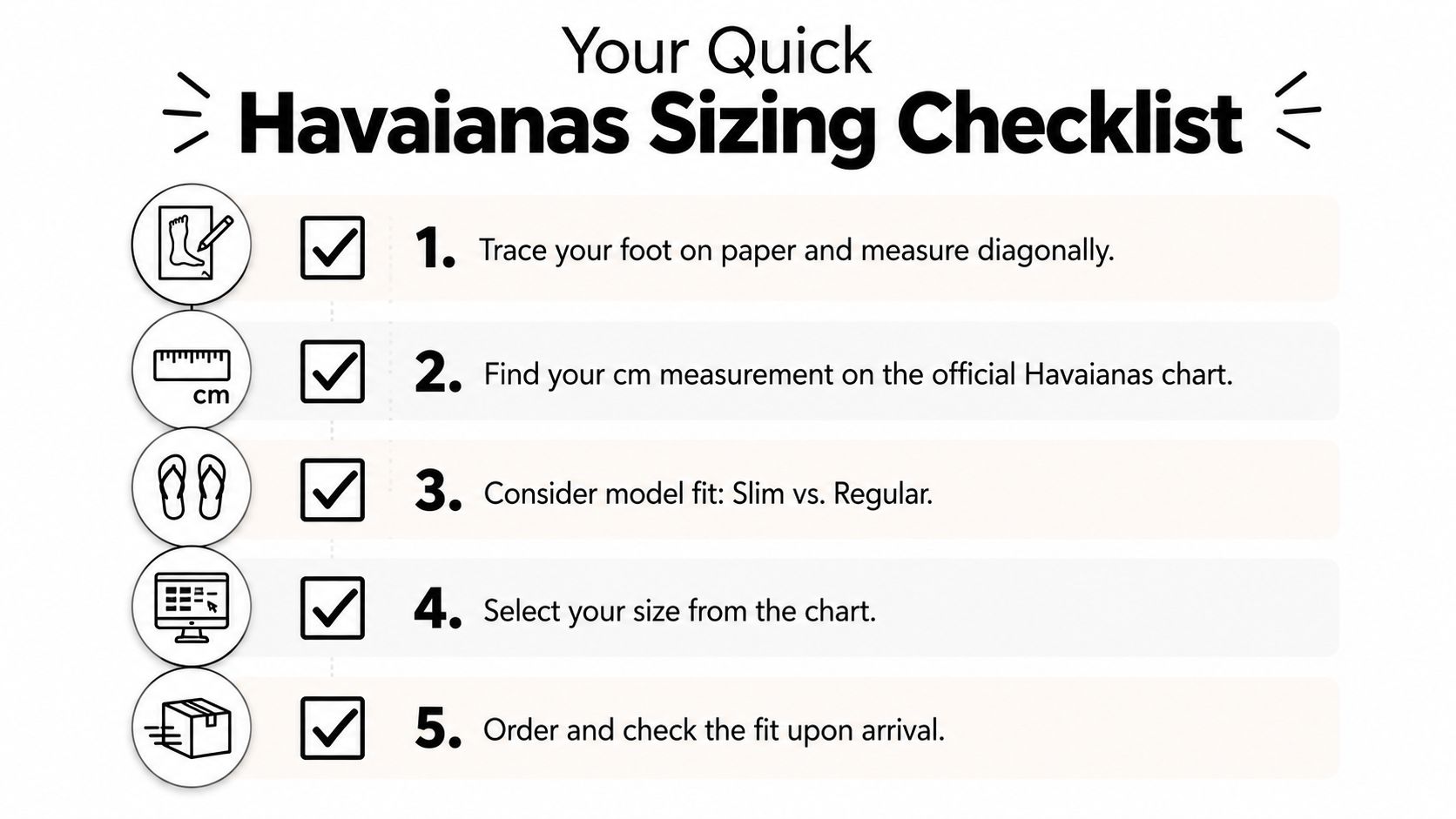
Keep this list open on your phone before you order:
- Measure both feet. Stand on taped paper, keep your heel against the wall, and measure diagonally from the heel to the longest toe.
- Record centimetres. Use the longer foot and round the diagonal measurement to the nearest whole centimetre.
- Find the paired BR range. Match your measurement to the relevant Havaianas centimetre band, such as 35/36, 37/38, 39/40, 41/42, 43/44, 45/46 or 47/48.
- Check the model. Choose the strap and footbed that suit your foot. Slimmer straps generally make more sense for narrower feet, while wider or chunkier options can be more comfortable across a broader forefoot.
- Review before checkout. Confirm the Brazilian size selector, delivery eligibility, and product model before placing the order.
If your measurement sits at a boundary, prioritise secure foot placement over a familiar shoe number. A wider forefoot may need the roomier option, while a narrow foot can lose stability in a sole that's too long.
Keep the parcel sealed until you've tried both pairs indoors on carpet. If anything pinches, slips, or leaves excessive gaps, use the Blitz return process rather than hoping the fit will change outdoors.
Blitz Surf Shop carries Havaianas styles for adults and children through its NZ online store, with product pages that make it possible to check the paired size before ordering. Visit Blitz Surf Shop to compare the available styles, use the centimetre measurement you've taken, and choose the right fit with a straightforward return option if needed.


